| Author |
 Replies: 28 / Views: 2,941 Replies: 28 / Views: 2,941 |
|
|
|
Member
United States
703 Posts |
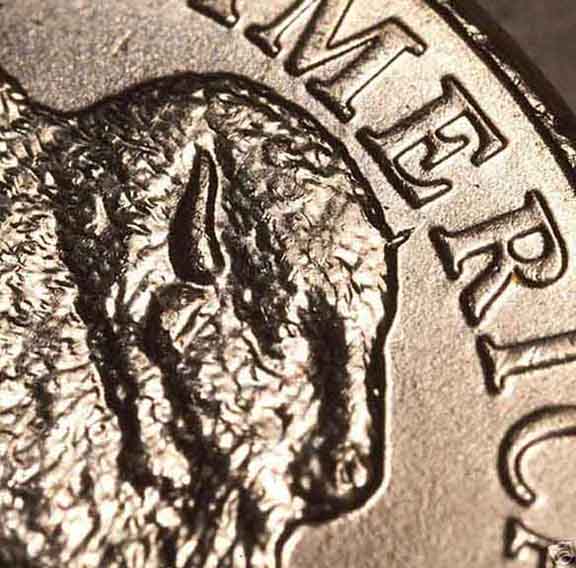
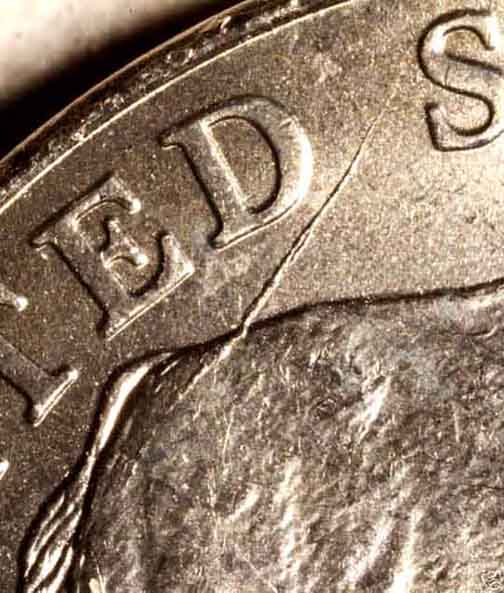
I will side with errorist on this one for the most part. He has shown many proof die cracks that are awesome. When it comes to mass produced coins with die cracks ( and yes many are so common as to be worthless), well when it come to naming them I think it is fine ONLY when it has great EYE APPEAL and/or is Large Enough. Two Recent modern examples are The wounded Bison and the Two-Horned Bison. I searched Thousands of dollars worth of Bison and found many die crack, but some really stand out. I in Fact Found and had published in CoinWorld my find, the Two-Horned Bison. I tried to get it named (It was NAMED in CoinWorld) but could not. PCI did but so what. I also know that this error has great eye appeal and is NOT common. Not many have it nor sell it. The frequency was lower than most other errors I found. Anyway there are tons of die cracks that are worthless because they are very common. I just think the ones with great eye appeal do carry a premium and should be named. That's all. Two-Horned and Wounded Bisons: Image:  2horn.jpg 2horn.jpg101.6 KB Image: Wounded.jpg86.55 KB in errrrrrrrror |
|
Pillar of the Community
United States
7629 Posts |
I don't think either of you understand...there aren't "sides" here. This is a market based on realistic demand by thousands and thousands of people. It's not a battle of wits between a dozen people here.
I have stated the facts of the market as it is. You can choose to collect what you want and be happy with it. You can give names to your die cracks all you want. You can expect the rest of the world to listen, but when they don't, there's no reason for you to get your feelings hurt...you've been told.
Die cracks are arguably the most common thing that occurs to dies in the minting process aside from typical die wear. With this being a fact, and the case, very few people are going to bother picking up die cracks as collectible or valuable coins. Most people see them for what they are - common, and a tolerable, normal part of the die's life.
This should serve as my answer to your question - why die cracks don't get attention or respect as collectible coins. Again, however, this is not to say you shouldn't collect what you want to collect - go right ahead. Many will consider it a waste, and many will think you've missed the point entirely - just fair warning. Myself, I don't really care either way. I know what I want to collect, and I want to collect what's scarce - a challenge to find.
|
|
Pillar of the Community
United States
1247 Posts |
Die cracks and die breaks on Lincoln cents were given considerable attention at one time: BIEs, Devil Horn, Devil tail, Dot date, Dash date, R-Dates, Coke Bottle date, Fish Hooks, Horned C, Jack -N-Jane, Skirted R, Mini-Skirt, Pencil to the Ear, Bullet to the head, San Jose, Wart Nose, Wart Head, Winged Head, Wheat Smut, Spiked Head, Cracked Skull, Goatee, Stick Pin, Bow-Tie, Antennas, Connects, Connectors, Drapes. They are all just die cracks or a piece out of the die. But they had a very dedicated following when the BIE Guild existed. The BIE Guild itself had some heavy weights: Alan Herbert, Arnie Margolis, John Wexler, Del Romaines. They also had the BIE Guild Handbook and Jean Cohen's: Classification and Value of Errors on the Lincoln Cent. Most of the Errors she lists are Diecracks and Diebreaks; over 7,000 listed and over 6,000 illustrations, practically all drawings. This book is incredible. It's incredible that anyone could do such a thing. And they sold. I have copy #123 of 1,000 of the 2nd printing. She must have sold out the first printing so people were collecting these even though they were nothing more than failing die errors. |
|
Valued Member
 United States
199 Posts |
|
|
Valued Member
United States
199 Posts |
I agree with error coins. Talk about hard to find are the proof ones. It has taken me about seven years to collect those proof ones.
|
|
Pillar of the Community
United States
1952 Posts |
put it this way. collect what you want or like but when you are gone are your kin going to have a box of junk or some real collectors coins that will make them a buck or two? I am on the side of collecting that coin that will bring it home later and in my opinion a die crack is not going to do it period
Gary
|
|
Valued Member
United States
199 Posts |
On mans junk is another mans treasure.
|
|
Pillar of the Community
United States
7629 Posts |
Longnine speaks of publications that were released a long time ago - a lifetime ago to many of us. These books, and the collecting mentality of the day was much different than it is now. Back then many people didn't understand any part of the minting process - only that it minted coins, and anything that came out of the mint looking like anything other than a normal coin was collected as an error...the days of Jean Cohen, Frank Spadone, and the like, are long gone. Their listing of common anomalies and assigning unrealistic values to such anomalies were the result of very little research, very little market analysis, and had no basis in fact. For many of us looking back on that generation is a lesson - but some still insist their work has validity today in more than being a lesson in what not to bother keeping.
Since those times we have come a long way in our understanding of the minting process as a whole, and we have become much more sophisticated in not only our terminology for what different things are, but in our way of collecting. We now know what the Mint looks for when they make dies and coins, and we know what is least likely to escape the facility and enter circulation. We know that the true errors and more obvious die varieties are those things that were never really supposed to leave the mint, and the common die wear related flaws that most dies eventually experience are accepted by the Mint as unavoidable truths that must be released to meet mandated mintage quotas. It is the difference between these things that drives the market today.
Back in the 1960s, collecting oddities was a pastime collectors had fun with. Heirs of such collections expected nothing from the effort other than some curious stuff grandpa kept for the kids to play with and enjoy. They never had expected that grandpa was trying to help them with their future by keeping coins, but for some reason that's what our newer generations expect. In our modern, fast paced society we expect that if someone is going to spend a lot of time on something they should have something monetary to show for it. If grandpa is spending a lot of his free time on his coin collection, there must be plenty of value in it.
Some people, however, have not moved forward in their understanding of the minting process, and have not moved forward with the market. Those people will ultimately be left behind, and the only people who will suffer are their heirs, primarily for thinking all the time and energy their relative went through in amassing their collection was leading to some financial reward...whereas this is not the case. The heirs find out that the collection is worth little more than face value to anyone, and they end up with bittersweet results in that someone cared to collect to have something to pass down in the family, but that it wasn't worth the effort and time financially.
Errorist is one of those people who seem to fail to see the fact that there is a market for some things and there is no market for other things...and he chooses to collect those things for which there is no realistic market. His heirs will be those heirs who try to sell the collection and will find that nobody will give them anywhere near what they thought they might get for it. It is indeed sad, but until he listens to what he is being told here, there's nothing anyone else is going to do to change this course of events.
The best thing others can do is listen to the advice he is being given and heed the warnings given. Unfortunately every educational experience has some who fall through the cracks, but others learn from it and gain in the end.
|
|
Valued Member
United States
199 Posts |
I am sure people want unique rare coins. Proof die cracks are both.
|
|
Pillar of the Community
United States
2443 Posts |
If every die crack was named, the die crack variety books on Shield nickels alone would consist of at least 100 editions! |
|
Pillar of the Community
United States
1247 Posts |
From Chuck: "Their listing of common anomalies and assigning unrealistic values to such anomalies were the result of very little research, very little market analysis, and had no basis in fact."
Very little research? Did the good tooth fairy stick those references under Joe Bush's pillow in the middle of the night? And BTW, those references have never failed me. They have drawings instead of photos. So what? If the information in them still works that's all that matters to me.
The values assigned came from mail auctions held by the membership. The also sold and traded coins with each other by snail mail. Why would anyone need "market analysis" to trade coins by mail?
**********************************************************
"The Letters BIE is to be understood as standing for
the 'BEST IN ERRORS' and not the diebreak between
the letters 'B' and 'E' as formerly supposed.
John E. Markley
Former BIE GUILD member.
***********************************************************
|
|
Valued Member
United States
199 Posts |
I thought the "BIE" term meant the coin was appealing to both sexes?
|
|
Pillar of the Community
United States
1247 Posts |
In a rather amazing coincidence the BIE is the *deterioration of Liberty* on the Lincoln Cent. And it showed up in force in the 50's when Roy Cohn and Joe McCarthy were in force. "Are you now, or have you ever been, a member of the BIE collecting party?"  |
| |
Replies: 28 / Views: 2,941 |







 First Page
 2horn.jpg
 Wounded.jpg

 Posted 10/18/2007 9:28 pm


