| Author |
 Replies: 13 / Views: 1,849 Replies: 13 / Views: 1,849 |
|
|
Pillar of the Community
Canada
1275 Posts |
Here's an 1982 that's quite unusual that I found interesting. I believe it's a Partial collar broadstrike on an unrimmed type 1 planchet. Notice how the rim is twelve sided on the obverse side and round on the Reverse. All comment and opinions are welcome. Cheers SIC 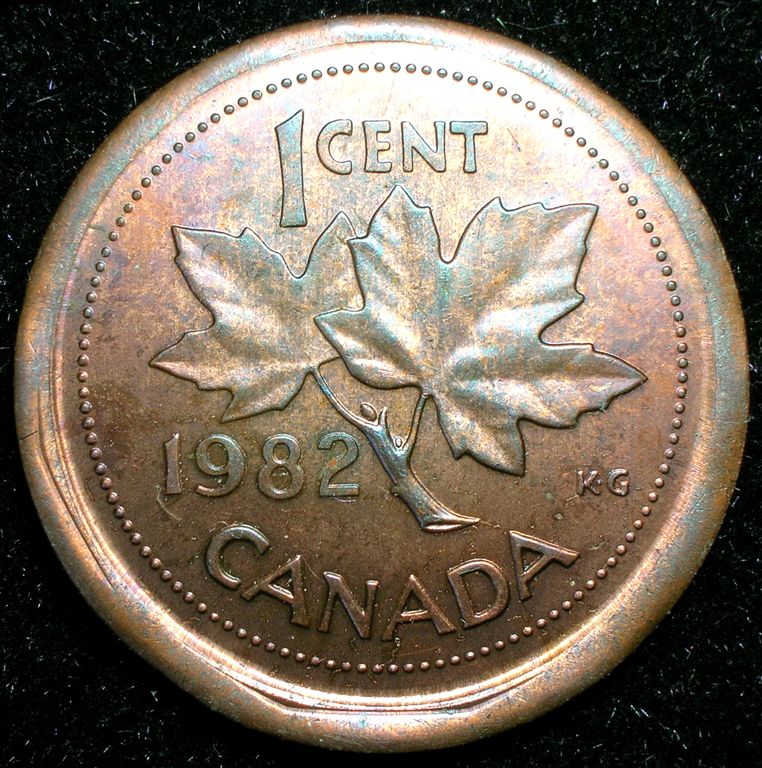 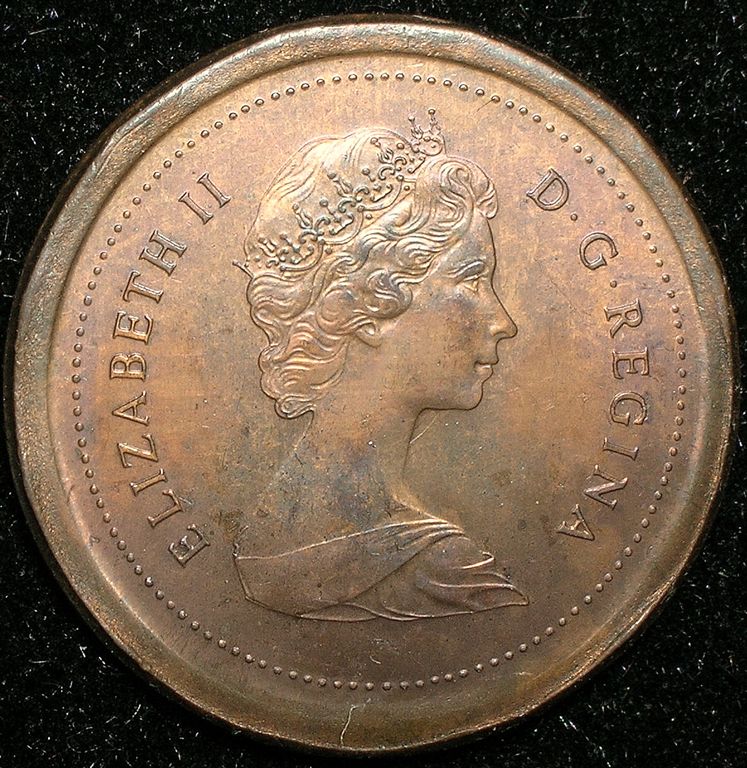 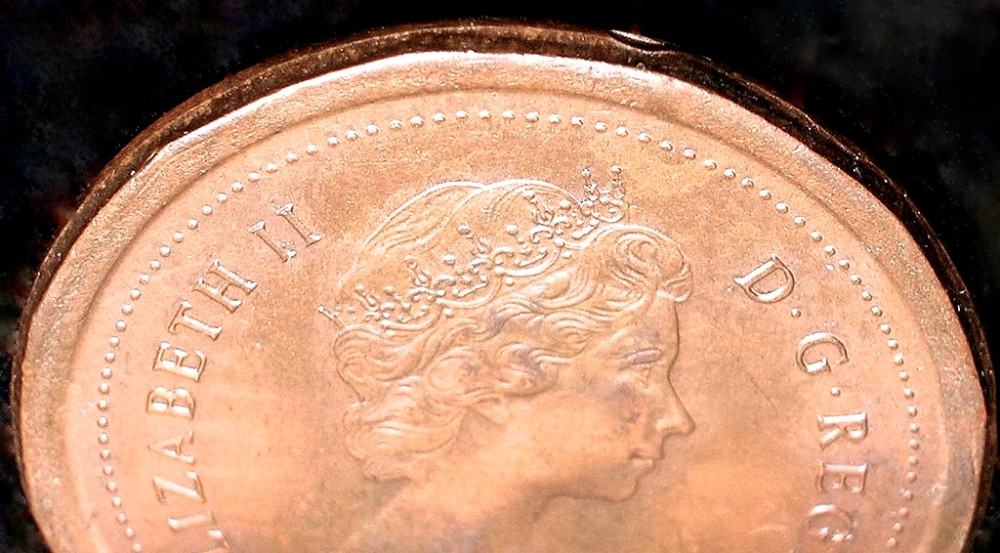 |
|
|
|
Pillar of the Community
United States
1781 Posts |
I could be wrong, but I don't think the blanks for the 12-sided issues could be upset.
|
|
Pillar of the Community
Canada
695 Posts |
Ken - At one time I had a couple of complete sets of Canadian small-cent blanks, with specifications that matched every time period. They were all rimmed, including the blank for the 12-sided cent.
|
|
Pillar of the Community
 Canada
1275 Posts |
I'm not sure if the blanks were put through the upset machine or not I had always assumed they were upset. The reasoning was that if a type 1 planchet entered the chamber it would not fit properly into the collar and this is why this coin was created.
Cheers, SIC
|
|
Pillar of the Community
United States
1781 Posts |
Thanks for the info. I wonder how they rim a 12-Sided planchet. Another project in the wind for me I guess.
|
|
Pillar of the Community
Canada
1275 Posts |
I had always thought they're a normal round planchet and the twelve sides are created by the collar. Perhaps someone with a better understanding will respond as well.
Cheers, SIC
|
|
Pillar of the Community
Canada
2531 Posts |
I think there is a picture of Canadian 12-sided penny blanks going through a rimming machine in Striking Impressions. Something about the picture, either the colour of the planchets or the round shape, threw me off but I can't remember which one it was. Perhaps someone with the book can double check it for me, the picture is somewhere in the first couple of chapters.
|
|
Pillar of the Community
Canada
4227 Posts |
|
|
Pillar of the Community
Canada
2531 Posts |
Those were the pics I'm thinking of, thanks chequer. It was the shape that threw me off until I read the captions.
|
|
Pillar of the Community
United States
1781 Posts |
No kidding! I have at least 25 mint copies of that book! I got them in a trade deal with John Regitko years ago. I started with cases of them. Fantastic and very underrated book. Hard to sell but should fly out the door based on all the good information it has.
I'll have to talk to a friend of mine that works in a mint to see how they strike a round planchet within a round collar and end up with a twelve-sided coin from 12-sided dies. Must be a special configuration of the dies as the collar in the image has a round ID.
Edited by koinpro
05/03/2015 10:27 pm
|
|
Valued Member
Canada
306 Posts |
|
|
Pillar of the Community
Canada
1275 Posts |
Many thanks to all who have replied so far. Castor when I click to the English on this site I can no longer find the article you mention for shape of the collar explanation. Ken I know I'd like to see the inside of this collar as it may only be the entrance that is round.
Cheers, SIC
|
|
Moderator
 United States
23522 Posts |
Seems pretty intuitive to me that this is a railroad-rim partial collar strike. The dodecagon coin is plainly a cooperative effort between collar and die; done right it's a rather complex strike requiring pressure from both sides - collar and die shoulders - to achieve the correct shape. It's also intuitive to realize that "normal" upsetting is an essential part of the process, in order to have sufficient metal in place at the moment of strike to achieve the shape. The brief moment in time during which both dies are exerting full pressure on the coin is insufficient to fill that shape without help, especially since the usual method of basining to aid the peripheral strike probably isn't possible here.
|
|
Valued Member
Canada
306 Posts |
Quote:
Castor when I click to the English on this site I can no longer find the article you mention for shape of the collar explanation. Hello Still in Circulation CIS This article is not translated into English and that's why she does not appear on the site in English. For your information the pieces whose contour is round, the collar is too. The collar for the pieces of 5 cents 1942/1962 and 1 cent 1982/1996 was not round but had 12 sides. For parts of $ 1, the collar 11 has sides. Whatever the denomination, the blanks are always round. Edited by castor
05/04/2015 1:24 pm
|
| |
Replies: 13 / Views: 1,849 |
|







 Posted 05/03/2015 10:37 am





