| Author |
 Replies: 16 / Views: 2,533 Replies: 16 / Views: 2,533 |
|
Pillar of the Community
921 Posts |
"A hoard of Roman gold coins found in St Albans has been bought by one of the city's museums for nearly £100,000. The stash was found by metal detector on private land in October 2012 by a man making his first survey. The find is believed to be one of the largest Roman gold coin hoards buried in the UK" http://www.bbc.com/news/uk-england-...rts-32844648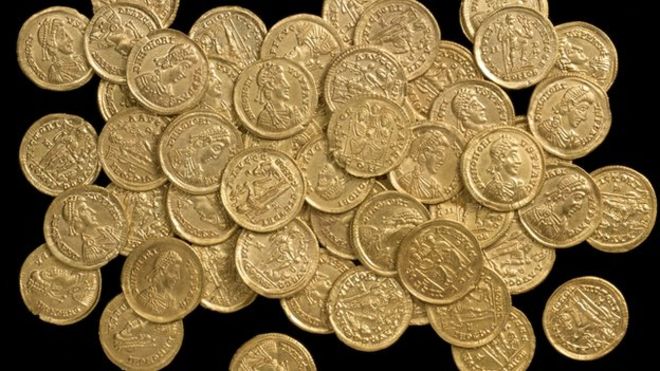 |
|
|
|
Moderator
 United States
23731 Posts |
I would love to have some of those.
|
|
Pillar of the Community
United Kingdom
3626 Posts |
|
|
Pillar of the Community
Canada
1269 Posts |
I'm with you pishpash, I would love to have just one of those.
|
|
Pillar of the Community
United States
5010 Posts |
|
|
Valued Member
United States
129 Posts |
Lucky guy finding that on his first try. I am not terribly familiar with the rules of the Treasure Act. Since there are 159 coins, would/could the museum keep a portion it's purchased and put some up for auction?
|
|
Pillar of the Community
United States
4778 Posts |
Would the finder have been allowed to keep even just one? Or does the law say all of it had to be surrendered?
|
|
Moderator
Australia
17005 Posts |
Quote:
I am not terribly familiar with the rules of the Treasure Act. Since there are 159 coins, would/could the museum keep a portion it's purchased and put some up for auction? They were declared to be "treasure" in 2013 (BBC article at the time here). A "treasure" declaration means they belong to the Crown, not the finder or the landowner. The Crown, however, "rewards" the finder and landowner the value of the coins, as determined by an independent valuer (who usually uses the true collector market vale as the basis for valuation). The Crown usually does not want to keep them directly and wants to make its money back, so offers them up for sale. If a local museum or the British Museum can raise the money to buy them, then they get first dibs. If no museum puts their hand up, then they get put up for public auction. Once the coins no longer belong to the Crown, Treasure laws no longer apply to them and they can be bought and sold just like any other coin. However, once museums acquire specimens, especially ones they had to pay money for and doubly-especially ones they had to go begging to the public to raise the money for, they don't generally sell them. Ever. If a museum closes or is forced to downsize collections, they are usually "sold" to other museums, usually for nowhere near true market value. It's a philosophical thing. None of these coins will ever come onto the open market. Quote:
Would the finder have been allowed to keep even just one? Or does the law say all of it had to be surrendered? No, the entire hoard is declared "treasure". The finder would only get to "keep one" if the coins ended up going to public auction and they used some of their reward money to buy back some of the coins they found. In this case, the museum wanted them all (again, for philosophical reasons), so bought them all. Don't say "infinitely" when you mean "very"; otherwise, you'll have no word left when you want to talk about something really infinite. - C. S. Lewis
|
|
Valued Member
United States
129 Posts |
Thanks for the great explanation.
|
|
Pillar of the Community
United States
2589 Posts |
bankruptcy would be a likely factor in a museum placing coins up for auction
|
|
Pillar of the Community
Australia
1006 Posts |
That is just amazing maybe I should set up a 'museum' then  |
|
Valued Member
United Kingdom
130 Posts |
Quote:
I am not terribly familiar with the rules of the Treasure Act. Since there are 159 coins, would/could the museum keep a portion it's purchased and put some up for auction?
They were declared to be "treasure" in 2013 (BBC article at the time here). A "treasure" declaration means they belong to the Crown, not the finder or the landowner. The Crown, however, "rewards" the finder and landowner the value of the coins, as determined by an independent valuer (who usually uses the true collector market vale as the basis for valuation). The Crown usually does not want to keep them directly and wants to make its money back, so offers them up for sale. If a local museum or the British Museum can raise the money to buy them, then they get first dibs. If no museum puts their hand up, then they get put up for public auction. Once the coins no longer belong to the Crown, Treasure laws no longer apply to them and they can be bought and sold just like any other coin.
However, once museums acquire specimens, especially ones they had to pay money for and doubly-especially ones they had to go begging to the public to raise the money for, they don't generally sell them. Ever. If a museum closes or is forced to downsize collections, they are usually "sold" to other museums, usually for nowhere near true market value. It's a philosophical thing. None of these coins will ever come onto the open market.
I've never heard of coins / artefacts going to public auction ,if they're unwanted by any museum they are returned to the finder & landowner to do whatever they want with.
|
|
Pillar of the Community
1121 Posts |
? ? ?  Edited by Topcat7
05/27/2015 05:50 am
|
|
Valued Member
United Kingdom
201 Posts |
Yes Gooner is correct. I have a specimen going through the treasure process at the moment and have been told by the British Museum that after valuation if a museum does not want to acquire it I will simply get it back.
|
|
Moderator
Australia
17005 Posts |
Ah, I was not aware of this. I was going off Wikipedia, and the wording of the Treasure Act; I assumed the whole "Secretary of State can disclaim the treasure" thing was a rare, exceptional event. But I find, buried inside the 145-page-long Code of Practice appended the act, the following paragraph: Quote:
Although the Secretary of State will be able to use this power at any stage once a find of potential treasure has been reported to the coroner, the normal procedure will be as follows...
If, as a result of this process of consultation, no museum wishes to acquire the object(s), then the national museum will advise the Secretary of State that the Crown's interest in the find should be disclaimed. If the Secretary of State accepts this advice and disclaims the object(s), the British Museum will inform the local museum, the coroner and the finder...
Any objects disclaimed in this way will be treated as though they had never been treasure and will be returned by the coroner. So yes, if the find qualifies as treasure but is deemed unimportant and unwanted by the museums, the normal practice is to allow the finder/landowner to keep it. It still doesn't alter the circumstances surrounding this particular hoard (or any other similarly large, similarly noteworthy hoard), which was handed over to the museum. The finder and landowner get cash, fair market value to be sure, but no actual coins to keep. If the finder wants a solidus as a souvenir of their find, they'll have to take part of their reward money, go down to the coin shop and buy a similar-looking one there that they didn't find. Don't say "infinitely" when you mean "very"; otherwise, you'll have no word left when you want to talk about something really infinite. - C. S. Lewis
|
|
Valued Member
United States
129 Posts |
Do you get taxed on the value of the find if it is returned to you?
|
| |
Replies: 16 / Views: 2,533 |







 Posted 05/26/2015 11:30 am





