Coin Community Family of Web Sites Join Thousands of Coin, Bullion, & Money Collectors
300,000 items to help build your collection! Vancouvers #1 Coin and Paper Money Dealer Shop for APMEX Bullion on eBay!Specializing in Modern Numismatics Coin, Banknote and Medal Collectors's Online Mall Royal Canadian Mint products, Canadian, Polish, American, and world coins and banknotes. Join Thousands of Coin, Bullion, & Money Collectors


Username:
Password:
Save Password
Forgot your Password?


This page may contain links that result in small commissions to keep this free site up and running.

Welcome Guest! Registering and/or logging in will remove the anchor (bottom) ads. It's Free!

Weak Strike Grading

To participate in the forum you must log in or register.
Author Previous TopicReplies: 6 / Views: 1,449Next Topic  
Pillar of the Community
Garoyn's Avatar
United States
513 Posts
 Posted 06/11/2015  12:41 pm Show Profile   Bookmark this topic Add Garoyn to your friends list Get a Link to this Message Number of Subscribers
Okay, I didn't want to resurrect old threads about this, and I didn't see any recent ones. And there are enough newbies and returnees around to re-visit this, anyway. Please link a recent thread, if that's a better angle for discussion.

Two parter (each worthy of its own thread?):

1) How does one grade a weak strike (without going all EAC net on us)?

Just annotate that it is a weak strike? "Details VF-20; weak strike"? Knock a VF details down to a "F"? Look the other way and flip it into the "return to the wild" bin? Donate it to the YN folks and let them cogitate on the meaning of "weak strike"? (oh, how does one take a tax write-off for the value of a YN donation--oops, completely different topic)

What do the third-party grading services do with a weak strike coin grade, especially non-MS grades? Charge double?

2) How does one tell the difference between wear and weak strike?

I always thought that a primary indicator is "balance." If parts of a coin side are mushy and parts are sharp, that's a good tell for a weak strike. Or if the obverse is strong and the reverse is mushy, that could be a weak strike. Wear is generally balanced. But that doesn't always work, does it?

Thanks for perspectives, cogitations, and random ramblings!
Pillar of the Community
United States
1554 Posts
 Posted 06/11/2015  1:03 pm  Show Profile   Bookmark this reply Add 1893S to your friends list Get a Link to this Reply
1) Weak strikes are not net graded, it doesn't matter if they are slabbed or not.
2) Years of experience and a good understanding of the coin series in respect to which dates had weak strikes. Or, how weak strikes appear on the coin series you are looking at/buying etc.
Edited by 1893S
06/11/2015 2:29 pm
Pillar of the Community
dbrablec's Avatar
United States
1944 Posts
 Posted 06/11/2015  3:03 pm  Show Profile   Bookmark this reply Add dbrablec to your friends list Get a Link to this Reply
sometime I can't keep up with all the acronym's. what does EAC - stand for?
Pillar of the Community
United States
1554 Posts
 Posted 06/11/2015  3:36 pm  Show Profile   Bookmark this reply Add 1893S to your friends list Get a Link to this Reply
Early American Copper
Bedrock of the Community
Learn More...
panzaldi's Avatar
United States
18657 Posts
 Posted 06/11/2015  9:00 pm  Show Profile   Bookmark this reply Add panzaldi to your friends list Get a Link to this Reply
To me a weakly struck coin came from the mint that way. The day it was struck it exhibited it therefore if it can be determined that it is in fact a weak strike one really cant tick the grade down for it since it is in reality not true wear. Value may be affected to some degree Imo. How much is open for debate. For me the sometimes corroded planchets on early coppers could also be considered the same way. The day it came out if the mint that condition was already there. Non corroded or fully struck coins that are known to exhibit these definlciencies would command a premium
Pillar of the Community
amida17's Avatar
United States
4897 Posts
 Posted 06/11/2015  9:09 pm  Show Profile   Bookmark this reply Add amida17 to your friends list Get a Link to this Reply

Quote:
2) Years of experience and a good understanding of the coin series in respect to which dates had weak strikes. Or, how weak strikes appear on the coin series you are looking at/buying etc.


This! Very much!

Really the only way.....look at as many of a series as you can....oh......and read all you can about the series.....you WILL have these little epiphanic, "Oh! I get it!", moments.....
Pillar of the Community
TypeCoin971793's Avatar
United States
6370 Posts
 Posted 06/11/2015  10:33 pm  Show Profile   Bookmark this reply Add TypeCoin971793 to your friends list Get a Link to this Reply
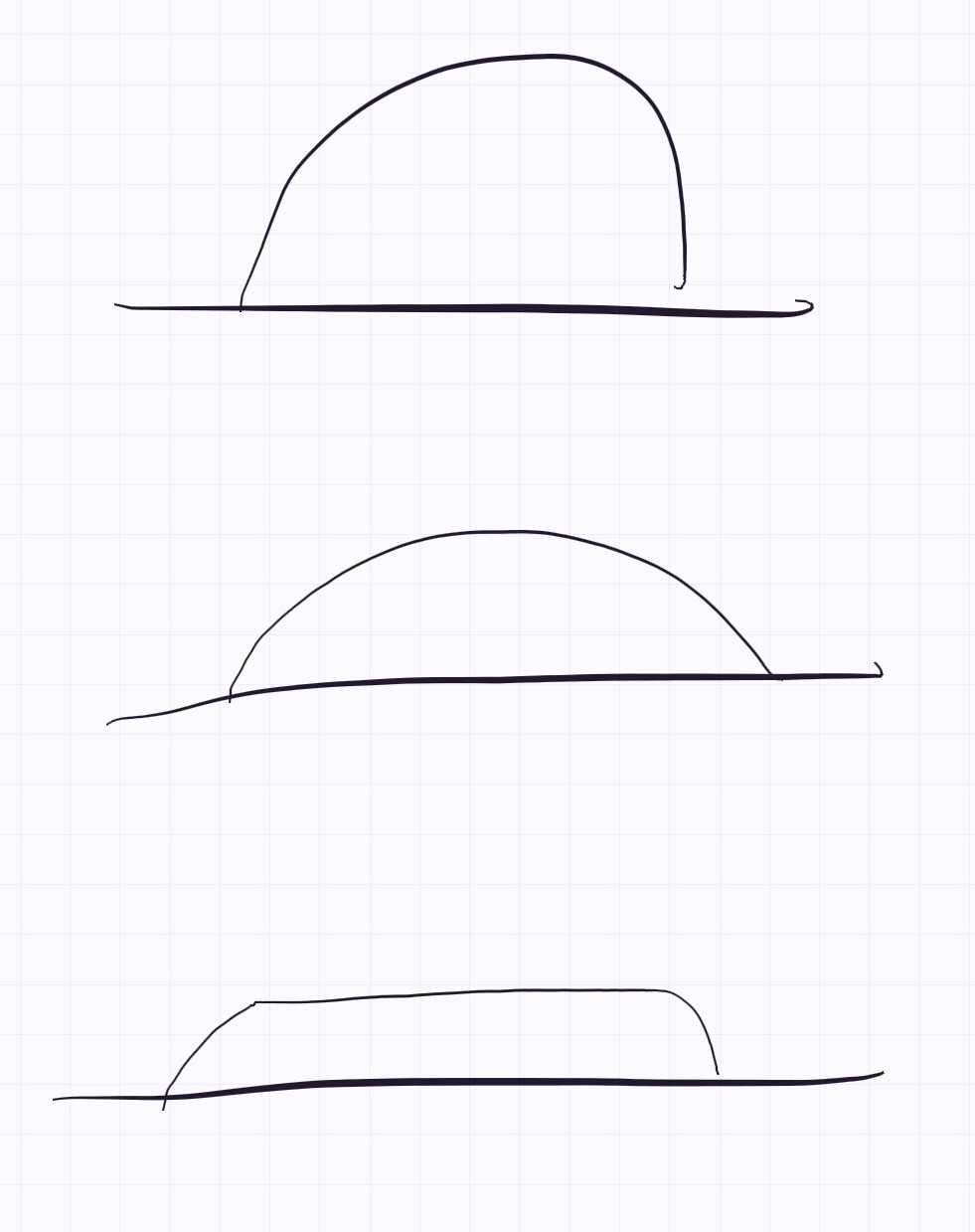
As Bill Fivaz put it, the way to tell the difference between a weak strike and wear is the cross-sectional shape of the surface in question. In a full strike, the coin's metal gets pushed all the way into the die, creating a sharp, distinct image (see the top example). In a weak strike, the softer areas are rounded since they formed a bit to the crevaces in the die, but not all the way, so the image is there, but not sharp and crisp (see the middle example). If there is wear, then the weak area is flat (which Bill Fivaz calls the plateau effect) (see the bottom example).

Weak-Strike-Grading
  Previous TopicReplies: 6 / Views: 1,449Next Topic  

To participate in the forum you must log in or register.


Disclaimer: While a tremendous amount of effort goes into ensuring the accuracy of the information contained in this site, Coin Community assumes no liability for errors. Copyright 2005 - 2026 Coin Community Family- all rights reserved worldwide. Use of any images or content on this website without prior written permission of Coin Community or the original lender is strictly prohibited.
Contact Us  |  Advertise Here  |  Privacy Policy / Terms of Use

Coin Community Forum © 2005 - 2026 Coin Community Forums
It took 0.26 seconds to rattle this change. Forums