



Coin Community Family of Web Sites Join Thousands of Coin, Bullion, & Money Collectors
300,000 items to help build your collection! Shop for APMEX Bullion on eBay!Specializing in Modern Numismatics Coin, Banknote and Medal Collectors's Online Mall Royal Canadian Mint products, Canadian, Polish, American, and world coins and banknotes. Join Thousands of Coin, Bullion, & Money Collectors Vancouvers #1 Coin and Paper Money Dealer


Username:
Password:
Save Password
Forgot your Password?


This page may contain links that result in small commissions to keep this free site up and running.

Welcome Guest! Registering and/or logging in will remove the anchor (bottom) ads. It's Free!

Why Did The Sugar-Plum Fairies Dance?

To participate in the forum you must log in or register.
Author Previous TopicReplies: 2 / Views: 1,250Next Topic  
Valued Member
Pistareen's Avatar
United States
309 Posts
 Posted 06/25/2015  8:15 pm Show Profile   Bookmark this topic Add Pistareen to your friends list Get a Link to this Message Number of Subscribers
Now you know.

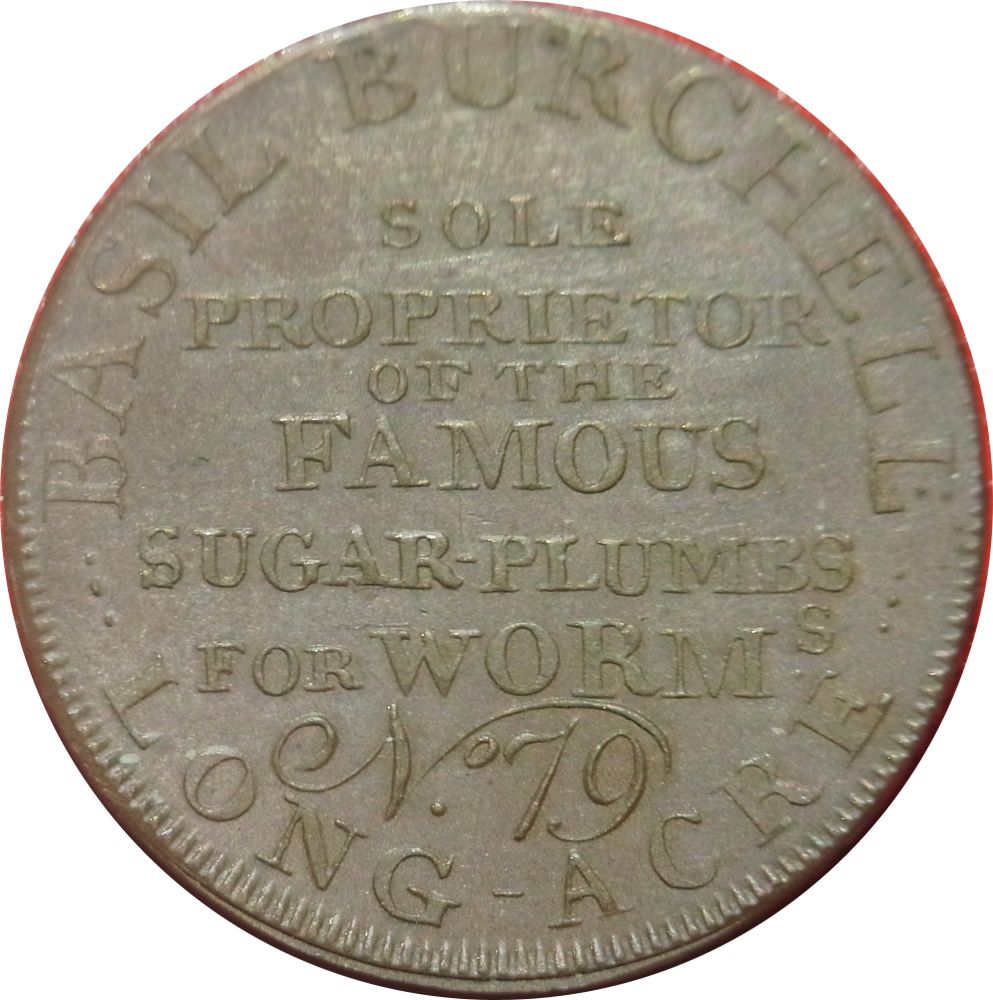
What year was this delightful token issued and what do you suppose was the active ingredient in the yummy "sugar-plumb" recipe, lethal to parasites, yet suitable for children in ye good olde days? Is there a clue in the way they spelled "plum" as "plumb" calling to mind lead weights on a string? What say you?


Why-Did-The-Sugar-Plum-Fairies-Dance?

Why-Did-The-Sugar-Plum-Fairies-Dance?
Moderator
Learn More...
Sap's Avatar
Australia
16827 Posts
 Posted 06/25/2015  8:59 pm  Show Profile   Bookmark this reply Add Sap to your friends list Get a Link to this Reply
A "sugar-plum" is an old-fashioned phrase for a piece of hard-boiled candy; it has nothing to do with "plums" (the fruit) and everything to do with "sugar". The proprietor in question was not known for his excellent spelling and grammar skills, as evident by the wording found in advertisements for these particular medications which can be found on this website.

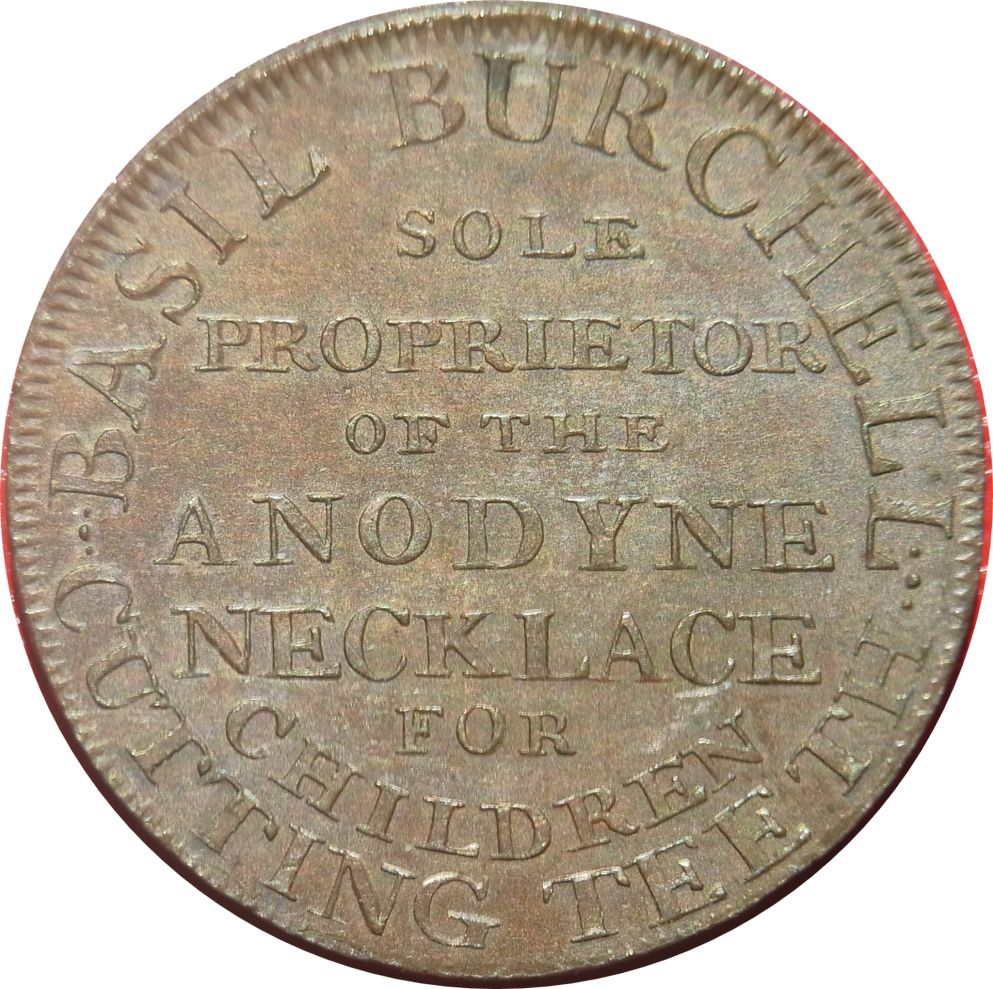
The "anodyne necklace" on the back was sheer medical quackery, no more than a magic charm, and I suspect the "sugar-plumbs for worms" were as well. The advertisement says that they "...have only the taste of fine sugar, and are as innocent and easy to take as a common sugar-plumb from the confectioner's.". I suspect there's a good reason why they tasted just like sugar: they were only sugar, no other active ingredients required or necessary. I suppose it may have contained lead acetate (which tastes sweet so might not be detectable in a hard candy) but we can't derive its presence or absence from the spelling of "plumb".

As for the issue date, all the references I can find indicate "late 1700s", at about the same time as other Conder tokens.
Don't say "infinitely" when you mean "very"; otherwise, you'll have no word left when you want to talk about something really infinite. - C. S. Lewis
Pillar of the Community
Circus's Avatar
United States
3079 Posts
 Posted 06/25/2015  9:07 pm  Show Profile   Bookmark this reply Add Circus to your friends list Get a Link to this Reply
http://www.rarecoinsandtokens.co.uk...ducts_id=353
Henbane root was a charm used in the 18th century, for childern
http://thequackdoctor.com/index.php...sugar-plums/

Scroll down and it talks about the token
Edited by Circus
06/25/2015 9:09 pm
  Previous TopicReplies: 2 / Views: 1,250Next Topic  

To participate in the forum you must log in or register.


Disclaimer: While a tremendous amount of effort goes into ensuring the accuracy of the information contained in this site, Coin Community assumes no liability for errors. Copyright 2005 - 2026 Coin Community Family- all rights reserved worldwide. Use of any images or content on this website without prior written permission of Coin Community or the original lender is strictly prohibited.
Contact Us  |  Advertise Here  |  Privacy Policy / Terms of Use

Coin Community Forum © 2005 - 2026 Coin Community Forums
It took 0.2 seconds to rattle this change. Forums