Coin Community Family of Web Sites Join Thousands of Coin, Bullion, & Money Collectors
Royal Estate Auctions - $1 Coin AuctionsCoin, Banknote and Medal Collectors's Online Mall Specializing in Modern Numismatics 300,000 items to help build your collection! Vancouvers #1 Coin and Paper Money Dealer Royal Canadian Mint products, Canadian, Polish, American, and world coins and banknotes. Join Thousands of Coin, Bullion, & Money Collectors


Username:
Password:
Save Password
Forgot your Password?


This page may contain links that result in small commissions to keep this free site up and running.

Welcome Guest! Registering and/or logging in will remove the anchor (bottom) ads. It's Free!

NGC Ancients: With Ancients, Rarity Is Common

To participate in the forum you must log in or register.
Author Previous TopicReplies: 5 / Views: 4,064Next Topic  
Press Manager
Learn More...
CCFPress's Avatar
United States
1420 Posts
 Posted 08/13/2015  1:29 pm Show Profile   Bookmark this topic Add CCFPress to your friends list Get a Link to this Message Number of Subscribers
NGC - Rare ancient coins aren't necessarily expensive.

If one thing can be said of ancient coins it's that "rarity is common". This may sound like a misstatement, a contradiction, or even something that Yogi Berra might have said, but it is a truthful declaration.

The reason? There are so many types of ancient coins, and often so many varieties within each type, that the field of ancient coins is rife with rarities. Indeed, rarity is so common within our field that the only way it can significantly impact market value is if the rarity has meaningful context.
NGC-Ancients:-With-Ancients,-Rarity-Is-Common

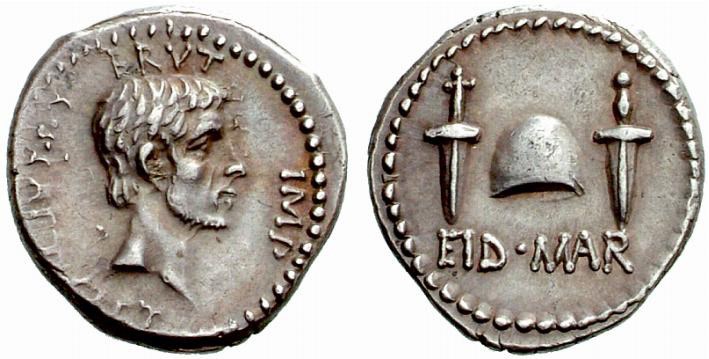
For example, if you want an 'Eid Mar' denarius that Brutus struck in 42 B.C. in celebration of his murder of Julius Caesar, you will have to part with more than $100,000 to get an attractive example in Choice Very Fine or better. The example shown above brought about $275,000 at public auction in 2007.

That is a strong price for an ancient coin of which more than 100 examples are known. By comparison, for less than $100 you can routinely acquire ancient Greek or Roman coins in silver or bronze of which ten or fewer examples are known. Some of these coins may even be unrecorded or unique, yet many such coins still have a low price tag.

Below are six ancient coins of great rarity-all seemingly unpublished in any standard reference. Every one of them has sold during this year for less than $100 at well-publicized auctions held by a major firm.

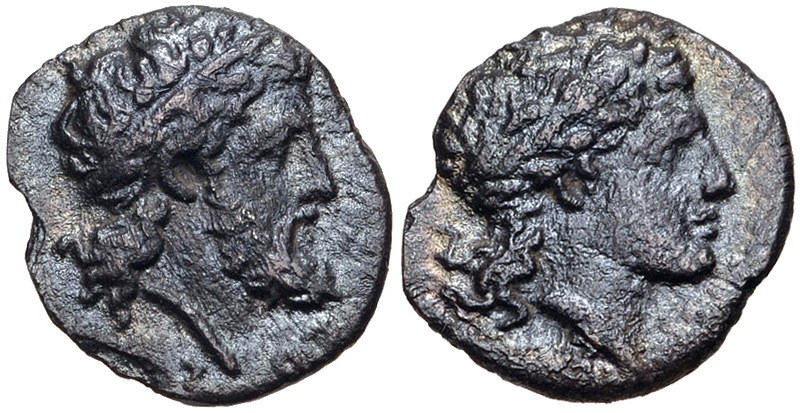
This silver obol of an uncertain mint in Cilicia, struck in the 4th century B.C., bears the finely styled heads of the gods Zeus and Apollo.
NGC-Ancients:-With-Ancients,-Rarity-Is-Common

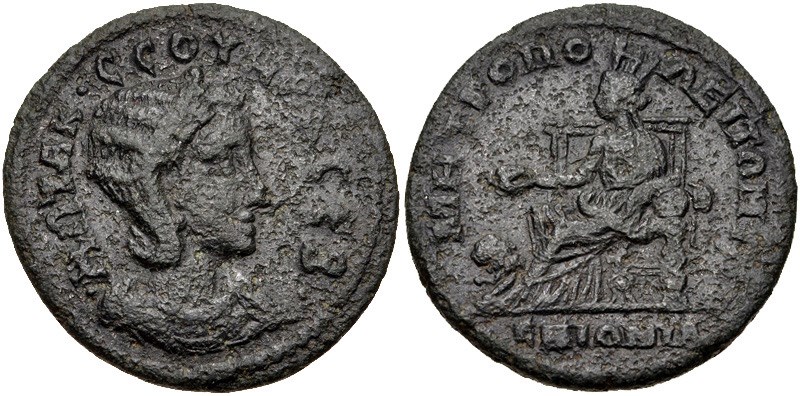
Struck for the city of Metropolis in Ionia, this bronze shows the portrait of the Roman Empress Otacilia Severa (A.D. 244-249) and the seated figure of Magna Mater (Cybele) with a lion at her feet.
NGC-Ancients:-With-Ancients,-Rarity-Is-Common

This silver hemidrachm from the Thracian Chersonesus, struck in the 4th Century B.C., depicts a lion; the symbols on its reverse are perhaps unpublished for the issue.
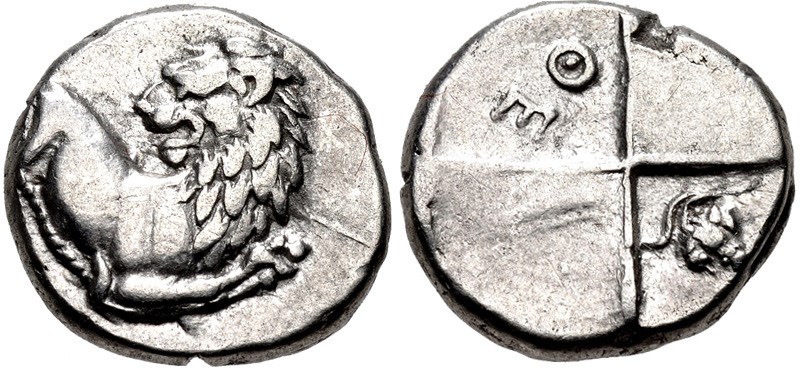
NGC-Ancients:-With-Ancients,-Rarity-Is-Common

The portrait of the Roman Emperor Caracalla and the seated figure of the goddess Demeter appear on this bronze coin from the city of Nicaea in Bithynia.
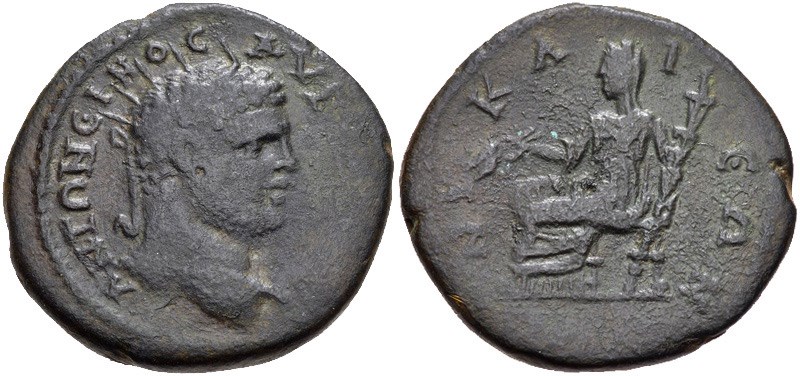
NGC-Ancients:-With-Ancients,-Rarity-Is-Common

This silver obol was struck in the 5th Century B.C. at an uncertain mint in Asia Minor. It shows on its obverse the facing head of an animal—seemingly a lion or a wolf.
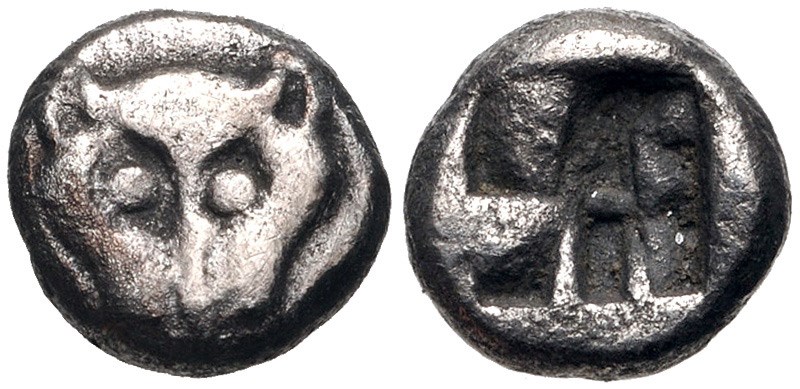
NGC-Ancients:-With-Ancients,-Rarity-Is-Common

Struck for the city of Damascus in Syria during the reign of the Roman Emperor Volusian (A.D. 251-253), this bronze coin bears the emperor's portrait and a temple containing the bust of the goddess Tyche and a leaping ram.
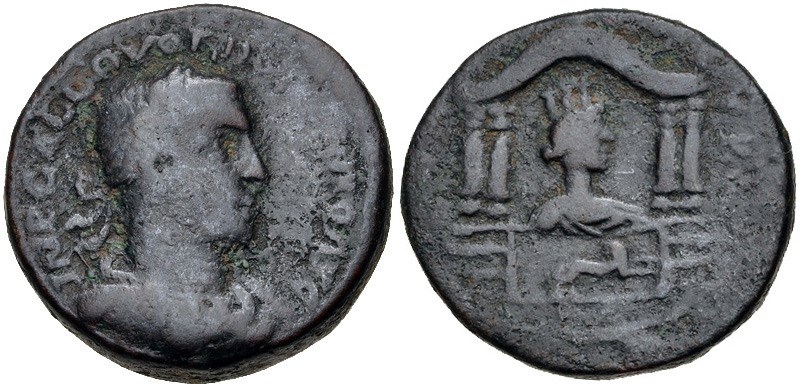
NGC-Ancients:-With-Ancients,-Rarity-Is-Common

The stark difference in value is easy to explain: so many people dream of owning an 'Eid Mar' denarius, yet relatively few people seek out unrecorded variants of the many thousands of different types of ancient Greek and Roman coins that exist.

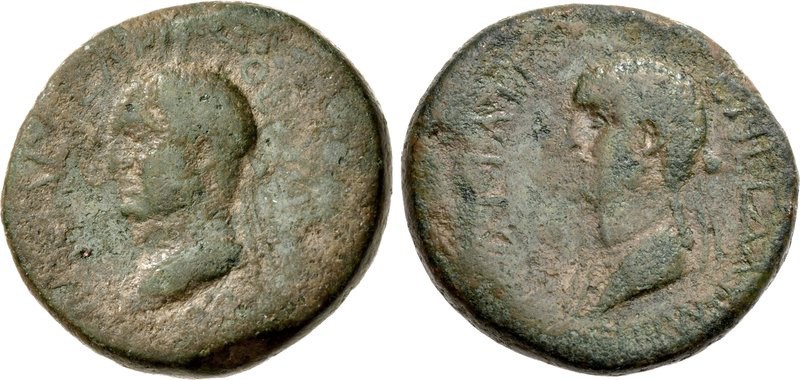
Another extremely rare ancient coin is worth showing (below) because it fetched more than $50,000 at auction in May of 2014, despite its modest condition. In this case rarity is a factor in its high price because it has context: the coin bears on its reverse the portrait of the Biblical-era figure Salome. She is infamous for demanding the severed head of John the Baptist from King Herod Antipas in return for performing a risque dance.
NGC-Ancients:-With-Ancients,-Rarity-Is-Common

Does this mean collectors, dealers and scholars who specialize in ancient coins don't care about rarity unless it is accompanied by a spectacular story? Not at all. It just means that rarities are so commonly encountered that rarity, alone, does not translate into meaningfully higher values. Simply put: collectors of ancients do not prize rarity just for rarity's sake.

The same can be said for some modern world coins. For example, a 1976 proof gold coin of the Bahamas of the $200 denomination, for which a mintage of just 168 is recorded—a rare coin by most any standard!—sold this year at auction for just 12% over melt value. Why?: There is low demand for such coins, almost no matter how rare they are.

By contrast, any regular-issue US coin with a mintage of just a few hundred pieces will be quite valuable. No matter how obscure the series, it will be a 'key' coin. Since so many people collect US coins—and they do so systematically, wanting to build 'complete' sets—there is bound to be strong competition for any such coin.

Even if ancient coins are daily becoming more popular, the vastness of the field assures that almost no matter how many people take up the pursuit, relatively obscure rarities in modest condition will never command very strong prices.

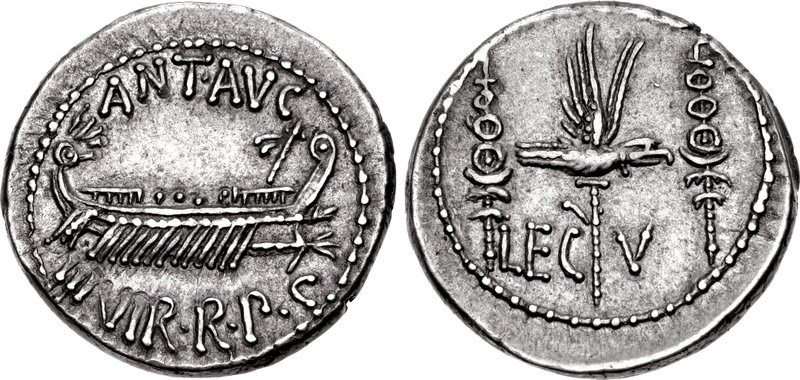
If anything, the opposite is the trend of recent times. By no means are rarities ignored, yet it is normal nowadays for common—yet popular—types in high grade to bring increasingly higher prices. This is quite different than the focus of collectors a century ago, for whom rarity was king and condition was of secondary importance.
NGC-Ancients:-With-Ancients,-Rarity-Is-Common

A perfect example (shown above) is a 'legionary denarius' of Marc Antony—a classic coin type of which many tens of thousands of examples have survived the ravages of time. In low grade they can readily be obtained for less than $100. This piece, however, brought more than $4,600 because it is beautifully struck and is well preserved.

Moderator
Learn More...
echizento's Avatar
United States
23731 Posts
 Posted 08/13/2015  1:39 pm  Show Profile   Bookmark this reply Add echizento to your friends list Get a Link to this Reply
Excellent article.
Pillar of the Community
orfew's Avatar
Canada
1269 Posts
 Posted 08/13/2015  4:33 pm  Show Profile   Bookmark this reply Add orfew to your friends list Get a Link to this Reply
Very interesting article. I have a rare (R5) of Constantine and only paid 20 USD for it. However, 2 coins I have been searching for are both rare and expensive. They include denarii of Claudius and Caligula. Fortunately I have found the Claudius. Also, I am looking for a portrait denarius of Julius Caesar. Because of his popularity as an historical figure this is a case where his coins can be readily found but are quite expensive.
Pillar of the Community
chrsmat71's Avatar
United States
4966 Posts
 Posted 08/14/2015  5:47 pm  Show Profile   Bookmark this reply Add chrsmat71 to your friends list Get a Link to this Reply
probably most of us have a handful (or two) rare coins.

here are some of my rare coins...that no one is particularly excited about.

NGC-Ancients:-With-Ancients,-Rarity-Is-Common

NGC-Ancients:-With-Ancients,-Rarity-Is-Common

NGC-Ancients:-With-Ancients,-Rarity-Is-Common
Pillar of the Community
orfew's Avatar
Canada
1269 Posts
 Posted 08/14/2015  6:32 pm  Show Profile   Bookmark this reply Add orfew to your friends list Get a Link to this Reply
Chris, what are those? Can you provide some more information?
Valued Member
Gallienus's Avatar
United States
167 Posts
 Posted 08/18/2015  12:08 am  Show Profile   Bookmark this reply Add Gallienus to your friends list Get a Link to this Reply
One thing that couples price with rarity in the Roman series is a coin of a "rare emperor". For example Nepotian. He looks pretty much like any other mid-latter 4th century Emperor, yet apparently his coins are expensive because people don't have a Nepotian who want one.

Recently I've watched a large number of Zombie & "End of the World" movies. Coupled with all the crazies who think that we're approaching a decline in the strength of the United States of America, I think there is more speculation and sci-fi movies about "end times" these days.

Recently I've become a little interested in Roman coins of their "End Times". Two attempts at "End Times" Roman coins ended in failure when I missed a superb siliqua of Constantine III (at a modest price little more than a superb siliqua of Gratian would be) and a superb (finest known?) solidus of Johannes (sold by NAC at the opposite of a modest or even a fair price). I missed out on getting a decent Romulus Augustus many years ago but recently got a Julius Nepos, 1st reign of 474 - 475 AD, his immediate predecessor. Technically Julius Nepos is the last true Western Roman Emperor as Romulus Augustus was never recognized by the East. Unfortunately, like the Johannes, I had to pay much more than this coin would have cost 10 or 15 years ago, but not a crazy price (IMO).

In some ways the internet promotes the spread of information and one can become more aware of rare items than before the internet age.
NGC-Ancients:-With-Ancients,-Rarity-Is-Common

Yes technically rarity can be cheap in that as all Roman coins are different, even a common worn AE3 of the Constantine era is unique but also inexpensive. Yet also certain coins, like superb solidii of Johannes or Romulus Augustus or hopefully one day Julius Nepos, are being recognized for being far rarer than the bulk commodity pieces of the 5th century. Thus I think there are opportunities if one researches the possible historical importance and the rarity of the coin. Don't want to spend $100 K on a nice Romulus Augustus? Buy a much cheaper Nepos & make the case that he's technically the last legitimate emperor!
  Previous TopicReplies: 5 / Views: 4,064Next Topic  

To participate in the forum you must log in or register.


Disclaimer: While a tremendous amount of effort goes into ensuring the accuracy of the information contained in this site, Coin Community assumes no liability for errors. Copyright 2005 - 2026 Coin Community Family- all rights reserved worldwide. Use of any images or content on this website without prior written permission of Coin Community or the original lender is strictly prohibited.
Contact Us  |  Advertise Here  |  Privacy Policy / Terms of Use

Coin Community Forum © 2005 - 2026 Coin Community Forums
It took 0.29 seconds to rattle this change. Forums