| Author |
 Replies: 8 / Views: 2,085 Replies: 8 / Views: 2,085 |
|
|
Valued Member
Slovenia
459 Posts |
One of the great things about coins, for me, is asking yourself the question: 'how did that get here?'. Inspecting all the change I get on daily basis, this question pops in my mind quite offen. Sometimes I can answer it myself ... Other times I'm posting here  So ... I found this 2002F Germany 2€ coin that has a nice unbroken circle in the inner core - through the eagle's head, tip of the wings and all around to the date and mintmark at the bottom. A similar, but not so evident thing can be observed on the obverse. At first I thought it could be a die clash, but than again - of what? What do you think? Error or post mint damage? Thank you  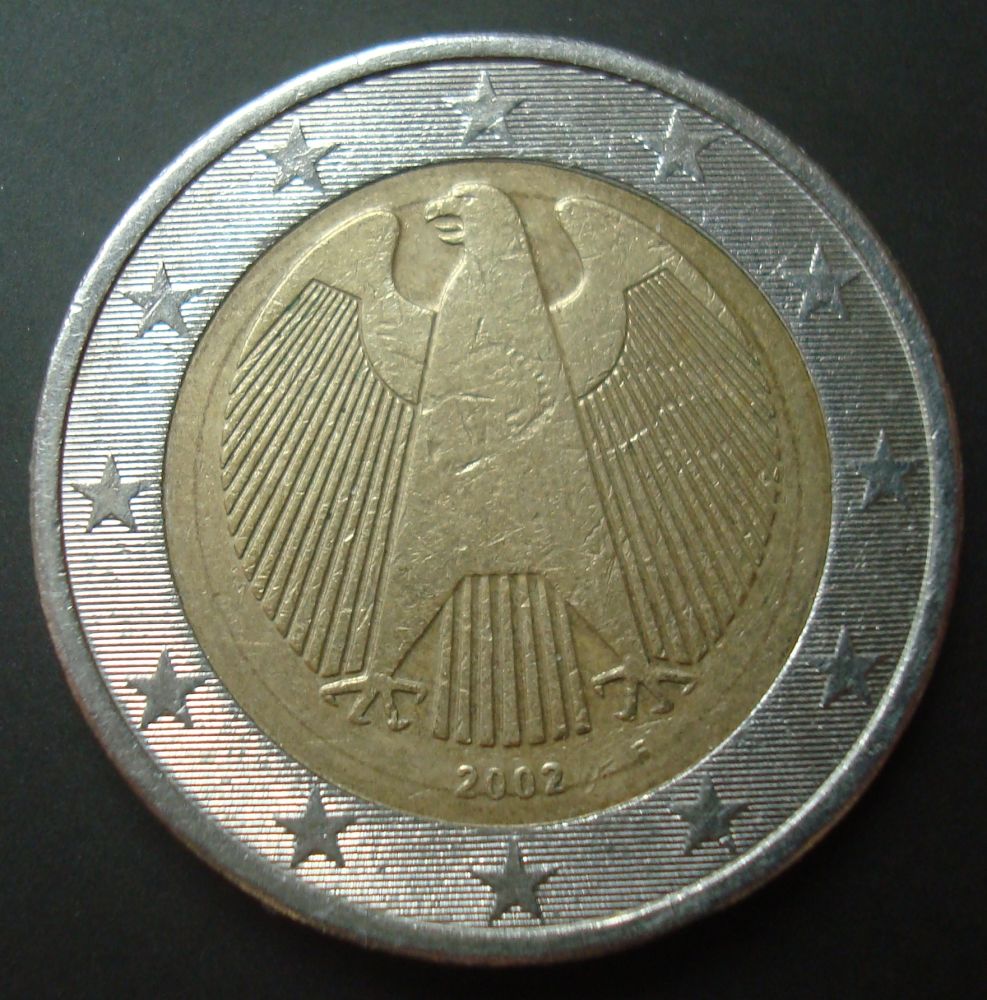 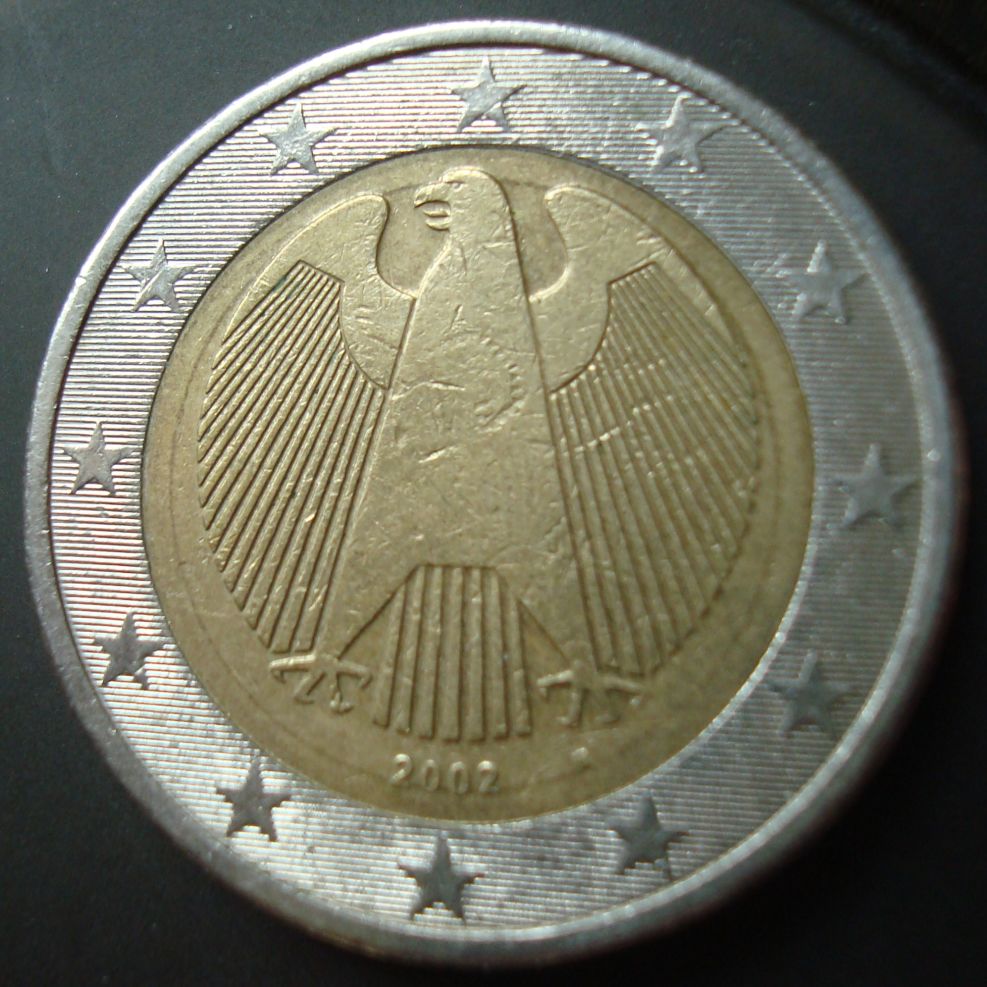 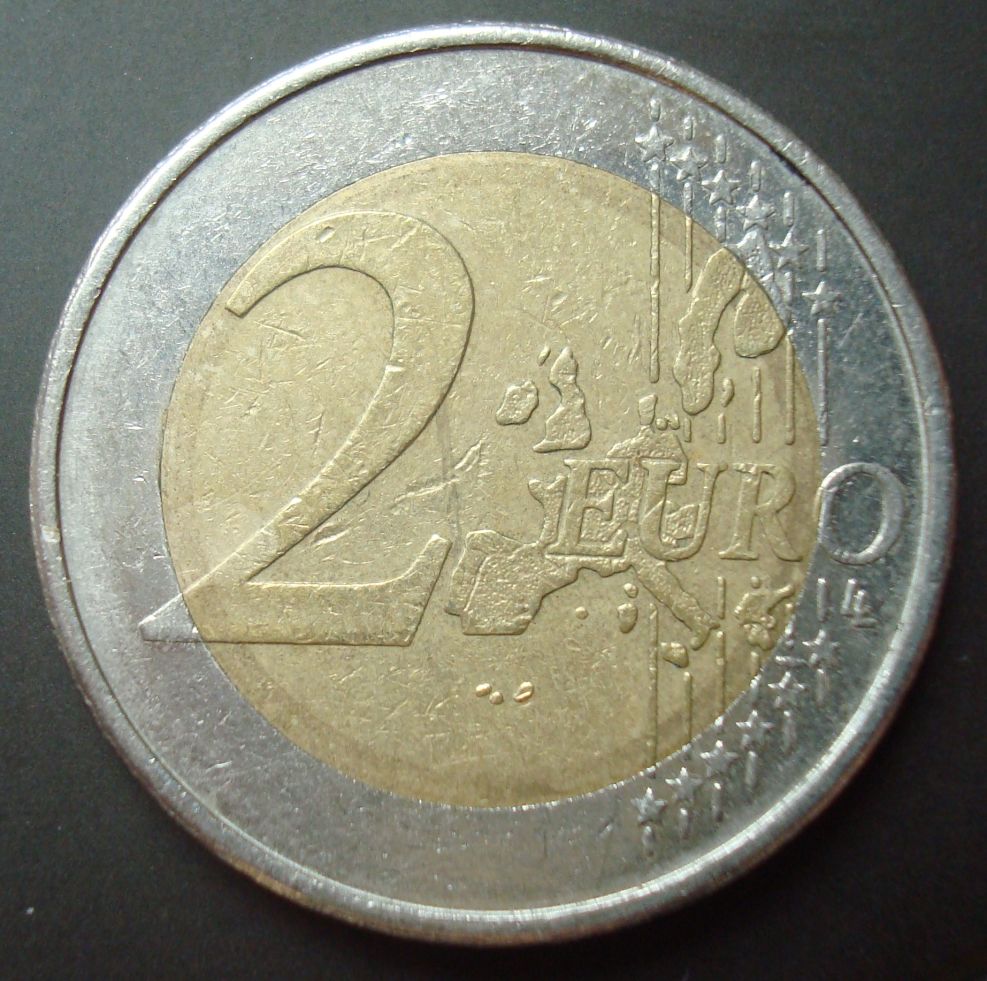 |
|
|
|
Valued Member
United States
108 Posts |
Looks like it might be an error on the original core press, before it went to the mating press.The eagle's head and the 2 both break the ring's continuity.
|
|
Valued Member
 Slovenia
459 Posts |
I'm not sure I understood your post ... Are you saying that the error or 'error' (or, well, the thing we're seeing here) happened when the inner part - planchet- was made?
|
|
Valued Member
United States
108 Posts |
Yeah, I would think so. It's just a blank slug set in the outer ring, which is crimped down on it. Pattern comes from the second press. I'd say the ring had to be there when the two were mated.
|
|
Valued Member
Slovenia
459 Posts |
Interesting. Thank you :)
|
|
Valued Member
Belgium
83 Posts |
Frankly speaking and thinking out of the box, have you considered the equipment that packages the pieces into a neat bankroll?
To form the ends of the bankroll, you need a sort of pusher, that can come in contact with the actual coins leaving a circle that is concentric to the actual coin. This phenomenon is seen often on pieces of 10 franks of Belgium, type Elstrom (circulated from 1969 to 1980).
|
|
Valued Member
Slovenia
459 Posts |
Hm, that also is an interesting thought. I've seen partial circles on newer circulated euro coins before, mostly on higher face values. Those semi-circles look like 'damaged' or scratched luster ...
But while I really like your idea, I can't seem to imagine how rolling equipment could affect both sides of a coin.
|
|
Valued Member
Belgium
83 Posts |
You are right, the rolling equipement will only affect one side of the coin beginning the roll and one side of the coin at the end of the roll (since this rolling equipment is used at both sides of the roll). Since the actual coins should be balanced there is a 50% chance for each side to be facing the outside of the roll (no, there is no preferred direction since the rolling is not done directly after the mint press!) Normally, the rolling equipment should be finetuned not to touch the coins, but there is proof of coins that have those typical rings... This explains the ring you see on the obverse (eagle-side). However, the European side or reverse looks more like a discoloration because another smaller coin was in contact with the 2 euro coin during "aging"
|
|
Valued Member
Slovenia
459 Posts |
Jupke: thank you for your thoughts; the rolling equipment theory seems quite logical now ... Previously I assumed the circles on obverse and reverse came from the same source. If you ever came by a coin with, or a photo of those rings as you've mentioned , I'd really like to see them.
|
| |
Replies: 8 / Views: 2,085 |
|







 Posted 08/24/2015 02:55 am





