| Author |
 Replies: 11 / Views: 2,139 Replies: 11 / Views: 2,139 |
|
|
Valued Member
United States
264 Posts |
I have found the following information regarding the 1909 George B Cortelyou Assay Medal. I am thinking that mine is one of the unknown number restrikes based on the "less distinct" comment in the Wikipedia entry below. The obverse of the 1909 issue, depicting Treasury Secretary George Cortelyou, was reused as Cortelyou's entry in the Mint's series of medals honoring Secretaries of the Treasury. The later pieces were struck with a blank reverse, but in the early 1960s, the reverse design from the Assay Commission issue was used with the Cortelyou obverse, and an unknown number sold to the public. The restrikes are said to be less distinctly struck than the originals. Any ideas? Has anyone seen an original that I could compare it to? 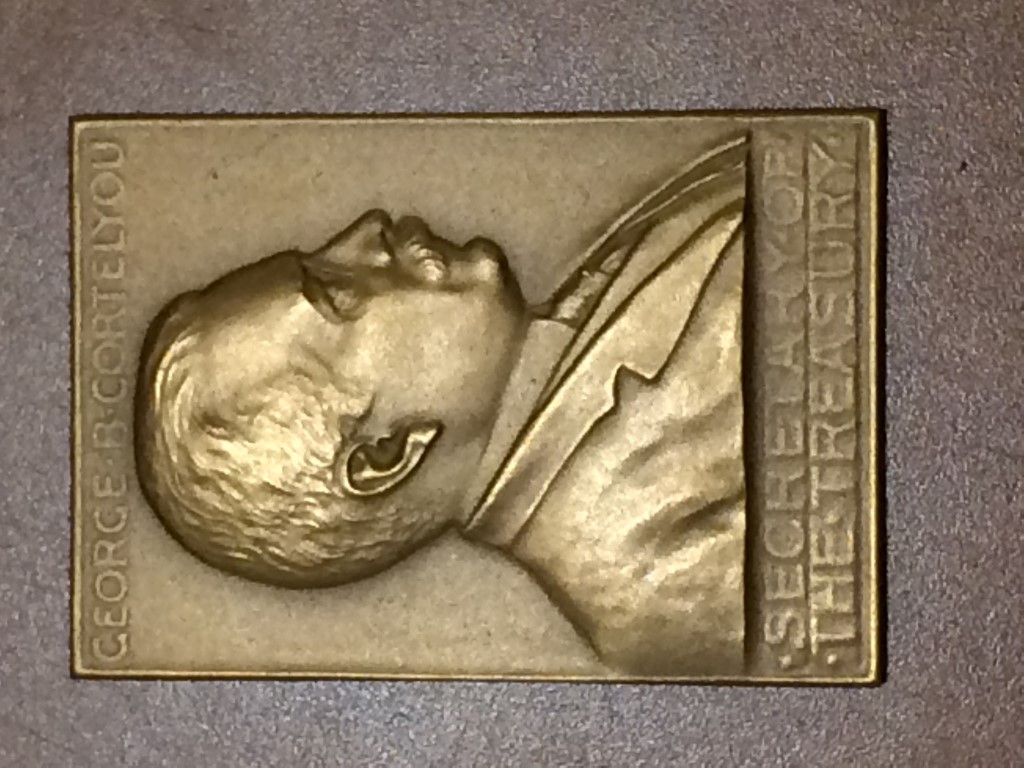 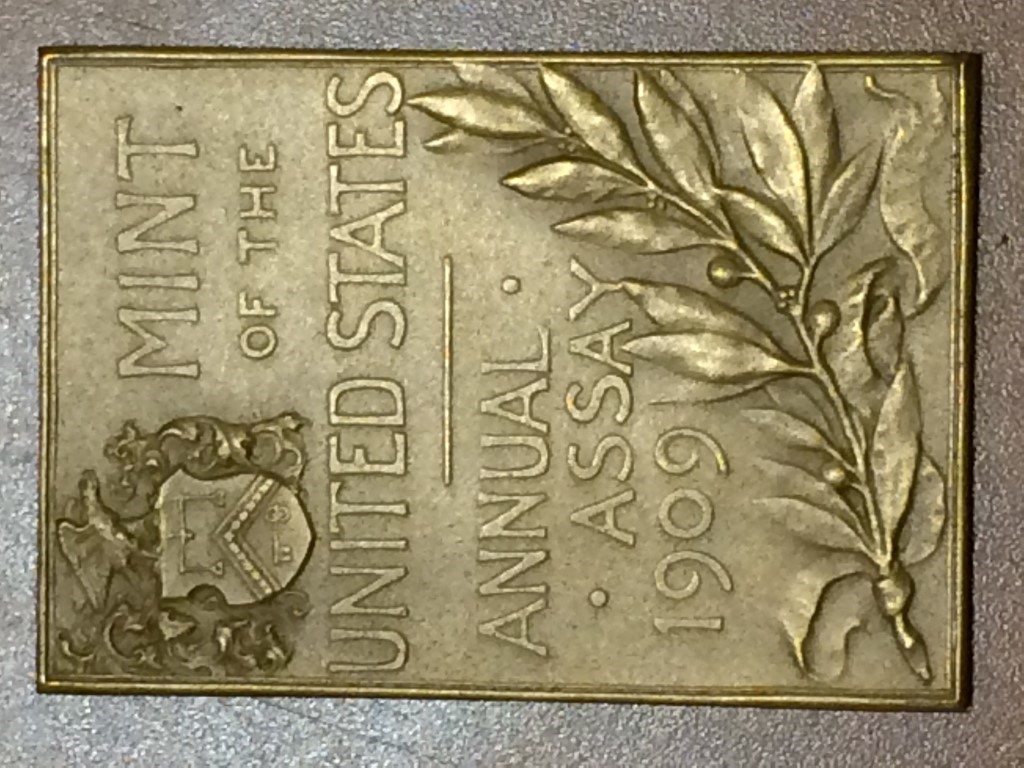 |
|
|
|
Pillar of the Community
Belgium
2895 Posts |
Link?
Why do you suspect it is a restrike?
Edited by Petrus
09/09/2015 3:39 pm
|
|
Valued Member
 United States
264 Posts |
The reverse looks a little "soft" which is how it says the restrikes that were issued without the intended blank reverse can be identified. However, I don't have a photos of an original to compare the two reverses.
|
|
Valued Member
United States
264 Posts |
|
|
Pillar of the Community
Belgium
2895 Posts |
|
|
Valued Member
United States
264 Posts |
No, definitely bronze. Just some funky lighting in the room where I took the picture, I think. I can definitely see more detail in the one up for bid at the Stacks in your last link. I found a restrike that sold on ebay, that look the same as mine so I am pretty sure it is not an original. http://www.ebay.com/itm/1909-Annual...em542142da94 |
|
Valued Member
United States
264 Posts |
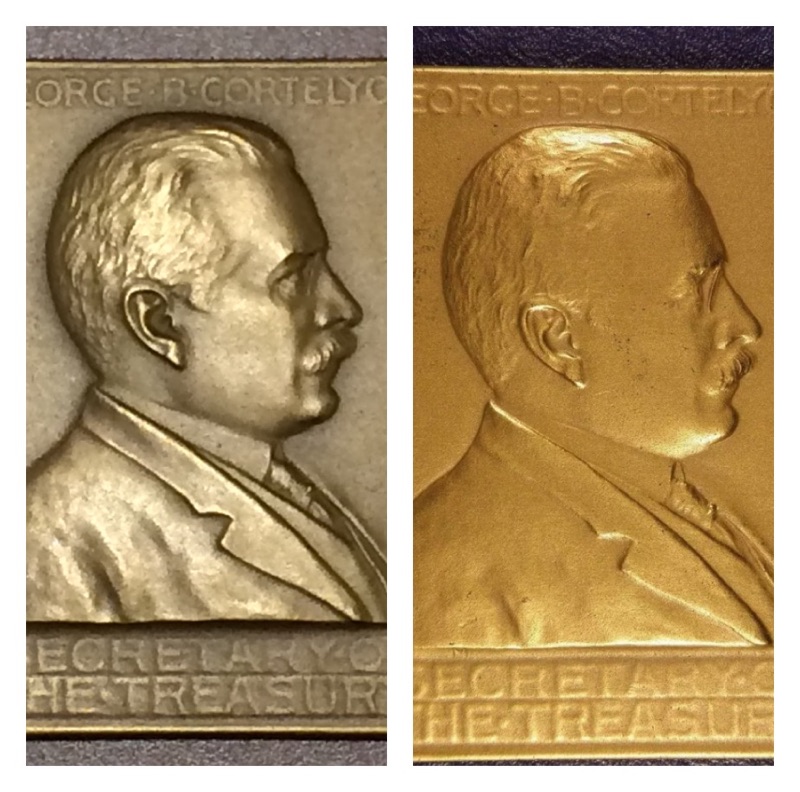
Petrus, Your question as to why I thought it was a restrike got me thinking. I found one that sold on ebay as a restrike and put it side-by-side with my medal. I do think mine looks much sharper? Also the comments on identifying a restrike mention contact marks marks on the cheek and to the rear of head which mine do not seem to have. any thoughts now that you see them compared? |
|
Valued Member
United States
264 Posts |
|
|
Pillar of the Community
United States
4409 Posts |
I emailed someone who is pretty knowledgeable about exonumia about this medal. It may take time for him to respond; if he does I'll let you know what he says.
-MV
Edited by MeadowviewCollector
09/12/2015 3:33 pm
|
|
Valued Member
United States
264 Posts |
Thank you. Interested to see what he says
|
|
Pillar of the Community
United States
4409 Posts |
The guy I emailed said he wasn't aware of a way to tell the original from a restrike. He then forwarded my question to a gentleman who he thought might know about this. The second guy replied Quote:
I regret to say that I have no real knowledge on this point. I do know that when John Pittman was on the Assay Commission he asked to buy certain medals and discovered that, by accident, the Mint had struck the Cortelyou medal with both obverse and reverse of the Assay medal, instead of just the obverse as should have been the case. The original was treated by sandblasting but perhaps the later ones vary in some way. I have not compared these medals so can only speculate.
There would not have been all that many of the restrikes sold because Pittman brought the matter to the Mint's attention and the error pieces were immediately withdrawn from sale. Pittman personally told me the story and I have no reason to doubt the accuracy. I do not, however, recall when John was on the Commission but I suppose it was the late 1950s or some time in the 1960s. ---RWJ |
|
Valued Member
United States
264 Posts |
Thank you for all of your effort. I did want to put it up for sale, but did want to misrepresent the item. Will have to give it some thought. Thanks again.
|
| |
Replies: 11 / Views: 2,139 |
|










 Posted 09/09/2015 4:10 pm