| Author |
 Replies: 9 / Views: 1,321 Replies: 9 / Views: 1,321 |
|
|
Valued Member
United States
166 Posts |
Hello All: I am trying to learn how to discern a fake copper patina from an original suface. Does anyone have any thoughts on this example? Thanks for reading, comments would be greatly appreciated. 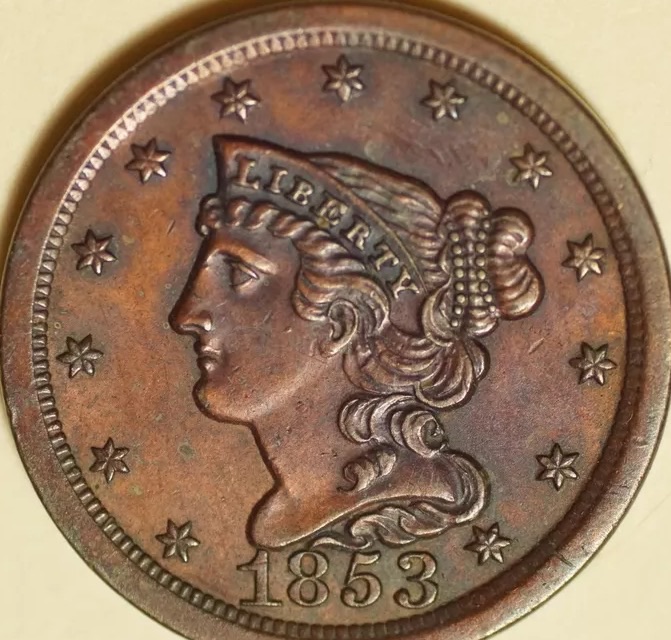 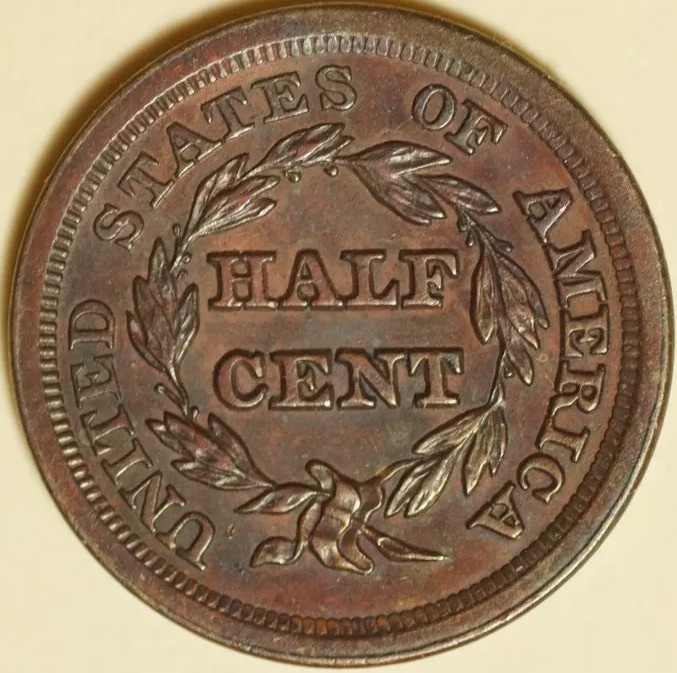 Edited by Krusti-Koin
11/16/2015 05:52 am
|
|
|
|
Bedrock of the Community
Australia
21792 Posts |
By the looks of it, this coin has suffered some tooling, probably to remove some verdigris above the hairline of Liberty.
If that is correct, my guess is that it is well advanced in re toning.
I think it is a rather nice coin, anyway.
|
|
Bedrock of the Community
United States
37163 Posts |
AU details coin, surfaces are not natural looking.
|
|
Pillar of the Community
United States
3185 Posts |
agree with au details and not original surfaces.
|
|
Pillar of the Community
United States
1304 Posts |
|
|
Rest in Peace
United States
17900 Posts |
This coin is nice in many respects, but has been cleaned and is retoning.
How can you tell? When a copper (or bronze) coin tones naturally, it will usually tone towards a darker color in a fairly even progression. There are exceptions, such as if a coin was in an old paper/cardboard holder than contained a higher sulfur content. In which case it will always be much darker the closer it is to that paper (the peripheries).
If a coin was in contact with an irregular item, such as another coin laying on top and reducing environmental exposure to that protected area, you might also see a marked difference in the toning progression.
But in the majority of cases, the copper (or bronze) coins will tone toward a darker color in that regular progression.
With this coin, you see that there are areas that are protected by the design, such as the area around LIBERTY on the obverse, and even more so around the stars. That darker color around many of the stars is called a "halo" and usually means that it's likely the coin has had a light cleaning or dip.
If a copper coin is much lighter in color in the open fields and much darker around design elements then there is a greater chance some cleaning or dipping has occurred at some time in the past.
I'm guessing this one was light dipped, as I see no signs of actual mechanical cleaning which is usually seen as fine parallel lines.
|
|
Bedrock of the Community
United States
94367 Posts |
|
|
Pillar of the Community
United States
4932 Posts |
Gahhh!! Hate beautiful coins like so that have been cleaned! :(
AU-55 details, cleaned.
|
|
Bedrock of the Community
United States
12057 Posts |
Old cleaning, obverse has been worked on, spot removed above head. The uneven coloring is often, but not always, diagnostic. As moxking correctly noted, copper tones from bright copper red to sulfur cream black at the other extreme. Some of the large cents / Half Cents had defective planchet alloys and would tone in odd, blotchy patterns but that usually occurs on the early and early middle dates. AU details. Member ANA - EAC - TNA - SSDC - CCT #890 "Most of the things worth doing in the world had been declared impossible before they were done." -- Louis D. Brandeis |
|
Valued Member
 United States
166 Posts |
Thank you all for the replies. I am trying to learn how to judge copper surfaces, and this example plus the replies were a big help. I must confess that I did notice the mark above the hairline, but did not recognize it as tooling. Once again, Thank you.
|
| |
Replies: 9 / Views: 1,321 |
|







 Posted 11/16/2015 11:39 am





