| Author |
 Replies: 7 / Views: 1,982 Replies: 7 / Views: 1,982 |
|
|
New Member
United States
6 Posts |
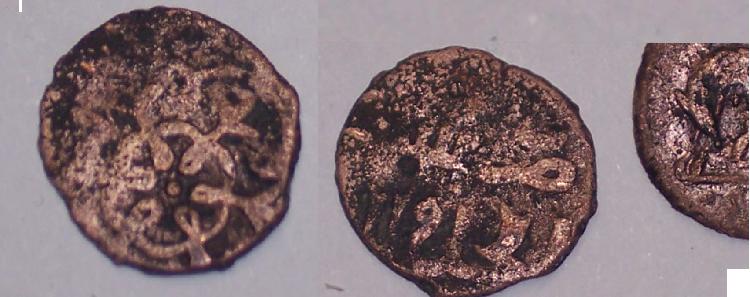
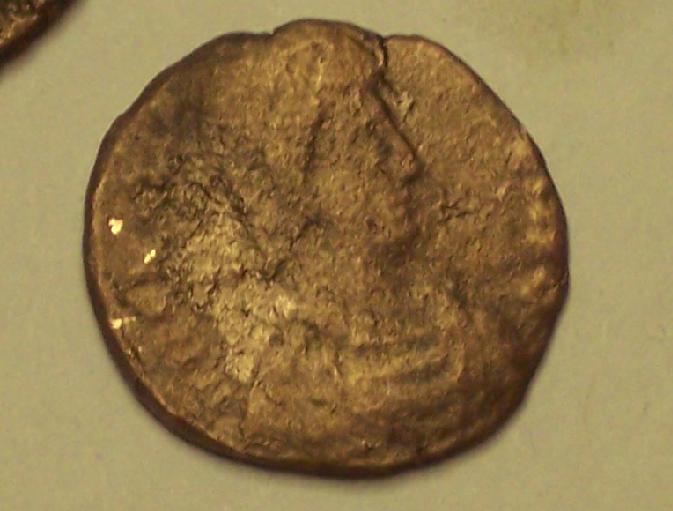
I am very sorry to keep asking. I just ordered a book on these coins,but my daughters presentaiotn is Monday. These are the last two that she is trying to Identify. Again they came incrusted and she cleaned them for her 6th grade class project. Image:  coin5.jpg coin5.jpg42.3 KB Image: coin6.jpg39.57 KB |
|
|
|
Pillar of the Community
United States
914 Posts |
:) Keep asking! That's what we're here for.
I don't recognize this one being Roman. It looks Byzantine.
|
|
New Member
 United States
6 Posts |
Thanks, that will give me a starting point. what about the one in the other pic. I know it is worn but the bust is fairly good
|
|
Moderator
 Australia
17006 Posts |
#5 is Arabic/Islamic of some sort. There's not enough writing left to read properly, but based on the style of lettering, I think it's from around the crusader period. What appears at first to be "1191" isn't a date, in either the Christian or Islamic calendar; it's just the top bits of a couple of Arabic words.
#6 is presumably the one Vaslin was referring to when he said it looked Byzantine; it's either late Roman or early Byzantine. How big is it, and what's on the other side?
Don't say "infinitely" when you mean "very"; otherwise, you'll have no word left when you want to talk about something really infinite. - C. S. Lewis
|
|
New Member
United States
6 Posts |
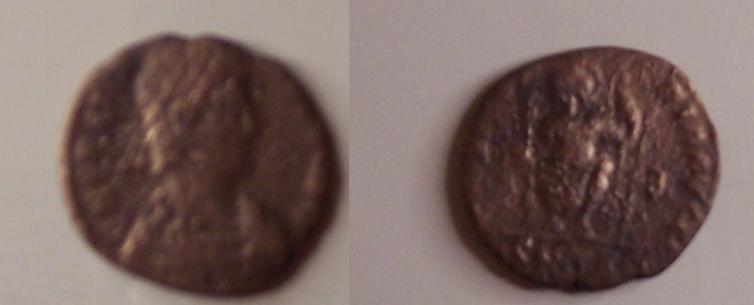
The pics didn't come out great but maybe they will help. The coin is 16.5mm across. Also in the original pic I posted you can see some bright yello flakes on the coin. Would the be from haveing been gold plated? or just shiny brass in the bronze. Thanks again for all the help. Image: coinfb.jpg18.04 KB |
|
Moderator
Australia
17006 Posts |
That's more "Roman" than "Byzantine". Looks like a Victory reverse type. Issued sometime around 350 AD, plus or minus 20 years. I'd need clearer pics to ID it any further, and it may be too badly corroded to extract anything more meaningful out of, anyway. It may have been gold-plated, but not in ancient times. You occasionally see shysters on ebay gilding common ancient copper coins and trying to pass them off as gold. If it looks more coppery than golden, it could be a "test cut"; when non-archaeologists (e.g. looters) find an ancient coin, they'll dig into it with a knife to see if it's silver or copper. Don't say "infinitely" when you mean "very"; otherwise, you'll have no word left when you want to talk about something really infinite. - C. S. Lewis
Edited by Sap
01/26/2008 01:26 am
|
|
Pillar of the Community
United States
914 Posts |
Thanks for the education Sap! I was unfortunately referring to #5 as Byzantine. Yes, #4 is definitely Roman.
|
|
Pillar of the Community
United States
992 Posts |
|
| |
Replies: 7 / Views: 1,982 |
|





 coin5.jpg
 coin6.jpg

 Posted 01/25/2008 1:11 pm




 coinfb.jpg


