| Author |
 Replies: 13 / Views: 1,930 Replies: 13 / Views: 1,930 |
|
|
Valued Member
Canada
210 Posts |
|
|
|
|
Moderator
 United States
56855 Posts |
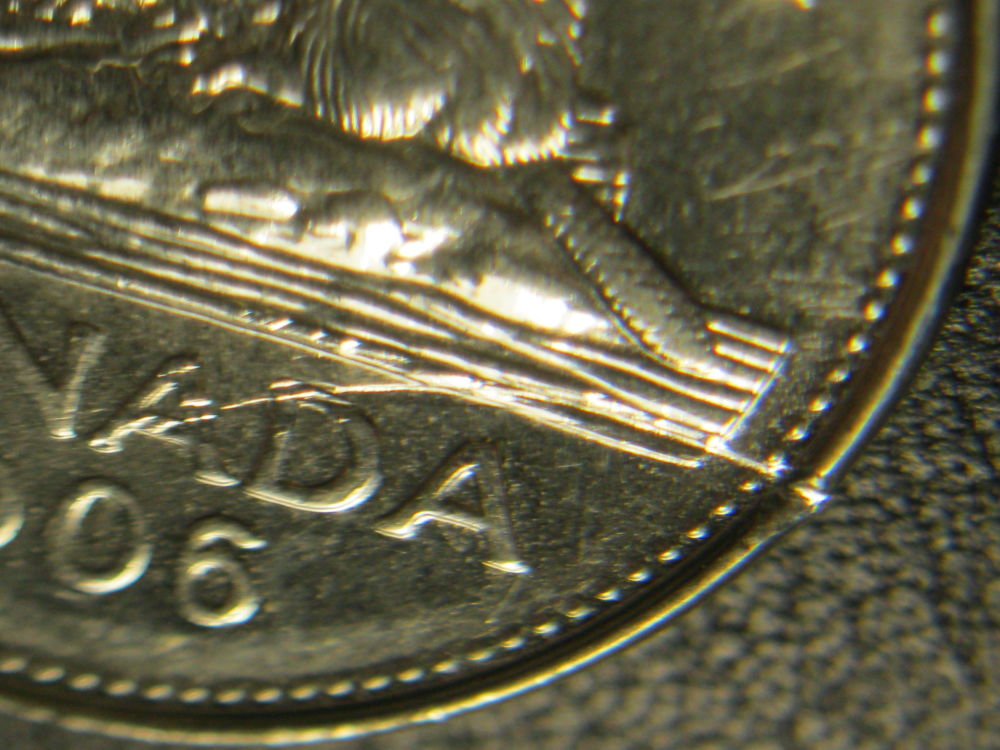
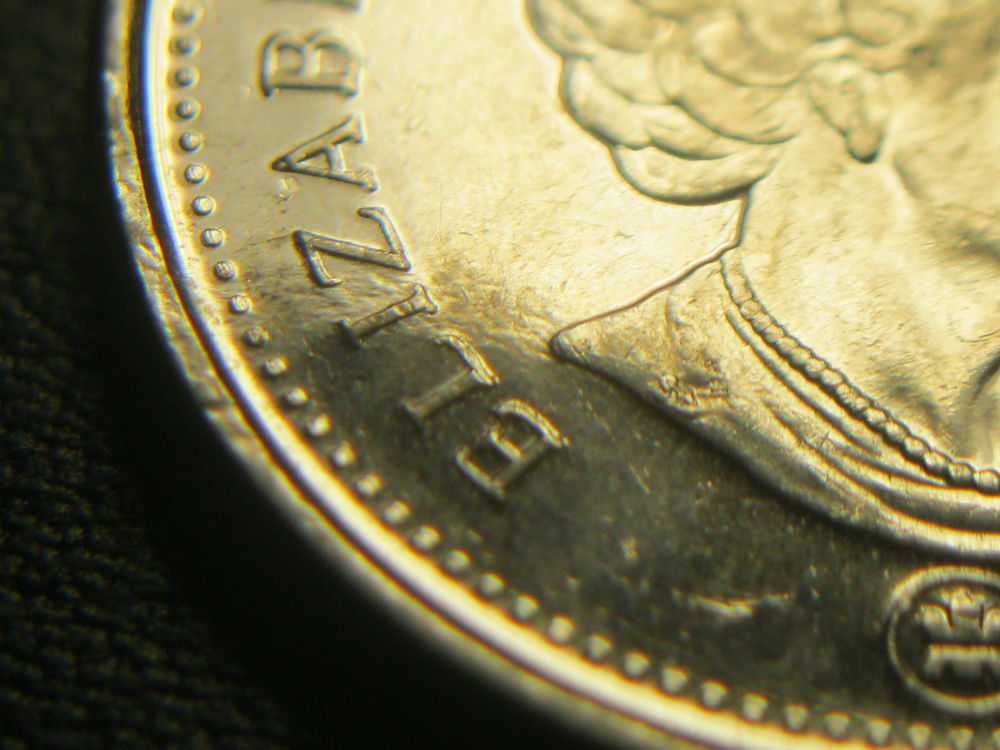
Looks like PSD to me. John1  |
|
Valued Member
 Canada
210 Posts |
Thank you, John 1, That`s it then, this ones "NOT" going up on ebay!LOL Thanks again! |
|
Moderator
Canada
10477 Posts |
"Discovery follows discovery, each both raising and answering questions, each ending a long search, and each providing the new instruments for a new search." -- J. Robert OppenheimerContent of this post is licensed under a Creative Commons Attribution-NonCommercial 3.0 Unported License. See: http://creativecommons.org/licenses...0/deed.en_USMy eBay store
|
|
Valued Member
Canada
210 Posts |
I do not know much, that is why I rejoined this great Coin forum, to learn. Thanks SPP OTTAWA
|
|
Moderator
Canada
10477 Posts |
"Discovery follows discovery, each both raising and answering questions, each ending a long search, and each providing the new instruments for a new search." -- J. Robert OppenheimerContent of this post is licensed under a Creative Commons Attribution-NonCommercial 3.0 Unported License. See: http://creativecommons.org/licenses...0/deed.en_USMy eBay store
|
|
Bedrock of the Community
United States
94367 Posts |
Thanks for pointing this out - a good refresher.
|
|
Valued Member
Canada
210 Posts |
yes, thank you for posting examples, very informative!
|
|
Valued Member
Canada
458 Posts |
good examples helps me out to know what to look for
|
|
Moderator
Canada
10477 Posts |
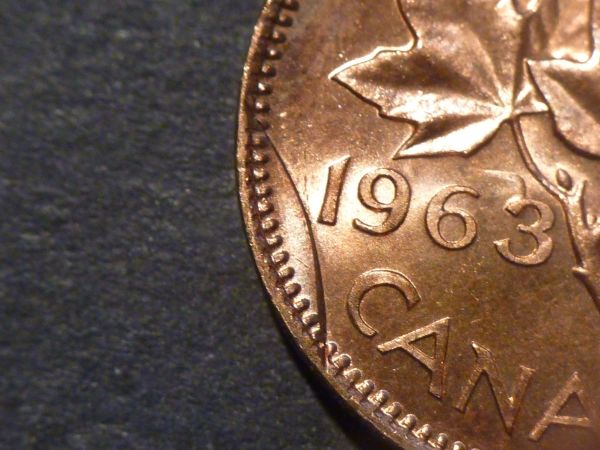
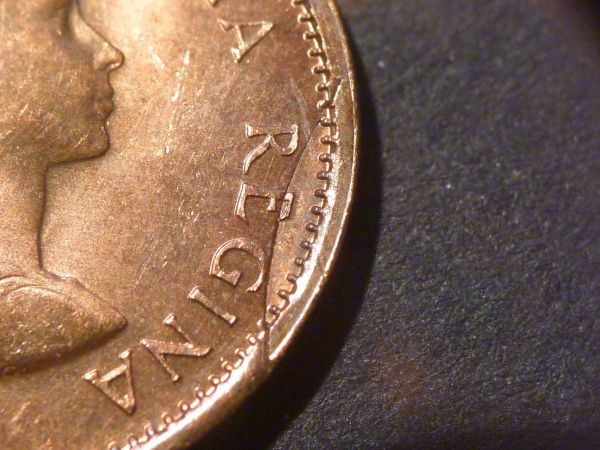
Here is one, a clip and an incomplete clip on the same planchet. Note how the upset mill (rimming phase) of the planchet, closes the incomplete clip and sharpens up the curvature near the rim.   "Discovery follows discovery, each both raising and answering questions, each ending a long search, and each providing the new instruments for a new search." -- J. Robert OppenheimerContent of this post is licensed under a Creative Commons Attribution-NonCommercial 3.0 Unported License. See: http://creativecommons.org/licenses...0/deed.en_USMy eBay store
|
|
Valued Member
Canada
210 Posts |
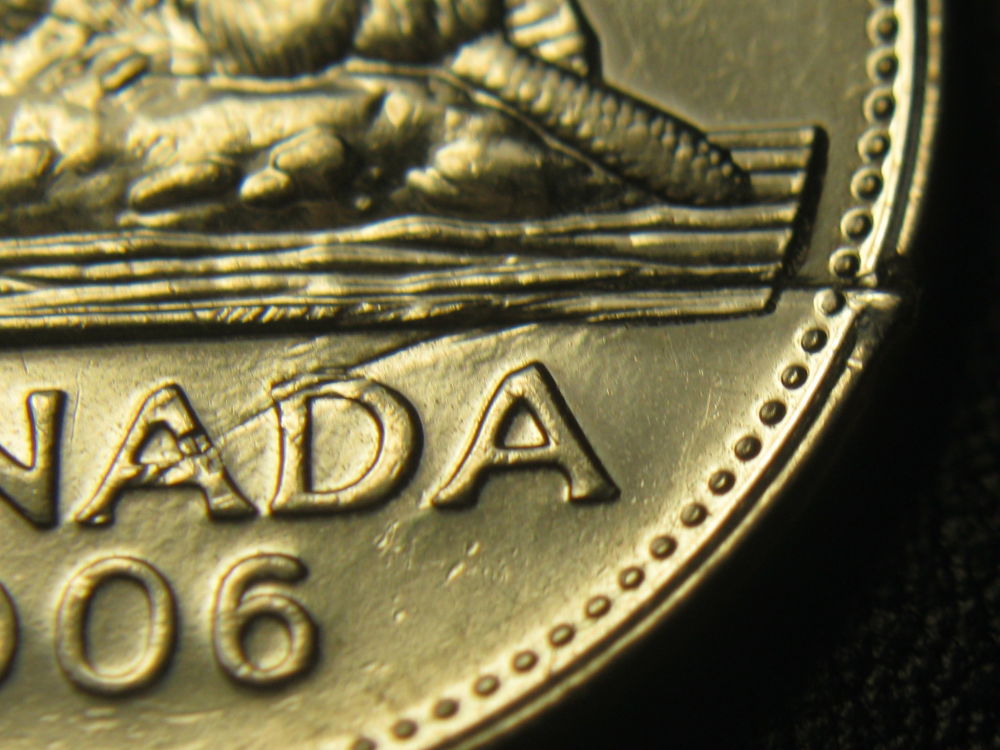
Yes, I see that now, not evident on the 2006 nickel I posted.which protrudes outwards, at that point! So After the punching out of the planchet, the ridge made by the "rimming phase",closes, or tightens up the area! now I can idenify a partial clip!! Thanks
|
|
Moderator
Canada
10477 Posts |
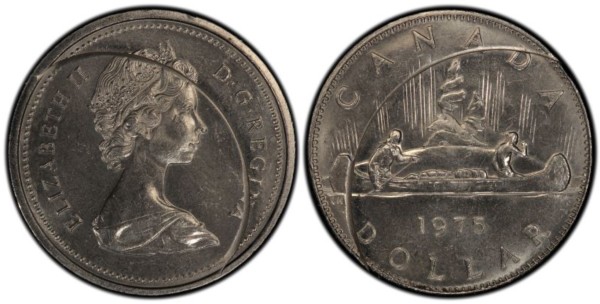
Of course, bronze metal behaves differently from silver, or pure nickel. This one is coming back from PCGS, you can click on the photo for a higher resolution image. http://www.PCGS.com/cert/33950459"Discovery follows discovery, each both raising and answering questions, each ending a long search, and each providing the new instruments for a new search." -- J. Robert OppenheimerContent of this post is licensed under a Creative Commons Attribution-NonCommercial 3.0 Unported License. See: http://creativecommons.org/licenses...0/deed.en_USMy eBay store
|
|
Valued Member
Canada
210 Posts |
Absolutely, different alloys react under pressure in different ways!. It`s also interesting to note the more extended incusing on the obverse,into the rim, than the reverse, which displays a "cut", to a lesser extant, and falls short of the rim! My guess would be that`s because of the "strike down" of the "obverse die", as opposed to the stationary reverse, bottom die! See how the rim of the obvere is cut", and the reverse rim is not! But that`s just a brief observation, and my own opinion, I could be totally wrong!LOL
|
|
Moderator
Canada
10477 Posts |
Nope - it is the other way around, the obverse is the anvil die and the reverse is the hammer die...
"Discovery follows discovery, each both raising and answering questions, each ending a long search, and each providing the new instruments for a new search." -- J. Robert OppenheimerContent of this post is licensed under a Creative Commons Attribution-NonCommercial 3.0 Unported License. See: http://creativecommons.org/licenses...0/deed.en_USMy eBay store
|
| |
Replies: 13 / Views: 1,930 |
|








 Posted 07/05/2016 1:33 pm