| Author |
 Replies: 16 / Views: 2,826 Replies: 16 / Views: 2,826 |
|
Pillar of the Community
United States
3495 Posts |
NEVER !! So I decided to follow an auction by a very reputable European seller of ancients. I played bottom feeder (as usual) and landed a very nice Psidia AE of Gordian. I particularly liked the wonderful green patina. For several years I have followed the advice of a rather obnoxious seller of ancients (no ..... not me) and dropped coins in acetone just to see what happens. Ideally nothing should ........ Sellers pic 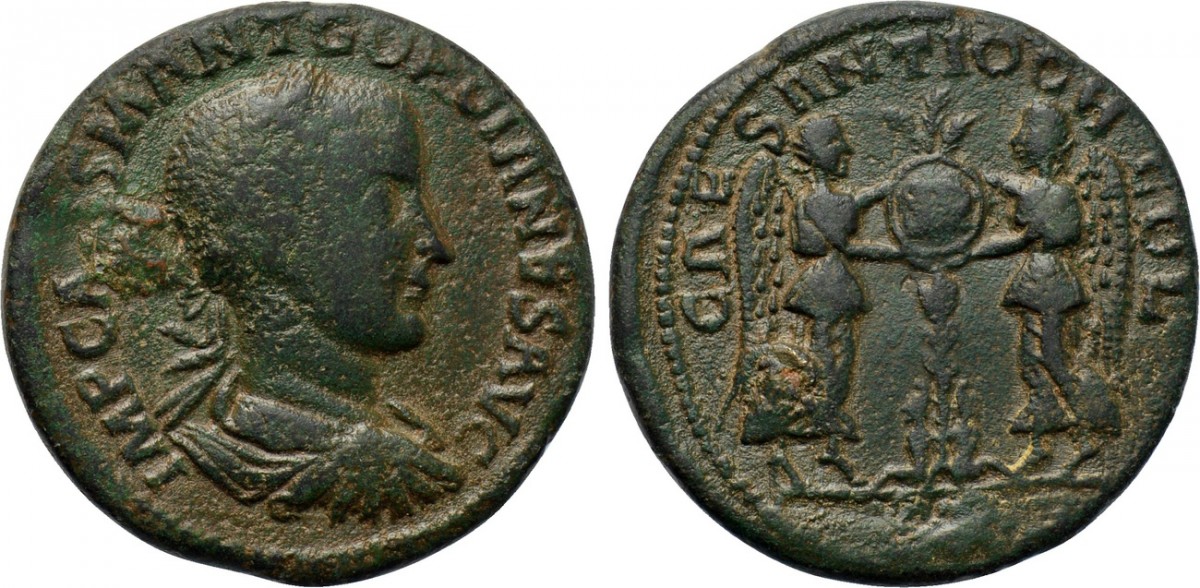 After 30 minutes bathing in acetone 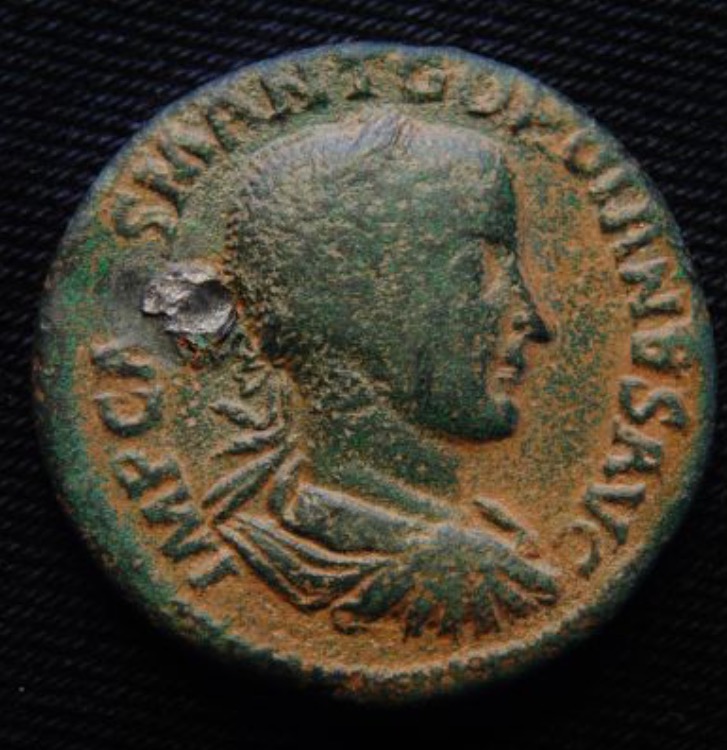 A lead plug ! And the patina ? Well what else can it be ? It is dissolving in acetone I won't say that I never bought a "dud" on ebay But I never bought such an elaborate hoax of a coin either. If I could throw it back to Vienna I certainly would If I only could ....... As yet I have not heard back from seller I will give him two days to atone before I pass judgement. 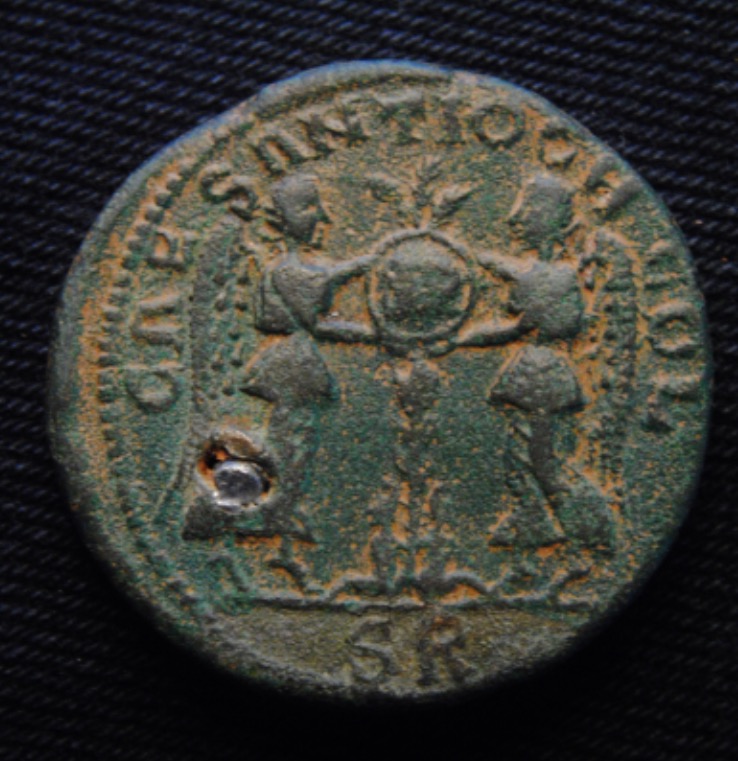 In hindsight (20/20) I should have noticed something was not kosher with this. The areas line up on both sides. Why they covered the lower reverse is beyond me. Perhaps there was a good reason but it escapes me at the moment. Edited by FVRIVS RVFVS
02/01/2017 6:26 pm
|
|
|
|
Pillar of the Community
United States
1970 Posts |
Oh dear. Yes, you should have been suspicious!
|
|
Pillar of the Community
United States
2563 Posts |
Oh, man that's a crying shame. I hope you get your money back
|
|
Moderator
 United States
23731 Posts |
Oh man! I'd be fuming and sending off a nasty note to the seller. To bad it's still a half way decent coin.
|
|
Pillar of the Community
 United States
3495 Posts |
If you examine the sellers pic
In particular the reverse of the coin it is clear that the "patination" covers quite evenly.
There is no break between the areas uncovered and the areas left intact. The acetone dissolved the underlying material
which removed the overlying patina. The conclusion must be that almost the entire patina has been faked.
This seller has other (similar) coins with very nice olive green patina.
But how can I trust any of them ?
The coins are genuine
But what is being done to them constitutes fraud
There is no other name for it
To say I am hopping mad about this is being polite !
This attacks the very trust that is the foundation of ancient coin collecting.
Edited by FVRIVS RVFVS
02/01/2017 8:04 pm
|
|
Moderator
Australia
17005 Posts |
Yep, looks like the coin was stripped, plugged, then repatinated. Quote:
And the patina ?
Well what else can it be ?
It is dissolving in acetone
The acetone dissolved the underlying material
which removed the overlying patina. The conclusion must be that almost the entire patina has been faked.Just out of curiosity: did the acetone itself turn green, or did it come off as a powdery residue? There are two ways to make a fake green patina. 1. Green paint or ink. This would turn the acetone green, and not leave any solid residue behind. 2. "Old-fashioned" verdigris paint, made of crushed copper oxide or copper acetate powder suspended in varnish, glue or resin. The glue itself would be clear, but dissolve, leaving you clear-coloured acetone and green-coloured "sand" that had been washed off of the coin. I'm told that the second method is commonly used to apply fake patina on ancient Chinese coins. Often, they crush up genuine old, corroded coins to make the verdigris paint. Don't say "infinitely" when you mean "very"; otherwise, you'll have no word left when you want to talk about something really infinite. - C. S. Lewis
|
|
Pillar of the Community
United States
3495 Posts |
It was the second method I believe.
When I removed the coin from the acetone I was still quite pleased with my purchase.
No discoloration of the liquid occurred. As the coin rapidly dried ( mere seconds ) I noticed that the affected areas seemed wrinkled.
Something obviously had dissolved so I rubbed my thumb across the surface and pieces came away. A quick ( and light ) brushing with brass brush revealed the plug.
I did same to reverse and was startled to see the S R suddenly revealed below.
As I mentioned I see other bronzes of a similar type of appearance (not always green some black) with the residue of "desert" patina on them in sellers current listing.
But how can I trust my eyes alone ?
I am very reluctant to buy any of these.
As noted in this forum before some sellers are specializing in the so-called "desert" patina.
Some of these are obviously being applied to the coins.
|
|
Valued Member
United States
112 Posts |
That is terrible! I would open a case with Paypal rather than ebayfor a full refund. You should not even have to return it. Then report the seller to ebay so they can watch the seller over time to see if it is a pattern or just one bad deal. |
|
Pillar of the Community
United States
3495 Posts |
This was not an ebay transaction but a large auction by a seller of excellent reputation. I am expecting 'him' to be quite upset and very eager to resolve this "unfortunate series of events". Expecting ....... I could not help notice that the google location of seller is adjacent to a polytechnical institute ! Now assuming this is not the product of some of the students ........ I also live but a stones throw from a polytech (what are the odds on that ?) Clever folks those students ....... Either they produced this one or can offer a "learned" opinion Maybe both !! |
|
Pillar of the Community
United States
3495 Posts |
Response received
The woman who replied has expressed remorse (in some "legalese") and of course offered to refund all costs and return shipping.
Might have been better but just enough to tame the Furies.
I won't charge them for the envelope !
Well .......
I am the nice guy .........
I still find the topic to be very unsettling
As someone else here has opined on Greek silver
They are all fakes !
till proven otherwise
|
|
Pillar of the Community
United States
1304 Posts |
Wow, just wow. I am glad they are going to completely refund it all. Ridiculous. I am going to start using acetone on everything I get. I have bought a coin once that someone had put filler on to conceal pitting, but fortunately I wasn't out much, lesson learned, and now I keep my eye out.
How do you know if a Greek coin is real. The million dollar question I suppose.
|
|
Pillar of the Community
Belgium
1194 Posts |
I can not understand this coin house . They have a very good reputation , are selling since years and went -I think after intern problems between partners - from Germany to Austria last year .For me , it is not a fake coin , but they had to give a good description or better , not to sell it .I am wondering if they remarked it , as it is a common coin and not expensive .I am glad you are completely refunded . albert
|
|
Pillar of the Community
Spain
629 Posts |
I think that this coin is a genuine one that was holed in ancient times to be used as ammulet...
More recently was "repaired" with lead and painted to hide the repair...
|
|
Pillar of the Community
United States
3495 Posts |
I agree one hundred percent !
The coin is without doubt genuine as is all but proven by it having had a hole drilled through it !
Making a true fake does not require such.
But as mentioned above the coin has been altered in a way to deceive a buyer.
A filler is used and then fake encrustations added to the area. Lastly a mottled green patina has been again "faked" to make it appeal to collectors like myself who believe that patination is not
only beautiful but a good authenticator of bronze coins.
Just for good measure the famous orange desert type patina has been applied over the green.
Again helping lure in another currently popular sort of collector.
So I count 3 or 4 separate deceptions !
So the item is genuine
But the coin is fake !
I have deliberately not mentioned the seller
I honestly believe they did not know any of this and anyone here buying from them recognizes who it is.
While the estimate was over $100 the sell price was only $70.
They deal in hundreds of thousands of dollars worth of inventory and certainly did not dwell on this one.
It isn't a Syracuse tetradrachm ! It's a common variety provincial bronze.
But buyer beware !
The experts get fooled everyday
Sometimes it just takes a dummy like me to figure that out
|
|
Pillar of the Community
United States
949 Posts |
Quote:
The experts get fooled everyday
Sometimes it just takes a dummy like me to figure that out All because you routinely dip your coins in acetone. How fortunate for you it worked out this way. Funny stuff, acetone. Back in the 80s I bought a small animal figurine from Harlan Berk that he had said was an intact Persian piece. I took it to the Univ of Chicago Oriental Institute to have one of their Persian specialists give it a once-over, and she suggested that I wrap it in a towel splashed with acetone for a day. This was to test the claim of "intact-ness." When I unwrapped it I found six pieces of ancient ceramic with a soft goo between them. I took the towel and all back to Harlan, and told him what Dr. Kantor had told me to do. He was none too pleased at what I had done and what had happened, but he stood by it and refunded my money, asking that in future if I have doubts to just bring it back without the acetone treatment. We played by those rules after that. In this field an acetone bath can uncover a multitude of sins. |
|
New Member
Hong Kong
10 Posts |
Its very easy to spot fakes like this, that orange looking like dirt doesn't exist naturally, anyone that does metal detecting and remove a ancient coin from the ground knows that theres no bright orange dirt looking like that attached to the coin, no even clay that will much darker then that orange.
|
| |
Replies: 16 / Views: 2,826 |







 Posted 02/01/2017 7:18 pm





