| Author |
 Replies: 6 / Views: 1,332 Replies: 6 / Views: 1,332 |
|
|
Pillar of the Community
United Kingdom
1273 Posts |
Just acquired this. It is inside a plastic wallet which only reads 'Tetradrachm 300BC.' Does anybody have any further information about it? Is it from Ptolemy era? The coin weighs 13.6 grams exactly. It measures 25mm wide and is 3.5mm thick. I've tried finding similar, but most don't seem to have text around the obverse like this one does? As always, I appreciate any responses  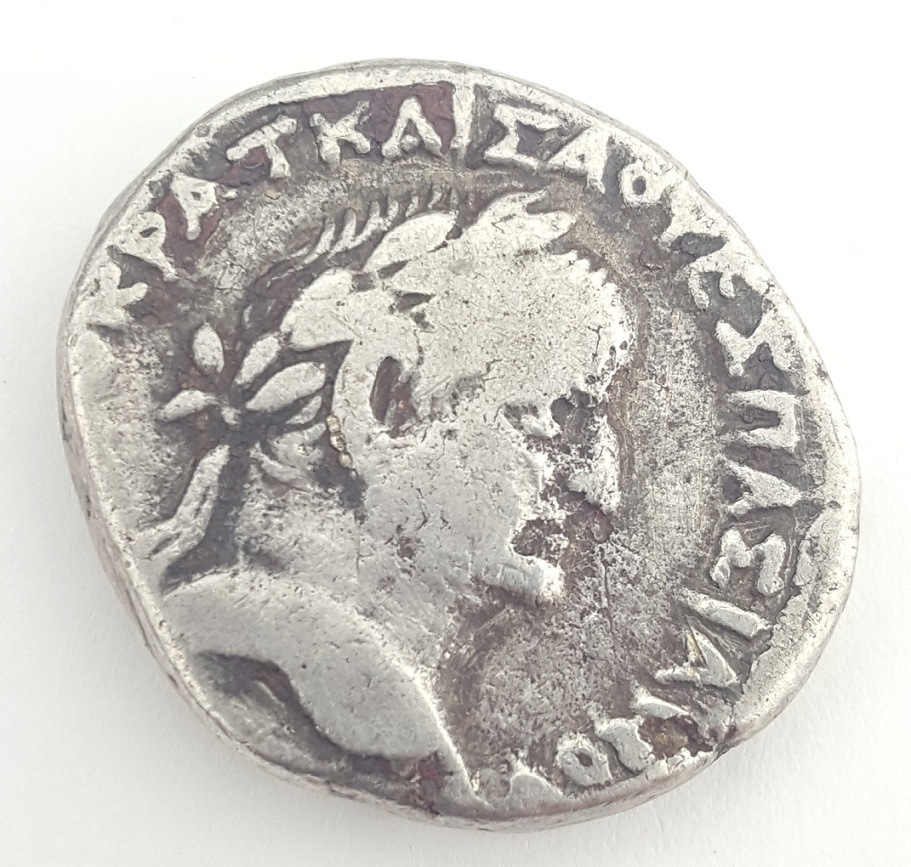 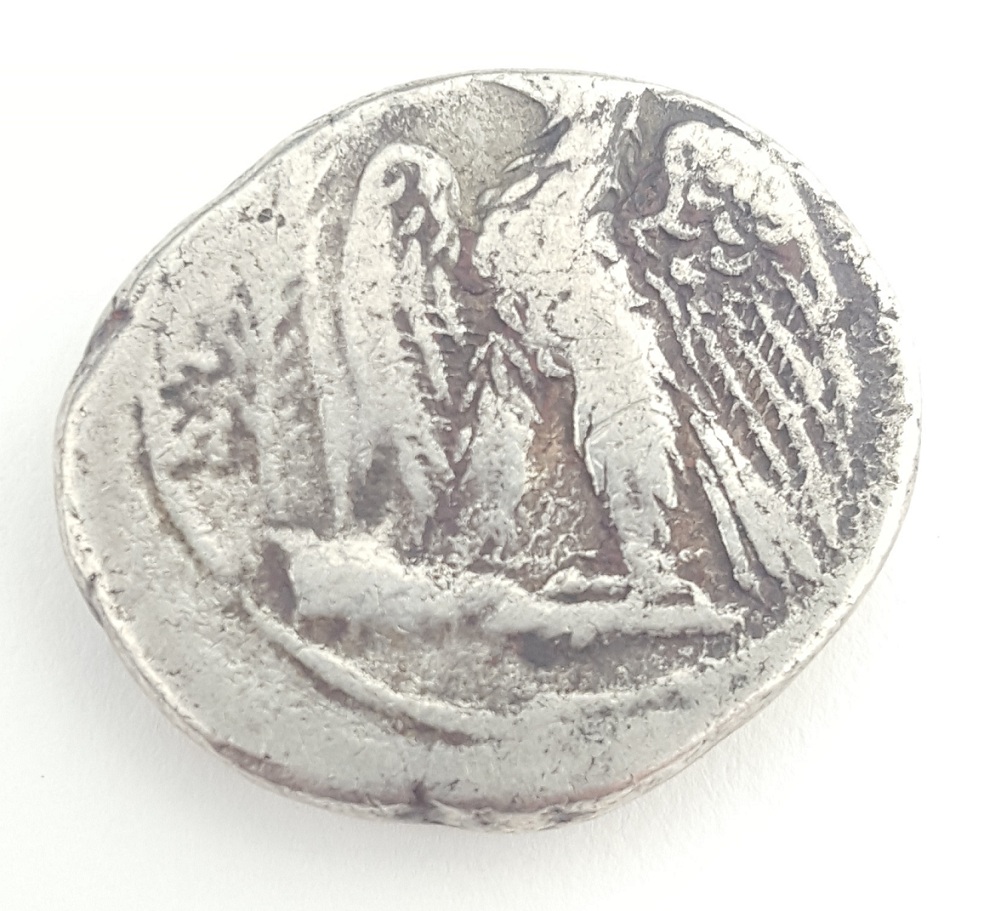 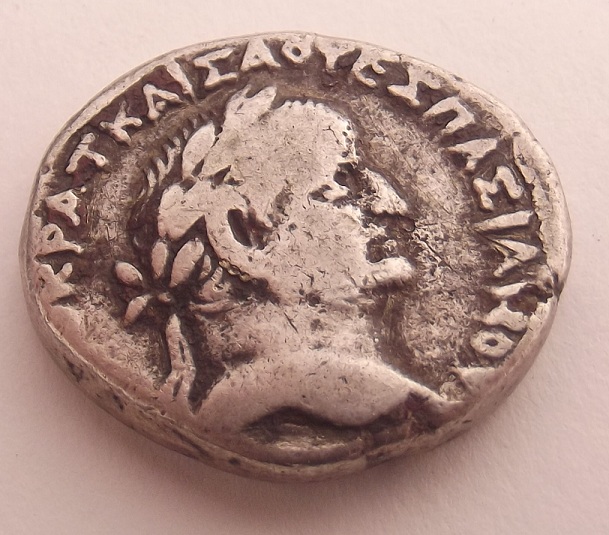 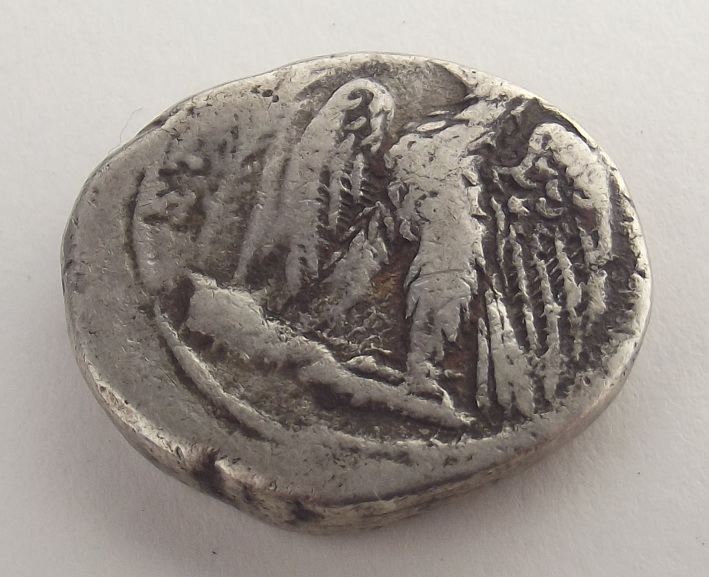 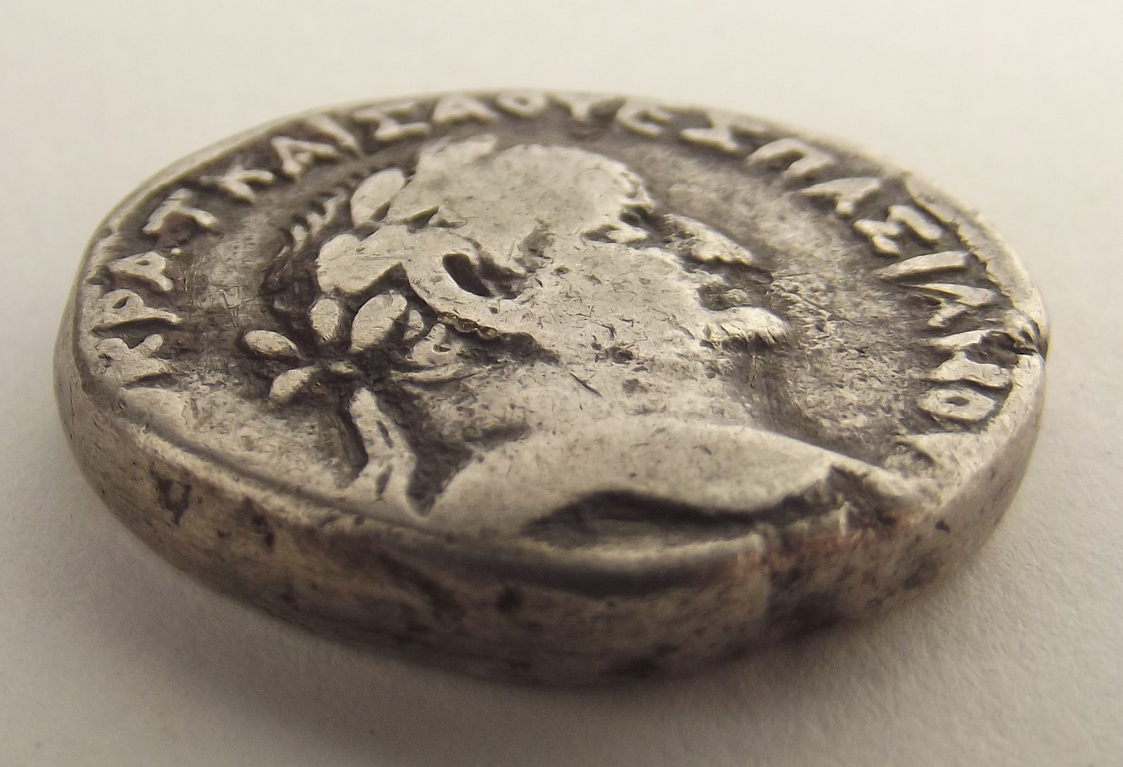 Edited by TobyJ
02/11/2017 3:52 pm
|
|
|
|
Moderator
 United States
23731 Posts |
If I'm reading the legend it is a Trajan Decius 249-251 AD from the Antioch mint. It's pretty rough and from the appearance of the surface I'm not sure if it's genuine.
|
|
Pillar of the Community
United States
582 Posts |
obverse:AYTOKPAT KAISigma;A OVESigma;Pi;ASigma;IANOY I think it's a VESPASIAN Antioch Tetradrachm, also not sure about it being genuine, whats up with the earlobe?
Edited by dwayne8625
02/11/2017 7:39 pm
|
|
Pillar of the Community
 United Kingdom
1273 Posts |
Thanks Dwayne! You've got it, I'm sure its a Vespasian Antioch Tetradrachm. Yeah the earlobe looks a bit scratched. I'm pretty sure its genuine, it was found in a field in the South of England and was bundled together in one lot with several other ancient Roman coins that had been found whilst metal detecting. So, according to the auction description, they were part of one man's lifetime collection of field-walking / metal detecting. I'd be pretty gutted if it was fake, as I payed some money for them. In there was a Caraucius Antoninianus though, which I'm very excited about.
Unfortunately, I don't think this Vespasian coin is worth sending to PCGS, but it would be nice to know if it was genuine.
|
|
Pillar of the Community
United States
582 Posts |
Glad I could help. I don't have many concerns about it's authenticity. Great find.  Edited by dwayne8625
02/12/2017 3:53 pm
|
|
Bedrock of the Community
Australia
21792 Posts |
I have quite a large collection of fake ancient coins mainly for educating myself and gaining skill in how to differentiate the various types of fake manufacture, and how to differentiate them from genuine.
I have only pictures to go on here to examine fabric, but I am inclined to think that this piece is genuine.
Unfortunately, weight is not much of a guide on proving authenticty. According to Milne, what is more important is that the coin contained the correct amount of silver in the billon alloy. Billon is a silver alloy with a greater than 50% mixture of copper, usually with a small amount of tin as well.
With this information, an XRF test is indicated to support authenticity.
With the Roman colonial tetradrachms of Vespasian, the total weight of silver only in the coin, should work out to be around three grammes.
Similar tetradrachms of Vespasian in this sort of condition are being offered on VCOINS if the $100 - $200 price range.
Edited by sel_69l
02/12/2017 5:03 pm
|
|
Pillar of the Community
United Kingdom
1273 Posts |
Thank you very much sel. Such useful information on here.
|
| |
Replies: 6 / Views: 1,332 |
|










 Posted 02/11/2017 7:32 pm


