










 Posted 02/27/2017 07:21 am


I can't quite make up my mind about this one,
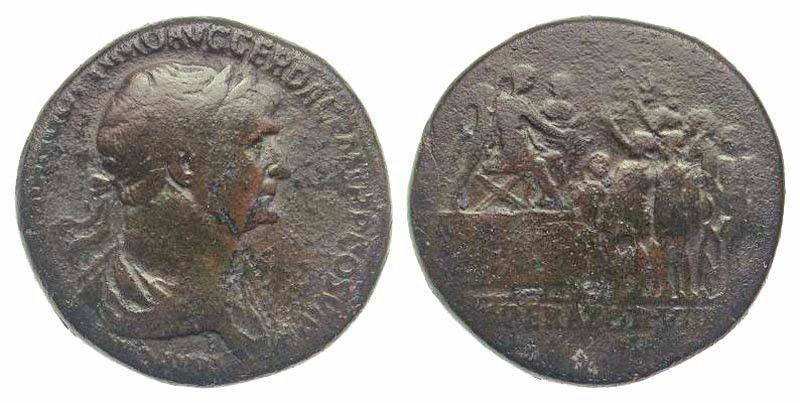
but the rough fields suggest pressure cast. Corrosion on genuine Roman bronzes can produce the same surface characteristics. Does the surface of it feel greasy between the fingers?
Roman coins of this period were made of Orichalcum, which is a Roman term for brass. Orichalcum had some zinc in the alloy to produce a golden color when freshly struck. It would be nice to know the results of an XRF examination on this coin, looking for zinc in the alloy, not just tin only. In the the pictures, the color suggests bronze, not brass, but orichalcum coins recovered from burial can have the same color.
Some bullion dealers and leading coin dealers have hand held XRF instruments.
Examine the edge closely with a 10X loupe and report back, or post some pictures of the most suspicious parts of the edge.
Wear in the legends, in combination corrosion can produce some mushiness in the details, which is also a characteristic of casting.
but the rough fields suggest pressure cast. Corrosion on genuine Roman bronzes can produce the same surface characteristics. Does the surface of it feel greasy between the fingers?
Roman coins of this period were made of Orichalcum, which is a Roman term for brass. Orichalcum had some zinc in the alloy to produce a golden color when freshly struck. It would be nice to know the results of an XRF examination on this coin, looking for zinc in the alloy, not just tin only. In the the pictures, the color suggests bronze, not brass, but orichalcum coins recovered from burial can have the same color.
Some bullion dealers and leading coin dealers have hand held XRF instruments.
Examine the edge closely with a 10X loupe and report back, or post some pictures of the most suspicious parts of the edge.
Wear in the legends, in combination corrosion can produce some mushiness in the details, which is also a characteristic of casting.


