quote:
Originally posted by KLD
WOW, What can I say.
I didn't think it was that complicated, yet so very interesting.
Thankyou very much for your time. I will try and get better pictures soon.
Am I correct in saying if it has two prongs on either side of the crown it is more likely to be a Edward the 2nd and the three prongs to be Edward the 1st?
I was lost on the restI am going to have to work harder to pick up this knowledge.
The below one is a slighlty better picture of a different coin.
http://i25.photobucket.com/albums/c...2-edward.jpg
Is it King Edward 2nd? or am I way off?
Finally where does Edward the third come into identification or is he harder to find?
Once again any help is greatly appreciated.
Kind Regards,
Lars
Yeah it's very technical (quite complex, although alot less so than Edward III coinage which is really tough to get one's head around).
Right let me try and explain it slightly clearer. In 1279 there was a recoinage (basically long cross pennies were phased out and the new design pennies [like yours] arrived and were minted in the millions, halfpennies and farthings were also introduced at the same time. As was an unsuccessful attempt at a Groat [the Edward I groat, very rare]).
From 1279-1335 the 'New Coinage' was issued and they are all in the same style as the one you have. So that covers Edward's I-III.
However, in 1335 Edward III's first coinage ceased production and work commenced on the Second coinage which ran till 1344 (although there's no pennies from the Second coinage). The penny was next seen in the 1344 recoinage known as the 'Florin Coinage' (when gold coins called Florins made their debut [and soon vanished as failures due to being overweight, the gold Noble arrived soon after and last a fair bit longer, about a century).
The pennies of the Florin coinage though look nothing like the 'New Coinage' types of 1279-1335. The New coinage looks like the king is wearing a shirt (the collar being visible). The Florin coinage onwards (to Henry VII) looks more like the top of one of those diving suits;
http://www.vigornia.co.uk/henry_VI_penny.htmAs for the prongs on the crown. Early Edward I coins have three prongs, late Edward I onwards have two prongs. With these things it's a process of elimination. If it has three then you know you've got an Edward I, if it's got 2 then it still could be any of the monarchs.
Edward III early issues are very rare though and thus it's generally best to eliminate him pretty much straight away (innocent of being Edward III until proven guilty approach).
The legends are the biggest give away usually;
EDW R & ED REX (Generally means Edward I early issues, short name is early)
EDWARD R, EDWAR (Generally means later Edward I and after, long name is late)
As for the lettering differences;
Lombardics = lowercase letters; n, h, m
Roman = uppercase letters; N, H, M,
Reversed letters = back to front letters, S's often come out backwards, the cross bar on the N is often running the wrong way. The reason for this is because die cutters have to cut the letters backwards so that upon striking they come out the right way around, but as you can no doubt appreciate sometimes they engraved them the right way around (to read) so that when the coin was struck they came out inverted! (Presuming all die cutters were literate of course! it might be the case that moneyers employed people to cut the dies in a "here's the inscription you've got to carve in, get to it" attitude, if any of the die engravers were illiterate then would they know whether an S was backwards or forwards?)
Open and closed E's, Early Edward I coins have open E's i.e it looks like E, by Class 6 the E's close up so they look like a backwards B, So Edward I late issues through to Edward III are all closed E type (except for Class 9B).
The classes are as follows;
1A, 1B, 1C, 1D (1279)
2A, 2B (1280)
3A, 3B, 3C, 3D, 3E, 3F, 3G (1280-81) [Which gives you an idea how much is being produced!]
4A, 4B, 4C, 4D, 4E (1282-89)
5A, 5B (1290-1)
6A, 6B (1292-6)
7A, 7B (1294-6)
8A, 8B (1294-1300)
9A, 9B (1300-02)
The legends change to the long 'EDWAR, EDWARD' variant from not onwards;
10A (1302-1310)
Crowns change from trifoliate to bifoliate from now onwards (i.e three pronged crowns to two prong crowns)
10B, 10C, 10D, 10E, 10F (1302-1310)
Edward II issues from now on;
11A, 11B, 11C (1310-14)
12 (1314)
13 (1315-18)
14 (1318-20)
15A, 15B , 15C (1320-1335) [Classed as Edward II issues, even 8 years in Edward III's reign]
Edward III issues from now on;
15D (1327-1335)
Where numbers change, i.e 1 to 2, 5 to 6 etc. Then that is a change of class. Classes are based on main design features, where the design features change quite a bit, i.e the king's face fattens out, the legend style changes, the crown type changes then the class changes. Minor 'progressive' alterations within a class i.e crown might alter it's shape or the positioning of something changes slightly then it's a sub-class.
The diagnostic for identifying Edward III 'New Coinage' pennies from Edward II types is that the legends change. Classes 15A-D are all similar, the difference between the Edward II 15A-C types and the Edward III 15D type is that the N's change from the Roman (N) to the Lombardics (n) type.
Often something so simple can change the sub-class and even the price-tag!
E.G Prices for London mint Coins of Class 15 in VG;
15A = £25
15B = £25
15C = £40
15D = £200
All because the N's changed!
Back to you coin, I should warn you differentiating between one class and another can be tough and differentiating between subclasses can be near impossible! I have an Edward I penny that I'm almost certain is from Class 4 (notice I say almost), however, narrowing it down to whether it's 4A/B/C/D Or E has proved pretty fruitless so far!
Edward I pennies are actually easy to identify when compared to Henry III longcross pennies, Edward III groats and the worst of them all a groat that says hENRICVS... (So is that Henry IV, V, VI or VII?)
Nightmare!









 First Page


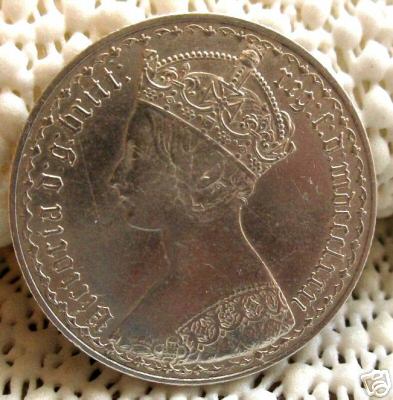 gorh.jpg

 Posted 02/22/2006 05:55 am


