| Author |
 Replies: 20 / Views: 2,178 Replies: 20 / Views: 2,178 |
|
Pillar of the Community
United States
3360 Posts |
My first thought was die polishing lines, but they are on the memorial steps too, so I am confused! What are they? 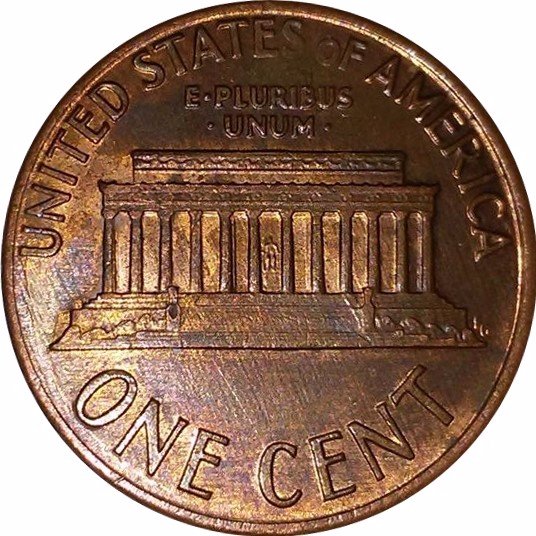 Edited by Pete2226
08/02/2017 11:01 am
|
|
|
|
Pillar of the Community
 United States
3360 Posts |
I am thinking that these lines, since they proceed over the steps also, are from the rolling of the sheet from which the blanks are cut. Is that possible?
|
|
Bedrock of the Community
United States
79330 Posts |
Roller Lines I think?
Errers and Varietys.
|
|
Pillar of the Community
United States
3656 Posts |
Well, they don't look like any roller lines that I have seen in the past. It just seems like I have seen quite a few of these and it just didn't jump out as an error to me. Should be interesting to see what our experts chime in with - You always have a head scratcher of a coin Pete  |
|
Pillar of the Community
United States
5964 Posts |
Polishing lines can be seen in steps sometimes, they're not that deep on the die. That's not the case here though. If they were polishing marks, they'd certainly continue some into the bays because the bays are higher on the die. I don't think they're roller lines either, they're not that consistent. It looks to me like plating lines.
|
|
Pillar of the Community
United States
3360 Posts |
Quote:
It looks to me like plating lines. I can understand the logic of plating lines. However this is a new term for me. I have searched, unsuccessfully, for a discussion of what causes these lines. Anyone with a link to such a discussion = please share.... (I do see some of these lines in the bays, but they are scattered). Edited by Pete2226
08/03/2017 05:49 am
|
|
Pillar of the Community
United States
3656 Posts |
I don't think there has been a post (in my time) on this particular example you have. Like I mentioned I have had a bunch and thought is was related to the excess coating/plating etc and didn't keep them. Here is current post going on that I don't think you have visited. Check page 2 coop discusses and shows examples of the die polishing. http://goccf.com/t/293356&whichpage=2So I think on yours there are polishing marks/scratches but I don't think it is related to the stairs. Maybe you can do some close ups of various areas of the LC for us. Edited by CoinCents
08/03/2017 12:14 pm
|
|
Pillar of the Community
United States
3360 Posts |
Quote:
Maybe you can do some close ups of various areas of the LC for us. Thank you - I would if I could, but it is not my coin, so I cannot. This is the only photo I have. |
|
Pillar of the Community
United States
3656 Posts |
Yeah that's a bummer. I have to use my USB microscope for images and unfortunately they just turn out horribly with the lighting (so they may not be a good reference at all). But is this is an example of what I see a lot. Just found this one this morning 1999 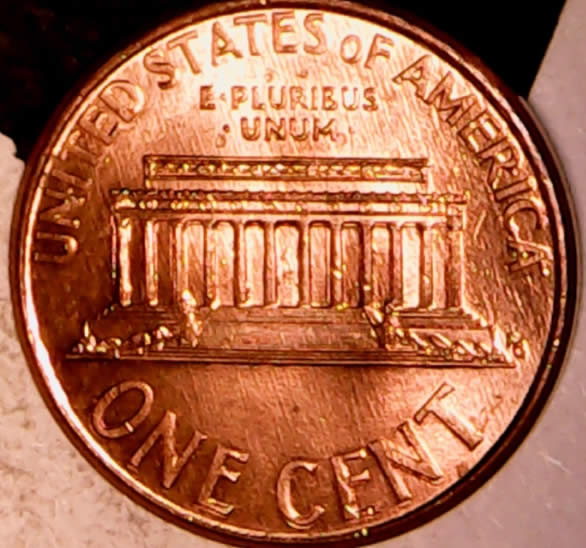 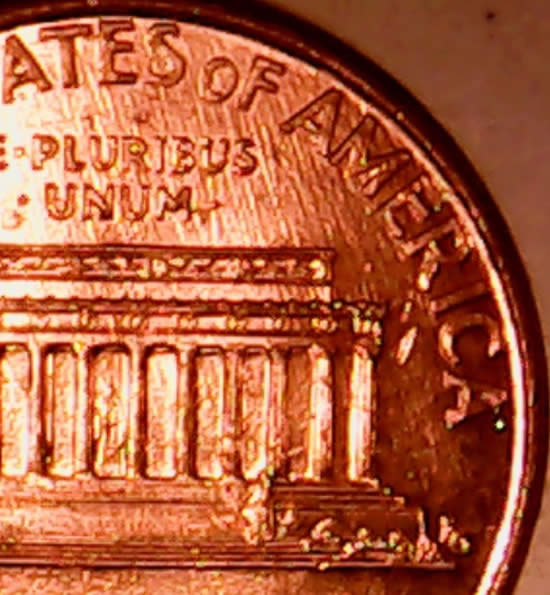 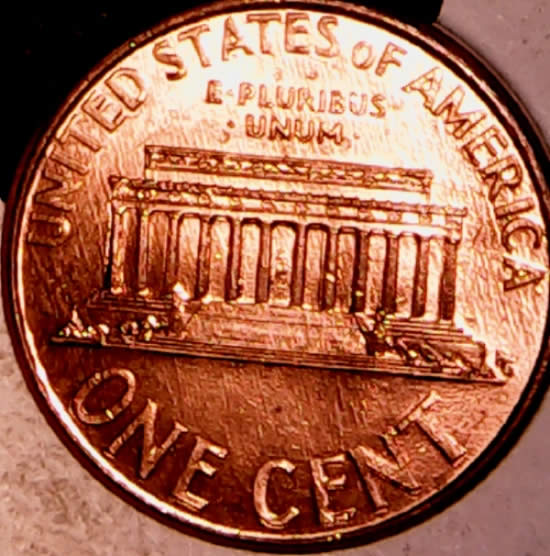 |
|
Pillar of the Community
United States
5964 Posts |
Quote:
can understand the logic of plating lines. However this is a new term for me. I have searched, unsuccessfully, for a discussion of what causes these lines. Anyone with a link to such a discussion = please share....
(I do see some of these lines in the bays, but they are scattered). In reference to the OP's coin: Pete, I think they're miniature Linear Plating Bubbles, (plating lines). The mint has had issues with plating since they started it. I see the scattered lines in the bays, but they're not connected to the ones in the steps. If they were polishing marks they would be. The bays are raised on the die, polishing marks couldn't start or stop right at the top of the steps. The ones in the bays are more plating issues. I zoom in and I see Tiny Bubbles. lol Disclaimer: The opinions expressed herein are only the personal beliefs of the CoinMasters and no warranty is implied by the statements, aforesaid or otherwise. Edited by CoinMasters
08/03/2017 9:57 pm
|
|
Rest in Peace
10197 Posts |
One possibility ifthe lines are incuse is that a wire brush had been used. Sometimes to remove die clash marks of stuck on film from the diamond polish. if they are raised, this is a plating issue. Bubbles and linear bubbles are thought to be a problem of the annealing of the plating to planchet, heat/cooling/rinsing...? Since it is a "stinkin' zinkin'", my money's on plating issue.
|
|
Pillar of the Community
United States
3360 Posts |
I am also thinking this is a plating issue. However, it seems different from a coin where you see one or two linear plating bubbles, so I don't really understand how this feature came to be. Could it be the result of a plating process where the plating only loosely binds with the Zinc Alloy 190 and then becomes "wrinkled" like this as the planchet is struck? The occurrence of plating not binding has precedents: especially seen where the metal which is being plated has not been properly and effectively cleaned.
Edited by Pete2226
08/04/2017 04:46 am
|
|
Pillar of the Community
United States
3656 Posts |
Yes, I believe that is the situation - you explained it so nicely!
@CM - I liked your little disclaimer :)
Edited by CoinCents
08/04/2017 10:22 am
|
|
Pillar of the Community
United States
5964 Posts |
There's two major problems with zincolns Pete, and they compound each other. The thin layer of copper and the zinc underneath of it. Those two things aside, they make fine coins. Haha Seriously though, I think your wrinkle theory is plausible, possibly aided post strike by corroding zinc. Glad you liked it CC. Something inside me just wouldn't let me say "jmo". You know, like you, I like to joke. Sometimes I really have to hold myself back.  |
|
Pillar of the Community
United States
3360 Posts |
Thanks CM.
The next question for me is how to distinguish poor binding of the plating from die polishing lines. My idea is that die polishing lines are relatively straight and consistent, whereas poor plating binding lines tend to be uneven and squiggly.
|
|
Pillar of the Community
United States
5964 Posts |
Quote:
My idea is that die polishing lines are relatively straight and consistent, whereas poor plating binding lines tend to be uneven and squiggly.  exactly. |
| |
Replies: 20 / Views: 2,178 |







 Posted 08/02/2017 4:51 pm





