| Author |
 Replies: 5,980 / Views: 456,808 Replies: 5,980 / Views: 456,808 |
|
|
|
Pillar of the Community
 United States
2126 Posts |
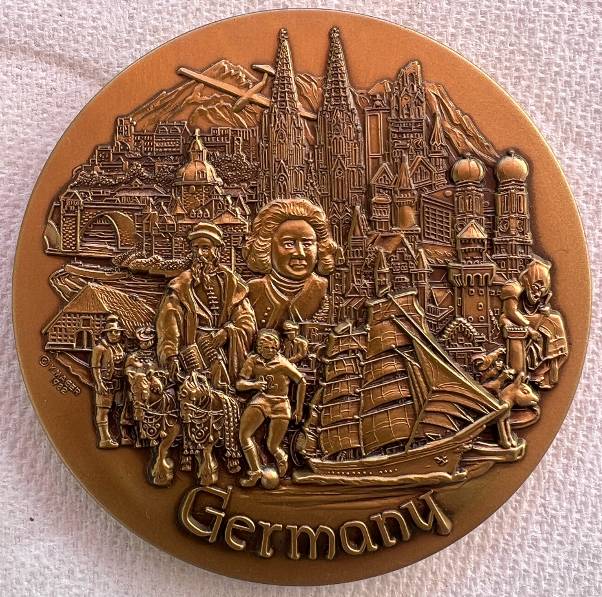 Kurt Majer (1923-2014) was a German immigrant who settled in Chicago. His "metal art" included medallions like the one above for Germany, a commission from American Airlines (AA logo is on reverse) and city specific medals for San Francisco, Chicago, Atlanta, Los Angeles, Dallas, and San Diego, produced by Medalcraft,Inc. ( There may be others ) These highlight medals come with an indexed "legend" that describes the highlights, as seen below: 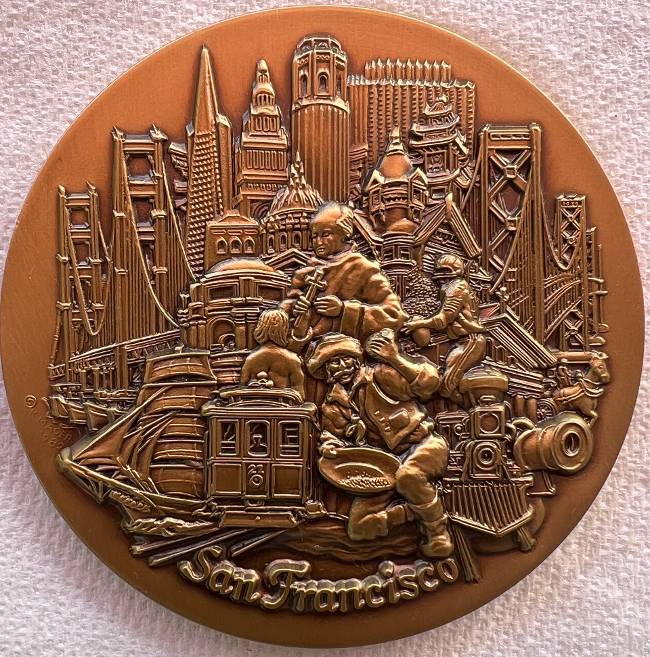 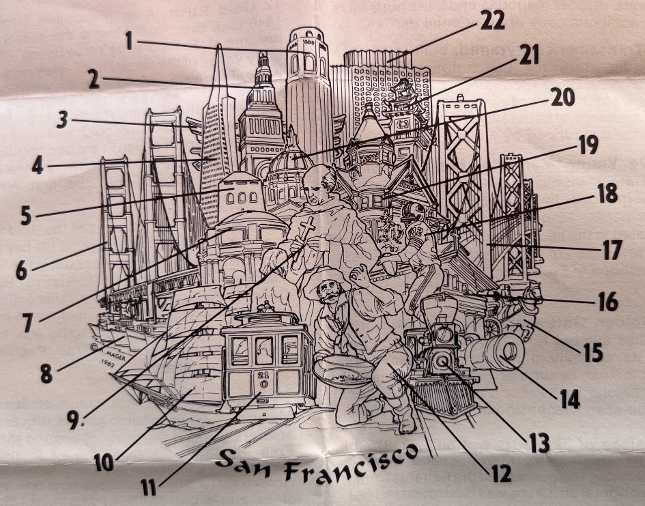 These were of interest as I served in the FRG in the early 80's and was born in SF. Some of his "highlight" medal designs were fabricated into key fobs. " Even a clock that's stopped is right twice a day. "
Edited by cptbilly
08/03/2023 3:44 pm
|
|
Moderator
 United States
195873 Posts |
A beautiful example!  |
|
Bedrock of the Community
United States
27514 Posts |
Fantastic medals, Captain!
Inordinately fascinated by bits of metal with strange markings and figures
|
|
Bedrock of the Community
United States
79217 Posts |
Very nice medals ctpbilly!
Errers and Varietys.
|
|
Pillar of the Community
United States
2126 Posts |
Milk Refund Token 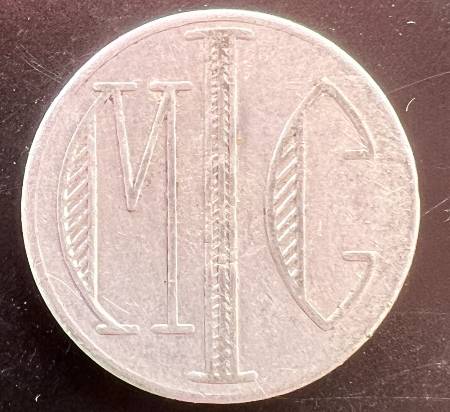 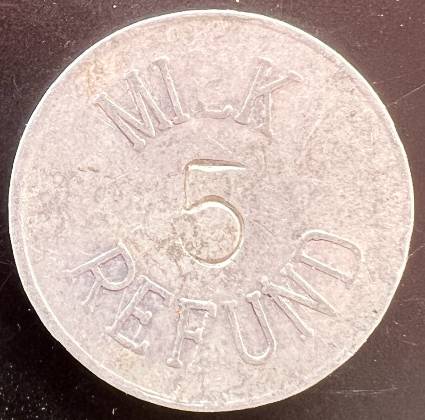 (Not Listed at tokencatalog.com) My guess is the "IC" in the "MIC" initials are for "Independent Creamery." Like the art deco influence in this one. Columbia Outfitting 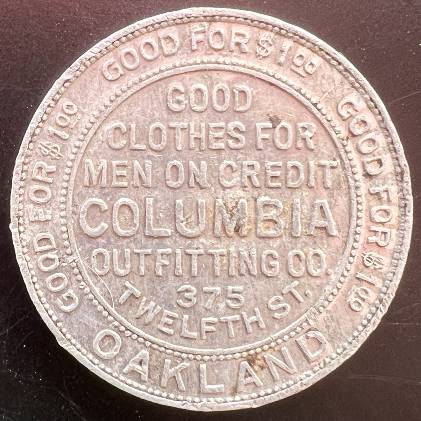 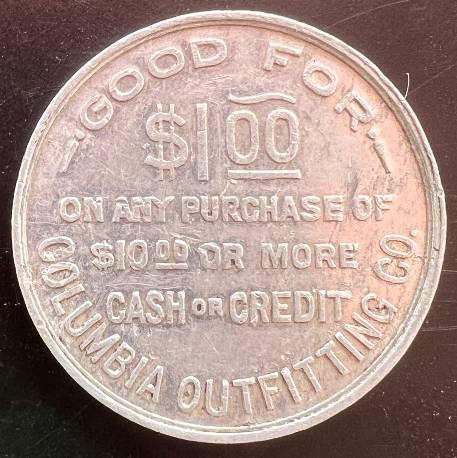 (Not listed at tokencatalog.com) Home Savings / Banca Populare Fugazi - San Francisco 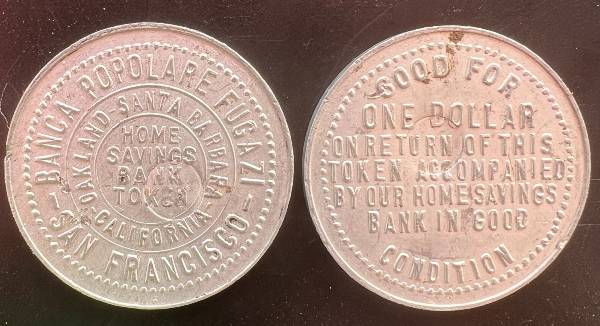 (Per tokencatalog.com, dates from July, 1911) |
|
Moderator
United States
195873 Posts |
Nice adds! |
|
Bedrock of the Community
United States
27514 Posts |
Very nice tokens, cptbilly!
Inordinately fascinated by bits of metal with strange markings and figures
|
|
Bedrock of the Community
United States
27514 Posts |
From Algiers, LA (a suburb of New Orleans). G. Sinatra / 10 R9 = 2 or 3 known examples. From Crawford and Farber, Louisiana Trade Tokens, 2nd Ed.: "Issued by Gioachino (also known as Joseph) Sinatra for a grocery at 1433 Patterson Drive. A family member stated that the store was in business from January 31, 1922 to December 1992. Directories indicate that Sinatra was in business from 1912 through 1938. Reportedly, Gioachino was Frank Sinatra's uncle." 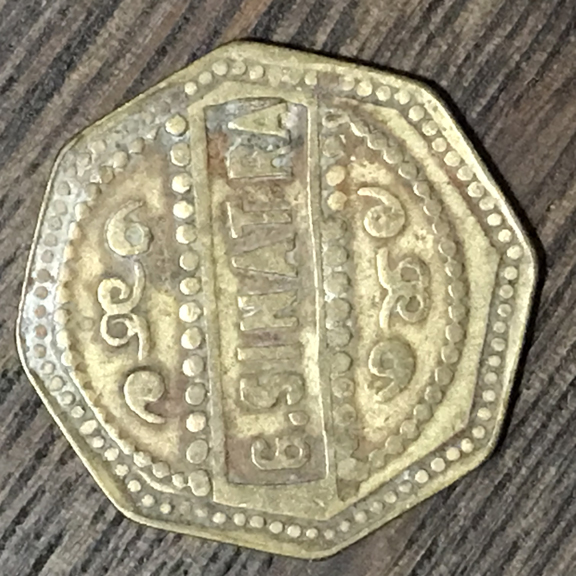 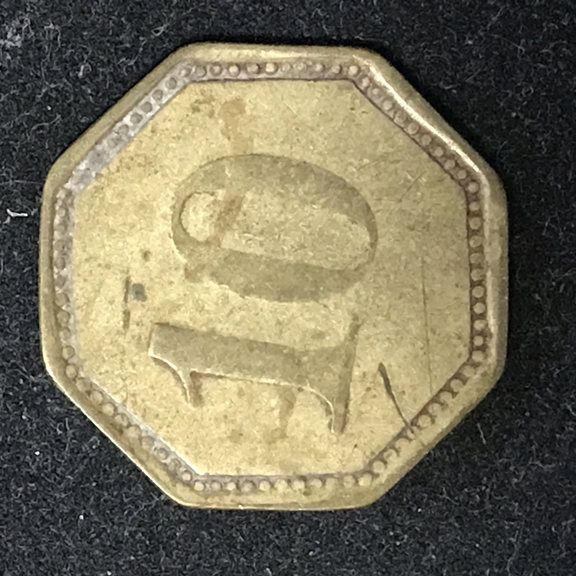 Inordinately fascinated by bits of metal with strange markings and figures
Edited by HondoB
08/04/2023 6:57 pm
|
|
Bedrock of the Community
United States
79217 Posts |
Very cool cptbilly and Hondo Boguss!
Errers and Varietys.
|
|
Pillar of the Community
United States
2126 Posts |
Acquired these in the last few months: Army Bicentennial (Bronze) 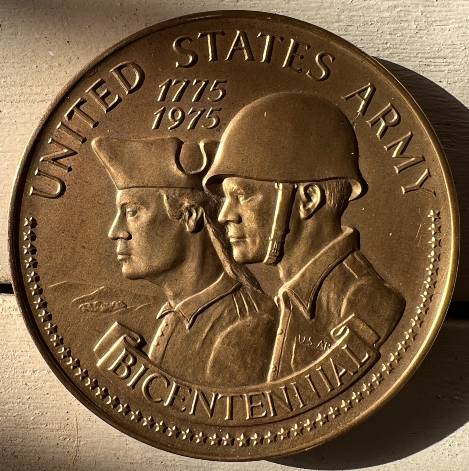 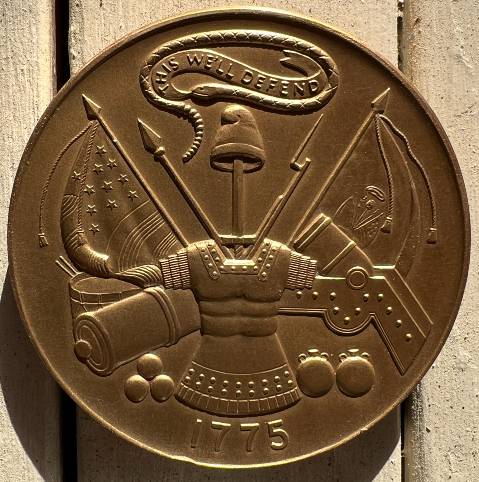 1988 Young Astronauts (Silver) 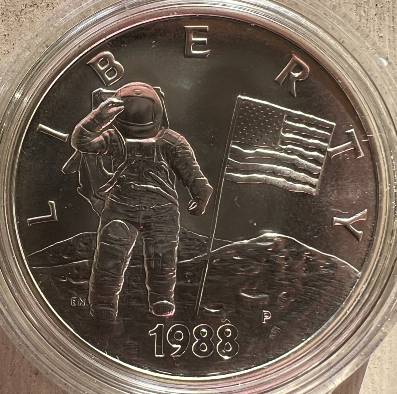 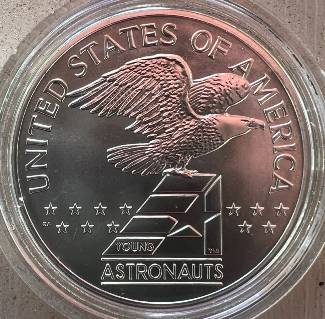 |
|
Bedrock of the Community
United States
79217 Posts |
Very nice ctpbilly!
Errers and Varietys.
|
|
Bedrock of the Community
United States
27514 Posts |
Excellent, Captain!
Inordinately fascinated by bits of metal with strange markings and figures
|
|
Bedrock of the Community
United States
27514 Posts |
Church of St. Anthony, Eunice, Louisiana. This Catholic church is still active today. From Crawford and Farber, "Louisiana Trade Tokens, 2nd Ed.": "This token was used in the 1930s when the practice of pew sales was abolished in the diocese of Lafayette. Pew sales had been used as a means of raising funds for the church, with church members bidding on specific pews for themselves and their families. When the sale of pews was discontinued the church pastor, the Reverend August Bauclizzone, determined that a charge of ten cents per person at the door would be instituted. Once worshippers were inside they could sit in the pew of their choice. However, it soon became apparent that many families, especially those with several children, could not afford the "admission" charge due to the depression. One of the council members suggested the use of a token. While these tokens were distributed to needy families free, other parishioners picked them up at the Rectory prior to mass. Therefore all members, rich and poor alike, would drop their tokens at the door avoiding potential embarrassment to some. Also, since it is very doubtful that anyone was turned away for the lack of a dime, church attendants likely kept a supply of tokens in their pockets to deposit when such situations arose. This practice continued until May 1933 when Monsignor A. Martel became pastor. At this time, the envelope system of contributions was instituted." Note: an old-timer told me that Catholic churches would also sell tokens such as these at a steep discount during the Depression so that people would have ***something*** to put into the collection basket as it was passed around to avoid the embarrassment of having nothing to contribute. Also, I recall from the '60s that there were still name tags on pews in the church my family attended, and only those families were allowed to sit there. 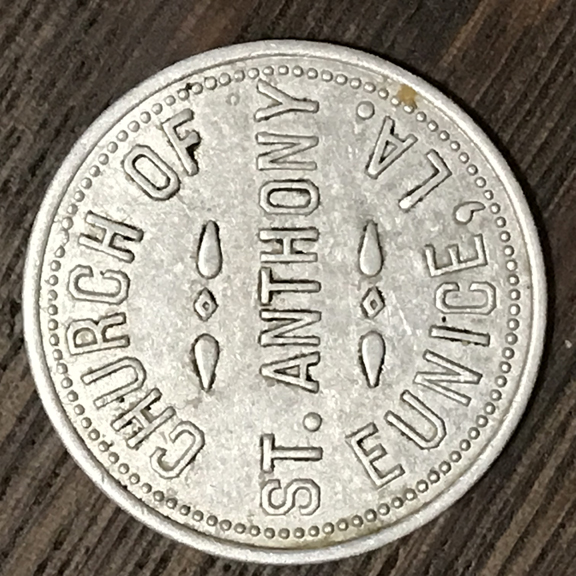 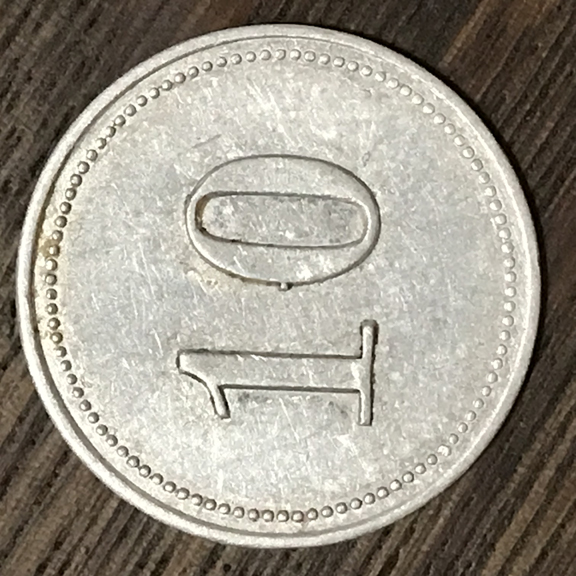 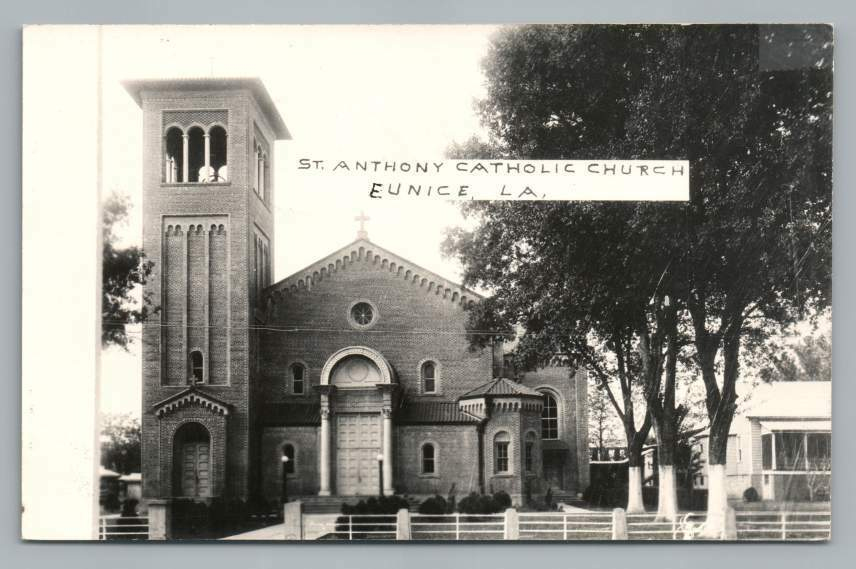 Inordinately fascinated by bits of metal with strange markings and figures
|
|
Bedrock of the Community
United States
79217 Posts |
Very cool Hondo Boguss!
Errers and Varietys.
|
|
Moderator
United States
195873 Posts |
Excellent additions! |
| |
Replies: 5,980 / Views: 456,808 |







 First Page
 Previous Page


 Posted 08/03/2023 2:53 pm





