|
This page may contain links that result in small commissions to keep this free site up and running.

Welcome Guest! Registering and/or logging in will remove the anchor (bottom) ads and the security checks. It's Free!
To participate in the forum you must log in or register. | Author |
 Replies: 5,980 / Views: 455,828 Replies: 5,980 / Views: 455,828 |
|
|
|
Bedrock of the Community
 United States
10284 Posts |
Thanks bd251, Now we have a great image of both the BLUE and RED Point tokens.
|
|
Bedrock of the Community
United States
10284 Posts |
1979 America's Natural Legacy ATLANTIC SALMON Longines Symphonette 35 gram Sterling Silver Medal  The average size of Atlantic salmon is 28-30 inches long and 8-12 pounds after two years at sea. Although uncommon, adults can grow to be as large as 30 pounds. Atlantic salmon have a relatively complex life history that includes spawning, juvenile rearing in rivers, and extensive feeding migrations on the high seas. As a result, Atlantic salmon go through several distinct phases that can be identified by specific changes in behavior, physiology, and habitat requirements. The Atlantic salmon is an anadromous fish, typically spending 2-3 years in freshwater, migrating to the ocean where it also spends 2-3 years, and then returning to its natal river to spawn. Suitable spawning habitat consists of gravel or rubble in areas of moving water. Eggs hatch in March or April and become fry. Fry remain buried in the gravel for about six weeks. The fry emerge from the gravel about mid-May and start feeding on plankton and small invertebrates. Emergent fry quickly disperse from nests (called redds) within the gravel. They develop camouflaging stripes along their sides, and enter what is termed the parr stage. Parr habitat, often called "nursery habitat," is typically riffle areas characterized by adequate cover, shallow water depth, and moderate to fast water flow. Salmon parr spend 2-3 years in freshwater and then undergo a physiological transformation called smoltification that prepares them for life in a marine habitat. Atlantic salmon leave Maine rivers in the spring and reach Newfoundland and Labrador by mid-summer. They spend their first winter at sea south of Greenland. After the first winter at sea, a small percentage return to Maine while the majority spend a second year at sea, feeding off the southwest or, to a much lesser extent, the southeast coast of Greenland. Some Maine salmon are also found in waters along the Labrador coast. After a second winter in the Labrador Sea, most Maine salmon return to rivers in Maine, with a small number returning the following year as what is referred to as three sea winter fish. 
|
|
Bedrock of the Community
United States
12477 Posts |
Tonight's Nürnberger Strassenbahn token (late night edition  ): Schöner Brunnen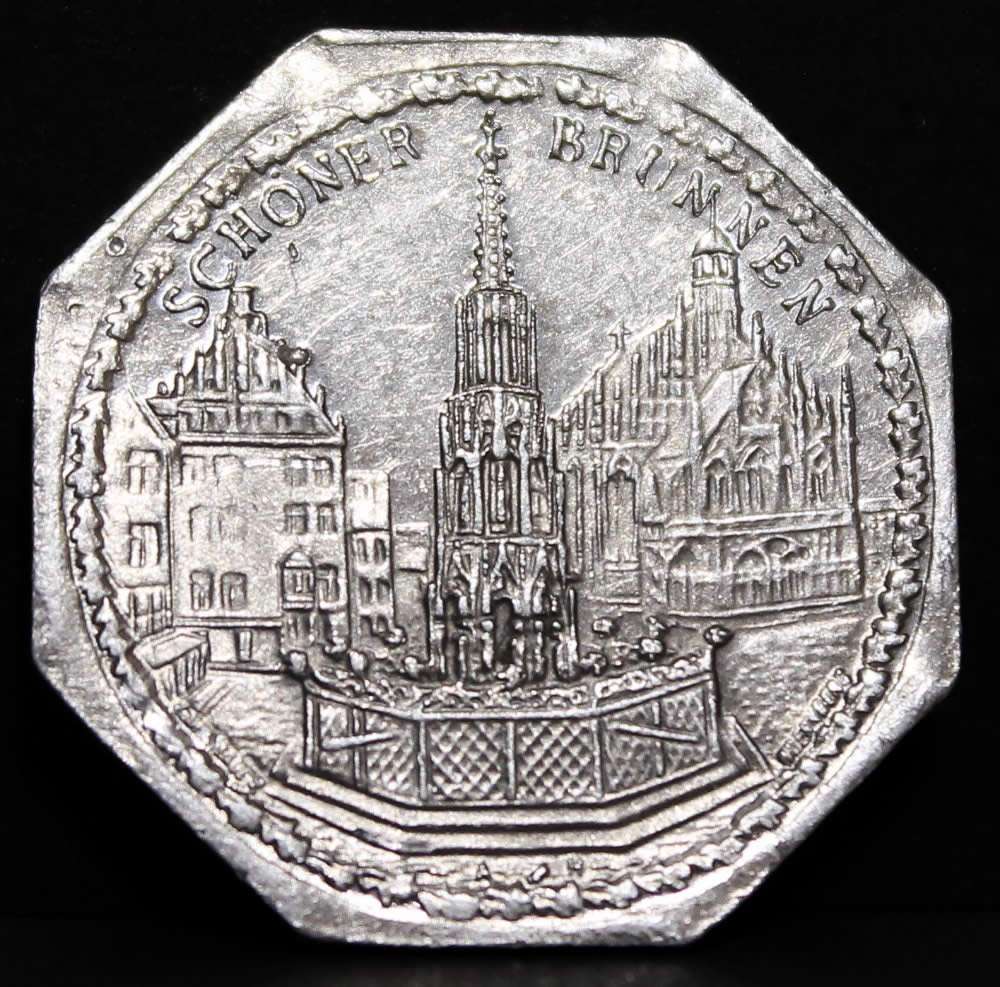 In Nuremberg's market square (Nürnberg Hauptmarkt) is one of the city's most famous fountains, the Schöner Brunnen (Beautiful Fountain). 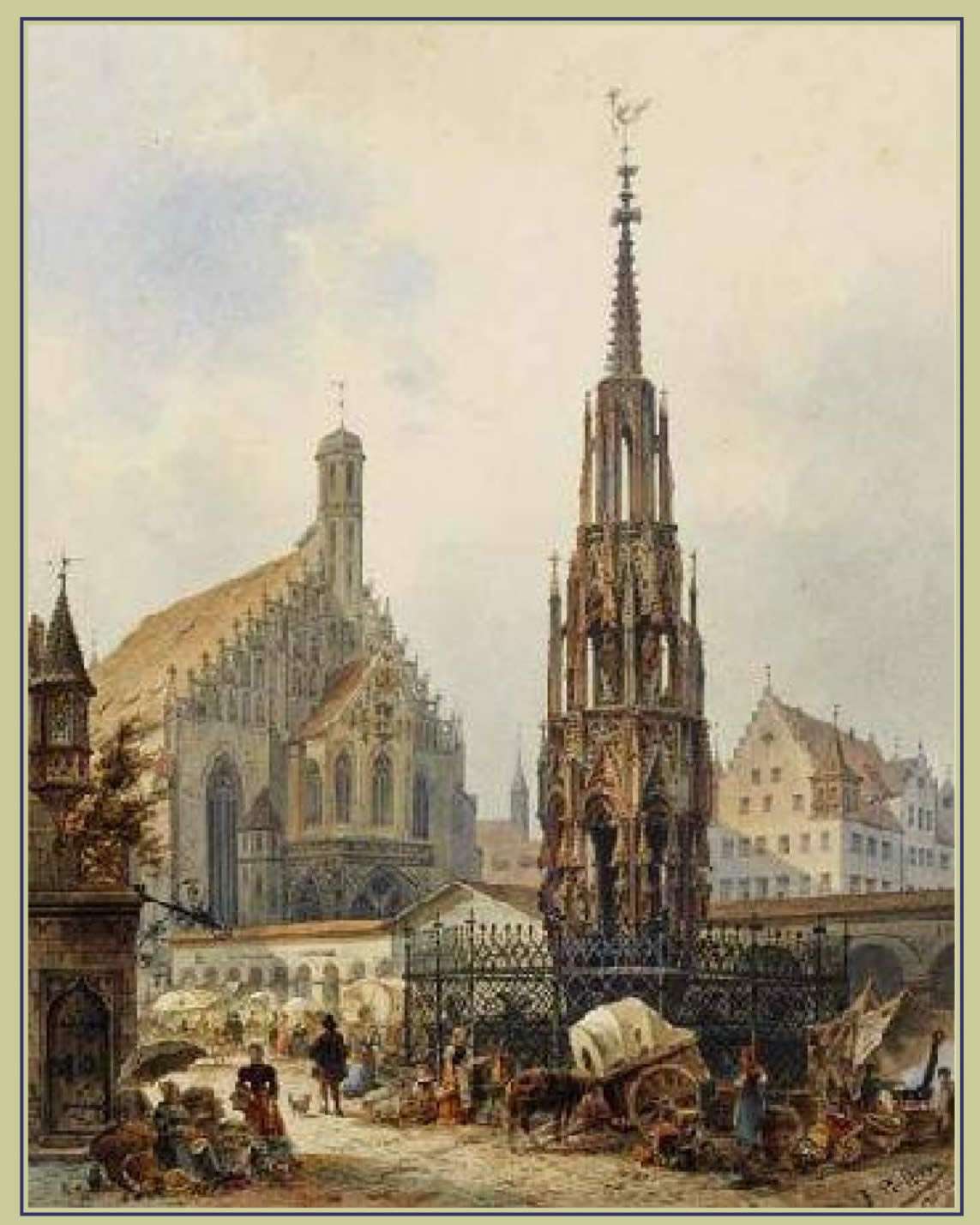 A common sight at the southwest flank of the Beautiful Fountain is one of the tourists hanging on to the fountain grille and having their photos taken. According to a local legend, if you turn the "golden ring" (this ring gets replaced due to wear and tear and on one occasion it was a black ring) on the grille three times and make a wish, your wish will come true. The golden ring is quite small and not immediately noticeable. 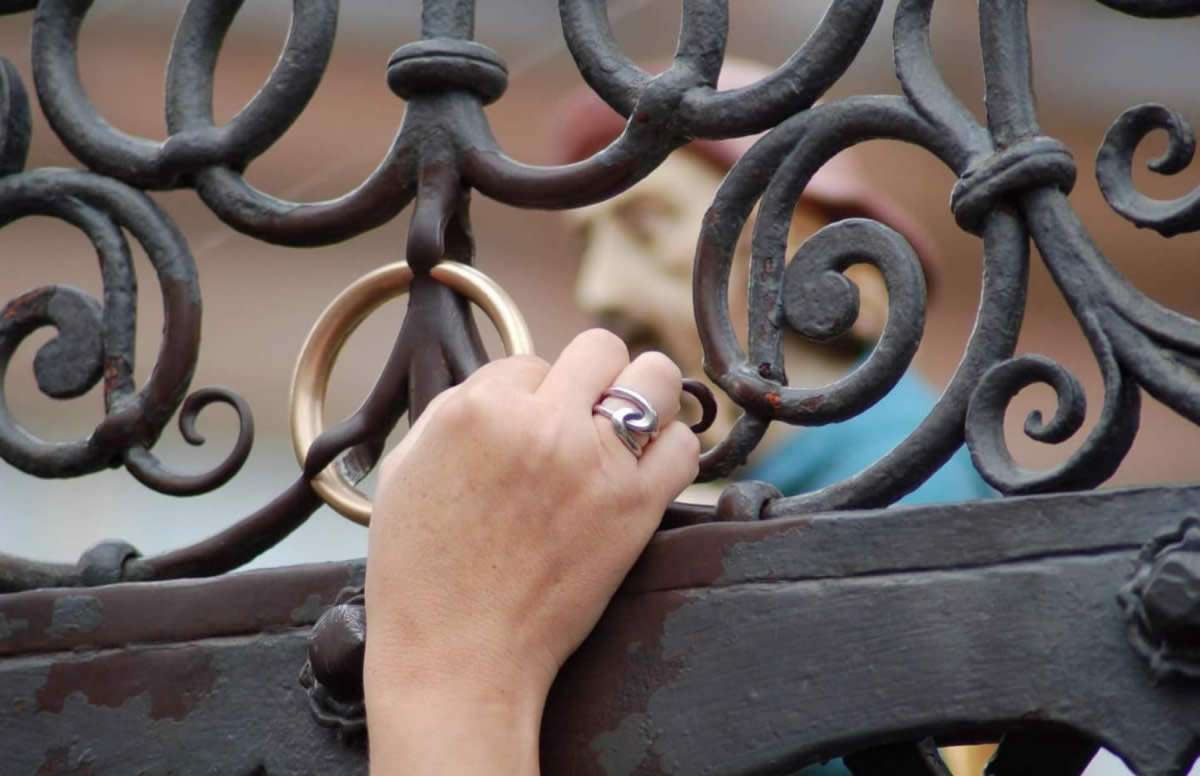 The fountain, in 1905, in the background of a photo of another fountain: 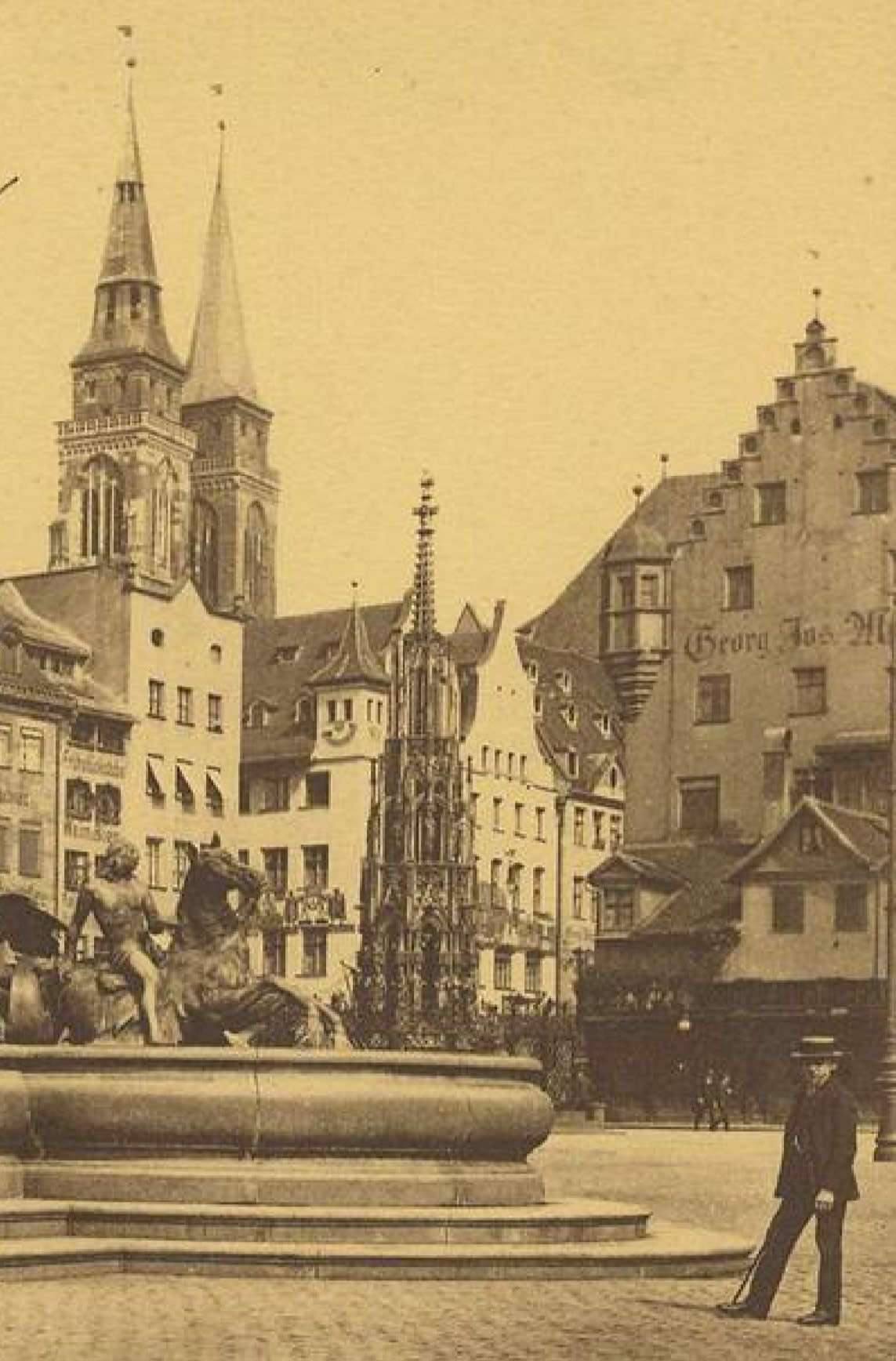 The current Beautiful Fountain in the Hauptmarkt is a replica that was placed here in the early 20th Century. The original Schöner Brunnen was erected around 1385-96.The OriginalThis ornate and richly painted fountain was the work of master builder Heinrich Beheim. It is unclear to me if he is directly related to the aforementioned and immortalized Martin Beheim. The three-tiered Beautiful Fountain stands in an octagonal water basin and it looks like a Gothic church spire. The fountain soars 19 meters (62 ft) upward and features 40 sculptured figures which reflect the world-view of the Holy Roman Empire: the pool is decorated with figures representing philosophy and the seven liberal arts and above them are the four Evangelists and the four Church Fathers. In the middle are the Seven Electors and Nine Worthies and above them Moses and Seven Prophets. The wrought-iron grille (ca. 1587) was the work of Paulus Kühn of Augsburg. Only fragments of the soft sandstone original survive and features and details of the original are now held in the Germanisches Nationalmuseum, which again, has its own token in the series. Images of some of what survives can be seen here: https://museum-nuernberger-kunst.de...ener-brunnenThe replica as it stands today: 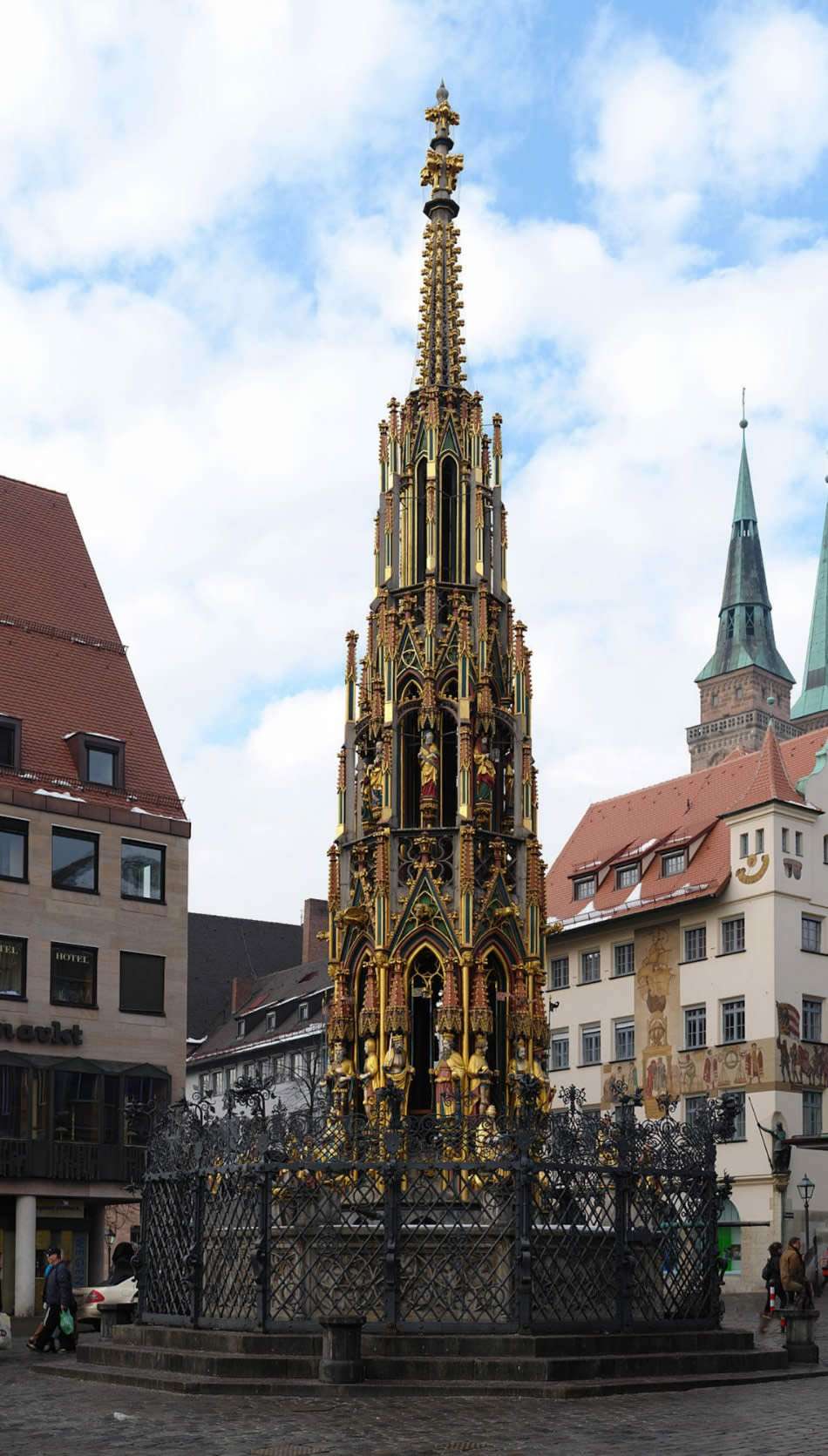 It's thought provoking: the replica of the original fountain is still approximately two centuries old. The original would now have been well over 600 years old. It was built before "Columbus sailed the ocean blue." That's a shrug of the shoulder in a place like Nürnberg.  In Memory of Crazyb0 12-26-1951 to 7-27-2020
In Memory of Tootallious 3-31-1964 to 4-15-2020
In Memory of T-BOP 10-12-1949 to 1-19-2024
Edited by spru
06/27/2018 01:29 am
|
|
Bedrock of the Community
United States
10284 Posts |
Spruuuuuu your medal set has become quite alive with your excellent commentary and images. Great job! I bet it makes you like them so much more.  |
|
Bedrock of the Community
United States
10284 Posts |
1974 Uncle Toms Cabin Danbury Mint Sterling Silver Medal  I believe these latest two medals come from The Danbury Mint in 1974 Medallic History of America Commemorative Medals Collection. There are a whopping 200 medals in the set. I only own three.  I bought this one since I have an old copy of the book from Harriet Beecher Stowe. And I have read it. If I do find what box I have it store in, it will automatically replace this related image.  Harriet Beecher was born June 14, 1811, the seventh child of a famous protestant preacher. Harriet worked as a teacher with her older sister Catharine. In 1836, Harriet married widower Calvin Stowe: they eventually had seven children. Stowe helped to support her family financially by writing for local and religious periodicals. During her life, she wrote poems, travel books, biographical sketches, and children's books, as well as adult novels. She met and corresponded with people as varied as Lady Byron, Oliver Wendell Holmes, and Mary Ann Evans who used the male pen name George Eliot. While she wrote at least ten adult novels, Harriet Beecher Stowe is predominantly known for her first, Uncle Tom's Cabin (1852). Begun as a serial for the Washington anti-slavery weekly, the National Era, it focused public interest on the issue of slavery, and was deeply controversial. In writing the book, Stowe drew on her personal experience as she was familiar with slavery, the antislavery movement, and the underground railroad because Kentucky, across the Ohio River from Cincinnati, Ohio, where Stowe had lived, was a slave state. Following publication of the book, she became a celebrity, speaking against slavery both in America and Europe. She wrote A Key to Uncle Tom's Cabin (1853) extensively documenting the realities on which the book was based, to refute critics who tried to argue that it was inauthentic, and published a second anti-slavery novel, Dred in 1856. In 1862, when she visited President Lincoln, legend claims that he greeted her as "the little lady who made this big war" meaning the Civil War between the states. 1974 Custer's Last Stand
Danbury Mint Sterling Silver Medal  This medal is similar to this 1972 Longines Symphonette Wittnauer Medal I acquired a ways back and posted about here.  Rather than repeat that exact text I wrote, you can click on this link to take you to that post about that medal. http://goccf.com/t/301479&whichpage=25#2665746
|
|
Bedrock of the Community
United States
10284 Posts |
The Battle of the Ironclads The Battle of the USS Monitor and CSS Merrimack ( in fact it had been renamed CSS Virginia long before the famous battle) or the Battle of Ironclads, was the most noted and arguably most important naval battle of the American Civil War from the standpoint of the development of navies. It was fought over two days, March 8-9, 1862, in Hampton Roads, a roadstead in Virginia where the Elizabeth and Nansemond rivers meet the James River just before it enters Chesapeake Bay adjacent to the city of Norfolk. The battle was a part of the effort of the Confederacy to break the Union blockade, which had cut off Virginia's largest cities and major industrial centers, Norfolk and Richmond from international trade. This event was taught to me in early grade school, probably 4th grade. I remember having to associate The Monitor with the North since both had the letter "N" in the name, and the Merrimac did not. We were also taught that they had nicknames, the Monitor looked like a "Cheesebox on a Raft" and so it was called, that was definitely a question on the test. I believe that teacher and this study was the first time I learned some association memorization tricks. I can't say I was enthusiastic about the Civil War, I was probably struggling in American History so that I may have just passed that particular year. The Merrimack originally was a USS frigate but was burned to the waterline. The South salvaged it and rebuilt it as an ironclad. It was then re-named "Virginia". Virginia and Merrimack were used interchangeably by both sides, as attested to by various newspapers and correspondence of the day. Navy reports and pre-1900 historians frequently misspelled the name as "Merrimac", which was actually an unrelated ship. It sometimes was called "The Rebel Monster". This is new to me.  I do remember that neither ship sank in the long battle at close range. The noise from both firing and being struck by cannons and heat inside the ships was horrendous. One gunner on the Merrimac quit firing at one point saying, "It is quite a waste of ammunition to fire at her. Our powder is precious, sir, and I find I can do the Monitor as much damage by snapping my finger at her every five minutes." The Merrimac hit the Monitor 23 times in four hours to no avail. The Monitor, hitting the Merrimac 20 times in the same period, was unsuccessful as well. (Both vessels were protected on top by iron plating, but below the water line, each had a wooden hull. Neither vessel hit the other below the water line, where both vessels were vulnerable.) The Merrimac even tried ramming the Monitor, but because her ram was damaged in her battle with the USS Cumberland the day before, and because Lt. Jones didn't go as fast, fearing getting stuck again as happened with the Cumberland, the Merrimac simply glanced off the sides of the Monitor without inflicting any damage. Even the Monitor tried ramming the Merrimac. Lt. Worden ordered her turned around and aimed at the Merrimac's stern. At full speed they were on target when suddenly the Monitor's steering apparatus malfunctioned and she missed the Merrimac by a few feet. Lt. Jones was convinced that he could not injure the Monitor, so his officers suggested attempting to board the Monitor with wedges and hammers, with the goal of freezing the revolving gun turret in place. It sounded like a good idea, but Jones didn't approve it, which was fortunate, because the Monitor's crew had already anticipated such action. They were at the ready with hand grenades which could be tossed out onto the deck from the turret. The Monitor crew would be protected by the turret, but the Confederates would have no where to go to escape the explosions except by jumping in the water. Though the battle was a draw, both sides claimed a victory, charging that the other had withdrawn in defeat. 
Edited by TNG
06/27/2018 11:53 pm
|
|
Bedrock of the Community
United States
10284 Posts |
Good thing I slowed down on the medals huh jbuckster?  |
|
Bedrock of the Community
United States
12477 Posts |
Quote:Spruuuuuu your medal set has become quite alive with your excellent commentary and images. Great job! I bet it makes you like them so much more. I do appreciate them more. What's more, I am learning about the people and places represented and that is the best thing. I now know why Martin Beheim is a name to remember when, before getting these, I was unaware of his existence. I still have several more of these tokens to post from those I own. On top of that, at 26 unique designs, I have just over half of the total designs produced, so there may be many more to come.  In Memory of Crazyb0 12-26-1951 to 7-27-2020
In Memory of Tootallious 3-31-1964 to 4-15-2020
In Memory of T-BOP 10-12-1949 to 1-19-2024
Edited by spru
06/28/2018 9:59 pm
|
|
Bedrock of the Community
United States
12477 Posts |
Tonight's German installment: Tiergärtnertor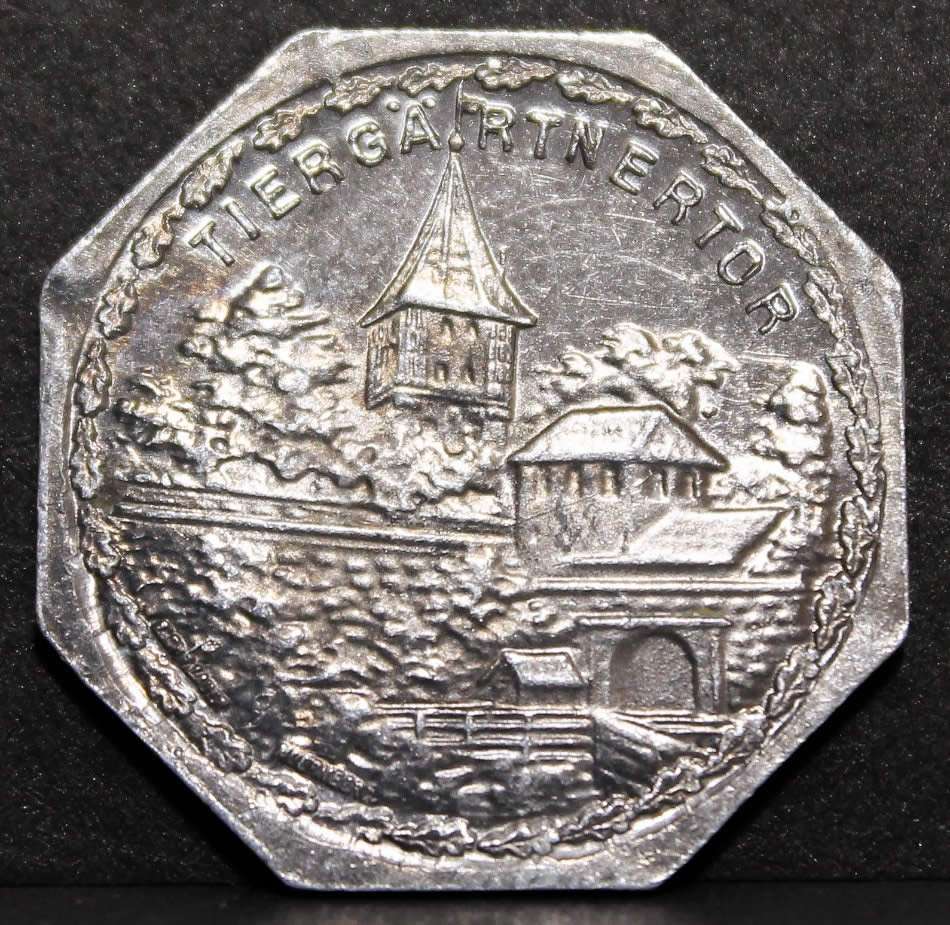 The Tiergärtnertor in Nuremberg is a gate and part of the Nuremberg city wall estimated to date to the late 13th Century. It was the primary gate of Nuremberg to the northwest. The name of the gate has its origin in a former game preserve of the Burgraves in the nearby moat (see below). Tor refers to the gate and should not be confused with the tower, or turm, aside it that is fittingly called the Tiergärtnertorturm. The gate (2010): 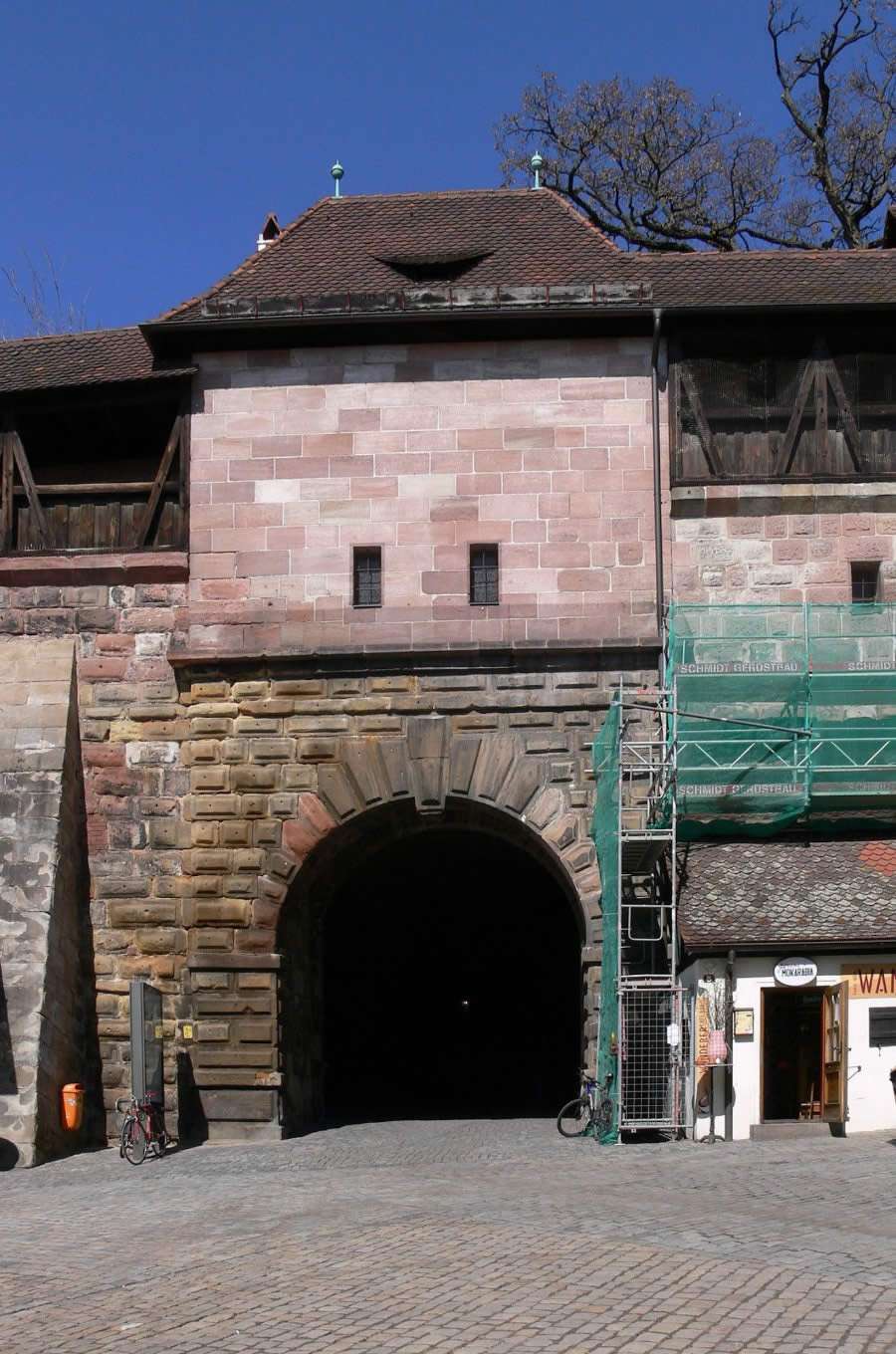 The tower (2017): 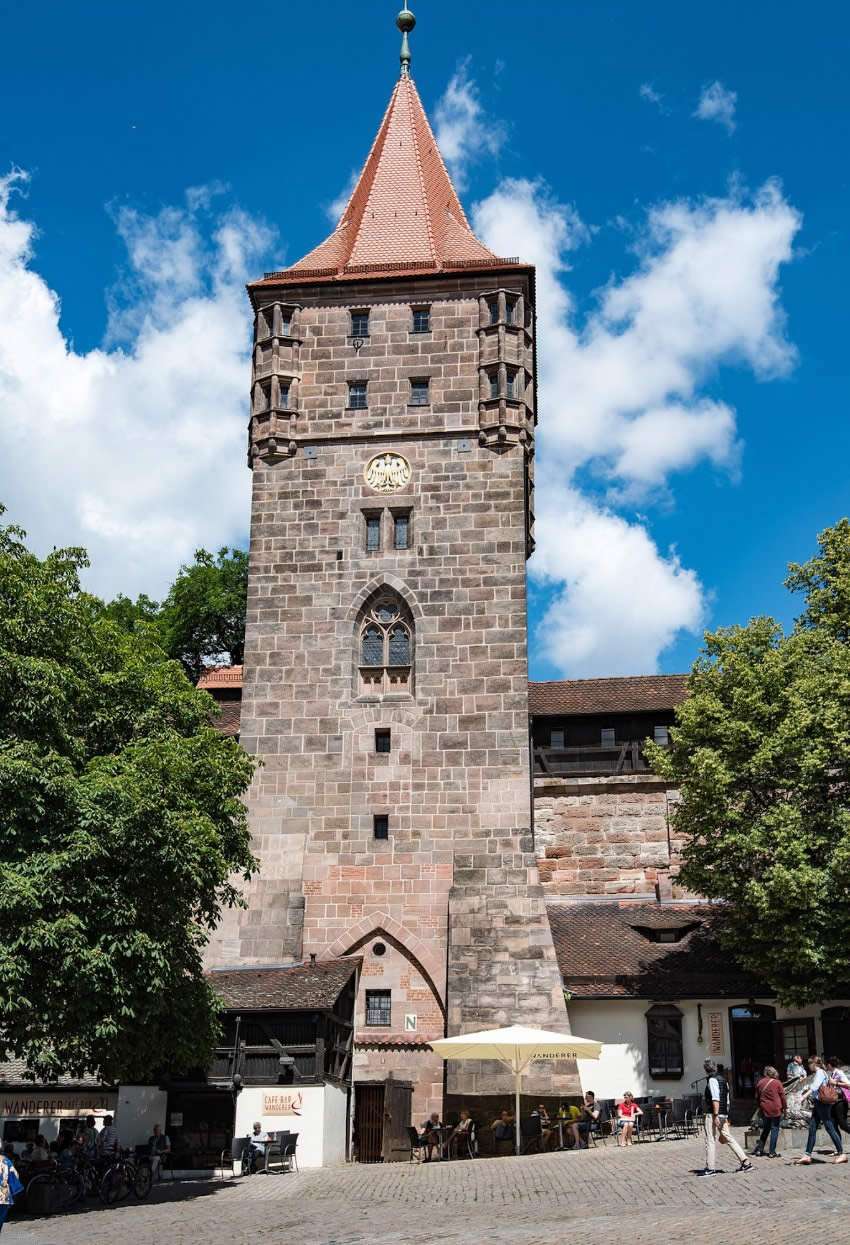 Interestingly, the token shows the gate and tower from outside the city, similar to what is seen on this postcard, ca. 1900: 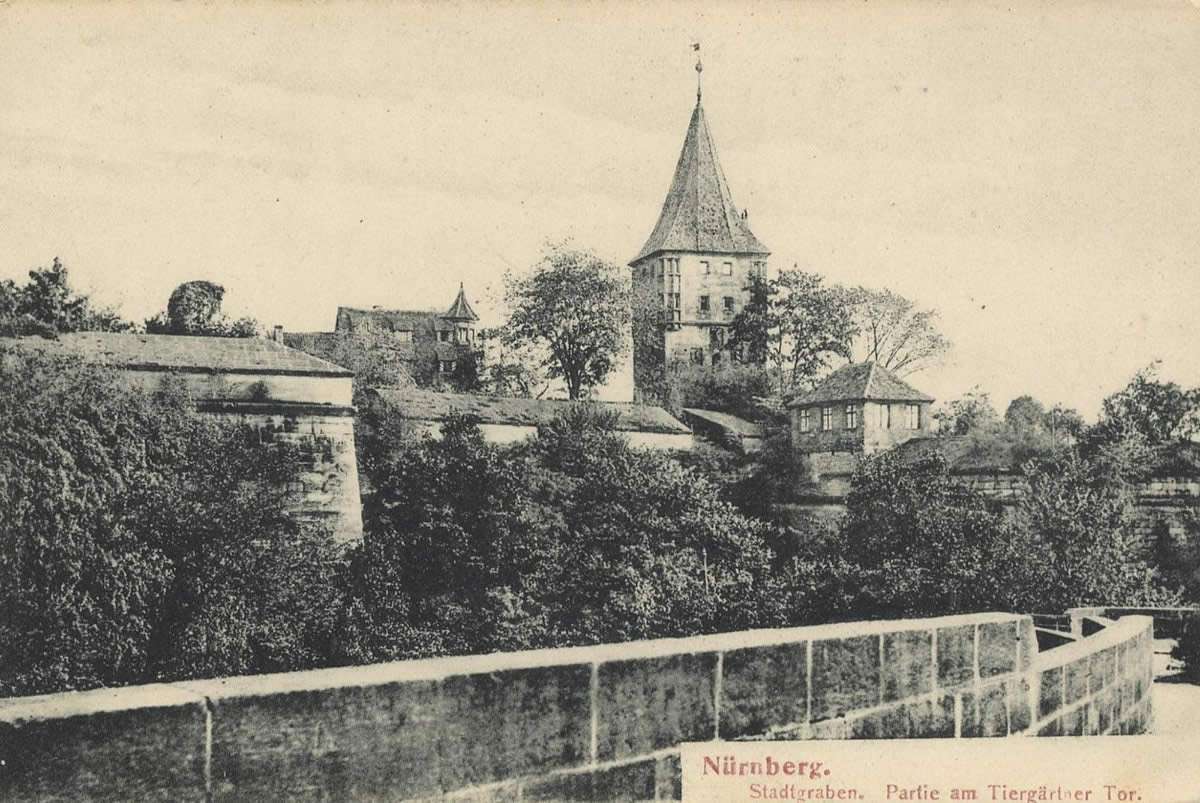 Here is a more commonly photographed view from inside the city wall, ca. 1900: 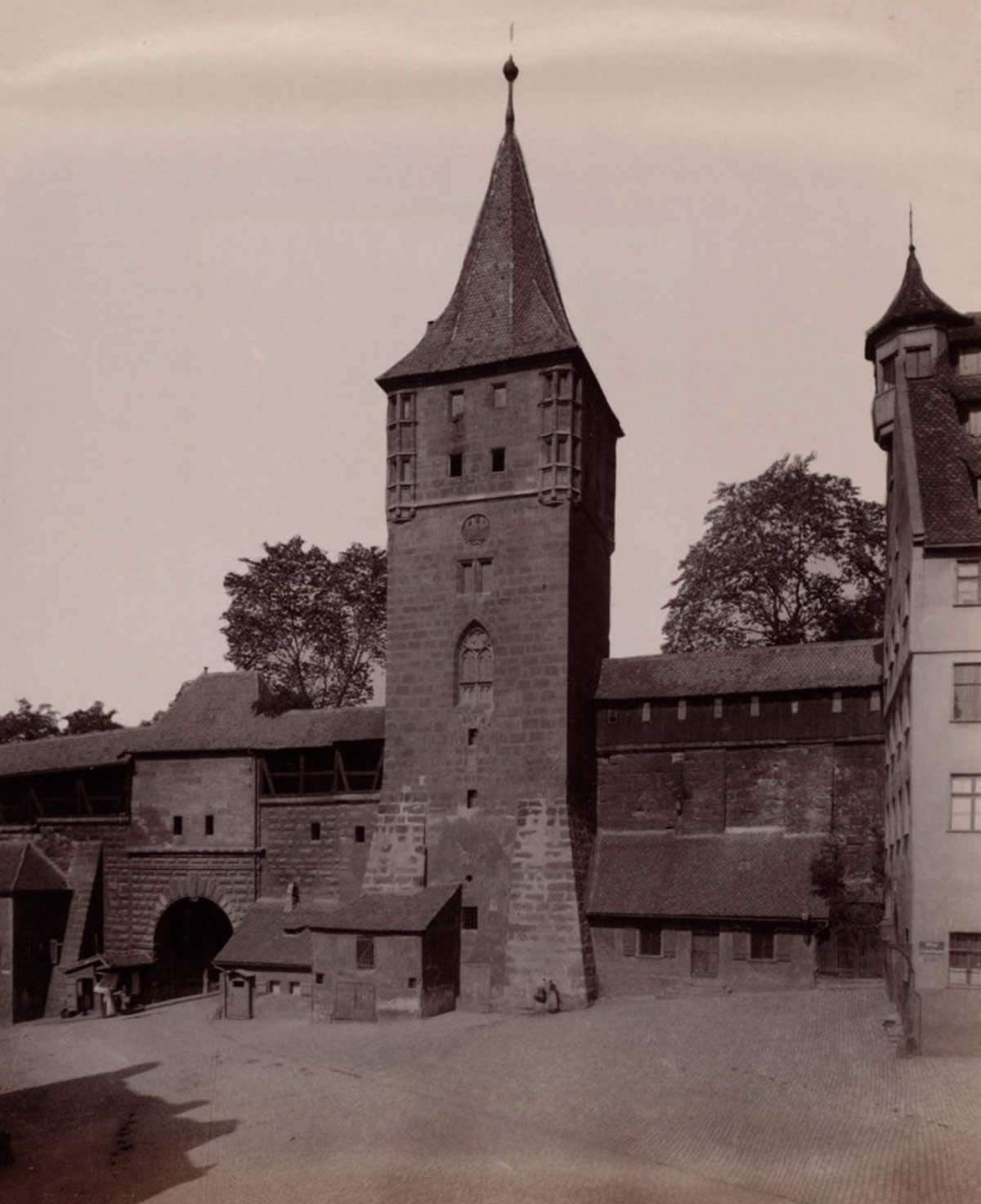 A Tiergarten is what we would now call a zoo. The tradition of zoos in Nuremberg goes back to the Middle Ages. However, the only indications of a zoo maintained by the local nobility, the Burgraves, take the form of certain place names, such as the Zoo Gate (Tiergärtnertor) and the adjoining Zoo Square (Tiergärtnertorplatz). This preserve stretched as far as the so-called Johannisfelder (today: St. Johannis) and the Rohlederersgarten (today the site of the Klinikum Nord). One can only speculate about the use made of the park. More on the Nuremberg Zoo when I get the "Eisbären" token.  One last historical image and note: 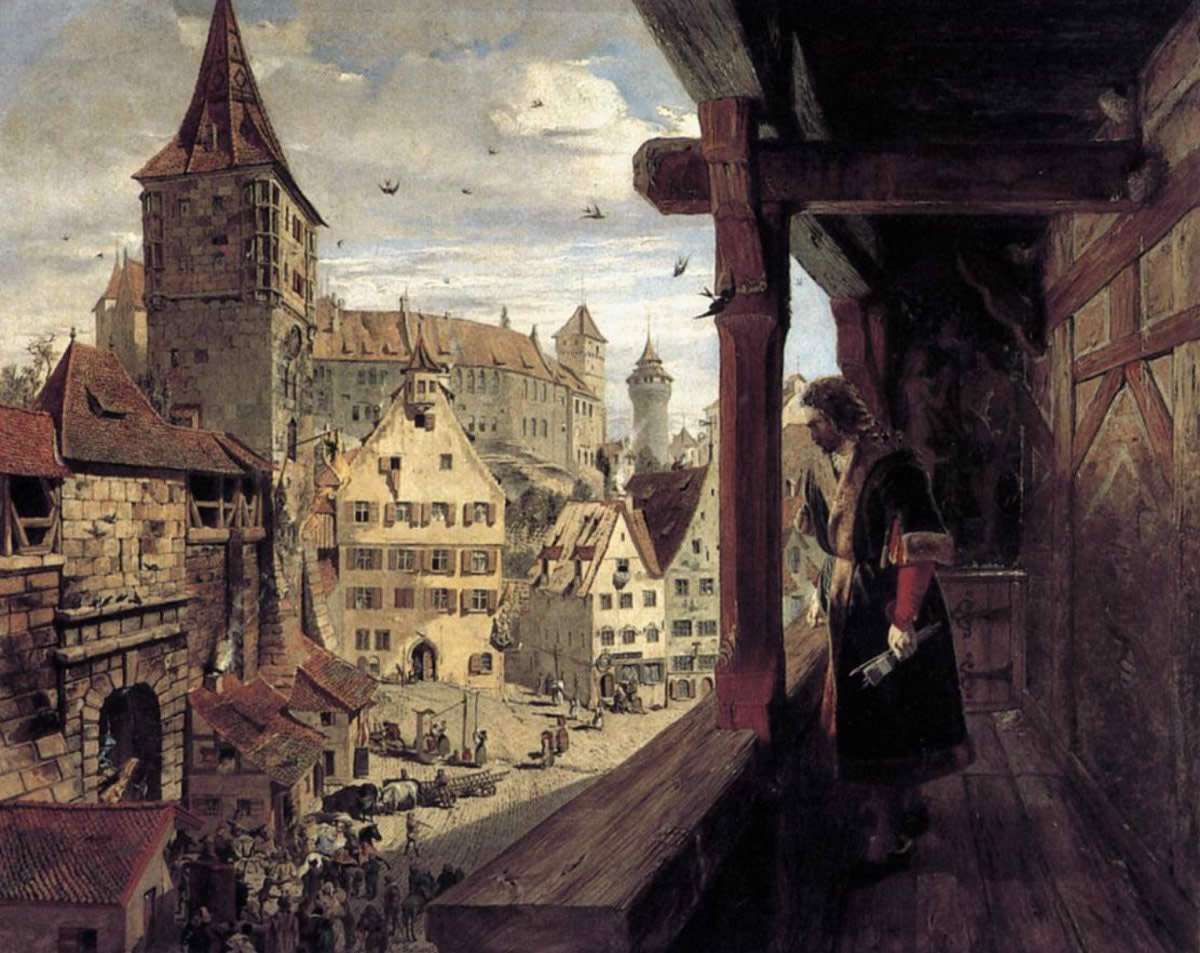 Albrecht Dürer (remember him?) is pictured here on the balcony of his house (the matching token already posted), with the Tiergärtnertor and the Tiergärtnertorturm to the left in a painting by William Bell Scott from 1854 -- 326 years after Dürer's death. In Memory of Crazyb0 12-26-1951 to 7-27-2020
In Memory of Tootallious 3-31-1964 to 4-15-2020
In Memory of T-BOP 10-12-1949 to 1-19-2024
Edited by spru
06/28/2018 01:49 am
|
|
Pillar of the Community
New Zealand
526 Posts |
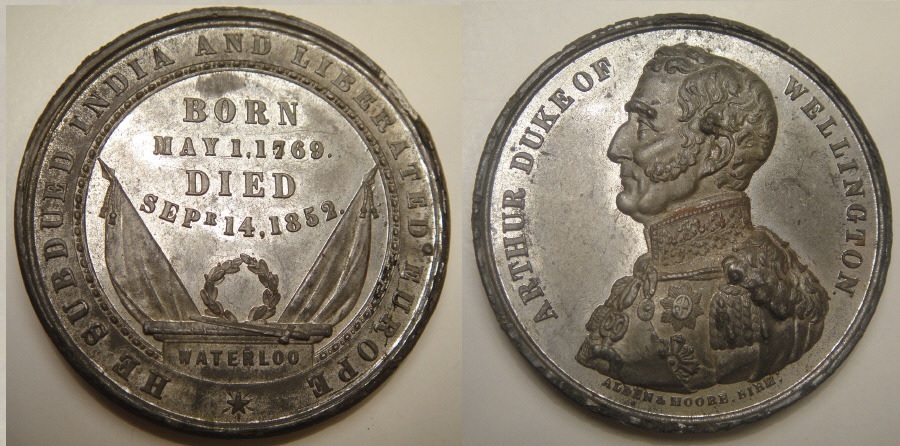 1852 Duke of Wellington Medal. White metal. 39mm. A very well detailed uniformed left facing bust of Duke of Wellington. 'ARTHUR DUKE OF WELLINGTON' in legend around. #8203;Allen and Moore Birm below. Reverse - Crossed flags with words 'WATERLOO'. The centre inscription reads 'BORN MAY 1 1769 DIED SEPR 14 1852'. Legend around reads 'HE SUBDUED INDIA AND LIBERATED EUROPE' Edited by Bas S Warwick
06/28/2018 06:21 am
|
|
Pillar of the Community
New Zealand
526 Posts |
Pope John 1983 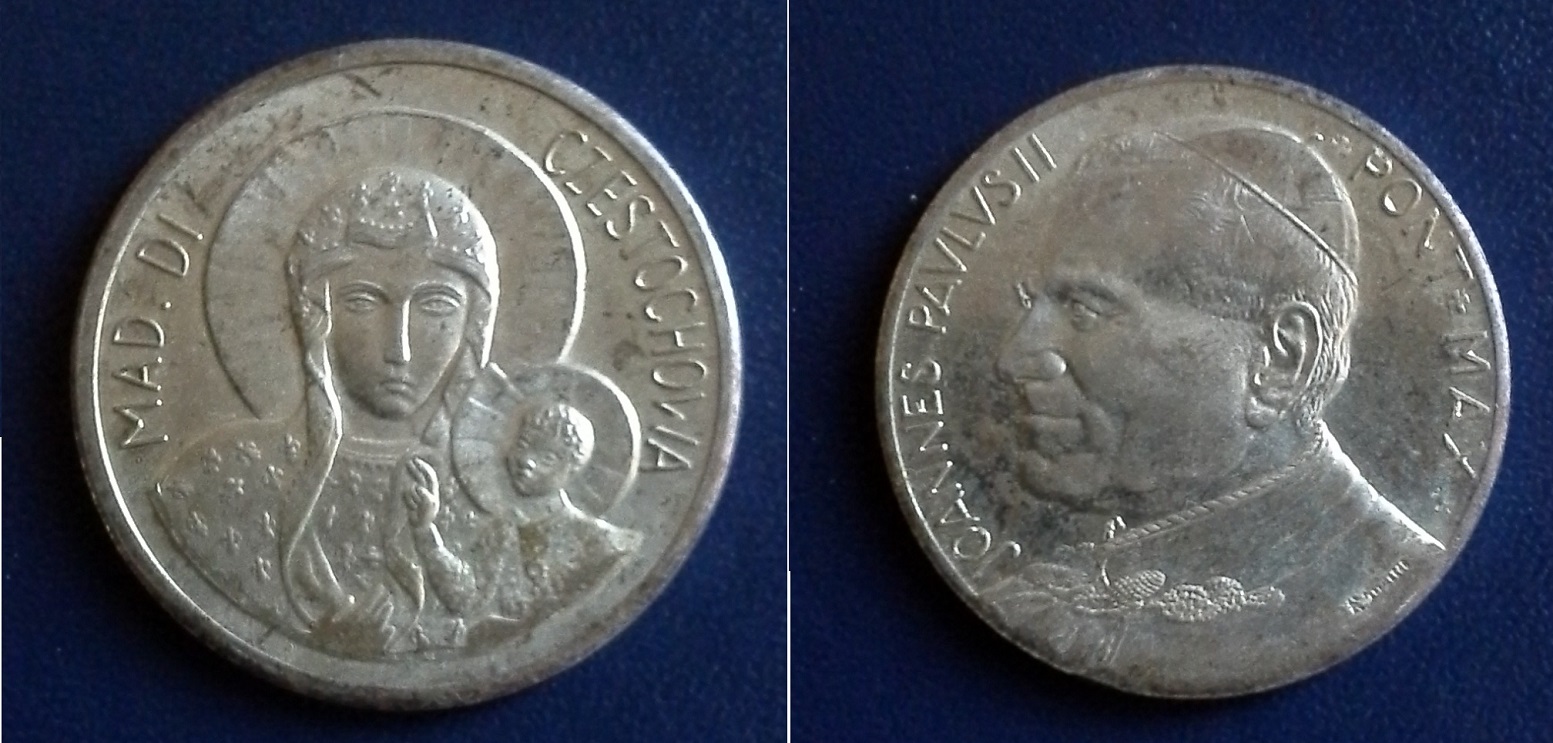 |
|
Pillar of the Community
New Zealand
526 Posts |
Pope John Paul 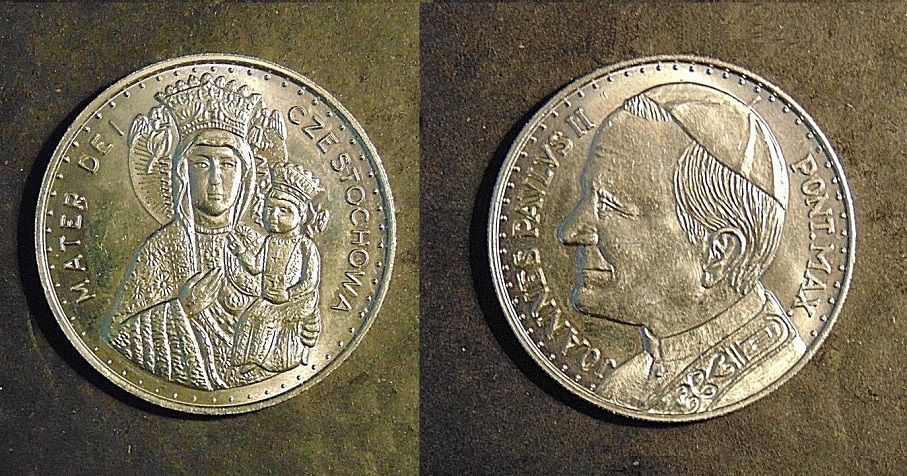 |
|
Pillar of the Community
New Zealand
526 Posts |
John Paul Roma 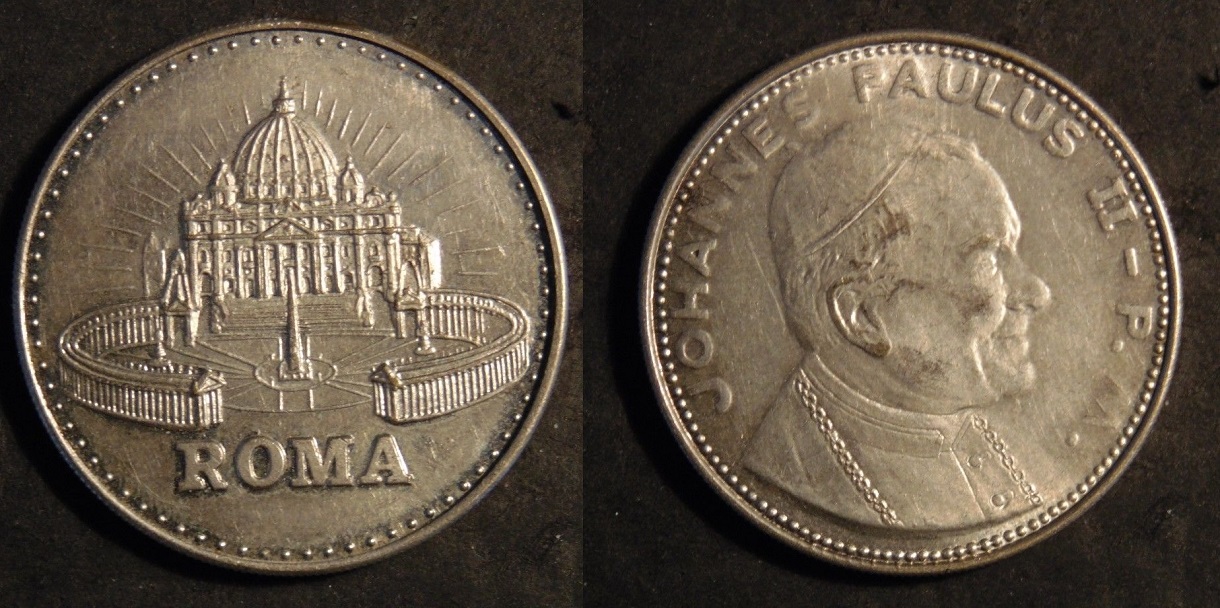 |
|
Pillar of the Community
New Zealand
526 Posts |
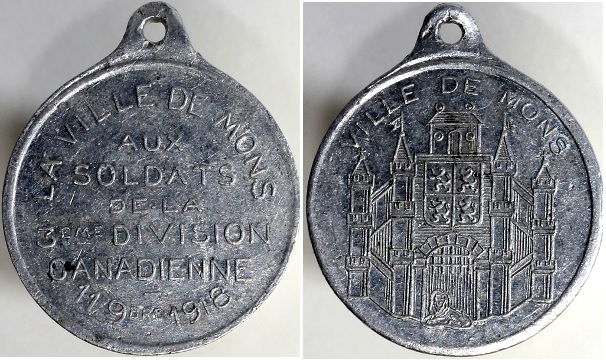 On the face of the medallion is the coat of arms of the City of Mons, with "VILLE de MONS ." On the reverse reads the following message: LA VILLE DE MONS AUX SOLDATS DE LA 3rd DIVISION CANADIAN 11 Sept 1918 |
|
Bedrock of the Community
United States
10284 Posts |
Good to see you back Bas!
Spruuuu I am glad somebody is chasing those medals, they are very interesting, thanks to your images and information compilation.
Thanks everyone for participating in my favorite thread on CCF!
|
| |
Replies: 5,980 / Views: 455,828 |
To participate in the forum you must log in or register.
Disclaimer: While a tremendous amount of effort goes into ensuring the accuracy of the information contained in this site, Coin Community assumes no liability for errors. Copyright 2005 - 2026 Coin Community Family- all rights reserved worldwide. Use of any images or content on this website without prior written permission of Coin Community or the original lender is strictly prohibited.
Contact Us | Advertise Here | Privacy Policy / Terms of Use
|
| Coin Community Forum |
© 2005 - 2026 Coin Community Forums |
| It took 0.58 seconds to rattle this change. |
 |
|
| |
| |







 First Page
 Previous Page


 Posted 06/26/2018 10:28 pm


