| Author |
 Replies: 199 / Views: 36,476 Replies: 199 / Views: 36,476 |
|
|
|
Bedrock of the Community
 United States
20038 Posts |
Thanks you Kurt, you are correct. I don't know what EVO is, but if it's based on olive oil, it's a mixture of many organic acids and chemicals. These will all affect the patina of the coin. Think "like dissolves like", oils will solubilize any organic materials coating the surface, which will change the coins appearance. Additionally, the other organic acids and components are non-selective, they attack everything. My package is intended only to dissolve the copper sulfates and carbonates, while actually protecting the copper and copper oxide layer to maintain the patina.
This test is on-going, it's not over until the verdigris is gone. I'm just documenting the time progression here. I suspect this going to take a few days and some fomulation adjustments.
EDIT: Just wanted to add that my "day job" is chemist in the metalworking fluids industry. I do know a little about metals chemistry. LOL
Edited by BadThad
05/17/2008 7:08 pm
|
|
Pillar of the Community
United States
914 Posts |
EVOO = Extra Virgin Olive Oil.
I'm quite excited about your progress! Thanks for sharing.
|
|
Pillar of the Community
United States
936 Posts |
Thad,
Have you tried potassium cyanide on Lincoln's yet? I have read a couple articles saying that is what people used in the "old" days.
|
|
Bedrock of the Community
United States
20038 Posts |
Chris - Yes, I did....it's aweful, it will clean the coin...right down the the metal, completely ruining it IMO. It destroys any original mint luster quickly leaving a dull finish. I've tried everything published I could find, all those methods do more damage than good. The fluid I'm working on will (or should) only remove the true verdigris.
Lincoln Cent Lover!VERDI-CARE™ INVENTOR https://verdi.care/
|
|
Pillar of the Community
United States
5318 Posts |
"Have you tried potassium cyanide on Lincoln's yet" Please--no more Lincoln assassinations.  |
|
Bedrock of the Community
United States
20038 Posts |
After 3 days I'm down to the really tough stuff. I have a couple new forumlas to try next. To this point, it's been #9.1. Initial 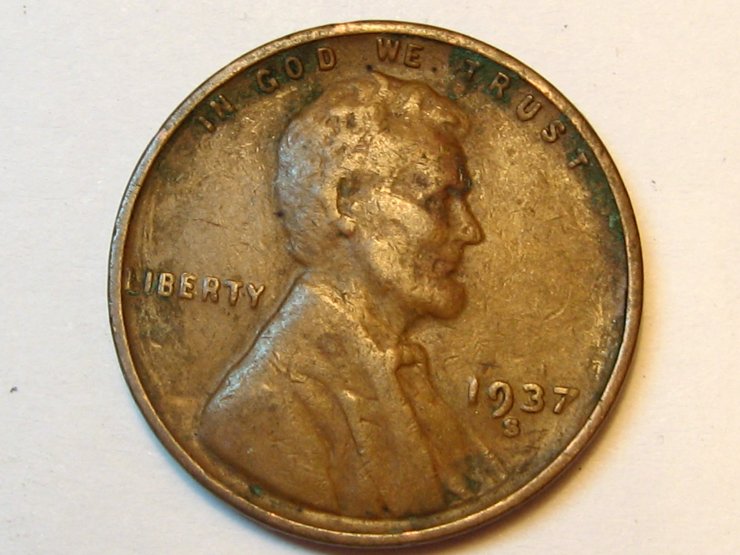 After 3 days 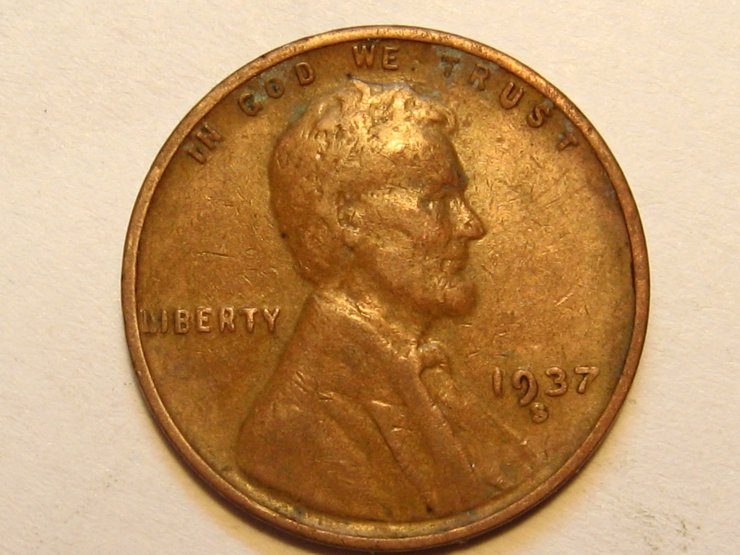 Initial Reverse 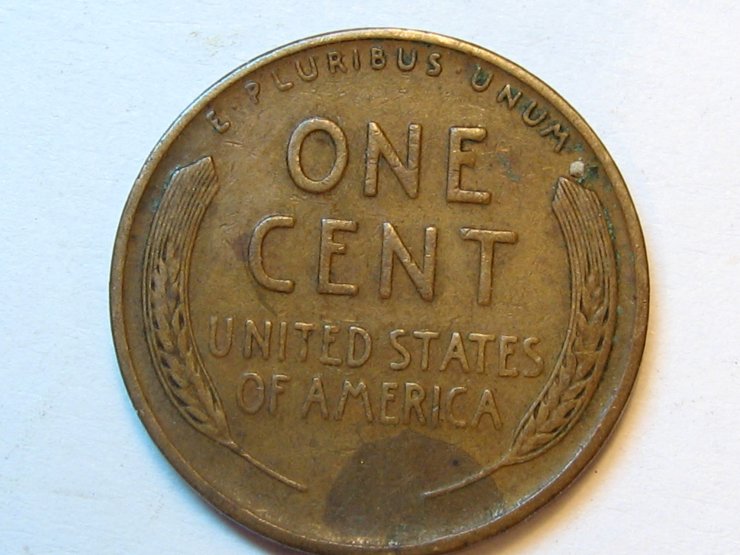 After 3 days Reverse 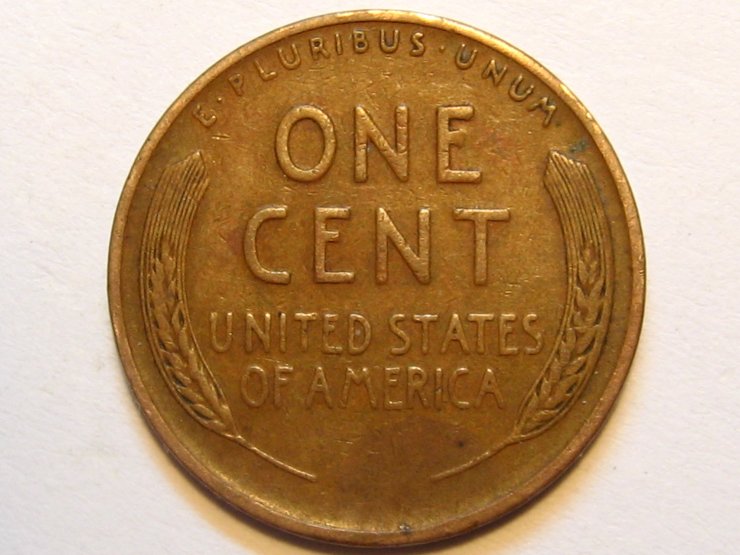 Some close ups Some close upsInitial 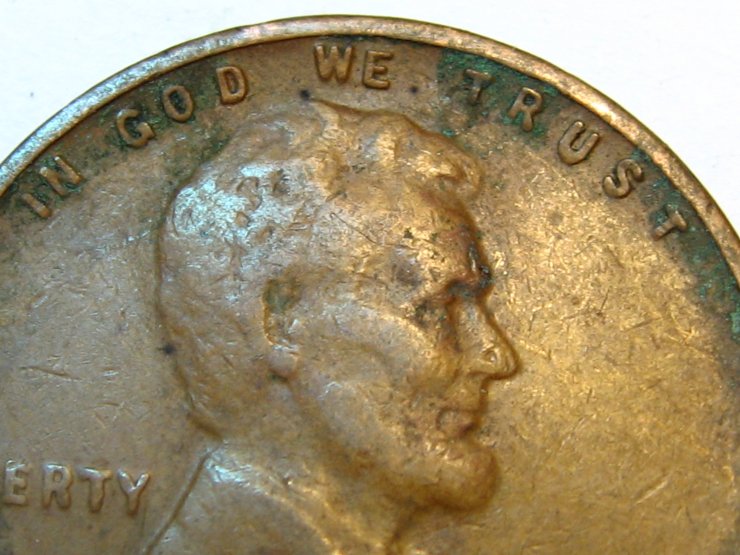 After 3 days 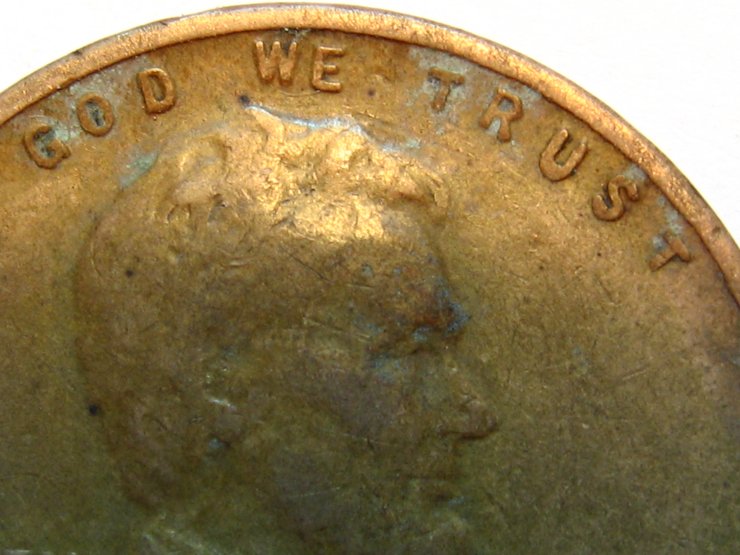 I've terminated this test. I think I was patina was lightened and the formula was unable to remove the last bit of corrosion. Lincoln Cent Lover!VERDI-CARE™ INVENTOR https://verdi.care/
Edited by BadThad
05/19/2008 6:47 pm
|
|
Bedrock of the Community
United States
20038 Posts |
Formula #8.6. Much more difficult test specimen, deep verdigris. Test started 19MAY2008 6:30PM. Initial  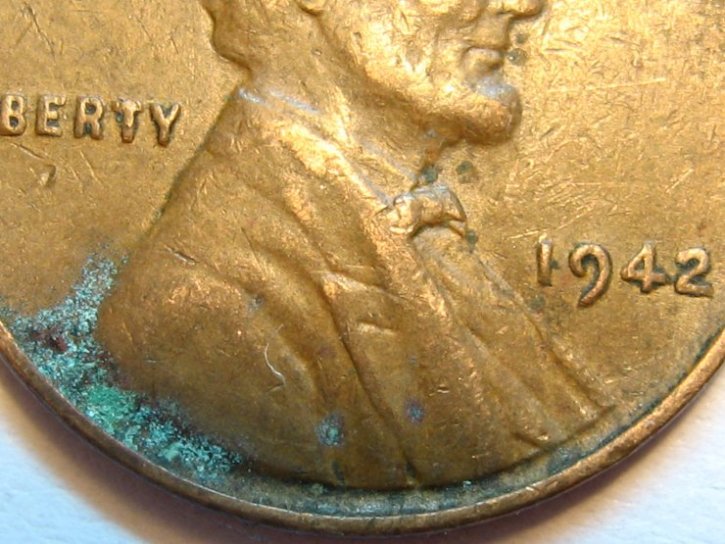 |
|
Bedrock of the Community
United States
20038 Posts |
#8.6 Initial 1 Day 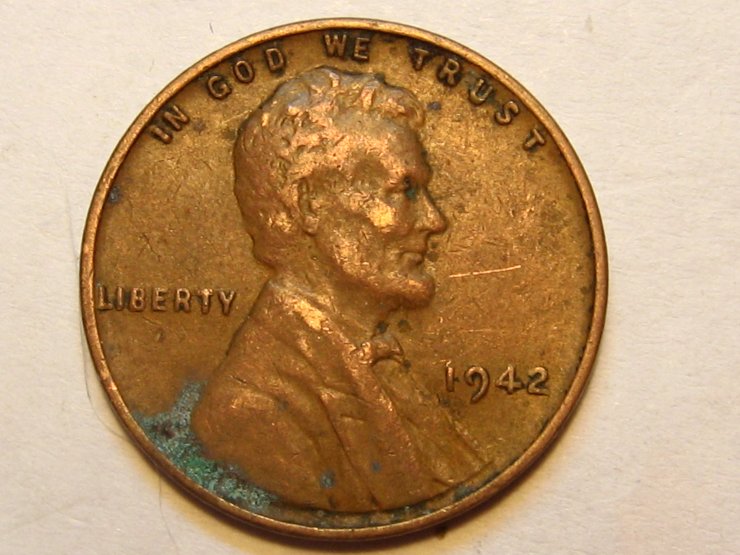 Close Initial 24 hours 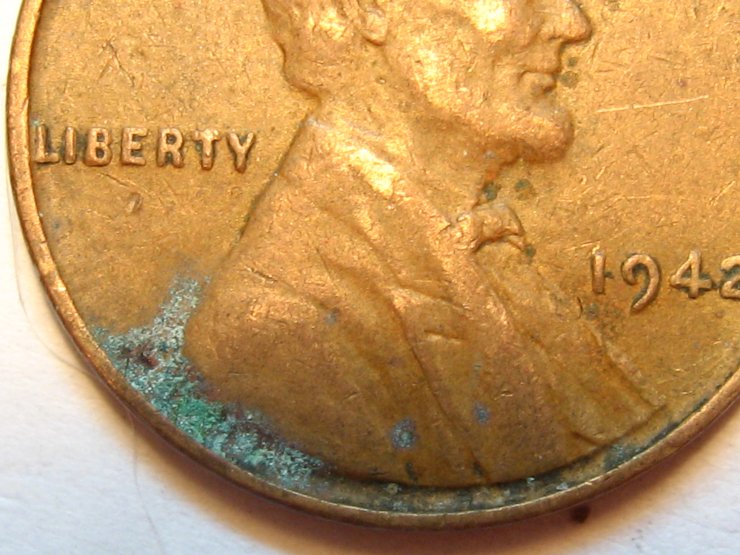 This verdigris is much heavier than the last coin. My adjustments to the fomula might be too weak. I also detect a bit of lightening of the patina, which is one of the reasons I changed the forumla. Changing the patina is unacceptable. I have a new copper protection package to try soon. I might have to dip the coin in the protectant, let it dry, then use the anti-verdigris solution on the coin. Work continues..... Lincoln Cent Lover!VERDI-CARE™ INVENTOR https://verdi.care/
Edited by BadThad
05/20/2008 5:53 pm
|
|
Moderator
 Australia
16982 Posts |
While you're experimenting, it might pay to check out some of the competition: Noble Roman Coins markets Gringgott's Wizard Mixes (yes, the name was apparently inspired by Harry Potter), and the stuff is mentioned and used with high praise over on the FORVM ancients forum. Now, your target markets are going to be different. The people who buy uncleaned ancient coins and clean them up require a completely different mindset to collectors of modern coins, because ancient copper coins are supposed to look green. But the chemicals used may be the same or similar to what you're experimenting with, or have similar effects when used on a modern "greenie". Don't say "infinitely" when you mean "very"; otherwise, you'll have no word left when you want to talk about something really infinite. - C. S. Lewis
|
|
Pillar of the Community
United States
1713 Posts |
Thad,
Have you done any experimentation on completely green coins (as opposed to just spots of verdigris)?
|
|
Valued Member
United States
52 Posts |
Badthad, I agree that the coins look lighter in your "after" photos, but the background also looks lighter. I am terrible at taking photos of coins, but I am pretty good with other subjects. Maybe you can find a way to take the photos in a controlled lighting situation, ie a room with no sunlight or at the same time each day? I am also wondering if you have a "control" coin, one that has approx. the same amount of patina to compare? Your experiment intrigues me greatly and I am waiting for your success so that I can buy some!!
|
|
Pillar of the Community
United States
936 Posts |
how about peach juice? I have read good things on that one.
|
|
Bedrock of the Community
United States
20038 Posts |
Quote:
While you're experimenting, it might pay to check out some of the competition: Noble Roman Coins markets Gringgott's Wizard Mixes (yes, the name was apparently inspired by Harry Potter), and the stuff is mentioned and used with high praise over on the FORVM ancients forum.
Now, your target markets are going to be different. The people who buy uncleaned ancient coins and clean them up require a completely different mindset to collectors of modern coins, because ancient copper coins are supposed to look green. But the chemicals used may be the same or similar to what you're experimenting with, or have similar effects when used on a modern "greenie".
Those products would have nothing in common with mine. Those are dilutable solid cleaners, mine is liquid. Mine is a unique and patentable invention, even as it stands now. It's a reacted material like no other, not just a mix of chemicals. |
|
Bedrock of the Community
United States
20038 Posts |
Quote:
Thad,
Have you done any experimentation on completely green coins (as opposed to just spots of verdigris)?
Yes I have, sadly, I only had one test specimen. The obverse was completely corroded and I was able to remove most of it. That's the coin that got me excited enough to post here. After only approximately 3 minutes of sonication, about 75% of the verdigris dissolved and the reverse patina was virtually intact.  Lincoln Cent Lover!VERDI-CARE™ INVENTOR https://verdi.care/
|
|
Bedrock of the Community
United States
20038 Posts |
Quote:
Badthad, I agree that the coins look lighter in your "after" photos, but the background also looks lighter. I am terrible at taking photos of coins, but I am pretty good with other subjects. Maybe you can find a way to take the photos in a controlled lighting situation, ie a room with no sunlight or at the same time each day? I am also wondering if you have a "control" coin, one that has approx. the same amount of patina to compare? Your experiment intrigues me greatly and I am waiting for your success so that I can buy some!
The lighting is controlled. However, my positioning of the coin for "quick and dirty" pictures is not so good. Mostly what I do is for me and my eyes and I'm just documenting here. I don't want to spend a lot of time with the photography in these early stages. Remember, I only discovered this a few days ago, there's much to be done. |
| |
Replies: 199 / Views: 36,476 |







 First Page


 Posted 05/17/2008 5:10 pm





