| Author |
 Replies: 199 / Views: 36,378 Replies: 199 / Views: 36,378 |
|
Bedrock of the Community
United States
20027 Posts |
VERDI-GONE™ is now available in very limited quantites!https://goccf.com/t/33105As some of you may know, I'm a chemist. For months, I've been working on a little project to develop a fluid that will remove green copper corrosion (verdigris) from Lincoln's without hurting the non-corroded patina. Today, I finally had a promising result on a horribly corroded Lincoln. Just wanted to share because I'm quite excited by my initial testing. Keep in mind, this is very early research. There's going to be a lot of tweeking yet. This is a good place to document some of my results: So far the only downfall I've seen is when severe corrosion is removed, the surface below is just bare copper. However, in some cases, there's a nice layer of copper oxide underneath.....which is good! You can hardly tell there was corrosion on that spot as copper oxide is actually a good surface protectant. It's only when acetate, sulfate and carbonate come into play that things get ugly. My approach is not the "eat the hide off a mule", it's very gentle. The key is reacting only the verdigris. I hope to take some before and after pictures this weekend when I do more testing. Keep your fingers crossed! This could be a huge breakthrough for copper coin chemistry (IMHO)...at least for me. I know NCS can do this too, but there's no information on their techniques that I can find (of course). To this point, everything I've tried has basically ruined the coin. I'm sure many of you have used things like vinegar, diluted coke, etc. Those all cause permanent damage to the entire surface....not good! Now, don't go asking me what's in it. LOL After the hours and hours I've worked on this, no way I'm telling. Besides, unless your an industry chemist, you wouldn't have access to the chemicals I'm using. More than likely, assuming I get it working 100%, I'm going to patent my invention.  If anyone wants to send me a test specimen, I'd appreciate it! Just send me a PM. I'm looking for both light and heavy corrision or even a mix.
Edited by BadThad
07/18/2008 8:17 pm
|
|
|
|
Moderator
 United States
194504 Posts |
 Excellent news!  (before and after!) |
|
Pillar of the Community
United States
2443 Posts |
Sounds promising. Waiting for photos.
I think I know your formula: Crush up Lincoln cents, fish oils, lemon juice, 2/3 of an ice cube and let simmer at 300 degrees or until corrosion is gone. :)
|
|
Valued Member
United States
90 Posts |
Wow! Sounds interesting! Definitely, please let us see the images when you get them. Best of luck to you!
|
|
Pillar of the Community
United Kingdom
2217 Posts |
Well good luck and I hope you have found a cure for the numismatic equivalent of cancer  |
|
Pillar of the Community
United States
1713 Posts |
Very cool Thad! Does this chemical also work on coins other than copper?
|
|
Pillar of the Community
Australia
839 Posts |
we probably have access to your chemicals at school, but we're never going to use them:(
|
|
Pillar of the Community
United States
5318 Posts |
Wow...that's very interesting! Good luck with it, and I hope we get to see some before/after photos at least.
|
|
Bedrock of the Community
 United States
20027 Posts |
My first test of this formula was on a completely obverse corroded 1931. I sped things along with sonication in the lab. I'll post pics of that coin after it soaks all weekend. Sadly, I didn't take a before picture of that coin, but even the date was illegible! The obverse was covered in green crap like a carpet....that's why I made it a test coin. This test mule is not as bad, but this type of removal is all I personally want the formula to do. Straight 3 hours of soaking test. This is a gentle formula, it's going to take time, but you can start to see results: Here's the test mule before I started. It has both very deep and very light verdigris deposits. I've saving this test specimen for my first real trial. (Please excuse my crappy pictures, these are just meant to be quick.) 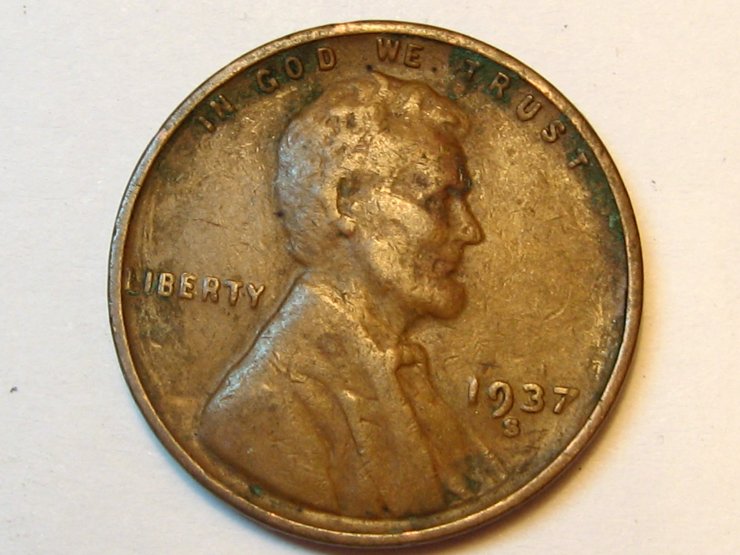 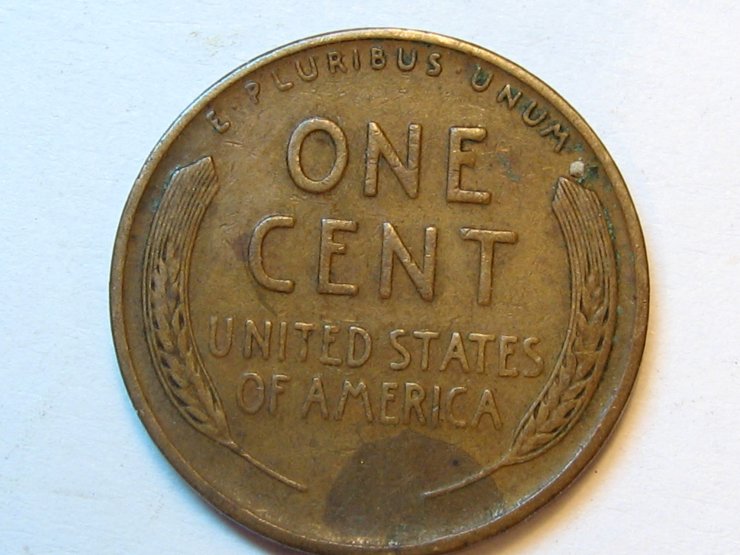 Initial 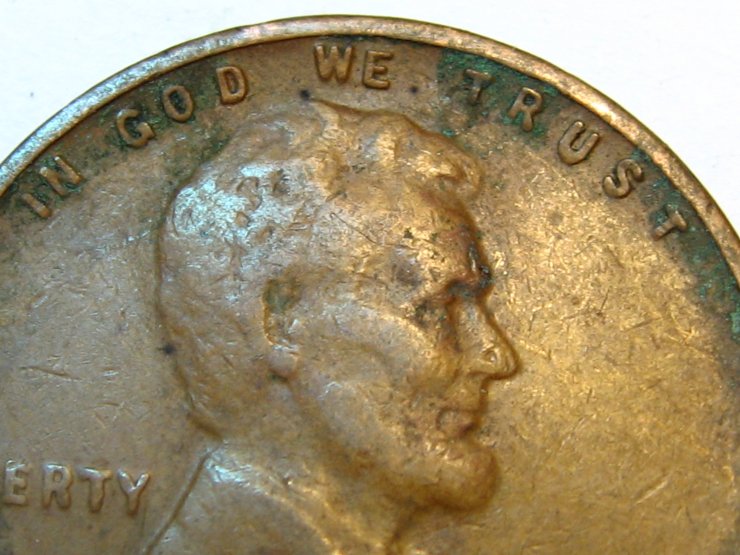 After 3 hours of soaking the green is getting pale, a sign the reaction is progressing.  Most obvious change is in LIBERTY. An area with fairly light surface verdigris: 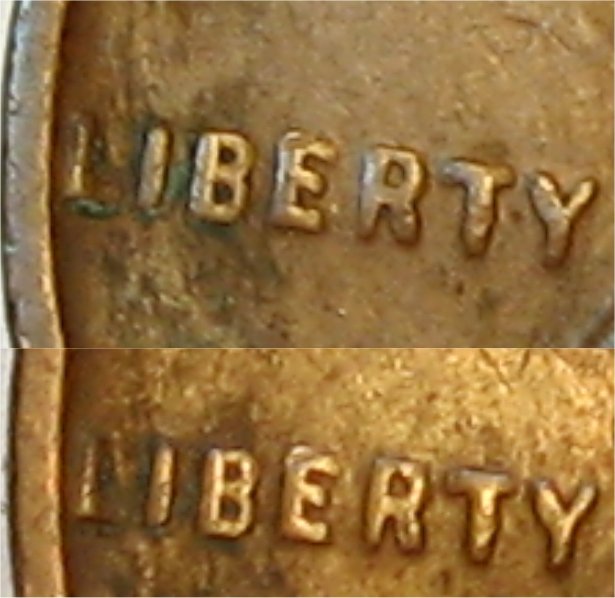 Lincoln Cent Lover!VERDI-CARE™ INVENTOR https://verdi.care/
Edited by BadThad
05/17/2008 12:58 am
|
|
Pillar of the Community
United States
2443 Posts |
|
|
Pillar of the Community
United States
5318 Posts |
That's an interesting process to see, especially on LIBERTY. If that succeeds to your expectations, I would think there would be many uses--including the conservation of antiquities. Edited by KurtS
05/16/2008 11:50 pm
|
|
Pillar of the Community
United States
621 Posts |
One suggestion for the product name is Verdi-Gone.
Looking forward to you being famous (or more famous if you are already).
Best of luck. I'll be watching for more lab reports.
|
|
Pillar of the Community
United States
2600 Posts |
Thad, that is fantastic, if it works and does not have further long term effects. Every danger, that you might just have to retire. Keep up the great work. Jim |
|
Bedrock of the Community
United States
20027 Posts |
Took another quick shot to monitor the progress. Initial 18 hours  REVERSE Initial 18 hours  Close up: Initial  After 18 hours:  EDIT: Nice progress on the reverse! I think it's my pictures that are making the coin look lighter: Initial  After 18 hours  Not sure at this point if it's my crappy pics or I'm affecting the patina. The coin seems a bit lighter when I look at the pictures. I might have to adjust my copper protection package a bit. Like I said...this is very early research. Edited by BadThad
05/17/2008 1:56 pm
|
|
Pillar of the Community
United States
1691 Posts |
after seeing your results, don't quit your day job...EVO takes longer but yields superior results...plus its tastes great with fresh squeezed lemon on salad!!
|
|
Pillar of the Community
United States
5318 Posts |
 I'm sure a chemist here can best comment, but I don't consider olive oil a very stable material for coins. I suspect it contains various organic compounds that may degrade or react with copper, including some acids. Not a very controllable process, imo. I think I understand that BadThad is striving for a completely different process whereby copper sulfate and carbonate are put into solution without affecting any copper oxide. That much seems clear from his writeup. I doubt mineral oil does that...? Edited by KurtS
05/17/2008 3:57 pm
|
| |
Replies: 199 / Views: 36,378 |










 Posted 05/16/2008 5:13 pm


