| Author |
 Replies: 6 / Views: 2,061 Replies: 6 / Views: 2,061 |
|
|
Pillar of the Community
United States
3499 Posts |
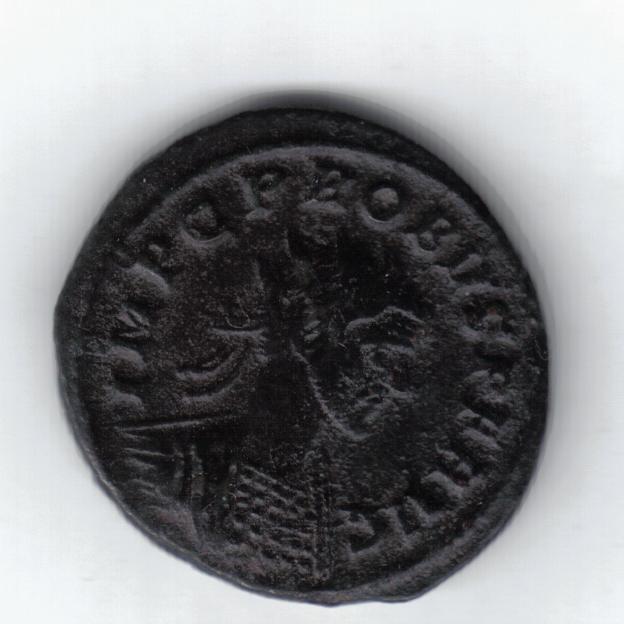
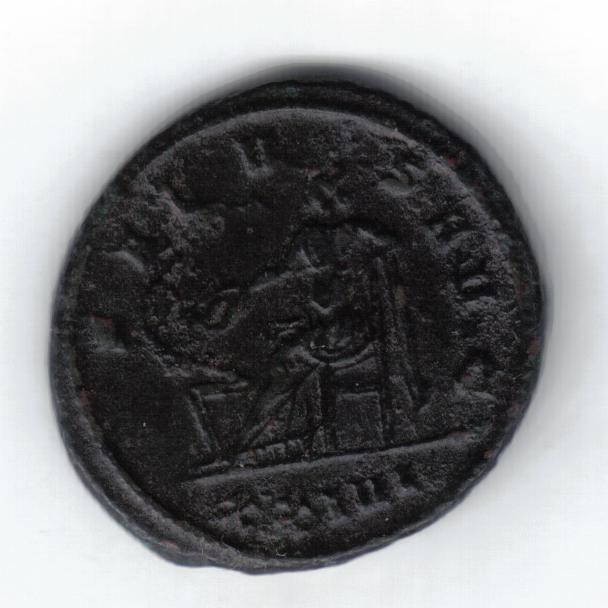
While I am certain that this is a coin of Probus, I am not at all certain where it was minted. The mint mark reads something like "XX IIII." So which mint does this indicate? Image:  probusobv.jpg probusobv.jpg40.68 KB Image: probusrev.jpg40.33 KB |
|
|
|
Moderator
 Australia
17005 Posts |
On coins issued prior to the reign of Diocletian, the letters in the exergue aren't "mintmarks" in the conventional sense. The letters "XXI" are an indication of the silver fineness: 20 parts copper to 1 part silver. The remaining letter(s) are the officina control marks, which I believe in this case are actually "VI", sixth officina. The reverse type is SALVS AVG, Salus seated feeding snake on altar. Sear attributes this type (# 12030, though with a different obverse type) to the Siscia mint. Found this example of the type on Wildwinds, which lists it as Cohen 591. Don't say "infinitely" when you mean "very"; otherwise, you'll have no word left when you want to talk about something really infinite. - C. S. Lewis
|
|
Pillar of the Community
 United States
3499 Posts |
Sap- I think that the two obverses are quite similar, so I bet you are right about this one. I'm just surprised that the coin contains a bit of silver. Thanks!
|
|
Pillar of the Community
United States
988 Posts |
"I'm just surprised that the coin contains a bit of silver"
In the third and up to the mid fourth century, Roman bronze coinage almost always had some silver content. L. H. Cope argued that these coins should be called argentiferous bronze coins. The silver content fluctuated with various reforms, though.
From A.D. 307-317, the amount of silver was circa 2-5%, and generally eastern mints had higher percentages of silver than the western mints, until Constantine became sole ruler of the Empire. From A.D. 318-320, there was circa 4% silver in the coinage. From A.D. 321-330, the silver content was circa 2%. After A.D. 330, the silver content was circa 1%, which was maintained until A.D. 341, when the silver dropped to less than 0.5%. Coins with only a trace amount of silver can no longer be thought of as argentiferous.
The argentiferous alloys were comprised of mainly copper (Cu), lead (Pb), tin (Sn) and silver (Ag).
Just one example from a Constantine coin circa AD 310-- copper 87.46% tin 5.27% lead 4.88% silver 1.74%
|
|
Pillar of the Community
United States
5318 Posts |
"Just one example from a Constantine coin circa AD 310-- copper 87.46% tin 5.27% lead 4.88% silver 1.74%"
I did not realize that lead was used in official Roman coinage. Of course, lead was in common use back then for a variety of things--including women's makeup. Was this practice a cheap way to lend mass back when coins were scrutinized by weight? I also wonder if the old habit of biting a coin was to distinguish a softer lead alloy (forgery) from silver?
|
|
Pillar of the Community
United States
988 Posts |
There may have been multiple reasons for using lead, it did make a coin seem heavier, it was cheap, maybe it helped the alloy bond, but I believe that a practical purpose was also that lead made coins easier to strike and the alloys with more lead would also have yielded coins that were less brittle, and dies would have also lasted a bit longer.
|
|
Pillar of the Community
United States
3499 Posts |
Thanks for the info everyone!
|
| |
Replies: 6 / Views: 2,061 |
|






 probusobv.jpg
 probusrev.jpg

 Posted 05/31/2008 05:59 am





