| Author |
 Replies: 9 / Views: 2,132 Replies: 9 / Views: 2,132 |
|
|
New Member
Brazil
44 Posts |
Hello, I am from Brazil and I am a Collector of Errors and Variety Coins, I have a doubt, I usually find Machine Doubling as shown on the picture below, 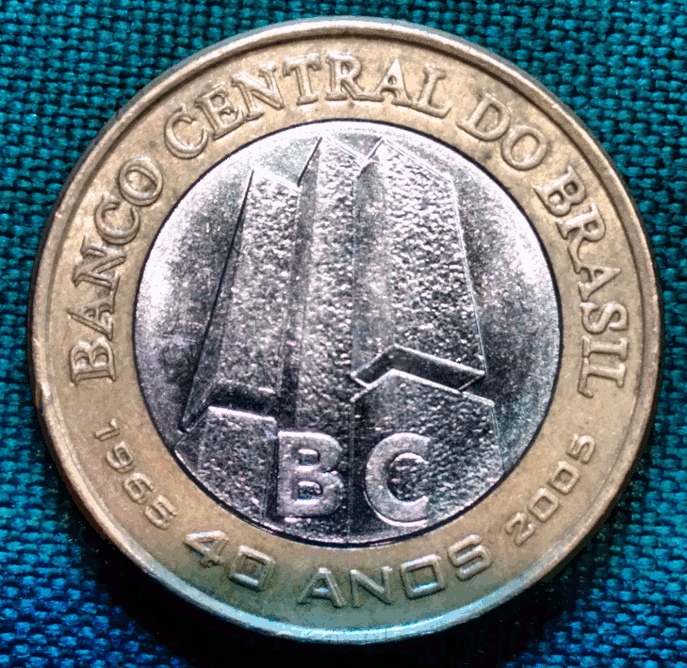 This a very commum case of Machine Doubling, The effect of this duplication is smooth, there is no separation in the duplicate elements. I understood that there was a movement between the dies to produce the effect. But recently I have found some coin´s with Doubled Machine, like this, 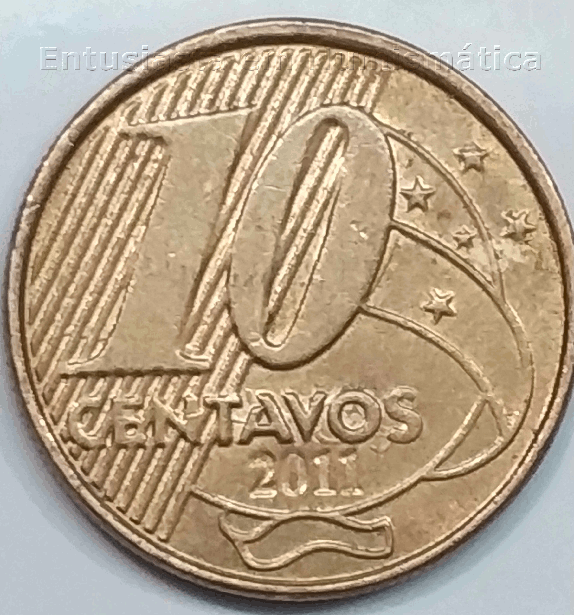 The duplicate elements still appear soft but They are separeted from the original elements. Can you help me to understand the difference between these cases, I also have a mixed case, On "Brasil" and on the bars I have the first case, but on "Pedro I" It seen´s the second case. 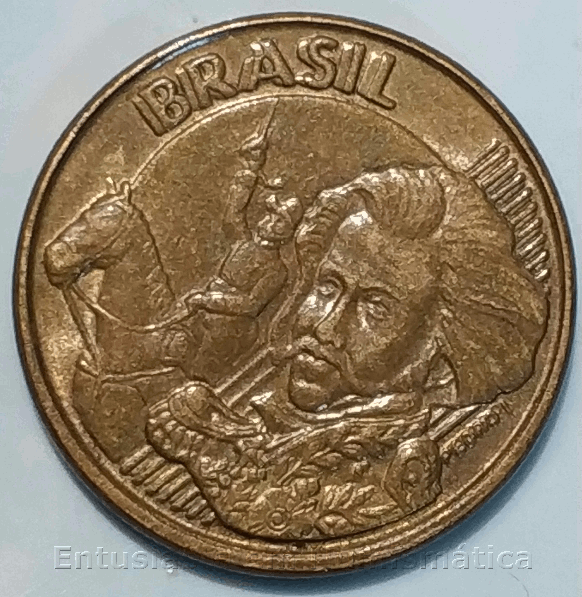 I believe On these 3 pictures are not showing any case of Doubling Die, But two different cases of Doubled Machine, Can someone help me to understand this Thanks a lot for any helping or explanation , |
|
|
|
Pillar of the Community
United States
4424 Posts |
They all look like doubled dies to me, good ones too!
|
|
Pillar of the Community
United States
1609 Posts |
 Unlike the common confusion between MD and DD, you have at least 2 (3?) real doubled dies! Also,  Edited by RoyCoinBoy
05/20/2018 3:03 pm
|
|
New Member
 Brazil
44 Posts |
Thanks for your answers, I realy need to relearn to classify my Coins,
I have been mined coins for two years, I found a lot of coins like these (with similar doublings),
I have the concept, that a genuine "Doubling Die" duplication, could be found on many coins, exactly the same doubling, The doubling should be produced before makin the dies, during pantograph process, This is not the case for these coins,...( maybe on the last one, I have found two pieces exactly with the same doubling)
After I will upload some pictures of coin that I have already classified as a doubled die coins.
BR
|
|
Pillar of the Community
United States
4424 Posts |
Quote:
The doubling should be produced before makin the dies No, doubled dies occur DURING the making of the dies. Edited by Tanman2001
05/20/2018 6:53 pm
|
|
Pillar of the Community
United States
4424 Posts |
The doubled die on the second coin is difficult to see so I made this graphic to help others see it. It has a very light extra hubbing but with a very strong rotation. 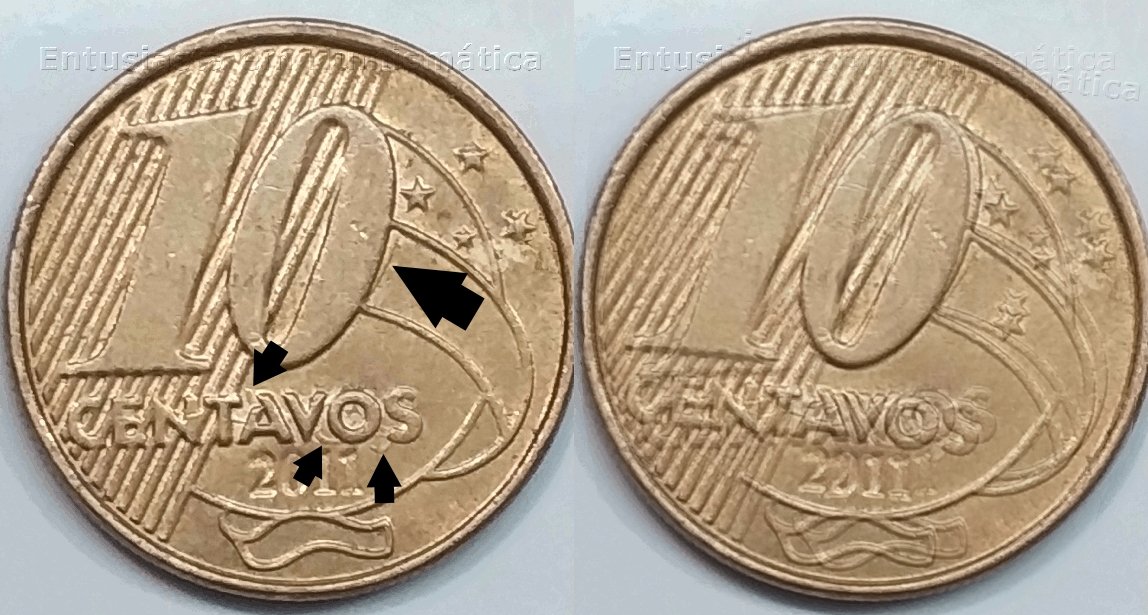 |
|
New Member
Brazil
44 Posts |
Many Thanks Tanman, I realy had a wrong concept about the Doubling Die, Now, I understood, About the second coin, your graphics helped me a lot Now I have another question , What it is the right classification for the following coins? We can find several coins like these on the second family of Real, all with the same duplication. 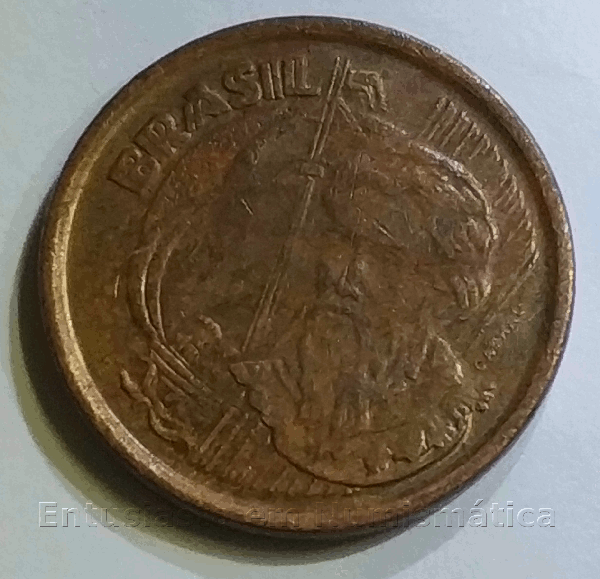 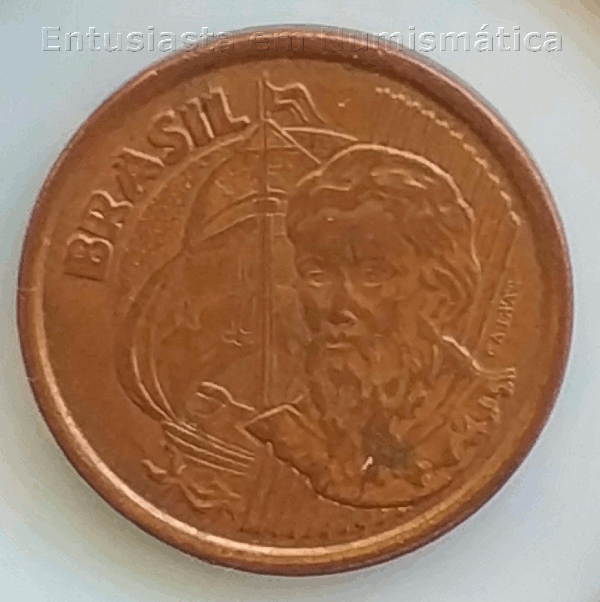 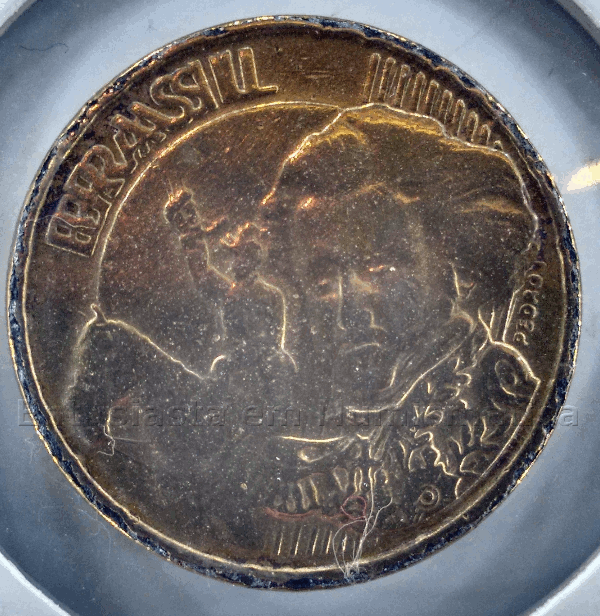 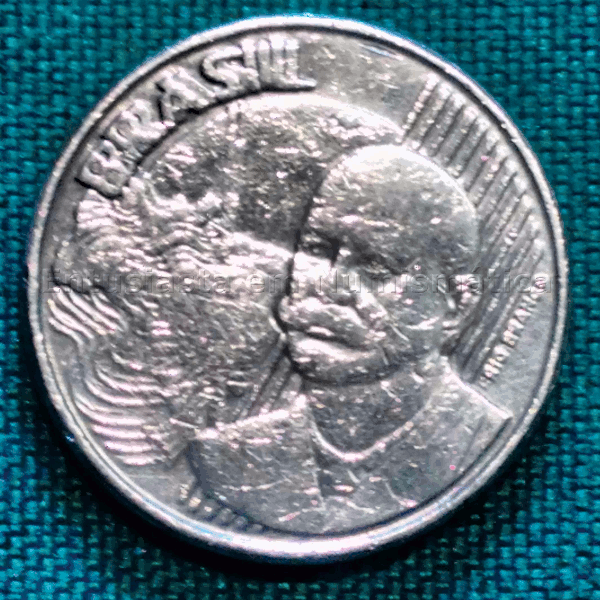 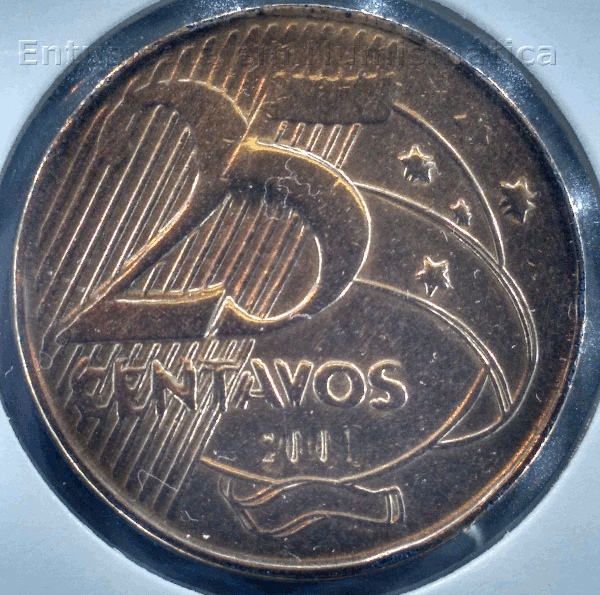 Can I classify them as Hub Doubled? BR |
|
Pillar of the Community
United States
4424 Posts |
Sorry for the late reply, but yes those are doubled dies. They are really nice ones too. We don't really have that many major doubled dies like those here in the states, so I really like to see extreme examples like these. All of these (except for the first photo in your original post) are Class I doubled dies. Here are some websites that explain Class I doubled dies, how they are caused and what they look like. http://www.error-ref.com/class-i/http://doubleddie.com/203843.htmlThe first image you gave, the 2005 40 Anos, is a Class V doubled die. They are caused by the same thing as Class I's except they aren't perfectly rotated from the center, they are pivoted. Here are more sites: http://www.error-ref.com/class-v/http://doubleddie.com/203927.html |
|
Bedrock of the Community
Canada
24885 Posts |
To the Forum. |
|
New Member
Brazil
44 Posts |
Once again, Thanks a lot, I will enjoy to study the links, I will send more doubled dies and others errors to you guys, soon,
BR,
|
| |
Replies: 9 / Views: 2,132 |
|







 Posted 05/20/2018 2:59 pm





