Hello everyone,
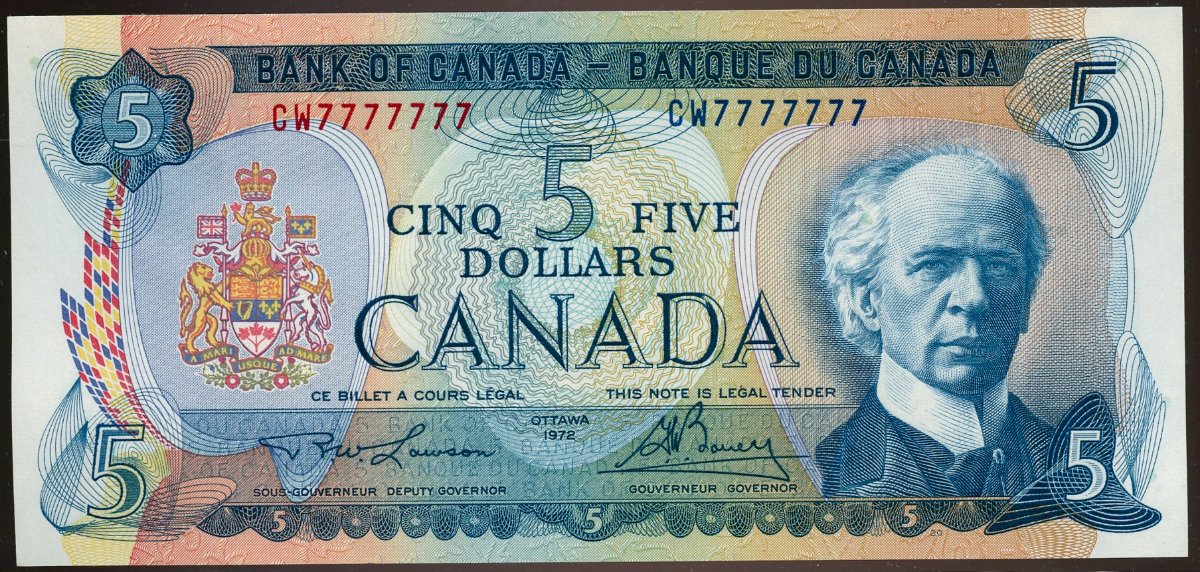
I'm looking at this note at auction and it has been graded by CCCS as Gem UNC65. Is this there highest grade quality. IS GEM the equivalent to EPQ or PPQ.
I found this on there website:
Bank Note Grading
Grade Description
GEM UNC - GCU - GCU65 1. A near perfect original note.
(I DON'T SEE GCU BEFORE THE 65 IN THE PICTURES OR DESCRIPTION)2. Colours must be bright, original with exceptional eye appeal. There must be no paper discolouration or foxing.
3. The note must have near perfect centering with sharp square corners and edges.
4. No noticeable impairments upon close examination; counting flicks, soft bends or machine marks, waves, paper flaws, writing, gluing, pinholes, etc.
5. Signatures must be clear, legible and strong. Hand signed and dated notes can have ink bleed, though no perforation.
6. The note must not be processed or pressed.
Tips for different series for GCU
1935, 1937 and some 1954 series notes must have heavy embossing on the engraved printed areas, serial numbers and the typed signature.
1954 issues must have original paper ripples present in heavy inked areas
Journey notes with holograms will show no "cutting cup"
CHOICE UNC - CU - CHCU63 1. A near perfect original note
2. Colours must be bright, original with exceptional eye appeal. No foxing is present.
3. The note may exhibit minor paper discolouration.
4. Centering of the note will be slightly off but still must have sharp edges and corners.
5. No noticeable impairments upon close examination with the exception of:
A minor original paper flaw prior to printing, a very slight soft corner, one very small counting flick.
6. Signatures must be clear, legible and strong. Hand signed and dated notes can have ink bleed, though no perforation.
7. The note must not be processed or pressed.
8. May have only one demerit point.
Tips for different series for CH CU
1935, 1937 and some 1954 series notes must have heavy embossing on the engraved printed areas, serial numbers and the typed signature.
1954 issues must have original paper ripples present in heavy inked areas
2001 Journey notes with holograms may show a slight "cutting cup"
UNC - CU-CU60 1. An original note with a heavy counting crease but not folded..
2. Colours must be bright, also original with great eye appeal.
3. There may be noticeable paper discolouration, minor foxing, but no major distractions.
4. Centering can be off, but edges and corners will be muted, thus not sharp and concise.
5. There may be minor flaws or defects resulting in up to three demerits, such as: visible counting creases (one demerit each), tight margin (one demerit)
6. Banding strap marks, ATM or counting machine marks that have caused waves in the note are acceptable.
7. Notes with blemishes or distraction, small tear, nick, crease with broken fibre, or edge bump, would not receive an uncirculated grade.
8. Can be lightly pressed but not processed or trimmed.
Tips for CU
1935, 1937 and some 1954 series notes must have heavy embossing on the engraved printed areas, serial numbers and the typed signature
1954 issues must have original paper ripples present in heavy inked areas
2001 Journey notes with holograms may show a slight "cutting cup"
DEMERIT POINTS
Counting crease, no broken fibres: one point each
Edge bump: one point each
Paper toning: one point
Minor Foxing: one point
Counting flick, no larger than 2 cm: one point each
Soft corner: one point each
GEM UNC No demerit points
CH UNC One demerit point
UNC Three demerit points
AU 1. A note which has never been processed but may have been pressed
2. The note must have great eye appeal, with bright original colours.
3. Foxing and paper discolouration may be present, especially on earlier notes. Slight remnants of glue may be found, but no writing or soiling.
4. May not exhibit original paper ripples and if the note appears flat, there still must be evidence of embossing.
5. A few very small counting flicks, or one light centre fold may be present, but not both.
6. Minor original flaws in the paper prior to printing may be present.
7. The note must have basically sharp edges and corners, however, very minor edge bumps from banding straps, or a couple of soft corners are acceptable.
8. Centering of the note must be good. On earlier notes the design must not be violated.
EF 1. A note that may show signs of processing or pressing. Identification of the original condition of the note prior to being pressed must be considered in the grade.
2. The note must have superior eye appeal, with bright original colours.
3. Foxing and paper discolouration may be present, especially on earlier notes. Slight remnants of glue may be found, but no writing or soiling.
4. Original paper ripples may not be present.
5. Two heavy counting creases, or one centre crease with broken paper fibres are present, but not both.
6. Basically, the note still must exhibit sharp edges, but two or more soft corners and edge bumps will be present.
v7. Note centering may not be perfect. On earlier notes the desing may be violated.
VF 1. An original looking note but may show signs of being pressed or processed. With pressed or processed notes the original condition must be determined and taken into account in the grade.
2. Must have good eye appeal, but colours will have decreased hue and vibrancy. A small amount of paper crispness will remain.
3. Evidence of wear will be present along the edges and corners, with no weakness in the design. No tears will be present and the corners will not be rounded.
4. Foxing, paper discolouration, small amounts of writing, soiling and colour smudging may be present. v5. Up to four major creases or folds, with broken paper fibres may be present, but no design loss.
F 1. Signs of considerable wear (circulation) and may show signs of being pressed or processed.
2. Heavy wear along the edges and corners. The corners may have rounding, with wear showing within the design areas.
3. Heavy foxing, paper discolouration, areas of writing, and noticeable soiling will be present.
4. Will have four or more heavy creases or folds with broken paper fibres, but the design should not be worn off completely in the creases.
VG 1. Evidence of heavy circulation, and may show signs of pressing or processing.
2. Heavy foxing, paper discolouration, writing, soiling and staining will be present.
3. All colour hues and vibrancy will be lost. The note will be limp with no sign of crispness
4. Four heavy creases and folds will be present, even the design areas? Heavy wear appears on edges and corners.
5. Tiny nicks and tears may extend into the design. Small holes within a fold, staple or pin holes are usually present. No pieces are missing from the note.
G 1. Very heavy circulation, and may show signs of being pressed or processed.
2. Heavy foxing, paper discolouration, writing, graffiti, soiling, and with the colour greatly faded or altered.
3. Basically, a whole note, but with very heavy wear along the edges and corners. Heavy folds with wear on the design within the creases. A limp and lifeless note.
4. May have numerous tears and defects, but no large section of the note missing.










 Posted 06/18/2018 12:54 pm


