| Author |
 Replies: 27 / Views: 6,791 Replies: 27 / Views: 6,791 |
|
|
|
Pillar of the Community
Canada
843 Posts |
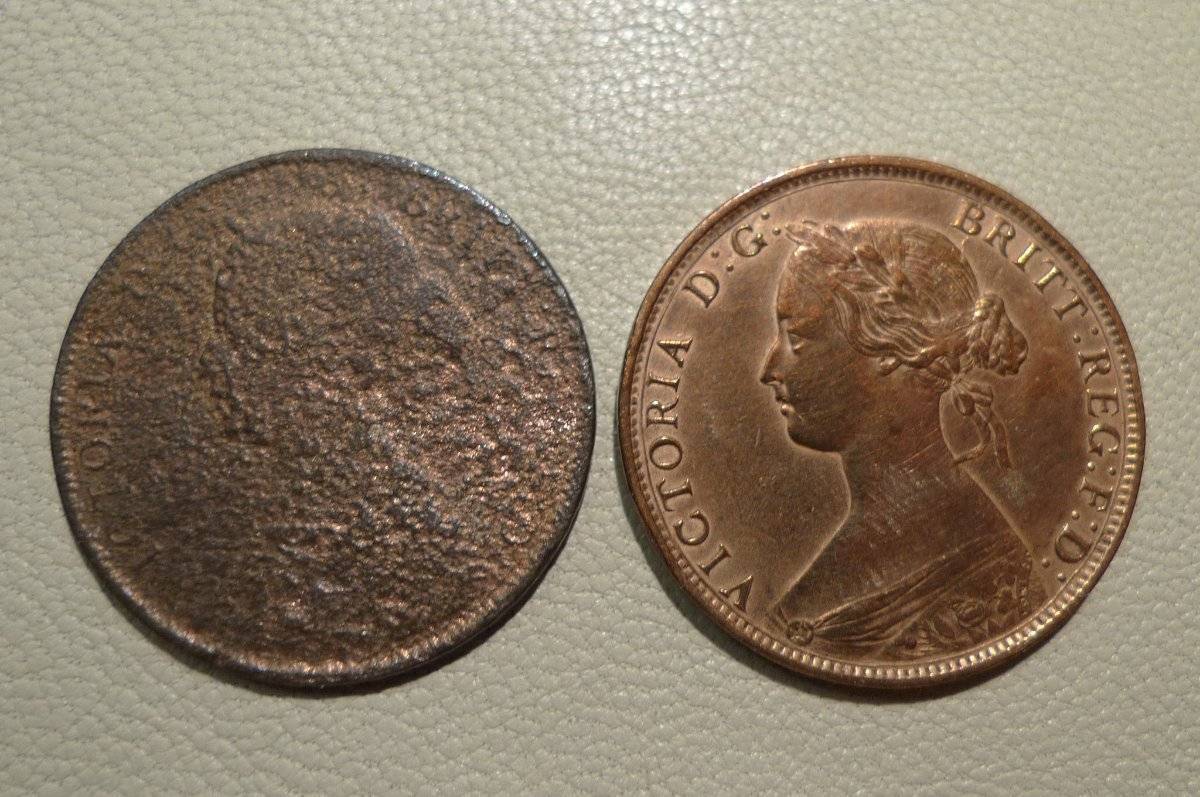
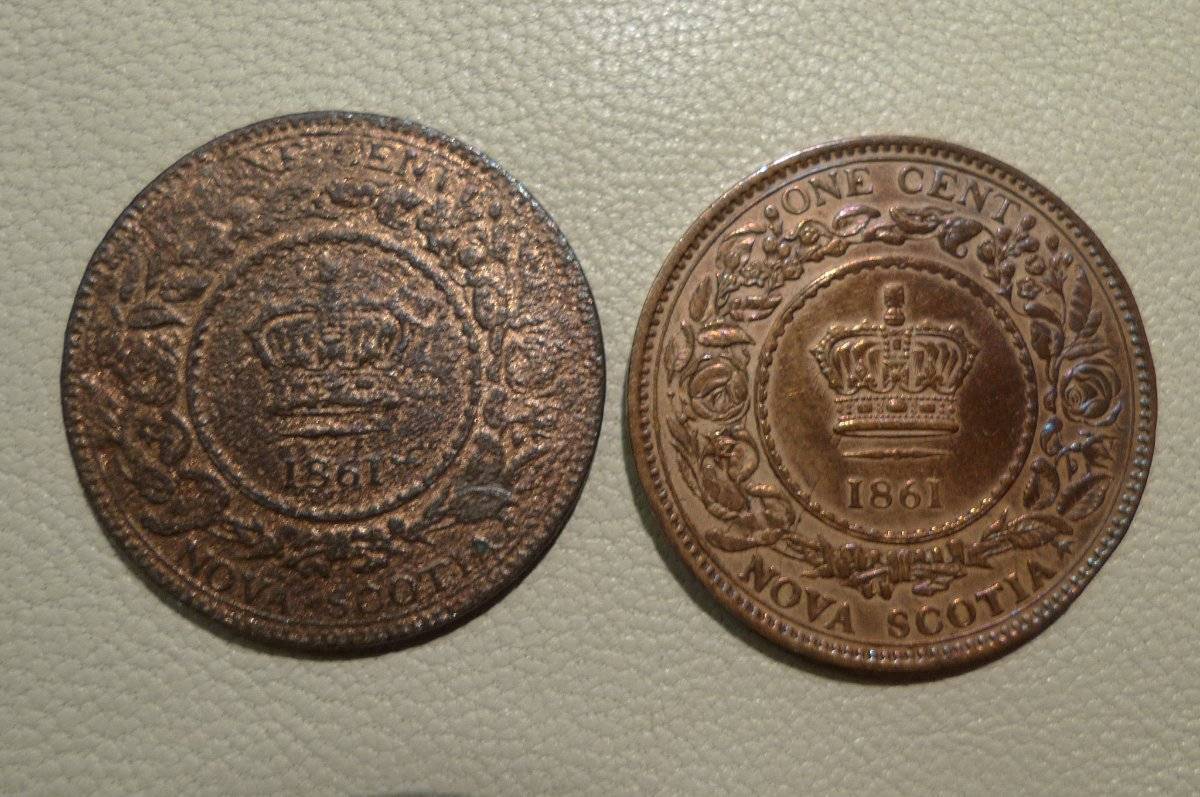
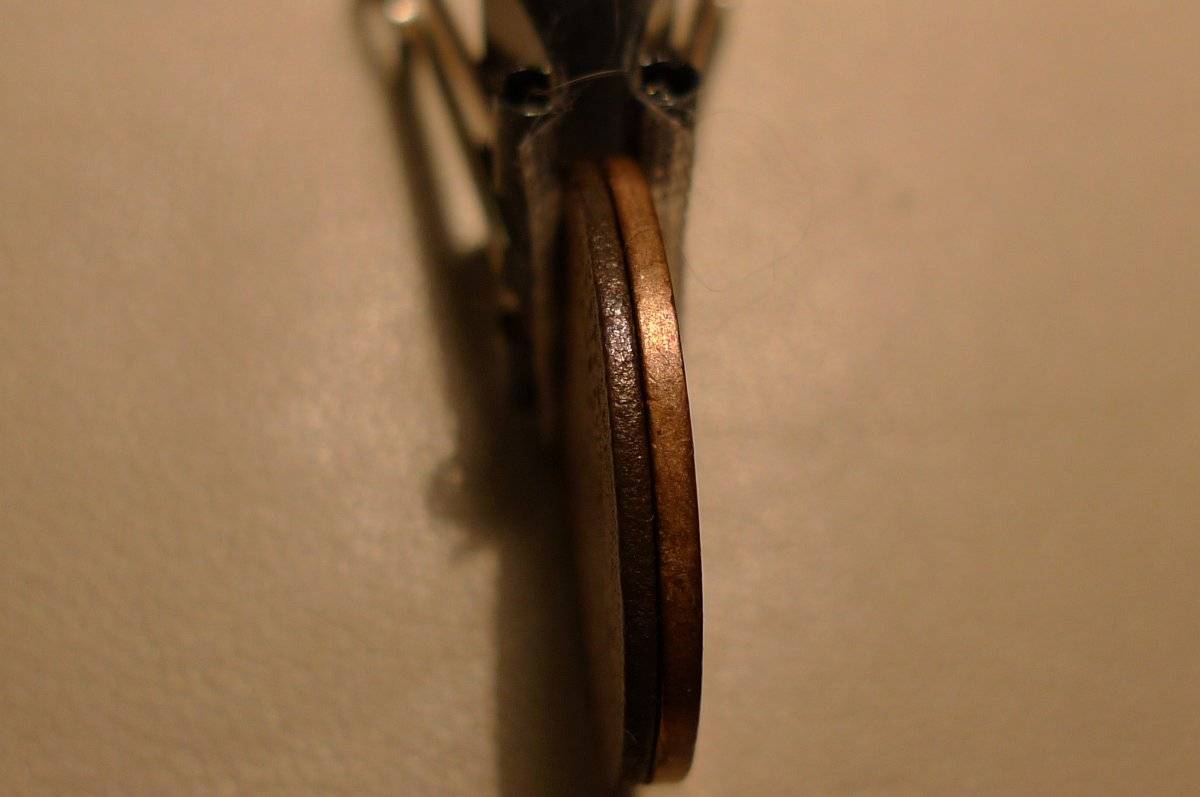
Don't throw that one in the junk pile yet. I have questions.  Can the PMD advocacy people explain: - What happened to the rim ? If a coin is soaked in acid, all exposed areas would be be eaten away fairly evenly, except the rim and high details resting on the bottom of the container (if suspended somehow, all parts would get equal exposure). That means that the tiny beads on the obverse would be affected the same as the rim. Did the acid eat through the entire rim, evenly all around the edge of the coin, but left all the beads? If the rim has been completely eaten away, then the whole coin should have disappeared since all the areas of the fields are thinner than the rim. The fields would be exposed on both sides, but the rim and raised details on the down side in the container are not exposed. - How did the denticles get elongated ? (compare the examples above) For pasasap, What does the edge of the rim look like ? Does it look like someone used a grinder to get rid of the rim ? Is it porous like it was eaten by acid, smooth, or rough ? Is the coin smooth on the two sides, or pitted from acid ? From your photos, it looks like the coin curves upward ever so slightly from the fields at the very edge, yes/no ? You could scratch a very small section on the edge to see what colour it is. If a silver planchet was left in a bin with a load of copper planchets, I imagine there might be a chemical reaction on the surface (not sure of the chemistry on this one). Canadian dimes are approximately 2.33 grams. Scales that measure to a hundredth of a gram can be had for $20 or less. Does anyone know if the rim was formed before a planchet was put through the dies or formed during striking ? I'm leaning toward smaller thin planchet (part of a delaminated planchet?) Edited by TerryT
07/30/2018 03:33 am
|
|
Pillar of the Community
Canada
2531 Posts |
TerryT, you can try this yourself and see the results. It looks like coins soaked in acid, and not like a lamination peel or split planchet. Anyway, here's my logic with things: Quote:
What happened to the rim ?
How did the denticles get elongated ? Acid eats from the edges and inward, this is why the diameter of the coin is reduced. I doubt the denticles aren't actually longer, but it looks like that due to a combination of the missing rim (making it look like it extends past the edge) and the skinnier denticles. Quote:
If the rim has been completely eaten away, then the whole coin should have disappeared since all the areas of the fields are thinner than the rim. I don't have anything to measure thickness of the fields right now, but even on a worn smooth coin, that's still most of the coin's mass there. The rim of a penny is perhaps, half a millimetre? I doubt a penny worn down to the fields is that thin. Quote:
That means that the tiny beads on the obverse would be affected the same as the rim. Did the acid eat through the entire rim, evenly all around the edge of the coin, but left all the beads? Acid also carves out the fields as it eats away at the beads. The middle part of the beads is higher and more protected, so the beads will stay above field level for longer than the rim. Think like sharpening a pencil. Quote:
If a coin is soaked in acid, all exposed areas would be be eaten away fairly evenly, except the rim and high details resting on the bottom of the container (if suspended somehow, all parts would get equal exposure).
The fields would be exposed on both sides, but the rim and raised details on the down side in the container are not exposed. Acid will make its way there. Ever see those metal into acid demonstrations where everything is violently fizzing? Quote:
Does anyone know if the rim was formed before a planchet was put through the dies or formed during striking ? A proto-rim is formed on the planchet by an upset mill before striking. |
|
Pillar of the Community
 Canada
5653 Posts |
I think that it's an acid coin as well
|
|
Bedrock of the Community
Canada
24885 Posts |
Edited by Dorado
07/30/2018 7:48 pm
|
|
Pillar of the Community
Canada
843 Posts |
Thanks for those photos, Dorado. Now THAT is an acid (or strong alkali) damaged coin. The obverse was probably face up in the container and was affected more than the reverse.
So where is this "youtube video" proving it's acid-soaked ?
Please post a link here if it exists.
If the diameter of the coin is the same as a normal cent, then it couldn't have been eaten by acid. If it's less, then it MAY have been eaten by acid. Let's wait until all the evidence is in before jumping to conclusions.
Edited by TerryT
07/31/2018 06:50 am
|
|
Moderator
 Canada
10477 Posts |
Quote:
Don't throw that one in the junk pile yet It most definitely is post-mint damage junk. This is not from a harshly corrosive acid (like HCl or HF or battery acid), but from a time-transgressive progression from something like a longer soak in Coca Cola. In fact, it is the properties of the metal itself, that causes the effect you see. Metal forced into depressions in the die is actually different (structurally, not chemically) from the fields. The devices are more resistant than the fields. US collectors use acid all the time to "reveal" the dates on worn Buffalo nickels. I have reproduced this experiment, and destroyed hundred of coins like this one, to get them off the error coin market, so collectors will not be duped. http://goccf.com/t/284202Quote:
I'm leaning toward smaller thin planchet (part of a delaminated planchet?) You can lean any way you want, but is not what you think it is, and it is equally as damaging providing legitimacy here to an altered coin. That coin posted here started its life as a fully struck planchet. The high points of the devices are all there. This is what a split or delaminated planchet strike looks like. Note the pattern of the metal from rolling the strips (it looks the same with planchets split after the strike too). 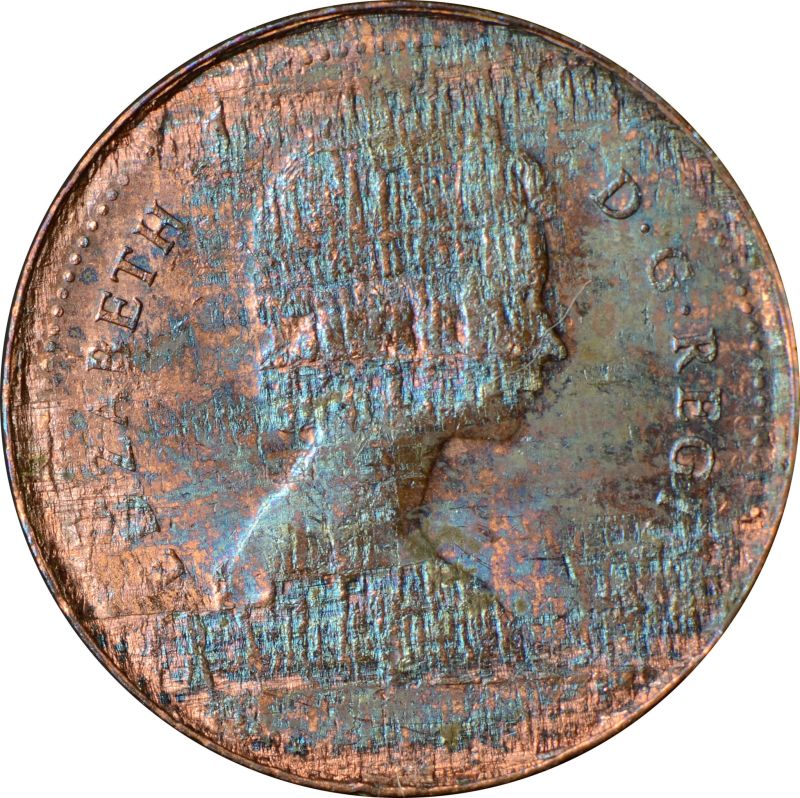 This is a thin planchet strike. Note the incompleteness of the strike. 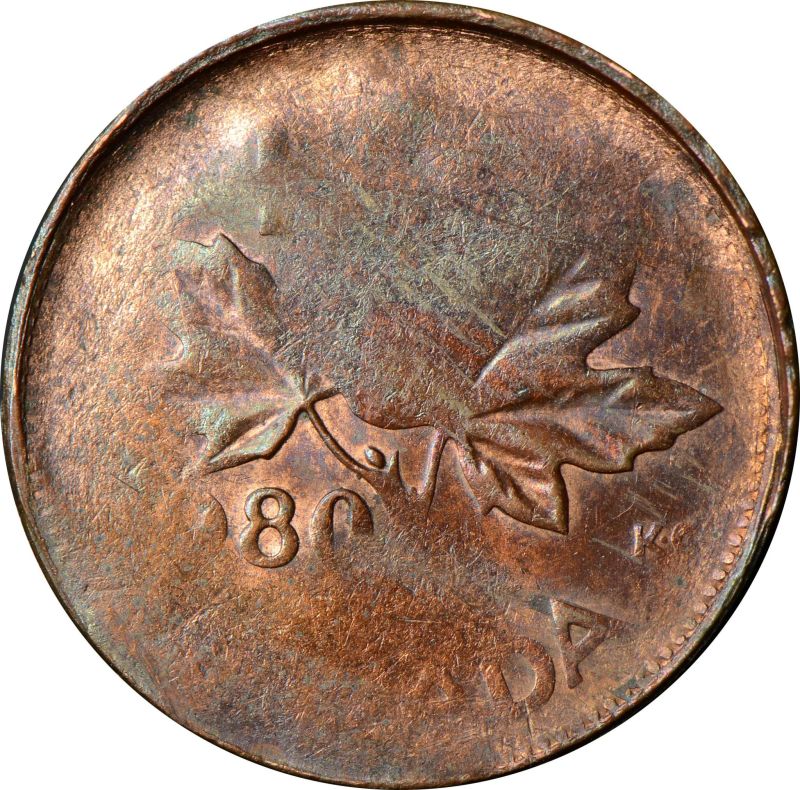 The original poster's coin is a post strike alteration, and junk. At least it did not cost him anything... "Discovery follows discovery, each both raising and answering questions, each ending a long search, and each providing the new instruments for a new search." -- J. Robert OppenheimerContent of this post is licensed under a Creative Commons Attribution-NonCommercial 3.0 Unported License. See: http://creativecommons.org/licenses...0/deed.en_USMy eBay store
|
|
Pillar of the Community
Canada
843 Posts |
SPP; I am not trying to perpetuate anything. With all the bs on the internet, people like me want proof of any kind of claim. I came at the question the original poster posed with no bias whether it was a real error or not. I thought I was asking the right questions to gather evidence one way or the other. A post simply saying "it's definitively PMD", without any clarification of how he knows, helps no one. If the owner had scratched the edge like I mentioned and it had come back as copper-coloured, then that would have been the evidence that it was not struck on a dime planchet, and your photo of the laminated-planchet shows my thoughts on that were incorrect. That's the kind of proof I was looking for. I was going to try the soaking in cola to see myself, but if you have actually done the experiment with the same results as the coin shown, then I can lean heavily to that side and fall off the fence. |
|
Moderator
Canada
10477 Posts |
For reference, here is a coin split after the strike. This is not a lamination peel per se, where you see the flow lines of the metal under the lamination. A planchet split after the strike is rare, as I suspect most blanks are split when put through the upset mill to create (Type II) planchets.  "Discovery follows discovery, each both raising and answering questions, each ending a long search, and each providing the new instruments for a new search." -- J. Robert OppenheimerContent of this post is licensed under a Creative Commons Attribution-NonCommercial 3.0 Unported License. See: http://creativecommons.org/licenses...0/deed.en_USMy eBay store
|
|
Valued Member
United States
462 Posts |
This is a classic example of a coin that was acid treated. I have literally seen 100's of these that often show up on these forums or come up on ebay for sale as either struck on thin or foreign planchets. I can spot them a mile away. These examples have plagued our hobby for many, many years. Those that have them, often have a hard time accepting that they are not mint errors because of their lack of experience in the error hobby. If this coin isn't discarded, it will someday again be the center of controversy for the new owner. I just get tired of seeing them and the debate that often ensues. |
|
Bedrock of the Community
United States
79404 Posts |
 Good point! It was dipped in acid unfortunately. It's Post Strike Damage (it happened after it left the Canadian Mint). Errers and Varietys.
Edited by Errers and Varietys
08/04/2018 12:48 am
|
|
Valued Member
 United States
190 Posts |
Rocky are those current values for Specimen strikes? Also, it shows in the book that Type 3 exist in PL, which someone said it does not exist in another post. It also shows type 1 & 2 in Specimen Strike. Is this correct? My checklist showed these too, but someone said that Type 3 in PL did not exist and Type 1 in Specimen did not exist. Does anyone know the correct information or is the book correct? I do not have any of these three pennies. Does anyone know where I can purchase them, none are for sale on ebay. Thanks. |
|
Valued Member
United States
190 Posts |
I am sorry I am so slow in responding. I realized that my post was missed by some of you. I agreed with you in that the penny was acid treated. You can go to YouTube and find examples of pennies being thinned out using extremely powerful acids. I am only familiar with pennies that have been placed in vinegar, and did not have experience with stronger acids. In vinegar, the coin results in pitted surfaces, but in the experiment on YouTube using the stronger acid (Ferric Acid I think) the results were different. To my surprise the details of the coin remained and there was no pitting. The penny was thinned down or reduced in size. Basically the acid ate away both sides of the coin until the penny looked thin. The surprise was the fact the lettering and date remained in most cases. I thought it be ate off the coin, but the experiment proved that was not the case. There are more than one experiment on YouTube, so it should not be hard to find them. Just enter thin penny acid experiment and you should get some results matching what I viewed. I m keeping the penny and placing it in my error section marked created using strong acid. I will use this as a diagnostic coin in case I find one that has clearly been minted on a thin planchet and not acid treated. Thank you guys for helping me determine what I had was not an error. I did not spend any money on it as it was in an old jar of Canada pennies, so I paid nothing extra for it. Thanks again. :)
|
| |
Replies: 27 / Views: 6,791 |








 First Page


 Posted 07/30/2018 3:16 pm