Should be coming in today. The currencys from a trusted seller on
ebay. First a coin struck in Japan in 1928, a time of great transition in Japan as the Japanese were in their 3'rd year of the Showa era, that of Emperor Hirohito, and already immersed in their "Government by assassination" with the assassination of Liberal former Prime Minister Shinzo Abe six years earlier.
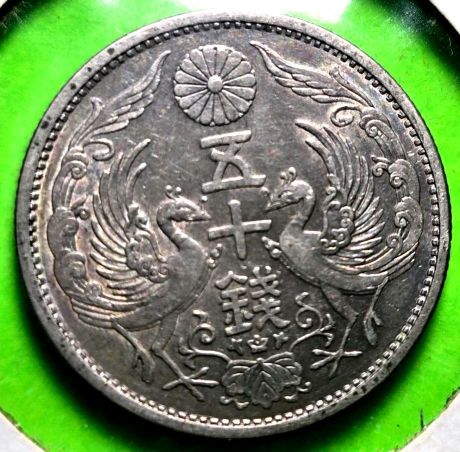
Some believe the Showa period lasted until Hirohito's death in 1989 but I'm in the camp of Historians who believe it ended in Aug. 1945 with Japan's surrender and the status of Emperor was reduced by American occupations forces.
In any event 1929 was a very important year of a very important era when Japan was transforming itself from a feudal state to an autocratic one where the Army and Navy held great sway along with the Industrialist familys who were churning out modern weaponry for what would end up being the largest Empire, in area sq miles, in Human history.
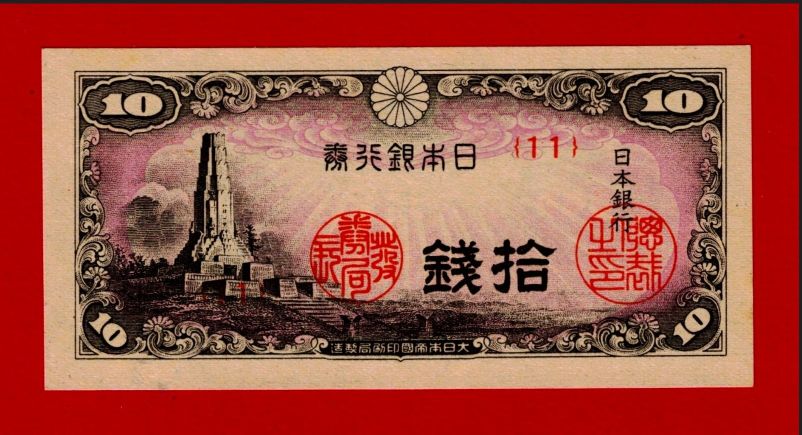
A Japanese 10 Sen bank note from 1944. A year when great air, land, and sea battles were reducing Japans Empire and leaving much of its army starving on strategically meaningless Pacific Islands an atolls as well as the morass their Chinese invasion had become. By 1944 the Japanese people, both military and civilian, were beginning to literally starve from a relentless American naval blockade.
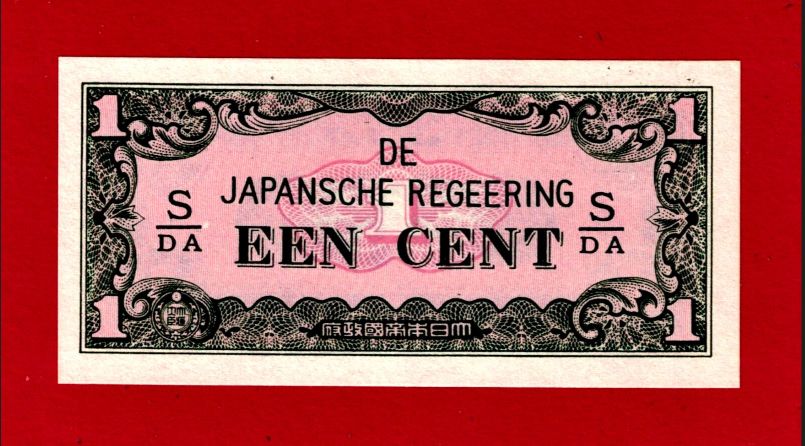
An occupation bank note printed by the Japanese forces that over ran the Dutch colony of the East Indies in the first three months of 1942. The oil production and refining facility's of the Dutch East Indies was a big reason Japan attacked the American fleet in the first place. America had placed an embargo on Japan, a country poor in resources, on oil exports, refined fuel exports, and scrap metal. This embargo was placed on Japan when they invaded French Indochina, thereby threatening our military presence in the Philippines.
At the time America produced 63% of the oil in the world, very high quality oil, and was the worlds biggest refiner of oil based products. There was a lot of oil in the Dutch East Indies but it was of poorer quality, nonetheless, Japan felt they had no choice but to attack the USN's Pacific fleet and invade the East Indies. Prior they had told the Dutch they had better not destroy the infrastructure of oil production but the Dutch did anyway prompting a savage Japanese response.
Initially the Indonesians welcomed the Japanese as liberators but eventually the Empire of Japan became their new masters and reduced most to slavery, forcing many Indonesian woman into forced prostitution and the men into forced servitude on the great railroad projects done under horrendous conditions. Their suffering is remembered in this occupation bank note.
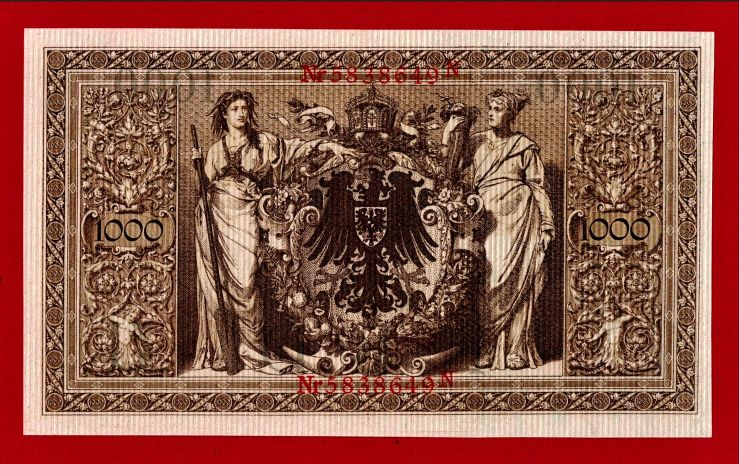
This German 1910 1,000 Mark banknote was printed at the beginning of one of the most eventful decades in all human History. Historians remember the decade as "The Tens" and it saw the collision of Empire, Industry, Monarchies, and shifting alliances in Europe, that created "The War to end all wars". A four year World War where an entire generation was either slaughtered on the field of battle or survived to suffer the effects for years after. Even the armistice ending it guaranteed a future war in Europe when an embittered German Army marched home feeling like they had never been defeated on the battlefield.







 First Page
 Previous Page


 Posted 06/16/2025 01:35 am





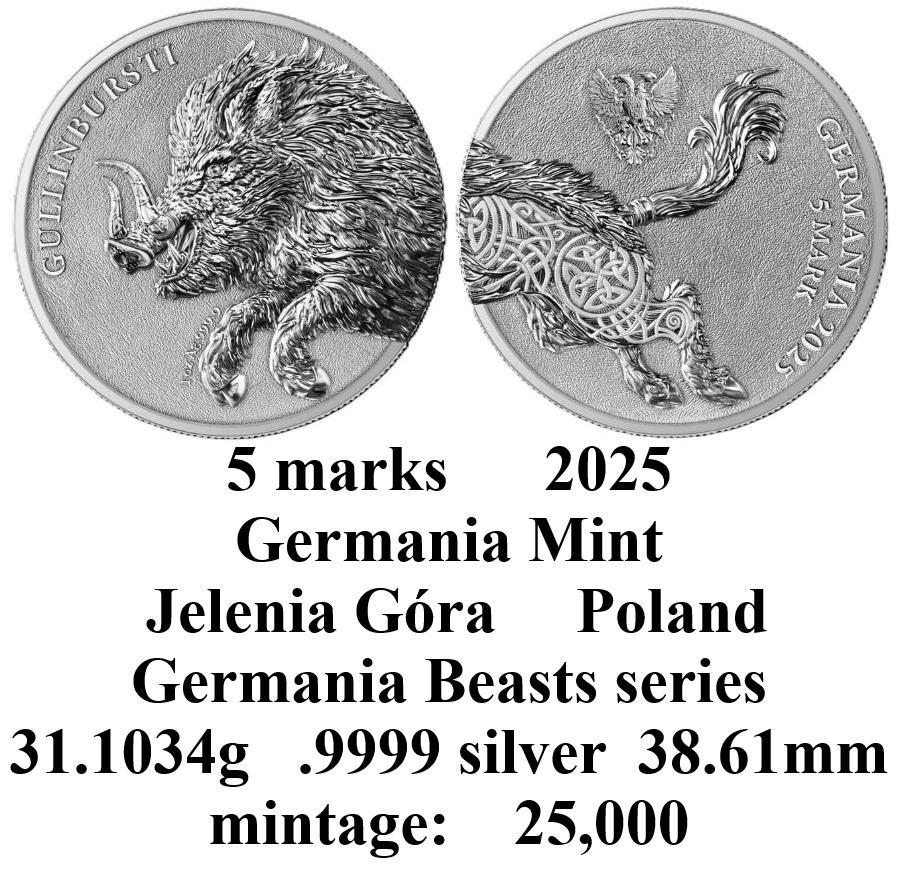

 Very nice pig coin.


