| Author |
 Replies: 12 / Views: 5,676 Replies: 12 / Views: 5,676 |
|
|
Pillar of the Community
Canada
4912 Posts |
So in Canadian numismatics, lacquered coins are nothing strange and some issues are expected to be found with lacquer originating from the mint..such as the 1908 specimen cents. So with that said, I own a heavily lacquered specimen 1946 cent, it has 2 very minor spots of green on the edge..these 2 spots have no lacquer and were the only parts not protected by lacquer and very minor corrosion occurred but it is very, very minor. My plan is to use verdicare on those small specks and then cover the spots in lacquer so that the corrosion is neutralized..assuming it isn't already. And then the lacquer will cover the areas and protect them from moisture and air etc to effectively kill any possible corrosion.
So my questions are
-is this a good plan and does anyone have any suggestions?
-how does one properly apply lacquer to a coin?
-what is a good lacquer to use?
-and lastly, how does one properly and fully remove a lacquer coating?
This thread is not only for my personal needs with the coin described but also so I can learn and so the rest of the forum can learn as well..any and all help and input about the subject of lacquered and lacquering coins in general is appreciated!
Thanks Feel free to call me Will.
|
|
|
|
Bedrock of the Community
United States
12477 Posts |
Why are you okay with a lacquered coin? That's my first question.
In Memory of Crazyb0 12-26-1951 to 7-27-2020
In Memory of Tootallious 3-31-1964 to 4-15-2020
In Memory of T-BOP 10-12-1949 to 1-19-2024
|
|
Pillar of the Community
 United States
5897 Posts |
No ideas on lacquer for coins.
Evidently lacquered coins are acceptable to him and one of the parameters of his collection. Also if that is how they are issued from the mint that would be the only way to get a Mint State coin. 
Good question Spruett001 but we all set out own parameters. Remember some don't like anything but VEDS coins while others consider "old cleanings" to be ok.
Maybe lacquer on "Frankenzincs" might stop the zinc breakdown and be the wave of the future since holders aren't really air tight.
Words of encouragement are one of the major food groups.
We need to consume them regularly to thrive and grow.
Edited by Petespockets55
12/27/2018 10:46 am
|
|
Pillar of the Community
 Canada
4912 Posts |
Well I would say off the top of my head thst I only own about 2 or 3 lacquered coins..both of which are specimens that would have been lacquered at the mint, one of which is from the Pittman collection. So I guess Pittman didn't mind lacquered coins either.
It is my udnerstanding though that when it is done properly it is a good thing for the coin or at least neutral?
My exact coin in question is a 1946 specimen cent in full red, I have only seen full red examples when they have been lacquered.
Feel free to call me Will.
|
|
Pillar of the Community
United Kingdom
4208 Posts |
People unnecessarily demonise lacquer in my opinion. A well applied traditional lacquer will preserve the coin with mint red indefinitely, even with light handling. It might need to be relacquered on occasion, but that is rather simple too. Take a look at 18th century conder tokens - there are thousands and thousands with lustrous mint red surfaces, even today, because many collectors back then would lacquer their coins. I also think the 'look' of lacquer is nice too, but that is an opinion.
Removing lacquer is simple and doesn't require rubbing the coin in any way. You'll need pure solvents (not store bought nail varnish remover), which can be bought in high purity. Take the coin, put it in a sealed container with plenty of solvent in it and let it soak. This will dissolve the lacquer. Dispose of the solvent safely (not in the sink), then wash the coin further with clean solvent. Then, for best results, repeat. The repeat shouldn't be necessary if it is good lacquer (not wax or acrylic, which are a different problem that is not easily solved). If you find the lacquer is not removed by one solvent, you can try others. The order I would try things in is Acetone, Ethanol, Isopropyl Alcohol, Methanol, Toluene, Xylene (the last two being quite bad for one's health).
Applying lacquer well is hard and you would be well served to watch videos of different application methods. A good spray system is best (but not using tins of spray lacquer, which tend to be polymer based and potentially irreversible). Painting on the lacquer is bad and will leave abrasions and a bad surface; a dip system might work. Whatever you decided, you need to make sure the coin is clean (I'd use acetone for this) and dry - anything on the surface when it is lacquered will be held against the surface until the lacquer is removed and damage can be done beneath the lacquer. If you find a good lacquer to use, practice first on some old copper pennies until you are confident. I believe the traditional lacquer is shellac - this doesn't last as long as a modern archival lacquer though and will yellow with age.
|
|
Pillar of the Community
United States
772 Posts |
To me, your plan sounds fine as the coin is already mostly lacquered. You're not doing any harm, just conserving the coin that is present.
|
|
Valued Member
United States
333 Posts |
I have several iron/zinc notgeld coins that I think were lacquered. I think it was a fairly common thing to do to them. The myrtlewood money that I found recently was lacquered, but that was by design. It gives them a really nice appearance and probably helped preserve them too.
|
|
Pillar of the Community
Canada
2187 Posts |
Hey thedollarman Here are the pictures of your coin. Let me know if you are still having trouble uploading pics from the mobile site. 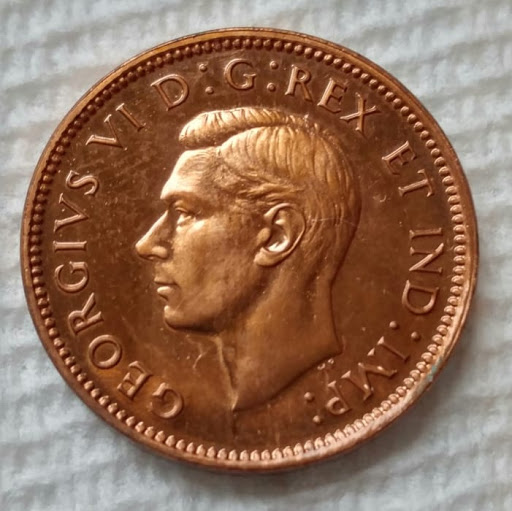 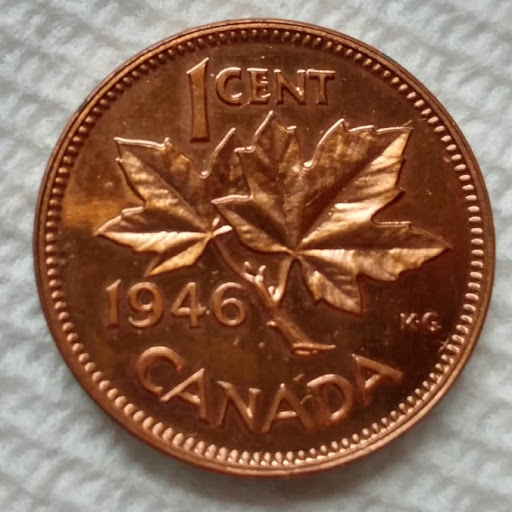 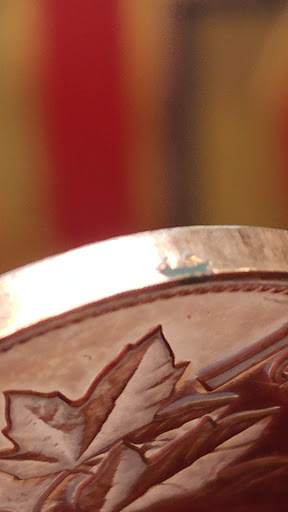 |
|
Bedrock of the Community
United States
17884 Posts |
Quote:
Why are you okay with a lacquered coin? That's my first question. Lacquer was the original Airtite holder. |
|
Moderator
United States
196278 Posts |
That is an interesting way to put it.  |
|
Bedrock of the Community
United States
12477 Posts |
Quote:
Lacquer was the original Airtite holder. Lacquer is still around. Why do we use other methods? In Memory of Crazyb0 12-26-1951 to 7-27-2020
In Memory of Tootallious 3-31-1964 to 4-15-2020
In Memory of T-BOP 10-12-1949 to 1-19-2024
|
|
Moderator
United States
196278 Posts |
It was good for its time.
|
|
Bedrock of the Community
United States
17884 Posts |
One problem with lacquer is it doesn't expand and contract at the same rate as the coinage metals. If storage temperatures vary too much the lacquer can develop cracks or even flake off allowing toning to develop on the surfaces below the cracks. If you don't keep a close eye on the coins toning and/or damage can develop without you noticing.
|
| |
Replies: 12 / Views: 5,676 |
|










 Posted 12/27/2018 10:45 am


