| Author |
 Replies: 24 / Views: 3,313 Replies: 24 / Views: 3,313 |
|
|
|
Pillar of the Community
Canada
3733 Posts |
a quick test you can do, without damaging the coin, is to try the ice melt theory, take another similar nickel, and the nickel in question, and place approximately the same size piece of ice on each nickel.. the nickel in question if silver should melt much faster, than the regular nickel.
|
|
New Member
 United States
18 Posts |
I'm going to do a silver test in about a half hour so I'll let u guys know
|
|
Bedrock of the Community
United States
17884 Posts |
Quote:
Really u seriously think all metals feel the same u must not had to deal with to many different metals in your life. So if we were to blindfold you and have you touch a piece of metal you could tell what it was? WOW! Quote:
I'm going to do a silver test in about a half hour so I'll let u guys know Long half hour. Quote:
Ok so how did the 1977 Kennedy have a strike error and produce one. It's not 90% silver its 40% The San Francisco mint strickes all the proof coins and the also struck the Unc 40% silver Bicentennial coins. Sometimes planchets get rejected for not being up to quality standards for the proof coins. These accumulate and eventually San Francisco ships them to Denver to be used for business strikes. The silver planchets (40% or 90%) are not supposed to be shipped but apparently a few got mixed in with the coppernickel clad rejects and that is where the 1974 D and 1977 D 40% silver coins came from. The WAS a potential source for the planchets. Your nickel is a 1979. You don't mention a mintmark so I am going to guess it is from Philadelphia. I'm not sure but I believe the last silver coin that Philadelphia had struck was in 1966, and that was in a different building. I don't know where a silver planchet could have come from. |
|
New Member
United States
18 Posts |
Yea for the most I could base what group of metal it was from and a close guess of what it is. I did do the tests last night but when u have sick kids u have to take care of it become a little difficult. At the beginning of the topic I gave 2 picture with my question. The test came back as that it is silver I also did the same tests to a dime, nickel and quarter. I'm going to go talk to the college in town to verify my findings.
|
|
Pillar of the Community
United States
1335 Posts |
 how about a pic of the other side , as one that has posted coins that I thought might of been something other then it was, I see how you can get upset, but you came here to ask , and didn't like what you heard .you can always go to a coin dealer that can see it in hand, or see if there is a coin club near you. ps. coop does have a lot to help us with. he is like a coin god , so don't take stuff to heart , you can learn a lot here, and hope to see more of your finds.  good luck and happy hunting. |
|
New Member
United States
18 Posts |
Ok here is some pictures of what happened. I did a 1974 jefferson some it was close to the same year didnt know if that would make much difference. 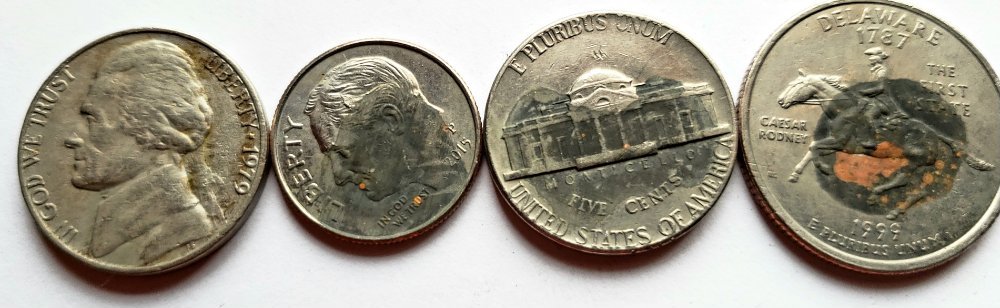 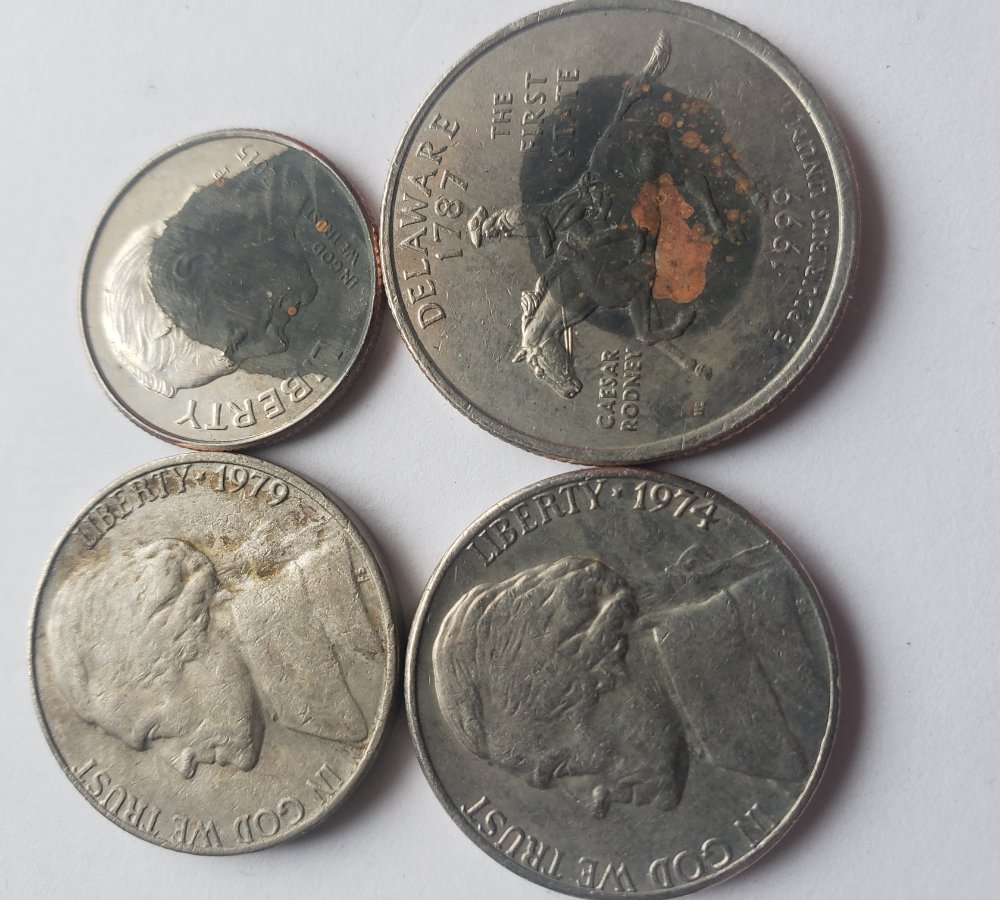 |
|
New Member
United States
18 Posts |
Forgot the back of the 1079 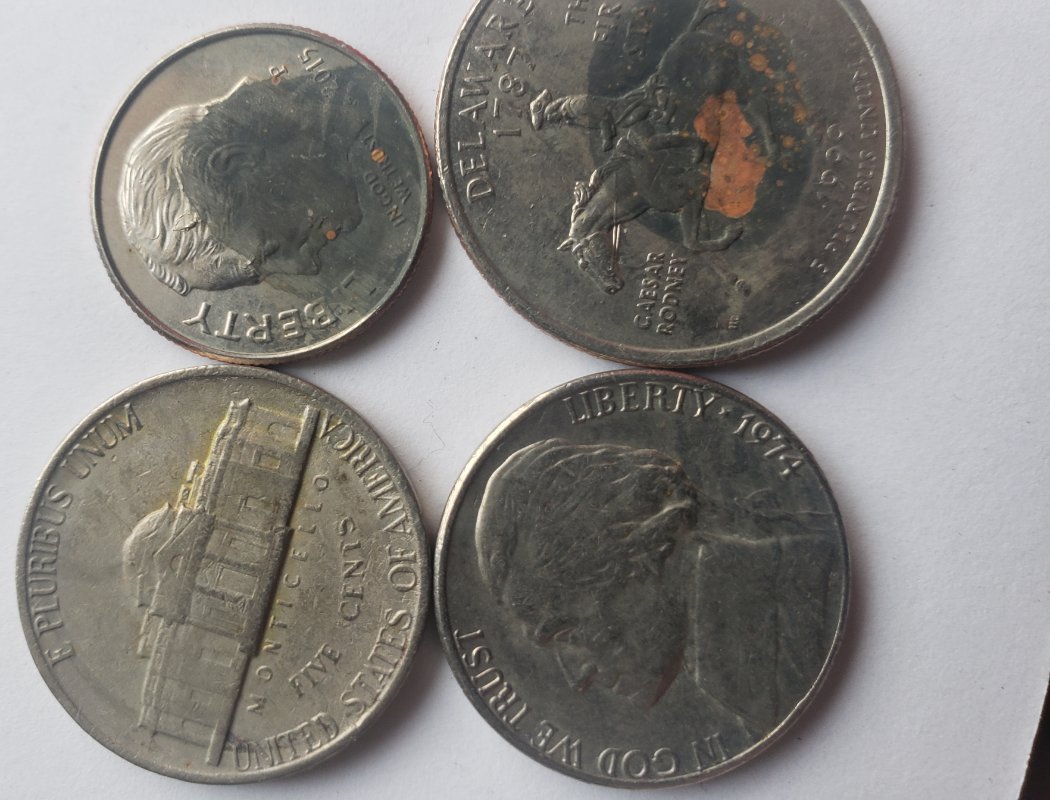 |
|
New Member
United States
12 Posts |
So why the crickets? Nobody responds after the guy seemingly tested the nickel?
|
|
Moderator
 United States
34562 Posts |
@rj67, thank you for jogging our memory. We get a large number of new coins posted each day and so ones from a month ago pretty quickly fall off of my radar. I had suggested to the OP that he or she get an XRF to non-destructively determine the alloy. Later, the wolf recommend an ice test. The OP seemed to say that he or she would do both of these. The new pics though look more like an acid or corrosive liquid was dabbed on several coins, including that '79. Without more information about what was done, I'm just not sure how to respond.  "If you climb a good tree, you get a push."
-----Ghanaian proverb
"The danger we all now face is distinguishing between what is authentic and what is performed."
-----King Adz
|
| |
Replies: 24 / Views: 3,313 |







 First Page


 Posted 01/25/2019 5:29 pm





