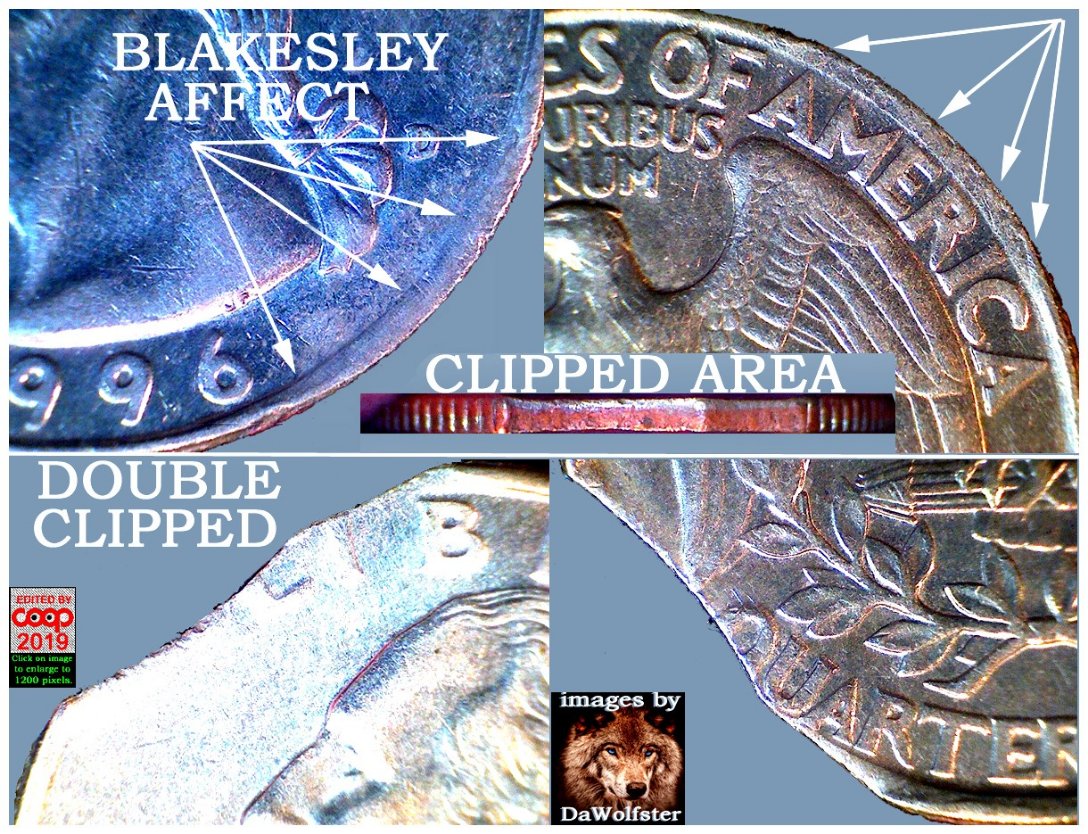
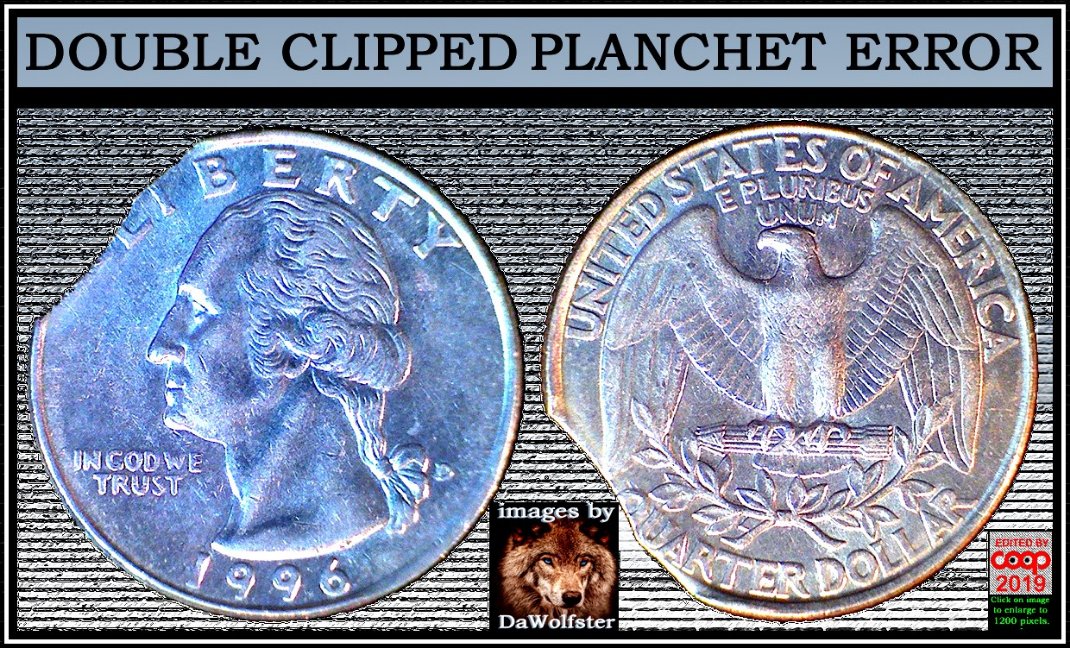
So I had to do a little digging to find pics to illustrate what I am seeing on this coin. First here is a Heritage auction for another Bicentennial Kennedy clip which is nearly the twin of the coin in question:
https://coins.ha.com/itm/errors/197...bnail-071515Here is another with smaller double clips, where the larger one is not a perfect curve:
https://coins.ha.com/itm/errors/197...bnail-071515So for the coin in the OP, here is what I would look for to authenticate it:
- Any other small clips in addition to the large one (in this case, there is a rim clip at K-12)
- Evidence of metal flow during the strike, either at the rim by the edge of the clip (not as reliable on clips above 25%) or in the shape of the curve itself (in this case, the curve is slightly flat behind the bust). The reason for this is because in area where the planchet is under the most pressure, where two areas of low relief oppose each other, there is often slight metal flow between the dies. On a counterfeit, the clip is typically made with a round punch, leaving a perfectly curved surface.
- A cut / tear surface on the inside of the clip, or on a clad coin, an inversion of the clad layers (not pictured on this coin)
- what I do not necessarily look for is Blakesley effect, on very large clips (above 25%) either the planchet is not rolled at all, or the planchet breaks apart (into a crescent clip and an elliptical clip) during the upsetting process.
For the auction the OP had spiked by
ebay, I am about 98% confident it is a genuine Mint error; a view of the inside edge of the clip would be necessary to get me to 100%.
I am happy to answer any questions, I can also try to add pics of coins from my own collection to further illustrate my post.
Sean






 First Page


 Posted 02/24/2019 10:55 pm