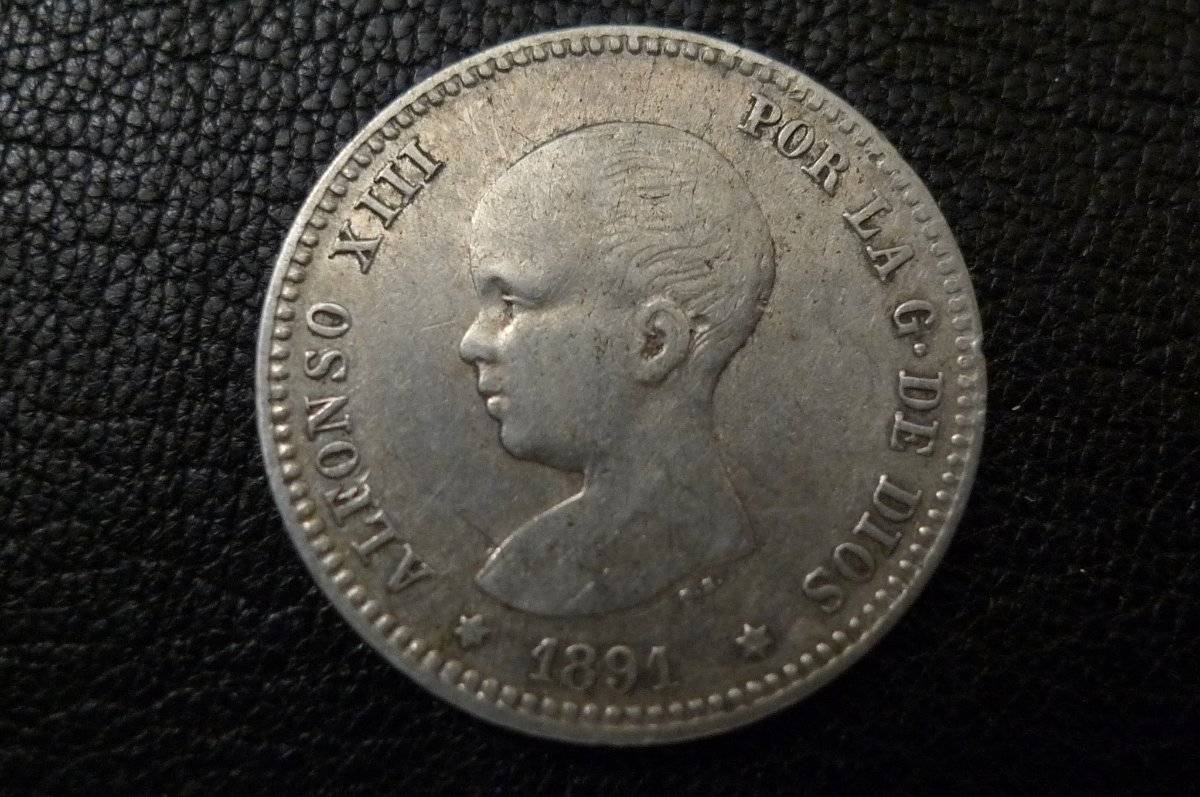
Dorado - these coins are popular because of the baby head. Alfonso XIII was King of Spain from his birth in 1886 as his father had died the previous year. The baby portrait was used from 1888 to 1892, but the one peseta denomination was only issued in 1889 and 1891. Alfonso XIII reigned until the proclamation of the Spanish Republic in 1931, when he abdicated, dying in 1941: the next King was Juan Carlos who came to the throne in 1975 on the death of the dictator Francisco Franco.
Most Spanish coins from 1869 to 1982 bear two dates. The large, obvious date is the year the coin was authorised. The actual striking date is shown incuse on the two six-pointed stars either side of the date. It is quite hard to tell the date of many Spanish coins in less than VF condition! Fortunately this coin only exists with the 'star date' 1891.
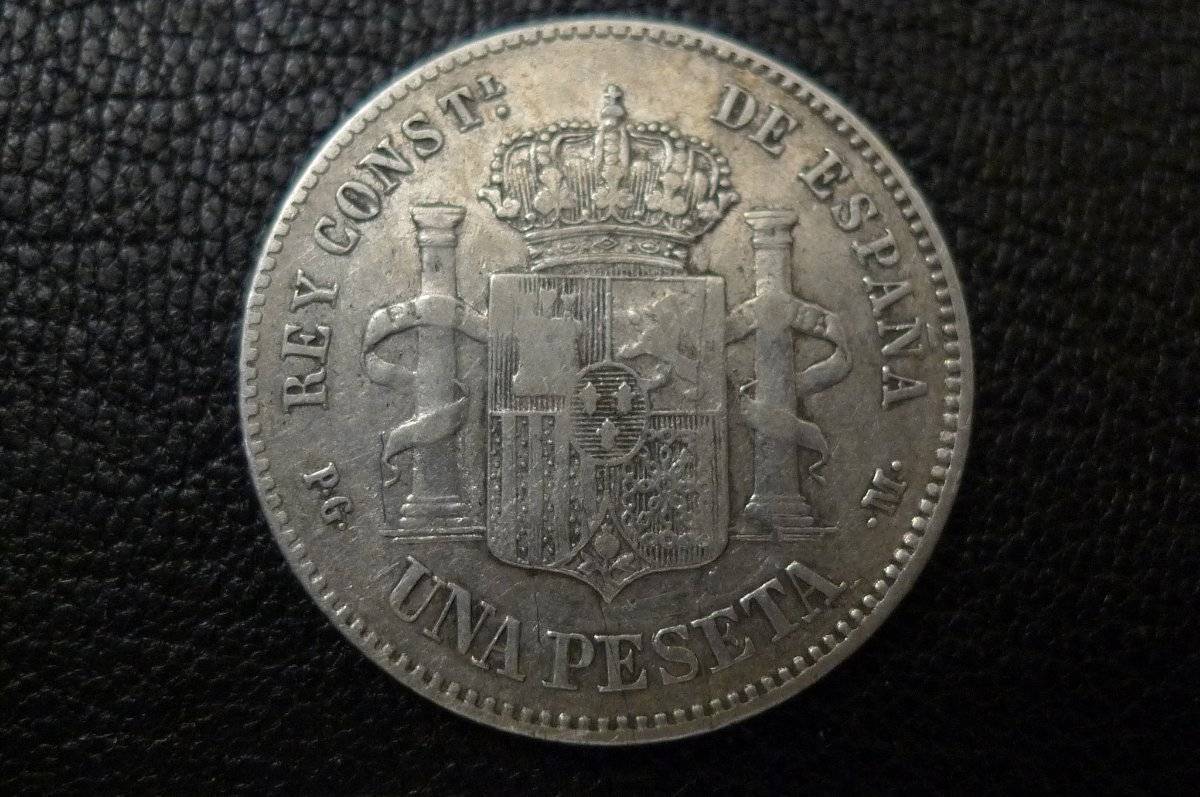
The reverse shows the Spanish coat-of-arms with 'Plus Ultra' in the scrolls around the pillars. The coat-of-arms has remained largely unchanged since then and appeared on many Spanish coins up to the introduction of the Euro.
I'd grade this coin as about VG/F and would say that it has some premium over silver content (5 grams, 83.5% silver) as the baby head coins are so popular, the portrait is well defined and these coins are often found in a much worse condition - they circulated until the 1930s and many of the ones you see in dealers' junk trays are almost worn smooth.
One of Alfonso XIII's enduring legacies is the popularity of Spain as a tourist destination. He encouraged the building of hotels and was largely responsible for the restoration of numerous disused castles and former palaces that were converted to the luxurious hotels now known as Paradors.









 Posted 07/06/2019 10:55 am





