jgenn and odin The way a Sheffield Plate coin corrodes when burried is essentially as you describe.
The Sheffield plate starts with three ingots: two thinner silver ingots with a thicker copper ingot placed between them forming a sandwich. The sandwich is "welded" together using both heat and pressure. Done properly this creates a single ingot that will expand and deform at identical rates in all directions allowing it to be rolled to the correct thickness for a coin and then struck. It is a process that differs from the earlier process of making a fouree since the silver is not applied as a thin foil and struck to a copper planchet to create an essentially mechanical bond between the silver and copper.
Once bonded (welded or fused together) the three layers behave as if they are one solid material. They expand at the same ratio and when struck the deformation is uniform creating a solid silver surface. When not adequately fused (low heat or inadequate pressure) a seam still exists between the two metals. When properly fused there is a boundary layer where there is an actual mixture of the metals and no seam remains at all. The metals melt together along the boundary line.
A true Sheffield plate properly fused wears without creating a seam line - instead there is a very small transition area where the color changes.
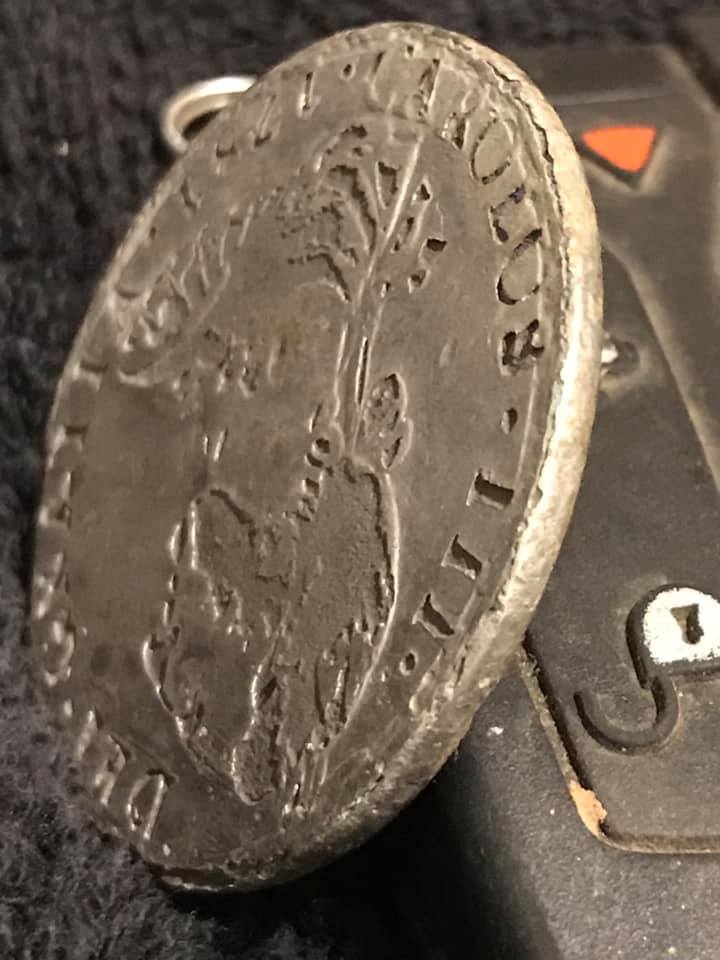
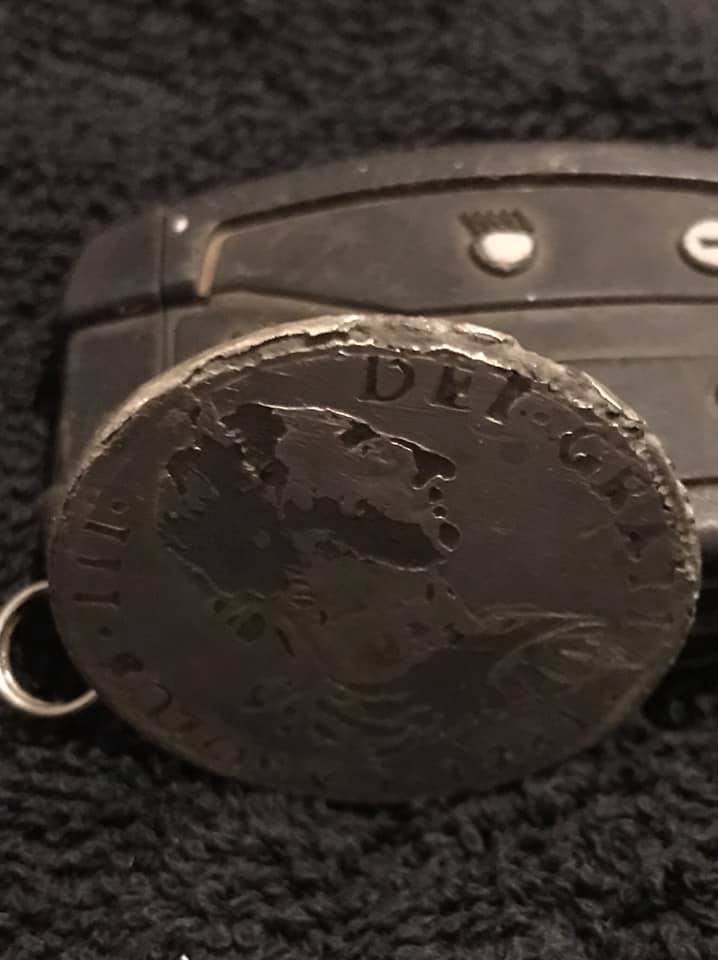
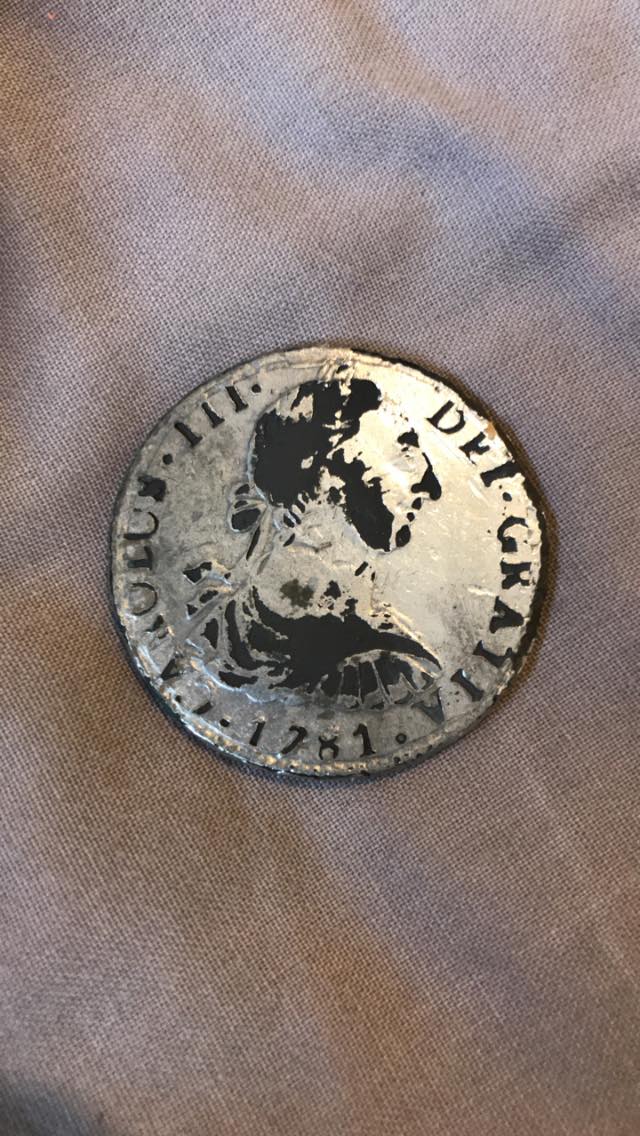
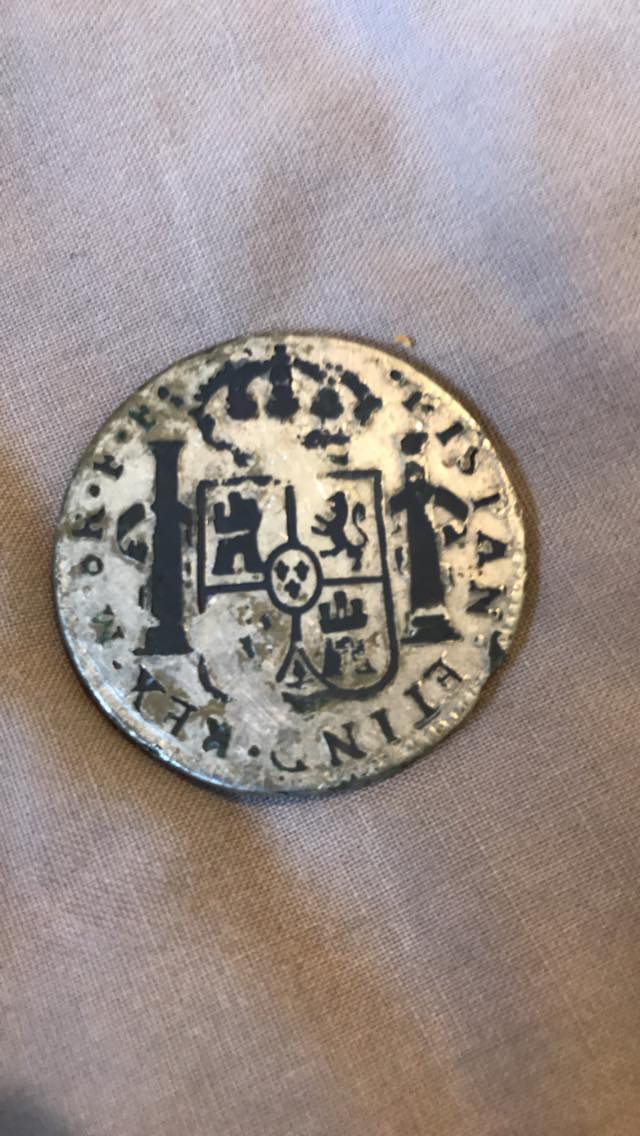
The new larger pictures taken at an angle show what the coin appears to be a very early example of Sheffield plate with a poor bond having developed between the silver and copper. If a seam remains, then when struck small fissures are often visible at the stress points where raised elements of the design meet the fields. This stress concentration creates tiny cracks in corners of raised letters that should not be present on a well bonded plate.
When buried these micro-cracks allow water to penetrate to the copper core and electrolysis begins. The copper being more reactive corrodes and expands. The corrosion under the surface enlarges the micro fissure and gradually pushes the silver (which is less reactive) outward eventually detaching it.
When excavated the remaining traces of the detached thin silver plating are washed or brushed away when the coin is cleaned. It leaves behind these ghost images which are actual depressed into the surface. The depression is due to the loss of under lying copper metal.
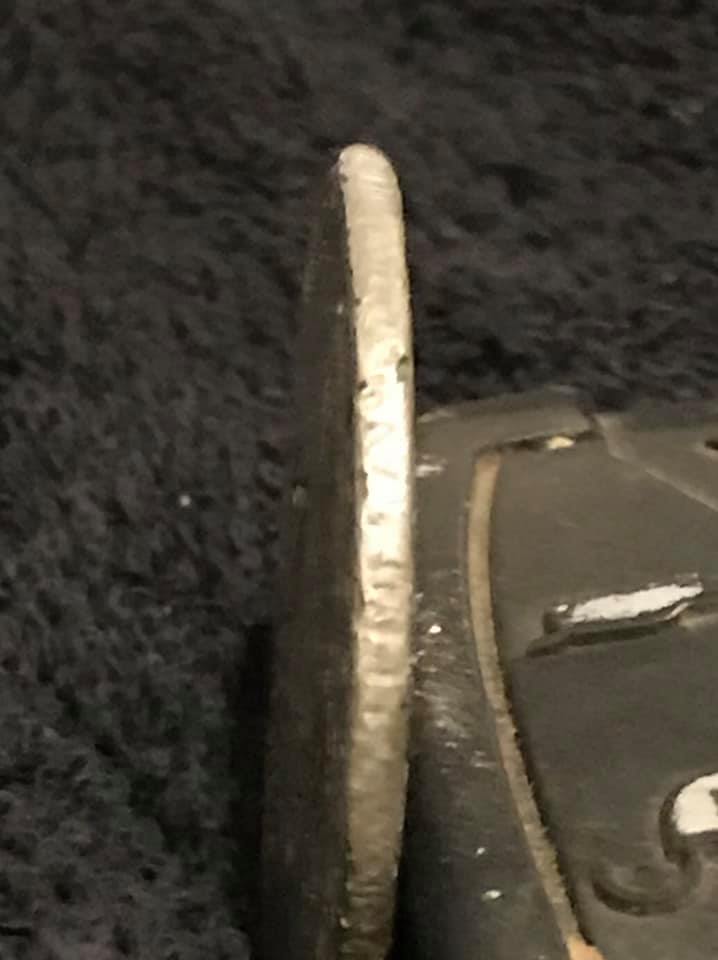
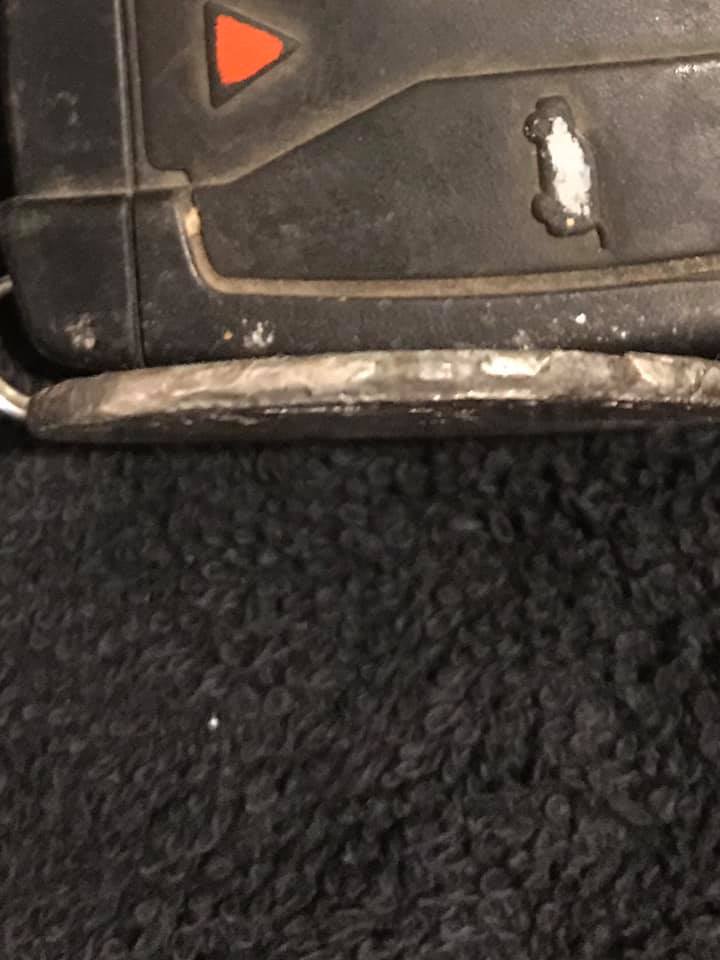
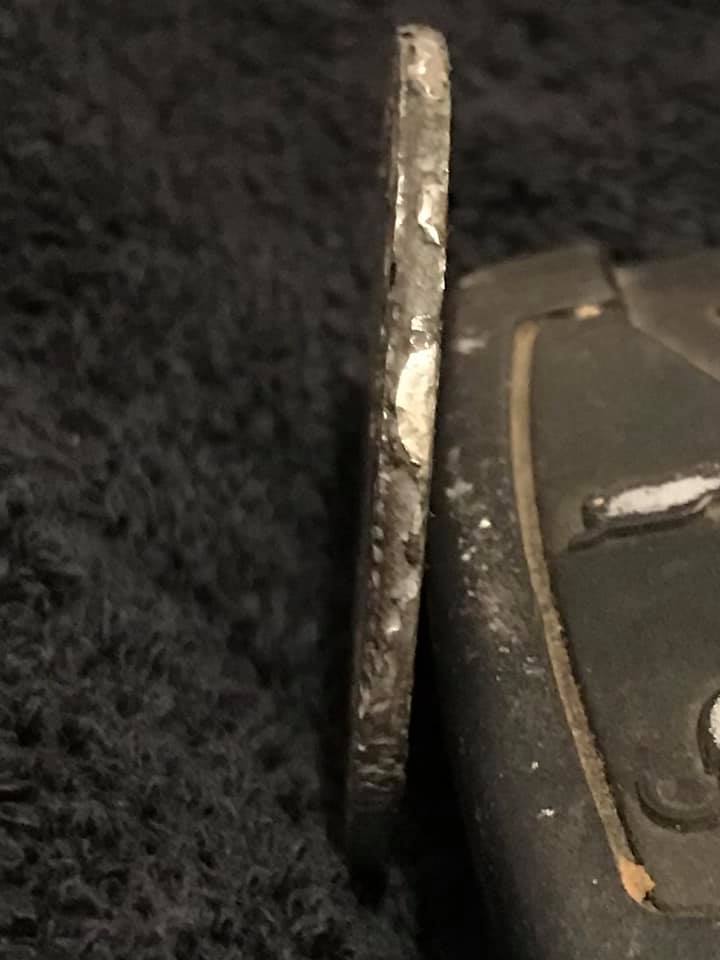
The edge of a Sheffield plate coin tells a lot about how the technology of the counterfeiters had progressed. The first edges were raw and showed the copper center. This was quickly corrected by using silver solder to cover the visible copper edge. The result was a very irregular edge. By 1785 Matthew Boulton had devised an edger apparatus that could add a thin silver ribbon to the edge of a plate. The ribbon was pressure bonded to the edge often employing a devise that resembled a security edge on a coin. Counterfeiters quickly adapted that ribbon technology allowing a colonial edge to be applied. This had to be done AFTER the coin was struck to avoid edge detachment. This edge was often the weakest spot on a good Sheffield plate and the only point where corrosion began.
I believe you may have an early ribbon application with cracked corners and a very indistinct edge pattern.
It is interesting because it points to one case where the counterfeiter's technology evolved to move from debased silver to a plate.







 Posted 05/14/2019 09:04 am