| Author |
 Replies: 15 / Views: 4,048 Replies: 15 / Views: 4,048 |
|
|
New Member
United States
49 Posts |
1658 German States BESANCON Thaler KM# 48 it weighs 24.1 g Obverse Lettering: MONETA.CIVIT.IMPER.BISVNTINÆ Reverse Lettering: CAROLUS.QVINT. / ROM.IMPERATOR. can anyone translate coin inscription ? opinions on condition,rarity,value Thanks rr 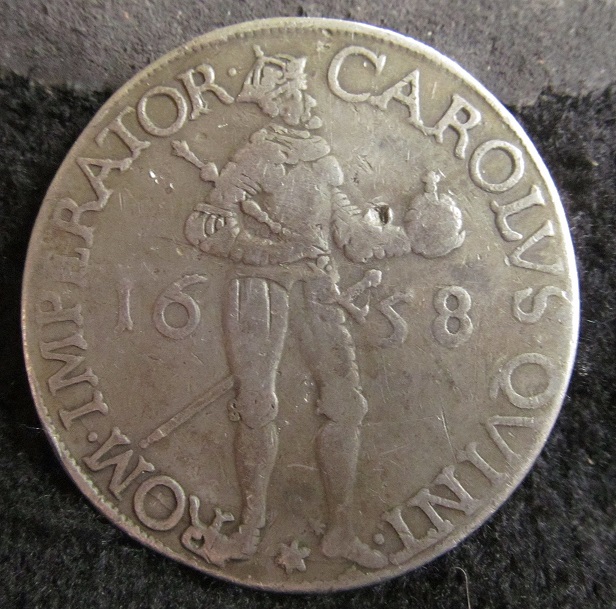 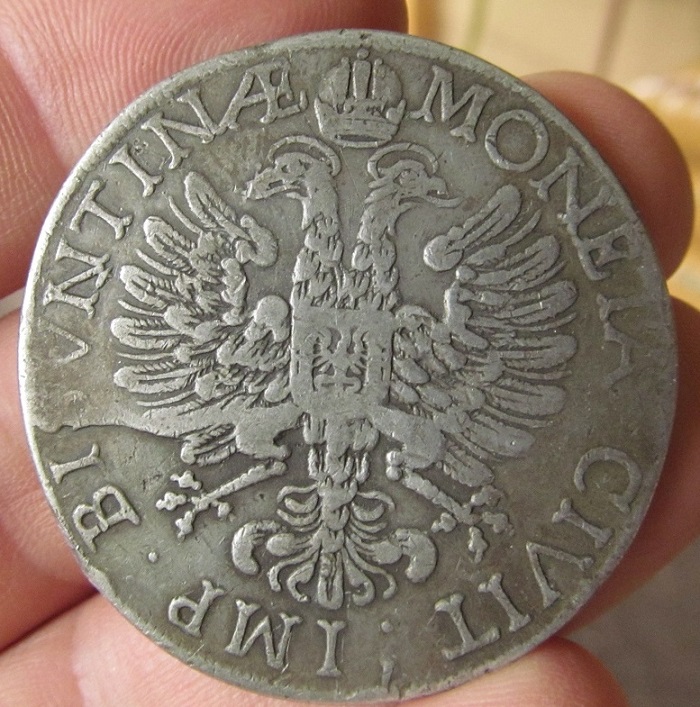 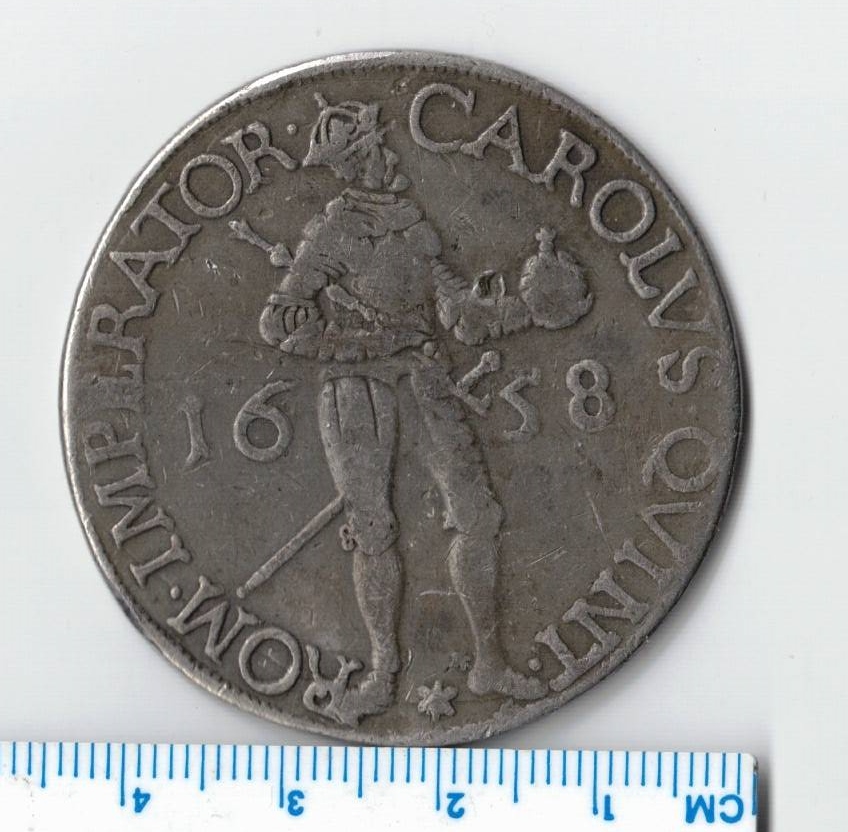
|
|
|
|
Valued Member
United Kingdom
240 Posts |
MONETA CIVIT(atis) IMPER(ialis) BISVNTINÆ
Coin of the imperial city of Besançon
CAROLVS QVINT(us) ROM(anorum) IMPERATOR
Charles V, Roman Emperor (sometimes also translated as emperor of the Romans). refers to the Holy Roman Empire
Edited by stratocaster
11/03/2019 2:46 pm
|
|
Valued Member
United Kingdom
240 Posts |
lighter by a small tolerance than the catalog listing. Krause lists it at 27.46-28.25g
Dav #5070
VG8 maybe, damage on obverse. 230.00$ according to Krause 2018
|
|
Bedrock of the Community
United States
37193 Posts |
Major die break on the reverse. Nice coin and I don't think the mark above the left arm will hurt the grade. I think this will pull a F-12 in the States.
|
|
New Member
 United States
49 Posts |
stratocaster,Thank you for the translation do you have any idea as to why/how it is a few grams lighter than the specified weight? IndianGoldEagle,Thank you for your input,please excuse my ignorance, please explain the Major die break on the reverse? what and where is it,could that account for the discrepancy in weight? can anyone speak to the rarity of this item? there is not any like it currently listed on ebay 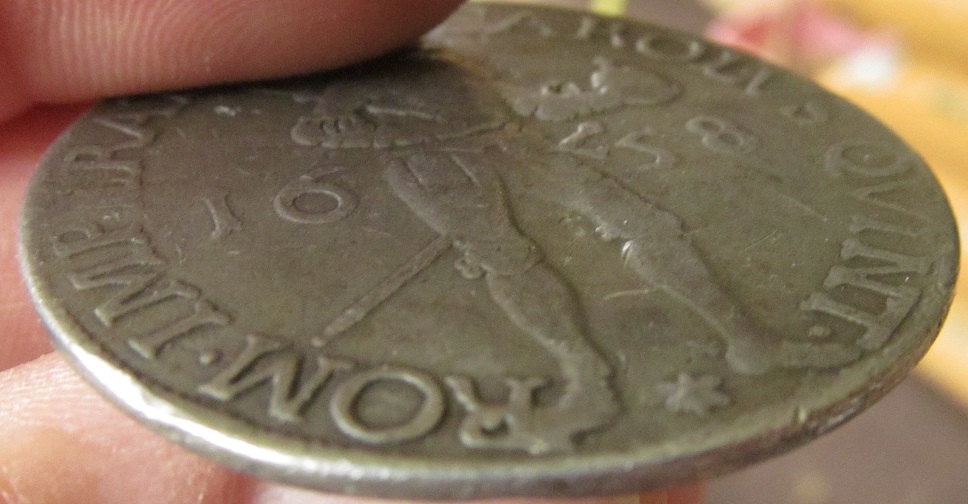 |
|
Pillar of the Community
 United States
8056 Posts |
You can follow this auction to see what your coin is worth. Grade is similar. https://www.coinarchives.com/w/lotv...eaa8a76b5357A specimen graded as "Good VF," sold for 425 Swiss Francs recently. So the price point does not suggest extreme rarity for a thaler of this era. The die break is that defect from the base of the eagle's feather's to the 9:00 position on the rim of the coin. If there is a large crack in the die when the coin is struck, some metal flows into the crack creating this defect, and it gives some weakness of strike in other areas of the coin (for instance also at 9:00 on the obverse). Edited by tdziemia
11/03/2019 1:59 pm
|
|
Valued Member
United Kingdom
240 Posts |
rrndawgs,
Some variation was normal, but 14% is a lot, even for a thaler! Larger coins lose a bit more, but more than 1-2% is unusual. I checked acsearch.info for some thalers from the period, and almost all are ~28 g.
Weight variations can happen during the minting process due to the fineness or availability of the raw metal and from planchet manufacturing and adjustments. A die crack should have no effect on the weight. In circulation, normal wear and damage can cause a further reduction in weight. Intentional shaving or clipping of coins was also very common (people were mechanically removing silver for personal benefit). Lastly, mounting a coin in jewelry can be a cause, when a hole is drilled or the rim/edge is damaged. On your coin there seems to be a nick on the edge around 11 o'clock on the reverse. Check there.
Usually such a big difference in weight would immediately flag a potential fake. However, I have no other reasons to suspect this. A die crack is difficult to fake.
I would carefully check the edges for signs of clipping in your case. Also check the scale maybe?
Edited by stratocaster
11/03/2019 3:20 pm
|
|
New Member
United States
49 Posts |
I appreciate the information you have provided,very useful.
|
|
Pillar of the Community
United States
8056 Posts |
On second thought ... Here is a specimen of the Besancon thaler that sold at Sincona recently. 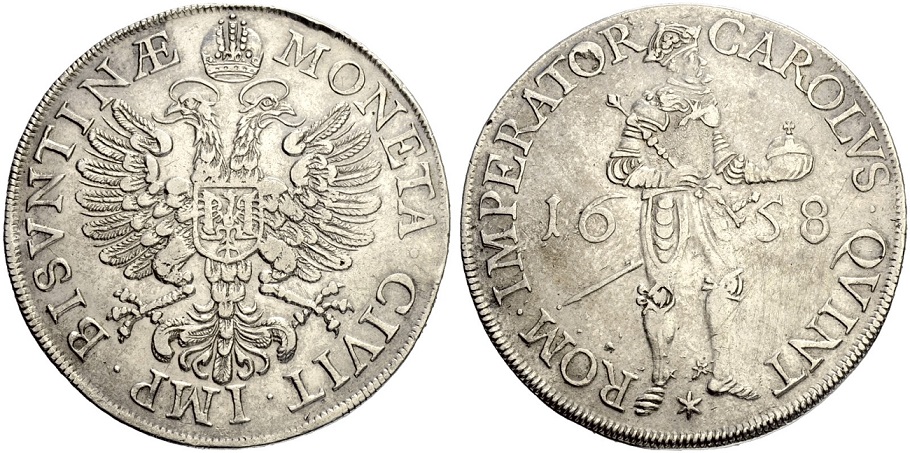 I see these differences: On the eagle side, the OP's coin has eagles with thinner and more upright necks, leading to a much larger gap between the eagles' tongue and the wings; the legend runs much closer to the crown on both sides, and has more letters connected together at the base (or nearly so). The pattern of feathers below the shield is 3-3-2-1-1-1, but on the Sincona specimen is 3-2-1-1-1-1. On the Emperor side, the style of lettering is completely different (also on the eagle side), with straight bottoms to the letters on the SIncona specimen, but curved, "footed" letters on the OPs coin. (Later edit: the tail of the Q protrudes much farther into the field on the Sincona specimen, and on all later dates of genuine examples of this coin that I have found in CoinArchives). The Emperor's elbow seems to be held farther from his body on the OPs coin, and the pattern to the armor on the emperor's right thigh appears different. Other experts out here have commented that the denticles are often the key, and I don't know how that applies here, other than to point out that the denticles are far less noticeable on the OPs coin (would this be expected with a slightly underweight planchet?) Maybe there was more than one die used to make these. The earlier link I posted, to a coin being offered in a different auction, appears identical to the OP's,EXCEPT for the die break. And I realize that may argue on the side of authenticity (OP's coin was the last one made on a deteriorating die?). Also these two coins have nearly identical patinas, which seems a bit unusual. And the other linked coin has a weight within spec.  Time for a better numismatist to weigh in. Edited by tdziemia
11/04/2019 2:37 pm
|
|
New Member
United States
49 Posts |
tdziemia,could the differences you noted just be variations?
or to you think it could be a fake
how would one have a coin like this authenticated? the grading services,how do they authenticate?
anyone else have ideas,opinions?
|
|
Bedrock of the Community
United States
37193 Posts |
It's possible the dies for your coin finally broke and the coin sold at Sincona were struck from a new set of dies. If your coin is a fake, it is a very old one. But the wear and patina look very original to me.
|
|
Pillar of the Community
United States
8056 Posts |
@rrndawgs, if you search on CoinArchives, you can find 7 examples of this type of Besancon thaler (issued 1658-67) https://www.coinarchives.com/w/resu...&results=100 There are an additional two examples in the NGC world coin price guide (1659 and 1666). Full disclosure, I am not as expert as many others out here, and I don't even own a thaler from this era. But if you look at these examples and yours, you will see the differences I described. Probably lettering is the most obvious, followed by the proportions of the eagles' heads/necks, and the appearance of the denticles (though maybe this is just wear). There is one other thaler that looks like yours, another 1658 currently up for auction. The others have the differences. There is also the weight difference for yours. Certainly what IndianGoldEagle suggests is one possibility, namely that in the first year of this thaler, there was an initial design, the reverse die broke, and a new pair of dies was designed with different lettering, and some differences in the eagle which then persisted for the remaining years they type was issued (maybe the engraver changed?). Maybe yours was an unusual under-weight planchet. The other option is that there were some forgeries made a long time ago. I'm not experienced enough to suggest which is more likely. |
|
New Member
United States
49 Posts |
tdziemia,IndianGoldEagle,Thank you, I appreciate your input.
Does anyone know who or what service has the knowledge/experience to determine authenticity?
or possibly it has not been documented,or lost over time.
I think it is a interesting coin in any case,I did not pay a lot for it,and have learned a new history lesson.
|
|
Pillar of the Community
United States
8056 Posts |
You can send it in to one of the third party graders ( TPG) for authentication. Cost for a single coin is on the order of $60 with NGC if you are not yet a member (membership fee + grading fee + postage)... |
|
New Member
United States
49 Posts |
tdziemia,Thanks for the info,if $ were no object I would submit it just out of curiosity,I didnt pay much more than that for the coin and plan to hold on to it,due some further research if possible.
|
|
New Member
United States
49 Posts |
also tared and calibrated my scale, it still weighs 24.1 g
|
| |
Replies: 15 / Views: 4,048 |
|









 Posted 11/03/2019 11:29 am


