| Author |
 Replies: 7 / Views: 1,224 Replies: 7 / Views: 1,224 |
|
|
Pillar of the Community
United States
588 Posts |
I always see coins that say "Toned" and have all these nice colors. For example last topic had a 1909 LC. And someone said it was unnatural" is it possible for a coin to get a tone naturally. Because I burned some LC not important ones and got some beautiful colors. Whats the difference?
|
|
|
|
Pillar of the Community
United States
7123 Posts |
Obviously if a coin can be called artificially toned then it stands to reason that there are natural processes which can also tone a coin .
coin doctoring is a frowned upon practice that finds its roots in taking advantage of the newer or less educated collectors due to the higher values paid for some naturally toned coins.
|
|
Pillar of the Community
 United States
588 Posts |
How do I know whether it's Natural or if I may call it so "fake"?
|
|
Moderator
 Australia
16957 Posts |
Quote:
How does a coin get it's tone? By chemical reaction between the raw metal surface of a coin and substances in the atmosphere. "Natural toning" is caused by a coin sitting at room temperatures for many years, absorbing oxygen and sulfur from the air. Coloured toning derives from the thin layer effect, the same process that makes butterfly wings shine and oil-on-water show many colours. "Artificial toning" is when some process is used to accelerate or create the appearance of toning. This can be done in numerous ways, by exposing the coin to different chemicals and/or increasing the temperature (as in the case with your experiments). Quote:
Whats the difference? That depends on the method of artificial toning. In some cases, the end result is basically the same, so there is no difference. In others, the end result is not stable in the long term - the colours will change or fade with time. Unfortunately for collectors of "toners", it can take a couple of years before the difference between a stable tone and an unstable tone becomes apparent. Don't say "infinitely" when you mean "very"; otherwise, you'll have no word left when you want to talk about something really infinite. - C. S. Lewis
|
|
Pillar of the Community
United States
7123 Posts |
Learning to spot artificially toned coins takes alot of practice and looking at many known artificially toned coins and many known naturally toned coins , learning the colors and characteristics of that color on the surface of the coin which are associated with time and environment -VS- chemicals and heat and other processes which are known to tone or change coins . an example . Artificially toned . 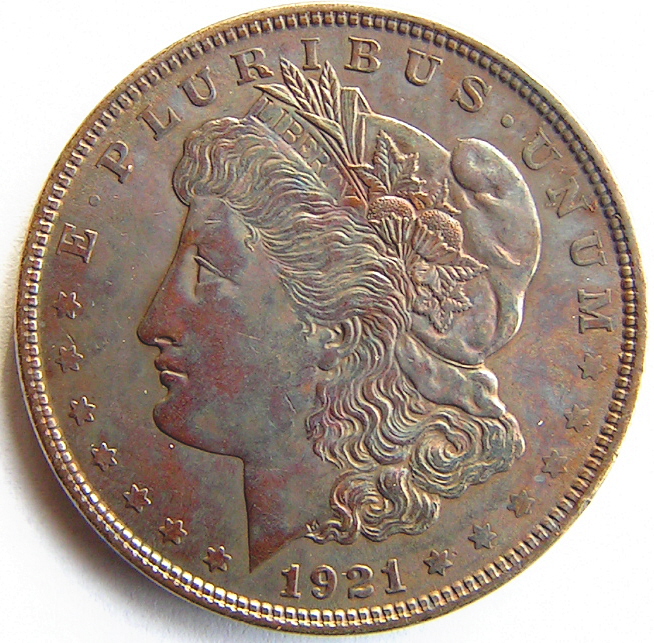 naturally toned 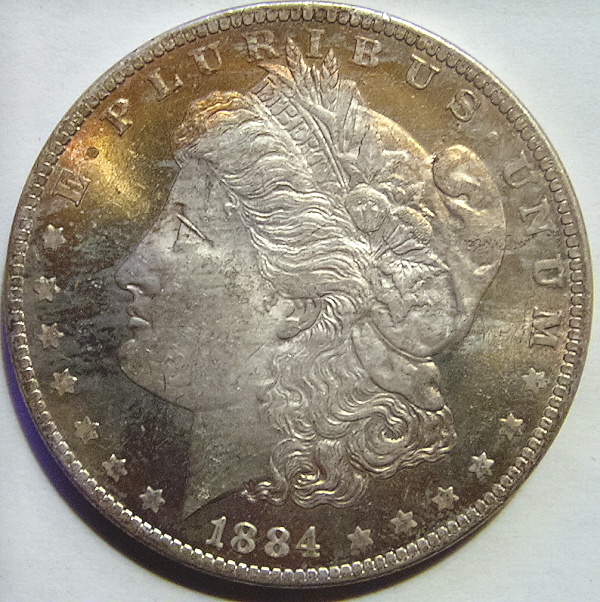 |
|
Pillar of the Community
United States
4541 Posts |
humidity does toning also I believe
|
|
Pillar of the Community
United States
588 Posts |
Those Morgan pictures really help now I see the difference Thank you.
|
|
Bedrock of the Community
United States
20753 Posts |
Toning, tarnishing, corroding, etc. are all effects of substances reacting with other substances. For example raw iron in air will form a thing called rust. Pending on the amount of Onygen present, two different types of Rust could form. With Copper, used in numerous coins, the metal reacts with massive amounts of other substances and also, pending the amount present, the end results could be different.
As to being able to tell the difference between AT and NT. A dealer I know has made numersous Toned Coins Artificially just to see if a TPGS could really tell. He gets about 25% graded and slabbed. So obviously if the so called experts can't tell, then?
|
| |
Replies: 7 / Views: 1,224 |
|





 Posted 10/05/2008 12:24 am





