| Author |
 Replies: 11 / Views: 2,121 Replies: 11 / Views: 2,121 |
|
|
New Member
United Arab Emirates
38 Posts |
Edited by byzantine
10/16/2008 12:42 pm
|
|
|
|
Moderator
 United States
23731 Posts |
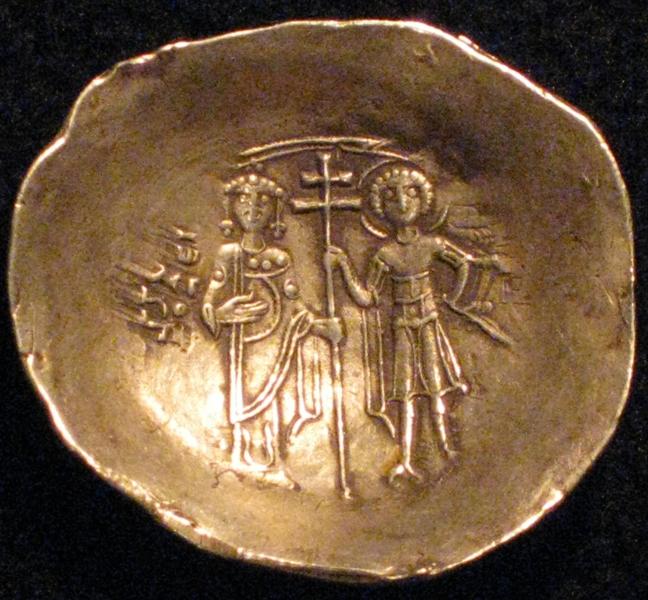
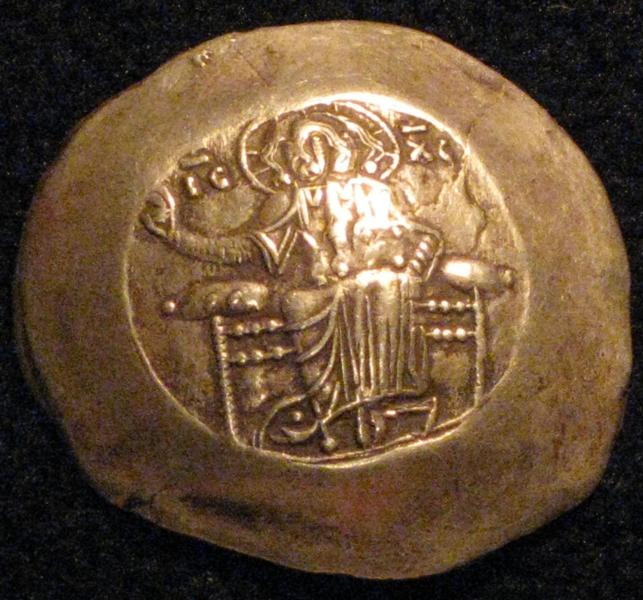
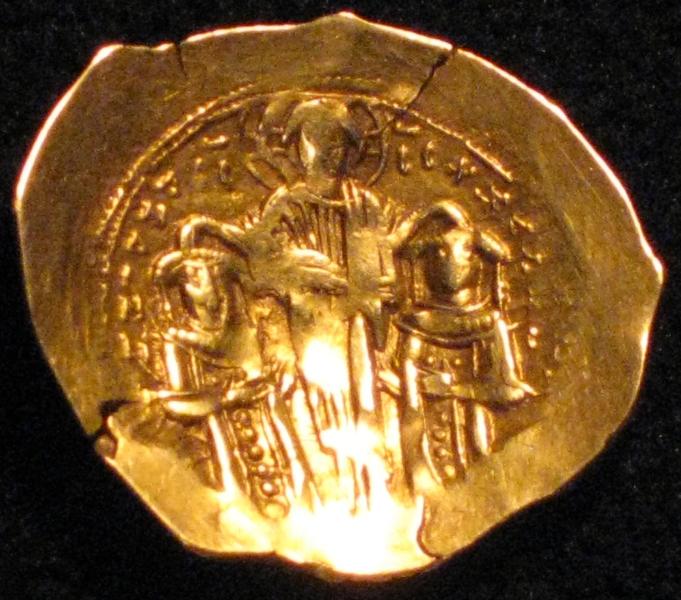
Coin #2 Looks like an Electrum aspron trachy of John II (Comnenus) 1118-1143, Sear# 1941.
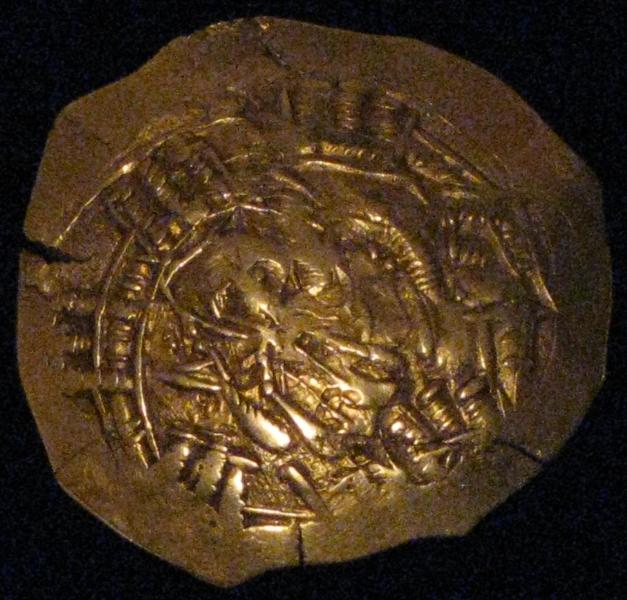
Coin #3 is a AV Hyperpyron of Andronicus II and Michael IX 1295-1320 Sear# 2396.Bust of the Virgin Mary within the city walls. Christ in the center with Andronicus on the left and Michael on the right.
Edited by echizento
10/14/2008 6:49 pm
|
|
New Member
United States
7 Posts |
|
|
New Member
 United Arab Emirates
38 Posts |
thanks lisa and echizento.
Edited by byzantine
10/15/2008 03:10 am
|
|
New Member
United Arab Emirates
38 Posts |
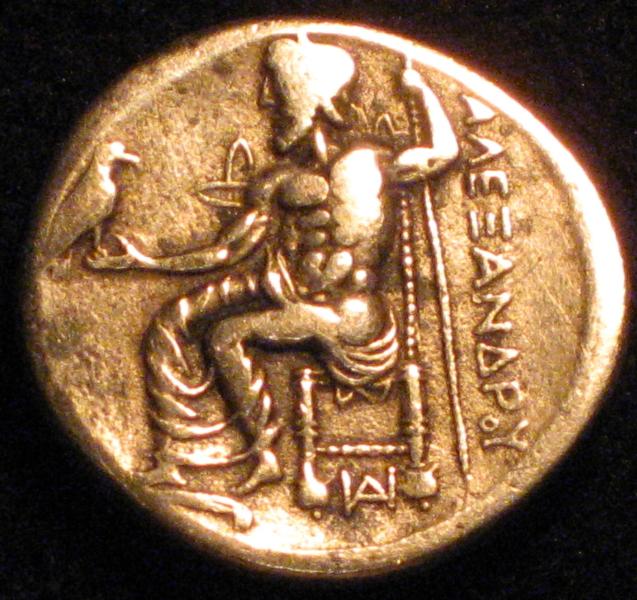
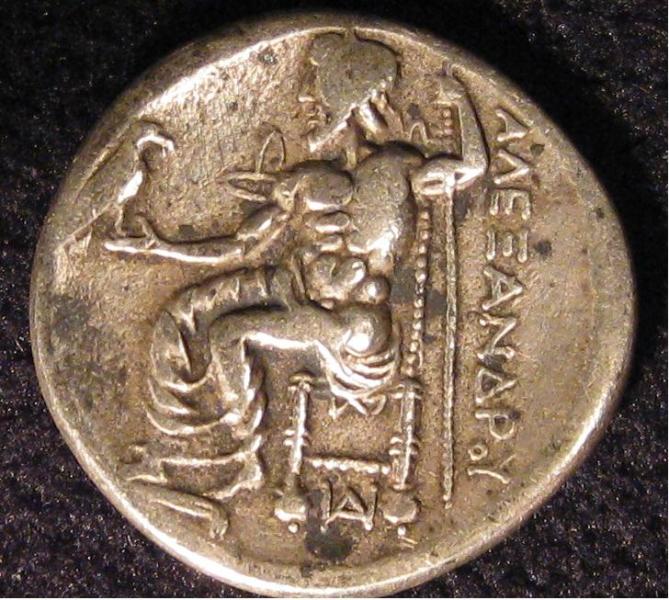
anybody have an idea about Alexandre coin's monogram ?
|
|
Moderator
United States
23731 Posts |
I've checked several sources but have not being able to find an Alexander Tetradrachm with that particular marking.
|
|
New Member
United Arab Emirates
38 Posts |
it's a good news for me.
Thanks very much echizento
|
|
Moderator
Australia
16982 Posts |
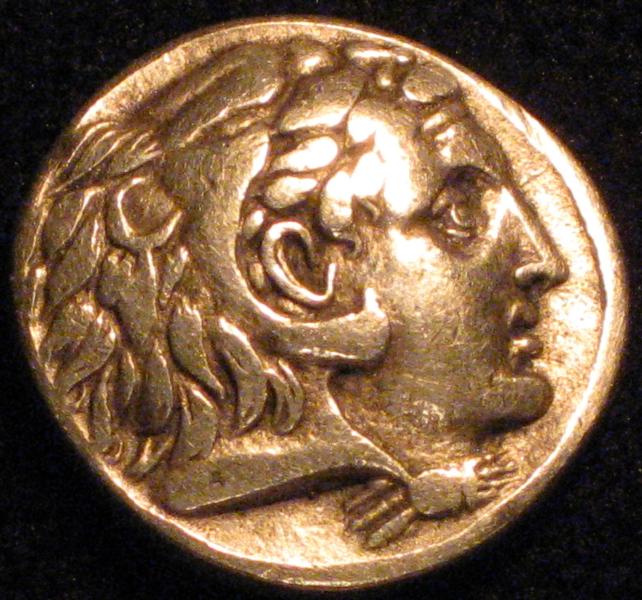
Just to clarify for anyone unfamiliar with ancients: this coin (the one in the top pic and bottom two pics) isn't actually Roman, it's Greek; Alexander III is perhaps better known as Alexander the Great, king of Macedonia and conqueror of much of the ancient world. The coinage of Alexander the Great was one of the first great "imperial" coinages, in the sense that coins of this same design were issued at dozens of mints scattered throughout the empire, with the mint and sometimes the date of issue distinguished by an astonishingly complex system of mintmarks, symbols and monograms. I'm not aware of an absolutely comprehensive website to go to for a list of mintmarks on these coins; random searching is the best one can do. I did find this one, struck in Parion (now in northwestern Turkey) which has both the monogram (which I would interpret as "I A I") and the curious asymmetry to the ornamentation on the back of the throne. However, it also has an additional mintmark, a bull. Here's another; this one's from Sardis, in what is now western Turkey. It isn't as close a match; it has the IAI mark but also a star, and the throne lacks any upper ornamentation. Just to confirm: how large and/or heavy is this coin? We're all assuming it's a tetradrachm, because those are the most common coin, but it could be a smaller denomination. Some aspects of the design, such as the throne-top ornamentation, look a bit too crude for a tetradrachm. Don't say "infinitely" when you mean "very"; otherwise, you'll have no word left when you want to talk about something really infinite. - C. S. Lewis
|
|
Moderator
United States
23731 Posts |
The two coins that Sap reference do match the monogram but not the mints so as to where these were minted is still unknown. Another interesting point is when they were minted while Alexander was alive or after his death. Wayne Sayles in one of his books make reference to Lifetime and Posthumous issues. Those of the lifetime issue are believe to be seem as Zeus legs in a parallel arrangement. While the posthumous issues are with Zeus legs crossed. This coin would appear to be from Alexanders lifetime.
|
|
New Member
United Arab Emirates
38 Posts |
Thanks a lot Sap
you re right, I'm correcting it now.
it is a tetradrachm, (24~26 mm I havent got a weighing machine but I guess nearly 17 g)
this coins have got same mint marks. but on my coin zeus has got a different foot position (right foot in front of left foot) and my herakles older than sardes mint's herakles.
|
|
New Member
United Arab Emirates
38 Posts |
echizento so can we say if zeus's right foot is in front of his left foot it was minted while alexandre was alive ?
|
|
Pillar of the Community
United States
2540 Posts |
Sap:
Thanks for the info.
|
| |
Replies: 11 / Views: 2,121 |
|









 Posted 10/14/2008 6:52 pm





