On another board I use, proper dipping seems to be an accepted practice among the long time experts there. For problem coins. Here, there is a much wider range of opinions. For those who think it is akin to cleaning, and will result in details grade, let me ask this. What do you think the TPGs do when they "Restore" or "Conserve" a coin? Coins submitted might spend some time in a chemical solutions.
Sure they come up with fancy names for it, but it's all a form of cleaning. But cleaning done properly.
TPG methods will not result in a details grade. And neither will dipping at home if done correctly.
I only dip problem coins. Ugly toning, haziness, extreme spotting. I bought a lot of 20 modern $1 commems 3 years ago for $10 each. They were not in mint packaging, and they had gotten so hazy it was hard to tell what ones they were. But melt on them at the time was $12 so I had nothing to lose.
Showed them to my LCS owner and he suggested E-Z-Dip. His instructions were, mix it 50/50 with distilled water. Dip for a few seconds. Pull the coin out, hold it flat, and roll the solution around on the coin for about 10 seconds. Then rinse in warm running tap water.
It worked great on 19 of the 20. One developed some ugly brown lines. Which is why I only use this on problem coins with nothing to lose. Even that coin is still worth more than I paid for it. As long as silver keeps going up.
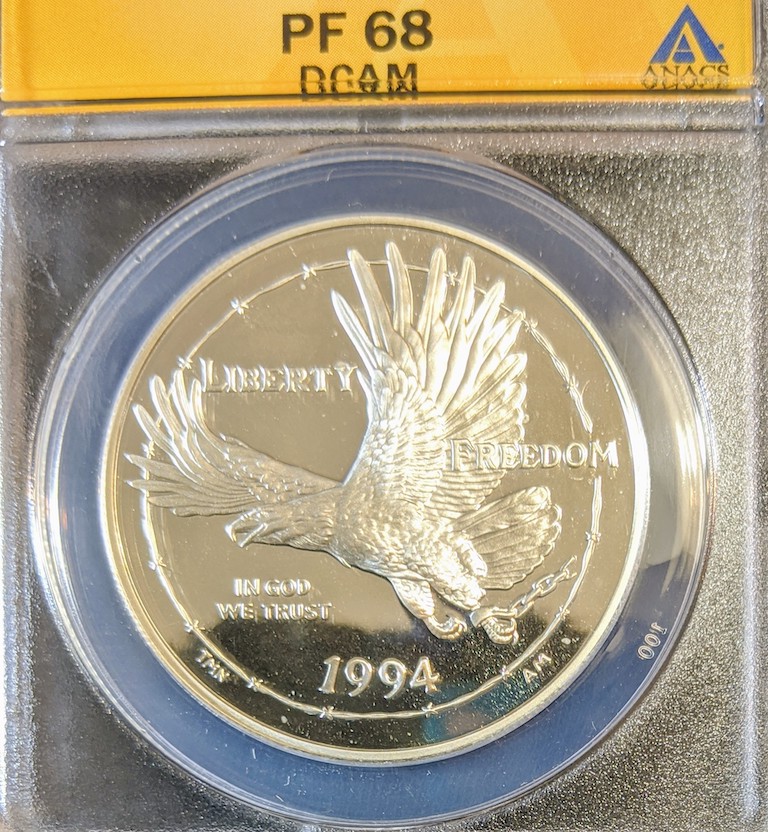
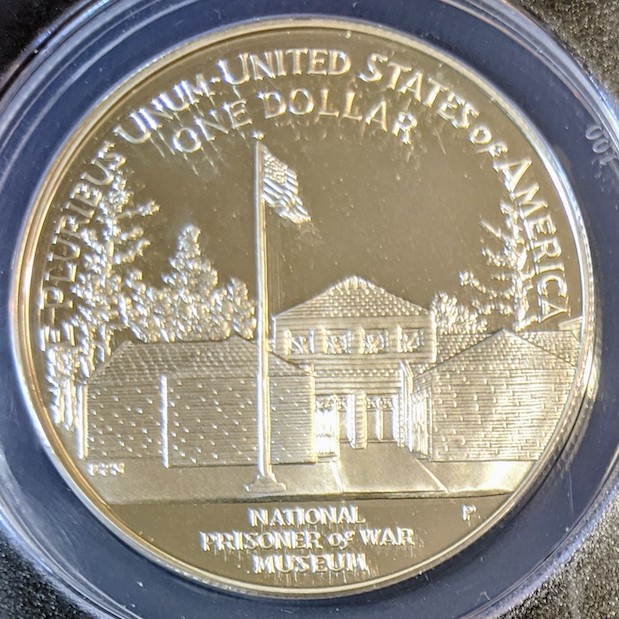
My favorite out of that lot was the '94 POW. Because I've been to that museum and love the sign out front saying that coins proceeds were used to build it. So I sent that one in for grading. PF 68 DCAM. Not bad, especially since that was before the mint was cranking out 69s and 70s with every coin. I'll post pics below. I wish I had taken pics of what it was like when I got it.
Without the dip it probably would have ended up on a silver melt pile some day. With the dip, it's worth 4x what I paid, and one of my favorite coins.
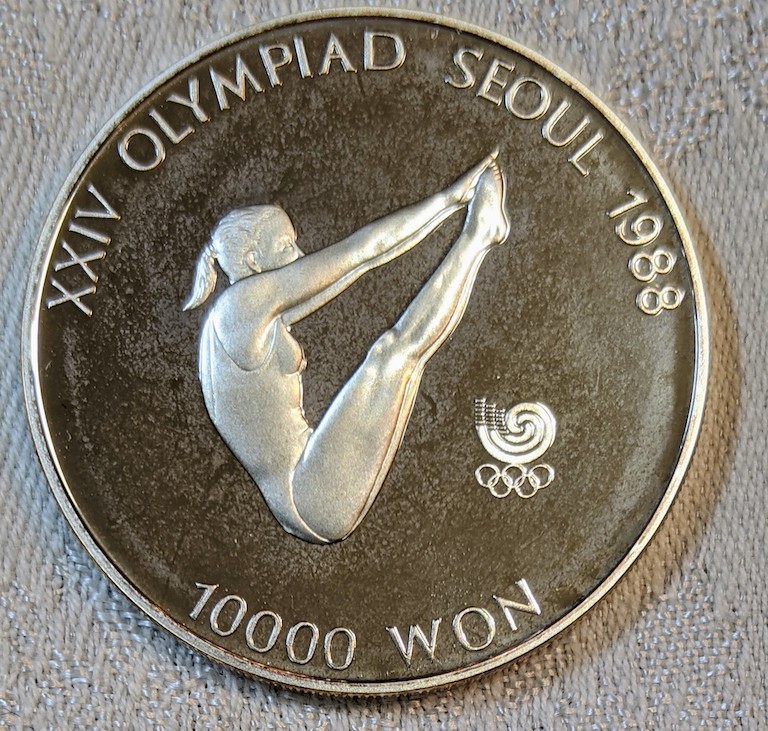
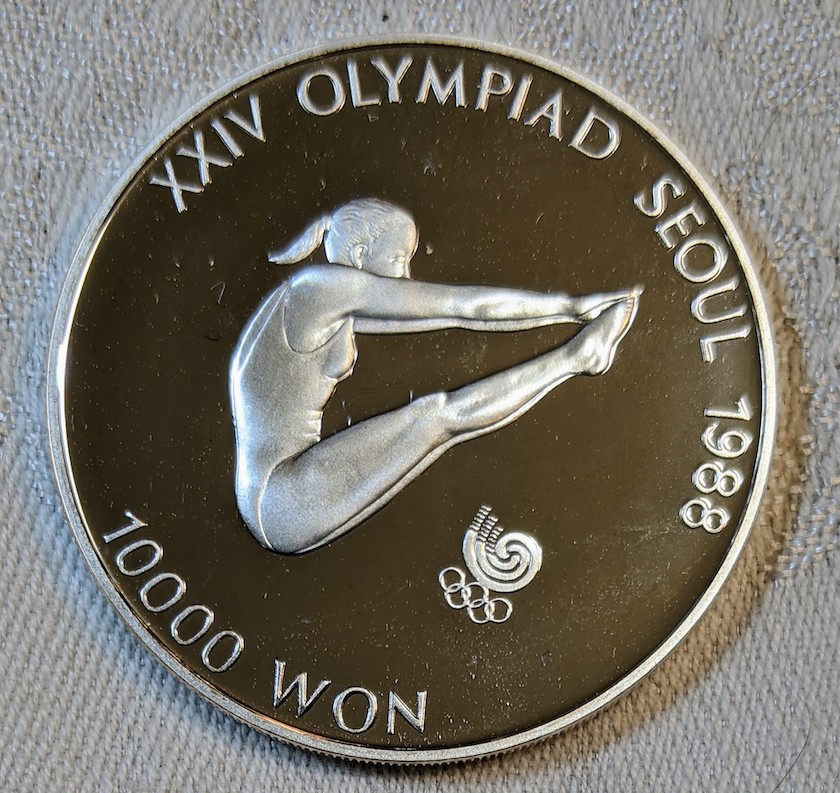
My latest rescue was a South Korean Seoul Olympic 10,000 Won proof. Which again because of extreme spotting, I got for less than melt. On that one I thought to take pics pre and post dip. Which I will also post below.
One thing I have change on my method. I added a 10 second acetone dip after the running water. Acetone dries so fast that I haven't had any problems with spotting or lines since.








 Posted 01/25/2020 12:09 pm