











 Posted 06/17/2020 3:39 pm


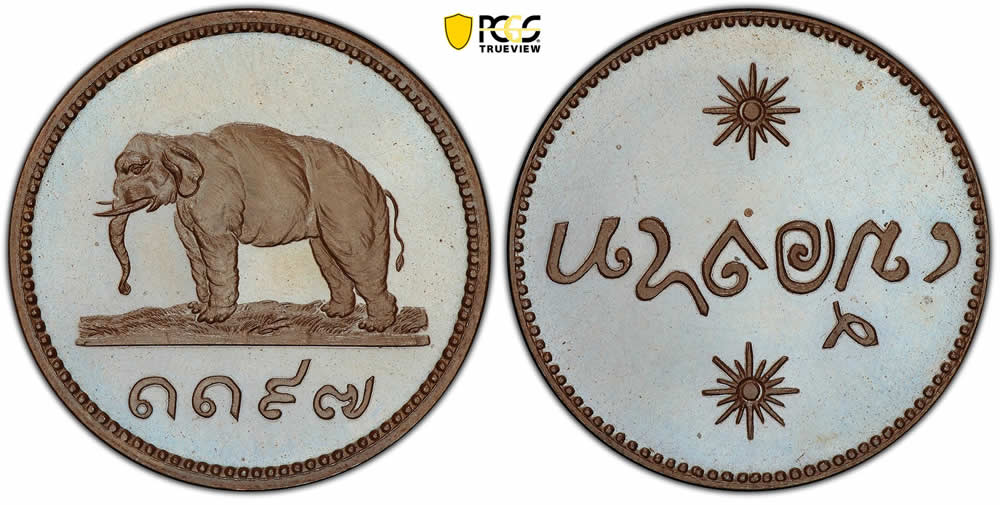
This coin interests me for a many reasons:
1. PCGS scanned in the coin's reverse upside down.
2. Thailand (Muang Thai) typically called itself Siam during the 1800s, yet this coin says Muang Thai...sort of.
3. Spelling is odd. Script looks modern, "Thai" spelled as seen in older "Tai" usage, and the vowel in Muang doesn't match what would be modern usage (or ancient Sukothai period usage). I'll have to research if there was a period in-between where this would have been normal for the script/vowels.
4. Thailand (I thought) did not have a mint or coin presses circa 1830. I thought they were using pod duang (bent/hammered silver) until a few decades later. Rama IV was the "modernizer" and his reign started in 1851.
5. I've never heard the term Keping used in Thailand or in reference to Thai currency.
I need to do some research on this one. Happy to hear if any linguists experts are on the forum.
1. PCGS scanned in the coin's reverse upside down.
2. Thailand (Muang Thai) typically called itself Siam during the 1800s, yet this coin says Muang Thai...sort of.
3. Spelling is odd. Script looks modern, "Thai" spelled as seen in older "Tai" usage, and the vowel in Muang doesn't match what would be modern usage (or ancient Sukothai period usage). I'll have to research if there was a period in-between where this would have been normal for the script/vowels.
4. Thailand (I thought) did not have a mint or coin presses circa 1830. I thought they were using pod duang (bent/hammered silver) until a few decades later. Rama IV was the "modernizer" and his reign started in 1851.
5. I've never heard the term Keping used in Thailand or in reference to Thai currency.
I need to do some research on this one. Happy to hear if any linguists experts are on the forum.


