| Author |
 Replies: 8 / Views: 1,382 Replies: 8 / Views: 1,382 |
|
|
Valued Member
United States
278 Posts |
This appears to be an ancient Roman Domitian coin to me. It weighs 2.3g and is approx. 17mm in diameter. Any identification help would be greatly appreciated. If possible, directions to a relevant catalogue or catalogue # would be most appreciated. 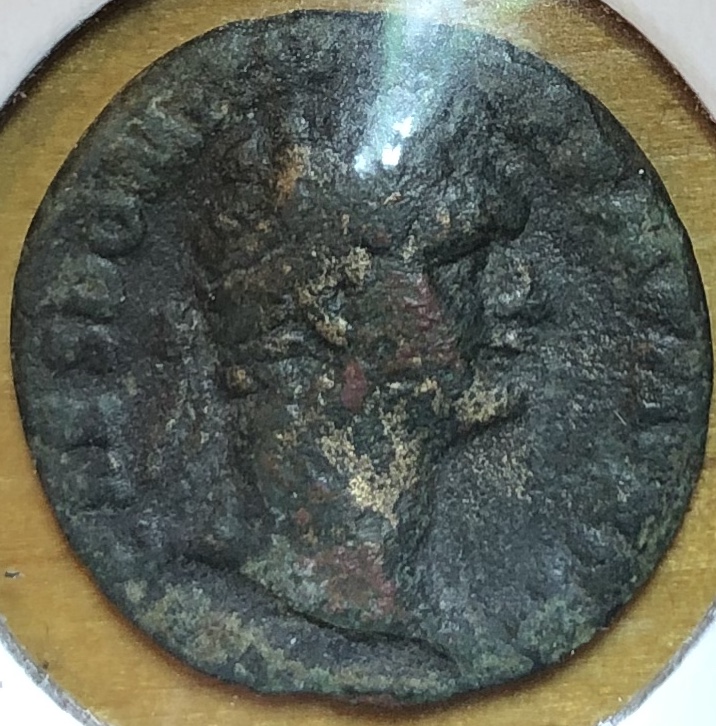 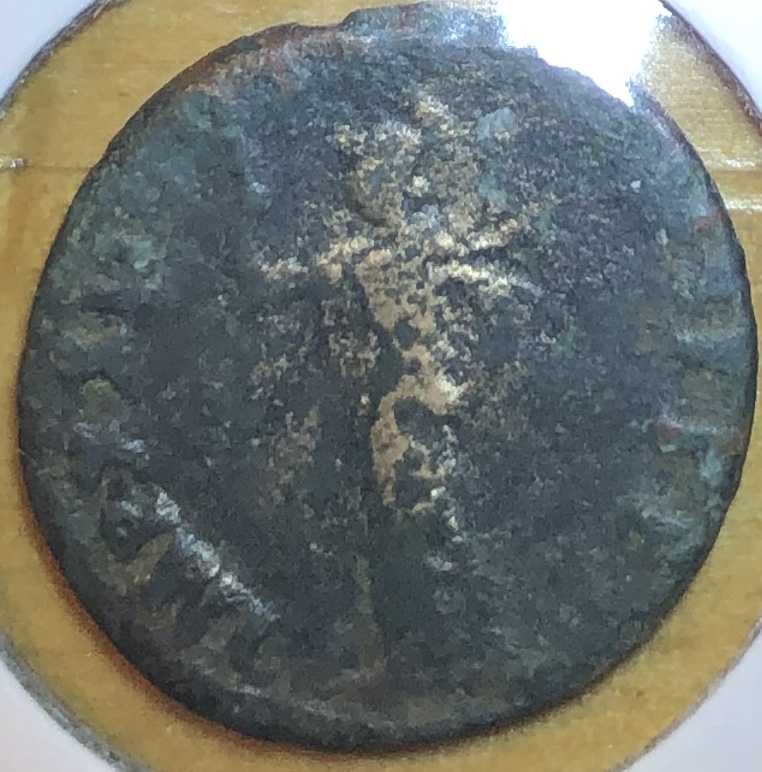 |
|
|
|
Pillar of the Community
 Sweden
2124 Posts |
|
|
Valued Member
 United States
278 Posts |
Thanks for taking a look! The one you sent erafjel appears to be very close but slightly different. My pictured coin has a reverse showing Minerva holding a spear or long stick of some sort. Do you have any idea what type the spear one is? I couldnt seem to find it on Wildwinds...
|
|
Pillar of the Community
Sweden
2124 Posts |
|
|
Valued Member
United States
278 Posts |
Thanks, the link you just sent appears to be a matching design type, but the coin I have is a bronze issue. Is there a different RIC # for the bronze issue of the silver type you sent in the link?
|
|
Pillar of the Community
Sweden
2124 Posts |
I think your coin is silver, although heavily stained. Bronze issues at that time had completely different designs, usually the only inscription on the reverse was SC. The only bronze coin of nearly that low weight would be a quadrans, and they look different.
|
|
Valued Member
United States
278 Posts |
There is a chip on the edge of the coin that shows the bronze colored inside of the coin. So I am thoroughly confused now. I look for hours on the web before for a Quadrans that had my design but couldnt find anything. It does appear that the silver type you sent is a matching design. I am 99% sure this coin is bronze based on the edge chip and bronze wear colorization on the high points. Could this be a fake coin made of bronze but originally silver plated? That is all I can guess...
|
|
Pillar of the Community
Sweden
2124 Posts |
Ok, then it is a bit interesting. If it is indeed made of bronze - and that could also account for the low weight - I see two possibilities:
1. A contemporary fake. Outside my experience, but they apparently exist for Domitian. (I don't think it is a modern fake, that would have been made to look silvery, I guess.)
2. A limes denarius. Again outside my experience, but they are more legitimate imitations from the outskirts of the Roman Empire. They could for instance be made locally to pay troops (and perhaps exchanged for regular denarii when returning to Rome). I'm sure there are others here that know more about these and can tell whether that is likely in this case.
|
|
Valued Member
United States
278 Posts |
Thank you for the help! At this point I'll attribute the coin as a Limes Denarius of the RIC 769 type
|
| |
Replies: 8 / Views: 1,382 |
|










 Posted 07/06/2020 1:08 pm


