
I just think that unless one can point out the details suggesting
why a coin is counterfeit, the details
actually present on the coin should be first order of discussion. Otherwise, a coin is made "guilty unless proved innocent"--just a general observation.
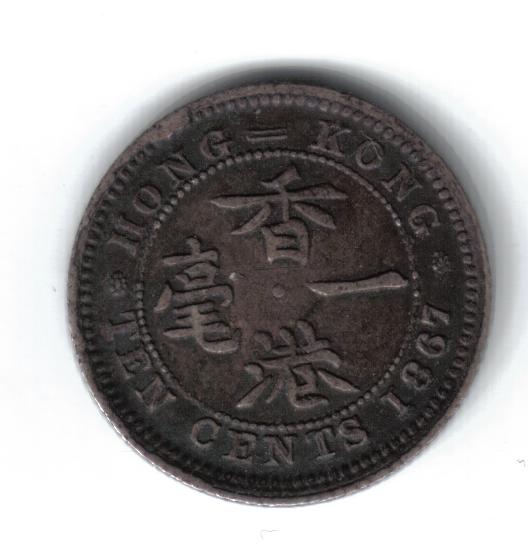
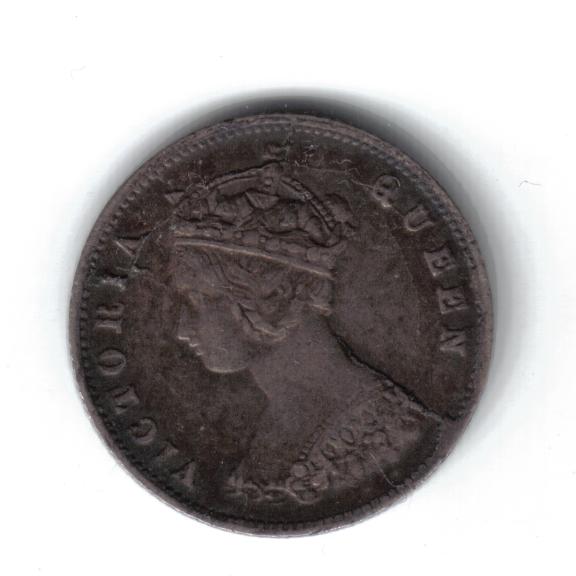
To further the discussion, I went ahead and oversampled the pic, bringing out details on the obverse. Here's a few things I saw:
• That's quite an impressive die crack on the coin, emerging from the rim at "I", circling the coin over to the rim at "U",
and continuing to the 4:00 position.
• I've seen
many UK/commonwealth coins with cracks circling the legends. I mostly specialize in Canada and Australia, and have seen numerous examples in just those countries. This might easily be due to how the dies were hardened, resulting in weaknesses that emerged during the stresses of coining. But I'm not an expert on dies, so those who know please correct me.

• Overall, I'm seeing a lot of evidence of extreme die wear which might explain the misshapen letters.
A broken punch may have been used on the R in VICTORIA. Extreme die wear might explain the
Cud and raised area along the back of the portrait.
That area would have a sharper edge than the front of the bust and may have been quicker to fail. --Just thoughts here.
• I don't really see any evidence of casting, such as granular surfaces or low-relief details dropping out into the fields.
For instance, look at the neck line and the front of the portrait. But I'm not an expert here--these are just my observations from looking at Canada coins from a similar period.

Edited by KurtS
11/16/2008 8:42 pm










 HongKong10Cent1867obv.jpg
 HongKong10Cent1867rev.jpg


 Posted 11/16/2008 03:41 am


