PCGS - The French Revolution brought about a French Republic, which brought about sweeping changes to remove religious and royalist influences across France and its government institutions. One such change came to its calendar, which would be changed and used by the French Republic for 12 years - including on its coinage.
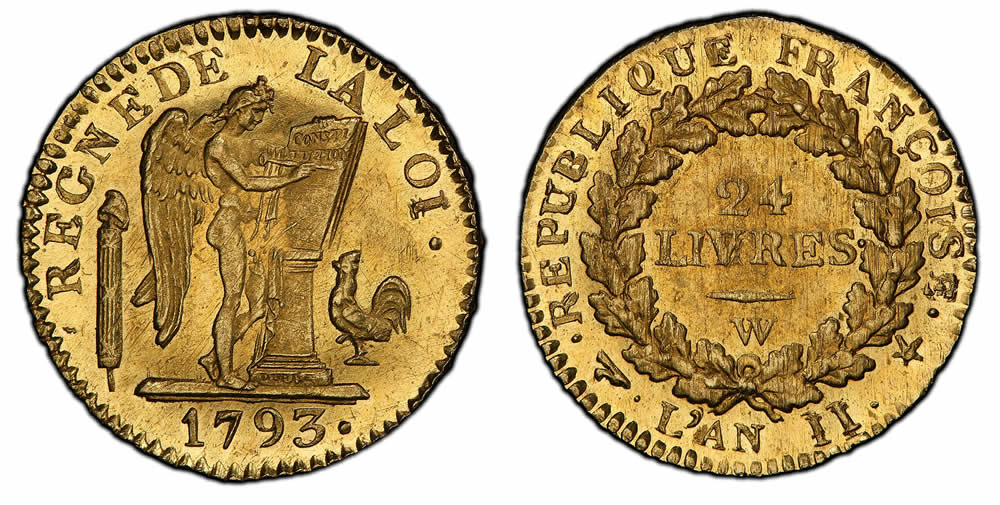
With the new Republic brought about by the French Revolution, the effort to remove the old feudal monarchy systems and replace them with theories of the Enlightenment and look towards ancient Roman Republic and Greek models of the past new systems of weights and measurements were introduced. The idea of using a system of blocks of 10 systems like the metric system were put into place and continue to be used to this day. Yet, implementing a new system for measuring time was something completely revolutionary, but it was put into place. The idea for the revision of the calendar came from Almanach des Honnêtes-gens (Almanac of Honest People), written by the anticlerical atheist Sylvain Marechal, which was a rejection of the calendar system of both Julian and Gregorian systems.
The French Republican calendar was adopted in 1793, but its epoch was set to September 22, 1792. The calendar design was a year divided into 12 months of three 10-day weeks or decades. Decadi, the 10th day of the week, was the replacement for Sunday and was set for the day of rest and festivity. Five or six extra days were needed each year to approximate the solar year, so they were added to the month that ended each year, September, and were called Sansculottides, or complementary days.
Read the entire article.










 Posted 07/23/2020 5:22 pm


