| Author |
 Replies: 9 / Views: 2,435 Replies: 9 / Views: 2,435 |
|
|
New Member
United States
13 Posts |
I've had this coin for many years and, while it resembles one of the early New England tokens, I have a mental block in identifying it. Appears to be copper or bronze. Can anyone help? 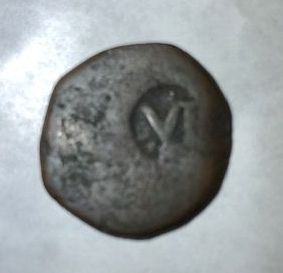 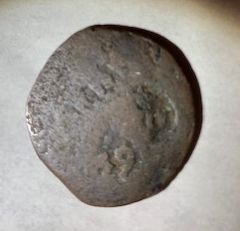 |
|
|
|
Pillar of the Community
 United States
8056 Posts |
One possibility is that it is a Spanish coin. Copper 6 maravedis coins of the early to mid-1600s were often countermarked like this. https://en.numista.com/catalogue/pieces117839.html(Moderators might want to move this to the Identification area on this forum, or to World Coins) Edited by tdziemia
08/15/2020 7:41 pm
|
|
New Member
 United States
13 Posts |
|
|
Valued Member
Spain
125 Posts |
|
|
New Member
United States
13 Posts |
Thank you so much, both of you. So, the Spanish revalued one of their own coins to VI Maravedis? Would the visible 9 on the opposite side help pin down the date, or am I reading too much into what might not actually be a 9?
|
|
Valued Member
Spain
125 Posts |
That is not a 9 for sure, none of those countermarks have a 9 on it. It is a 6 head down, maybe the reverse of the 1641-42 countermark 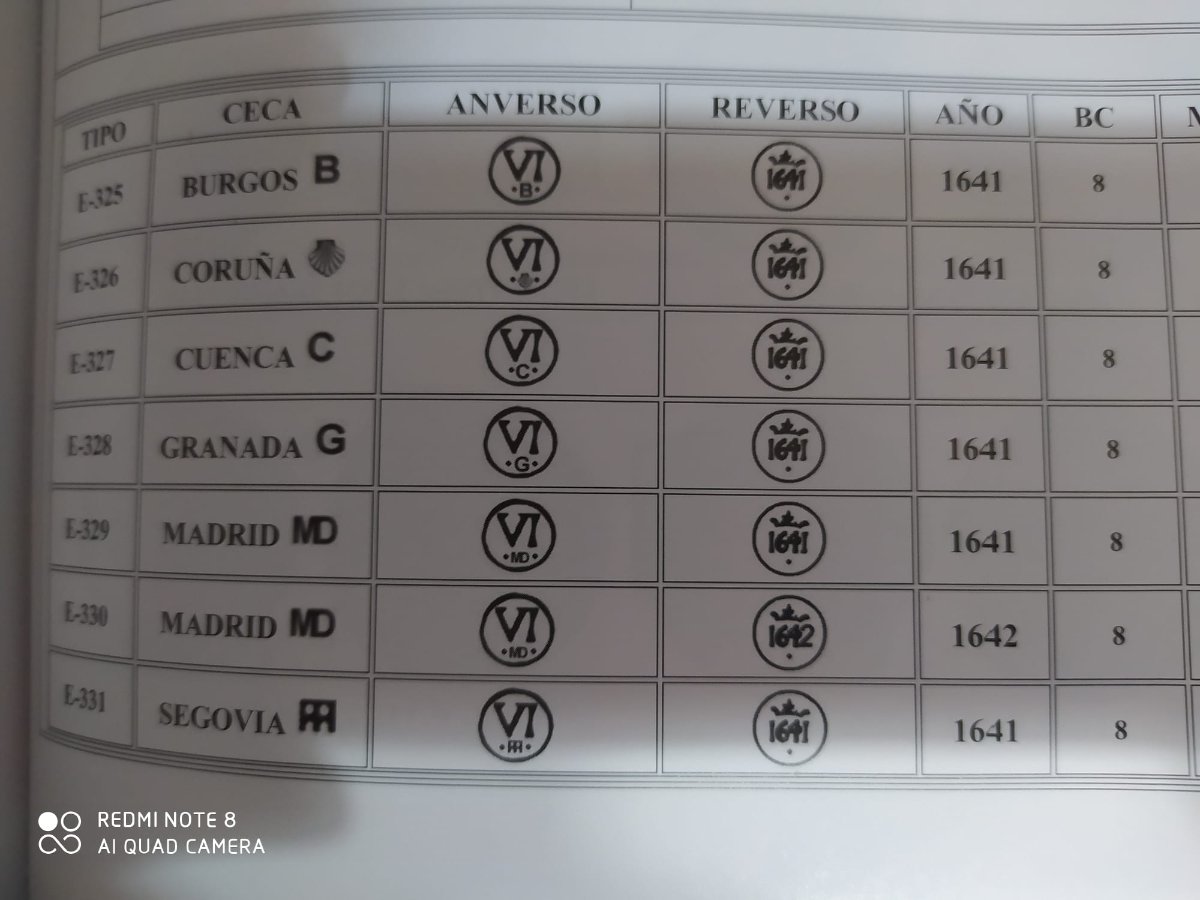 Or if next number is a 5, another different one, the 1651-1652 to 8 maravedís 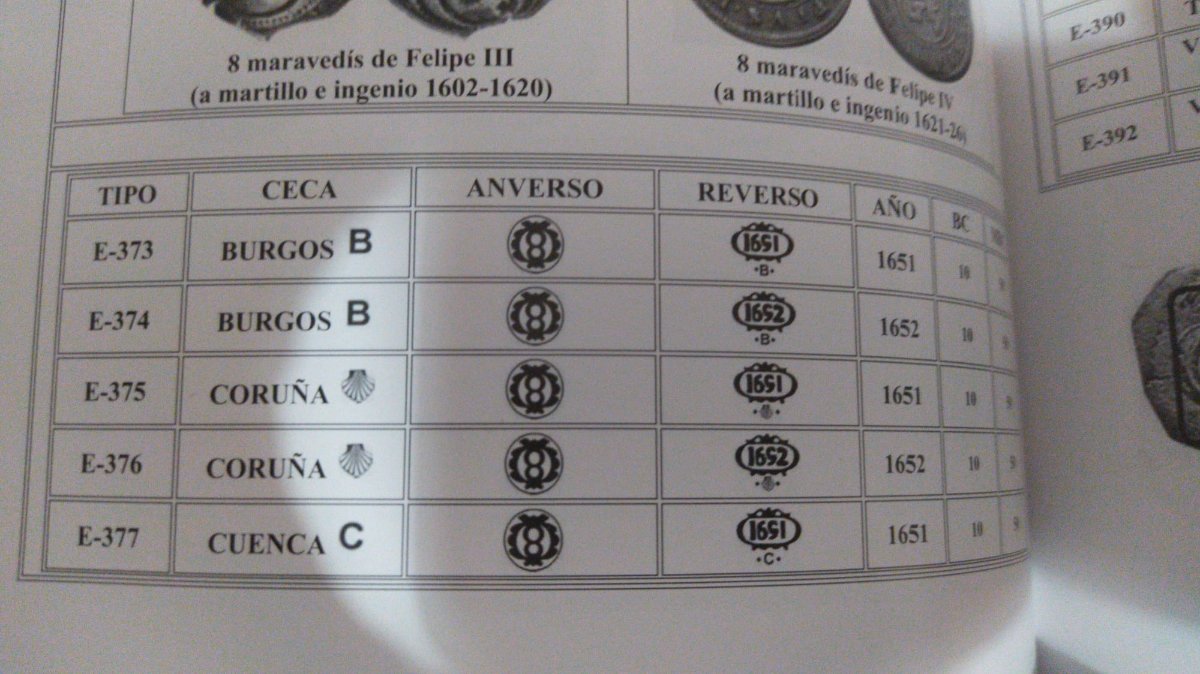 (Ceca=mint, anverso=observe, reverso=reverse, año=year) Regards! |
|
Valued Member
Spain
125 Posts |
Those years were soooo difficult for Spain @someconcerns.
We did not only reevalued some of our coins to another values, we even reevalued coins of 8 maravedis with countermarks of 8 maravedis. Only countermarked coins were legal on ceratin periods, and some coins have 2 or 3 CM on them. Spanish 17th century is so complex, specially on copper coins. A big economic crisis, which ended with the loss of European territories some years later, and American territories after them.
PD: Sorry for my poor English :(
Edited by txabs
08/19/2020 3:18 pm
|
|
New Member
United States
13 Posts |
Hi txabs, Your English is fine, certainly far better than my minimal Spanish. The countermark is clearly the "VI," hence the 1641-42. Too much wear - as you can see from the photos - to tell what mint. Those tables were helpful. I have very few Spanish coins, a couple of Carlos III 1711 2 Reales likely being the best; one EF and one F. As I collected US coins mostly, most countermarks I've seen were one of a kind and not government sponsored. Thanks again for your help! Steve |
|
Valued Member
Spain
125 Posts |
Yes, the VI on observe is the 1641-42 countermark for sure.
But it seems your coin has at least another one. (1)65(X) part might be the 1651-52 to 8 maravedis. Because the other posibility is the 1654-55 to VIII maravedís, but these one weren't on coins like yours.
It is normal that a single coin has 2 o 3 different countermarks stamped on it.
|
|
New Member
United States
13 Posts |
Hi txabs, Yes, as you said, those apparently were unhappy and trying times. I will add these notes to the holder for the coin. Thank you again!
|
| |
Replies: 9 / Views: 2,435 |
|










 Posted 08/15/2020 7:41 pm


