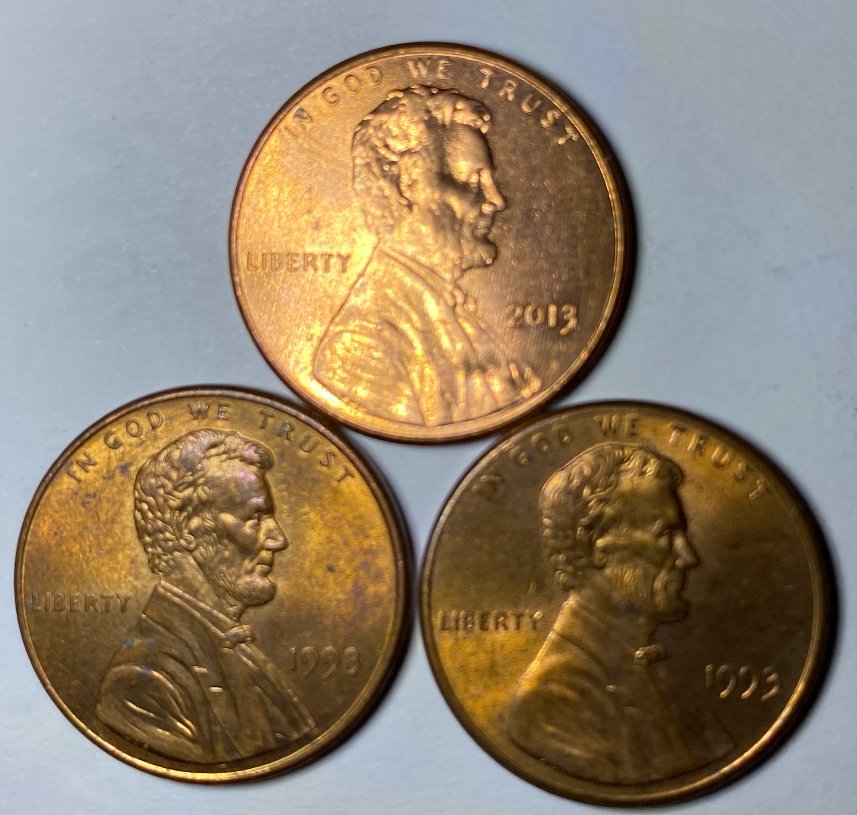
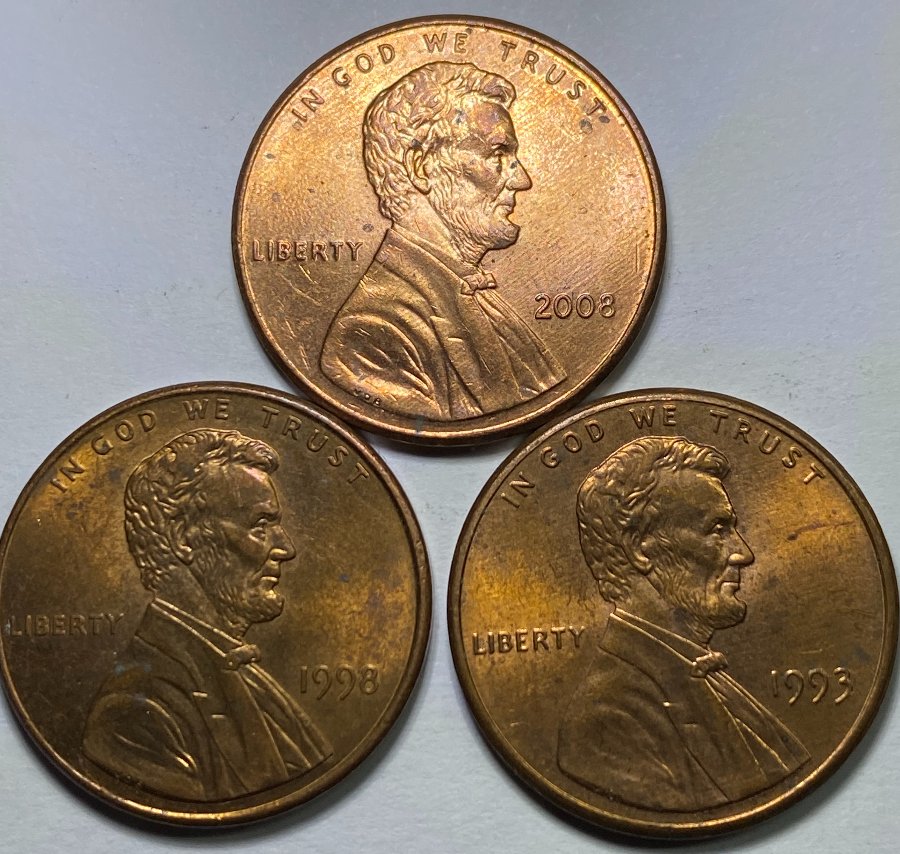
"It is not uncommon to find a Zinc cent that has been Brass plated instead of plated with Copper. This can happen when Zinc planchets get left behind in the plating tank and dissolve to combine with the Copper which becomes Brass. Then this solution gets plated onto the next round of Zinc planchets."
i find it of being no premium myself, because of how easily it can happen, and that it isn't' a "mint error" it's a planchet supplier defect by not taking all the zinc planchets out of the plating solution each time and contamination the copper.
THey are worth something, the linked webite sell ungraded, or PCI graded examples for what they think they are worth.
A letter from the Dept. of Treasury to Ken Potter back then(also linked on that page linked above)
letter from the Department of the Treasury?
"JUNE 27, 1985
Dear Mr. Potter:
This is in response to your letter dated June 17, 1985 in which you enclosed three 1985 Denver one cent coins.
The difference in color is due to the amount of zinc in the copper plate. In a proper plated cent there would be no zinc in the outer layer. However it is NOT a rarity to find zinc present.
In the plating process it is NOT uncommon for several zinc blanks to be retained in the plating tanks. After a period of time the blanks begin dissolving and contaminate the plating solution. Thus a brass plate rather than a copper plate is formed on the subsequent blanks to be plated.
It is possible to
The coloration in this case is due to the INFUSION of zinc into the copper layer. However, since laboratory tests have shown a sharp boundary between layers this explanation has been disregarded.
Your coins are being returned to you with this letter."
So, it's not the zinc leeching to the copper plating, but left behind zinc planchets dissolving into the copper plating solution, contaminating the copper plating.
As far as brass goes:
"Brass is mainly an alloy that consists of copper with zinc added. Brasses can have varying amounts of zinc or other elements added. These varying mixtures produce a wide range of properties and variation in color. Increased amounts of zinc provide the material with improved strength and ductility. Brass can range in color from red to yellow depending on the amount of zinc added to the alloy."
The Ken Potter link, he can sell his PCI graded slabs for whatever he likes. Not sure if PCI is in business or not anymore. it was in and out of business for varios legal reasons over the years, their website no longer exists how I used to find it.
Lincoln cents like this can exist of any year if the planchet manufacturer runs slack quality control and leaves zinc planchets in the plating solution and lets it get contaminated and continues to use it when it's been contaminated and should have been discarded.
Also might want to note, he stopped this marketing and slabbing when one of the times that company PCI went out of business, And I've never seen one graded by NGC, PCGS or ANACS or anyone else, just PCI.
my opinion, a relatively common occurrence, turned into a marketing gimmick by a coin dealer and a a less than reputable
TPG that was willing to do it.
Nothing bad about this Ken Potter, his business or his website, he's gotta make money somehow and if people are willing to pay for those, why not offer them.




 Posted 09/27/2020 4:54 pm