| Author |
 Replies: 8 / Views: 1,902 Replies: 8 / Views: 1,902 |
|
|
Pillar of the Community
Singapore
631 Posts |
Hi all, does this piece look genuine ? 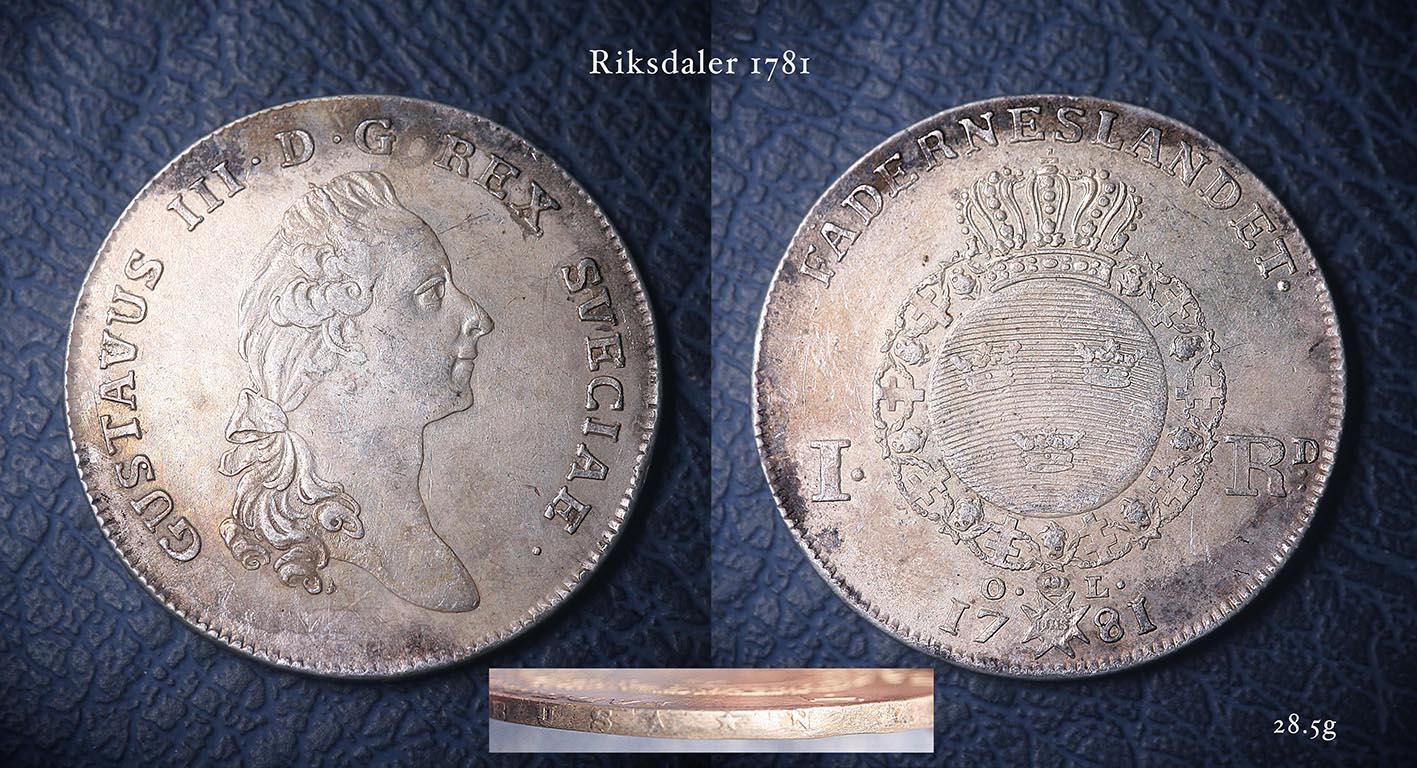 |
|
|
|
Pillar of the Community
 Sweden
2124 Posts |
Although it does look ok, the weight is off. The weight should be close to 29.25 grams, 28.5 is a little bit too much off for a coin without much wear. Does the edge have a full inscription *MANIBUS**NE**LAEDAR*AVARIS ?
|
|
Pillar of the Community
 Singapore
631 Posts |
The inscription looks correct but couple of the letters are worn down and there's a small hole on the edge, could that explain the weight difference ?
Is this a relatively common coin from your area ?
|
|
Pillar of the Community
Sweden
2124 Posts |
It is not an unusual coin, 1781 had a mintage of more than 500,000, which is fairly high for Swedish 18th century riksdalers. Still, it is a large silver piece and good quality examples will not come cheap.
There are copies, and I think your coin matches the obverse of a Chinese copy that is readily available - but your coin looks better than those ... I am concerned though about the underweight. I don't think a small hole and worn (filed?) off edge letters could account for a weight loss of at least 0.5 grams (silver coins were manufactured with tight tolerances and I don't think any coin weighing less than 29.1 grams would have been let out from the mint). 0.5 g on a 29.25 g coin is about 1/60th of the weight - think of it as taking away a one minute slice from a clock, I don't think the hole on your coin is that large.
|
|
Pillar of the Community
Singapore
631 Posts |
I was always told that a slight variance for old coins is +/- 5% is acceptable. Am I mistaken ?
Another thing I noticed is that there is a dot protrusion in the "S" of GUSTAVUS.
What could that be ?
Edited by Numister
11/03/2020 06:02 am
|
|
Pillar of the Community
Sweden
2124 Posts |
5 % tolerance is far too much for 18th century gold and silver coins. For Swedish coins the allowed tolerance was specified to around 1 % in the mid 17th century already. Copper coins is another story, there it was usually only the medium weight that was important and variance between individual examples could be considerable.
I see the dot protrusion, but I don't know what it is.
|
|
New Member
United Kingdom
9 Posts |
If you were to push me for an answer, I'd say fake, though not with any level of certainty. That subtype has a diagnostic tell beneath the x of REX has some excess metal. That along with the weight and a coupla other factors would make me very suspicious. Check the rim just above the E on the obverse too. your pictures aren't amazing, but it looks like an edge nick from a potential real coin could have transferred to the die.
I wouldn't worry about the 'dot' in the S.
|
|
Pillar of the Community
Singapore
631 Posts |
This is my first Riksdaler, never seen one before. So might have pulled the trigger too fast. Go easy on me  Just want to learn more. Attached is a closeup of the area in question. Just realised a dot is missing too, there should be one between the "G" and "R". Although it looks soldered or modified in that area. Doesn't bode well for this coin it seems ... 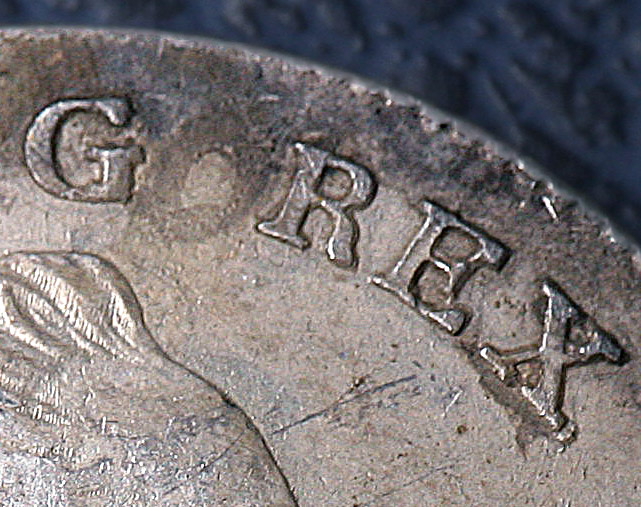 Edited by Numister
11/06/2020 07:38 am
|
|
Bedrock of the Community
Australia
21792 Posts |
When it comes to screen shots - even top quality screen shots,
I have to admit that is is very difficult from screen shot examination only,
to distinguish genuine from a high quality pressure diecast fake.
You have to have lots of experience and knowledge about the die variations of the genuine, and compare with the suspected fake.
Especially so, with milled silver coins, from 1800 and earlier.
Other opinions are going to be better than mine in this regard.
John Davenport warned decades ago of the existence of good quality fake European crown sized silver coins.
So you have to resort to some of the investigation techniques used for ancient coins.
Provenance, weight and XRF, together with knowledge of fake and genuine manufacturing methods can help.
|
| |
Replies: 8 / Views: 1,902 |
|








 Posted 11/02/2020 7:36 pm


