| Author |
 Replies: 26 / Views: 4,127 Replies: 26 / Views: 4,127 |
|
|
|
Pillar of the Community
Canada
5341 Posts |
Kinda of cringe when I hear someone scraping coins to find out what they have, an XRF is the right option, I forgot what year mine was.
|
|
Bedrock of the Community
Australia
21789 Posts |
Problem with XRF is that it looks at the surface layer only, and has no way of telling what the core of the coin may be made of.
Ultrasonic testing gets around this problem, but you need a lab set up to test coins.
Comparative ping tone testing can? may? help, but is nowhere near as reliable, but due to zero cost and being a non destructive test, certainly should be done in this case.
XRF best for ancient coins - the ancients had no way of obtaining the high purity of metals that modern electrolytic refining can. With ancient coins, you look at the range of trace elements that the ancients could not refine out, and not for the level of metal purity of the major constituents. Destructive chemical analysis on very worn ancient coins has already done by museums to give give a guide data base on what those trace elements may be for an XRF test coin.
Edited by sel_69l
02/01/2021 5:30 pm
|
|
Moderator
 Canada
10473 Posts |
Quote:
Problem with XRF is that it looks at the surface layer only, and has no way of telling what the core of the coin may be made of. Absolutely not true. The penetration depends on the power of the source beam. Yes, some of the beam is attenuated in the surface layer, but if that is a nickel-plated cent, a strong enough beam will also provide trace readings of Cu, Sn and Zn. The XRF in my research lab would decipher that in a 90 second analysis. "Discovery follows discovery, each both raising and answering questions, each ending a long search, and each providing the new instruments for a new search." -- J. Robert OppenheimerContent of this post is licensed under a Creative Commons Attribution-NonCommercial 3.0 Unported License. See: http://creativecommons.org/licenses...0/deed.en_USMy eBay store
|
|
Bedrock of the Community
Australia
21789 Posts |
Does a held XRF instrument have a strong enough beam?
I think this may be the type most often encountered in the possession of scrap gold buyers and bullion dealers.
As I understand it, a fake gold bullion bar with thick gold covering and tungsten core could escape detection with a hand held instrument.
|
|
Moderator
Canada
10473 Posts |
We are discussing a potentially plated coin, in which an XRF would help solve this enigma. A fake gold bar with a drilled tungsten core is an entirely different animal... If you are unsure of the technology, then don't fill in the blanks with assumptions. Not the first time I have told you this: http://goccf.com/t/319902"Discovery follows discovery, each both raising and answering questions, each ending a long search, and each providing the new instruments for a new search." -- J. Robert OppenheimerContent of this post is licensed under a Creative Commons Attribution-NonCommercial 3.0 Unported License. See: http://creativecommons.org/licenses...0/deed.en_USMy eBay store
|
|
Bedrock of the Community
Australia
21789 Posts |
Suggesting that is plated may be a good theory, but it is also worthwhile to consider that it may be a genuine off metal strike, perhaps on a wrong planchet.
Both lines of investigation need be followed up to a logical end.
|
|
New Member
Canada
29 Posts |
I would say , plated. A closer pic should tell. If there are no sharp edges, most likely plated.
I have a 1977 Gold plated 1 cent.
Why someone would do this is beyond me.
If I find my US example, I will post it for you.
|
|
Valued Member
United States
462 Posts |
I am not sure how it can be smaller than a dime as OP stated when it has full rims. The OP did not measure the diameter properly by "wrapping a string around the coin and measuring the length of that". Being full size and fully struck, I question the coin weight at 2 grams when a normal cent would weigh 3.24 grams. Also, it has that polished look that often comes with plated coins. If magnetic, the plating must be magnetic. There is nothing about the look of this coin that leads me to think it's not plated. Plated coins are plentiful out there.
Edited by Zimmy
02/02/2021 11:03 pm
|
|
Pillar of the Community
Canada
842 Posts |
Diameter is the distance across the center of the coin. Circumference is the circular dimension.
Does your scale measure full grams, or hundredths (2 decimal places)? If by grams, it may be 2.99 and only shows 2.
Edited by TerryT
02/03/2021 01:03 am
|
|
Pillar of the Community
Canada
6244 Posts |
I agree with SPP-Ottawa, and I thing a topic about XRF must be open in order that everyone understand this technology.
Short: XRF scanner it is X-rays spectrum. The professionals' ones start with 15-16K and a decent one for nonmetallic at about 3-4K. The X-ray scanner will do the job on any coins because the x-rays pas through indifferent if it is plated or not. The only metal which stop those rays is the lead or the metal foam.
Important also for those scanner is the software they are loaded on.
And important: XRF it is NOT ultrasound device.
|
|
New Member
Canada
29 Posts |
Not a good pic sorry. This is gold plated 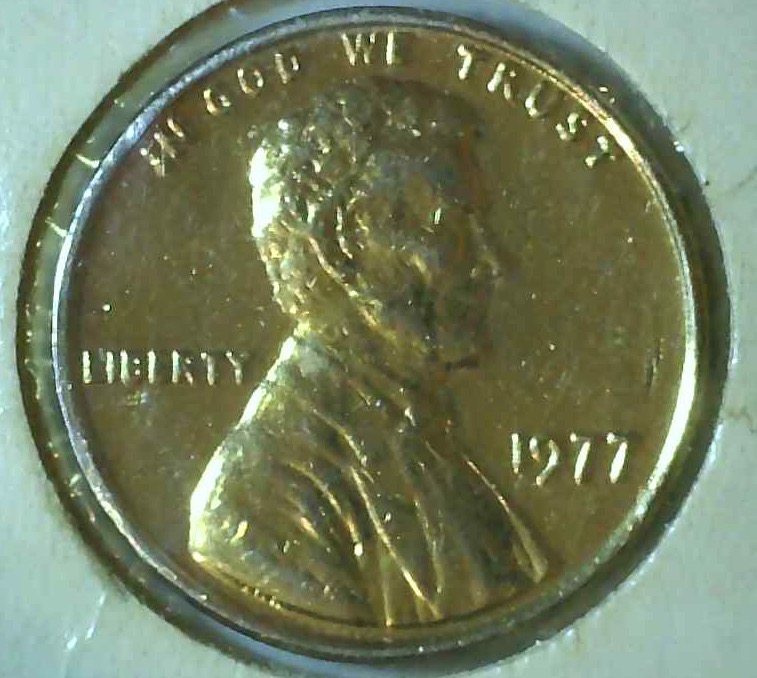 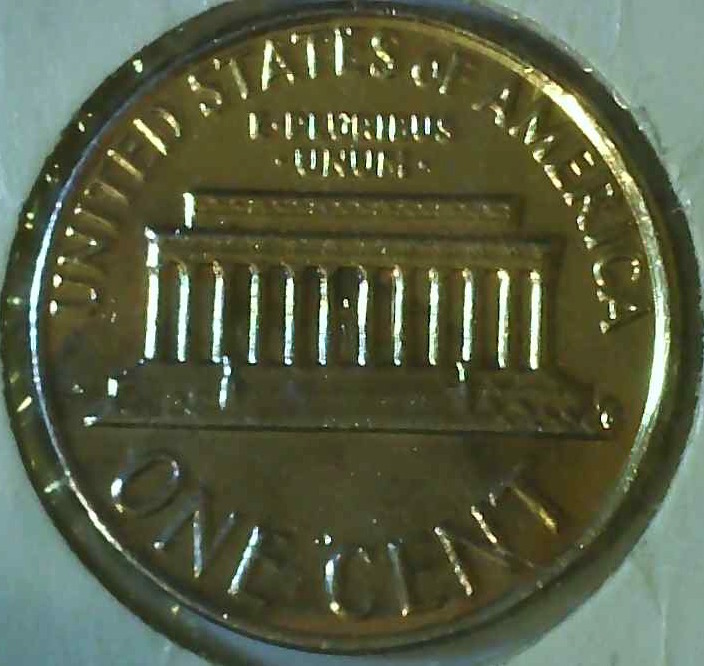 |
| |
Replies: 26 / Views: 4,127 |








 First Page


 Posted 02/01/2021 5:16 pm


