NGC -
The metal composition of this spurious coin is a dead giveaway — it contains not a speck of silver.Graders at Numismatic Guaranty Corporation (NGC) are constantly on the lookout for counterfeits among the coins submitted for authentication and grading. Sometimes, the fakes they encounter are of deceptively high quality, created using the transfer-die process; others exhibit much cruder workmanship. The 1897-O
Barber half dollar pictured here definitely falls into the second category.
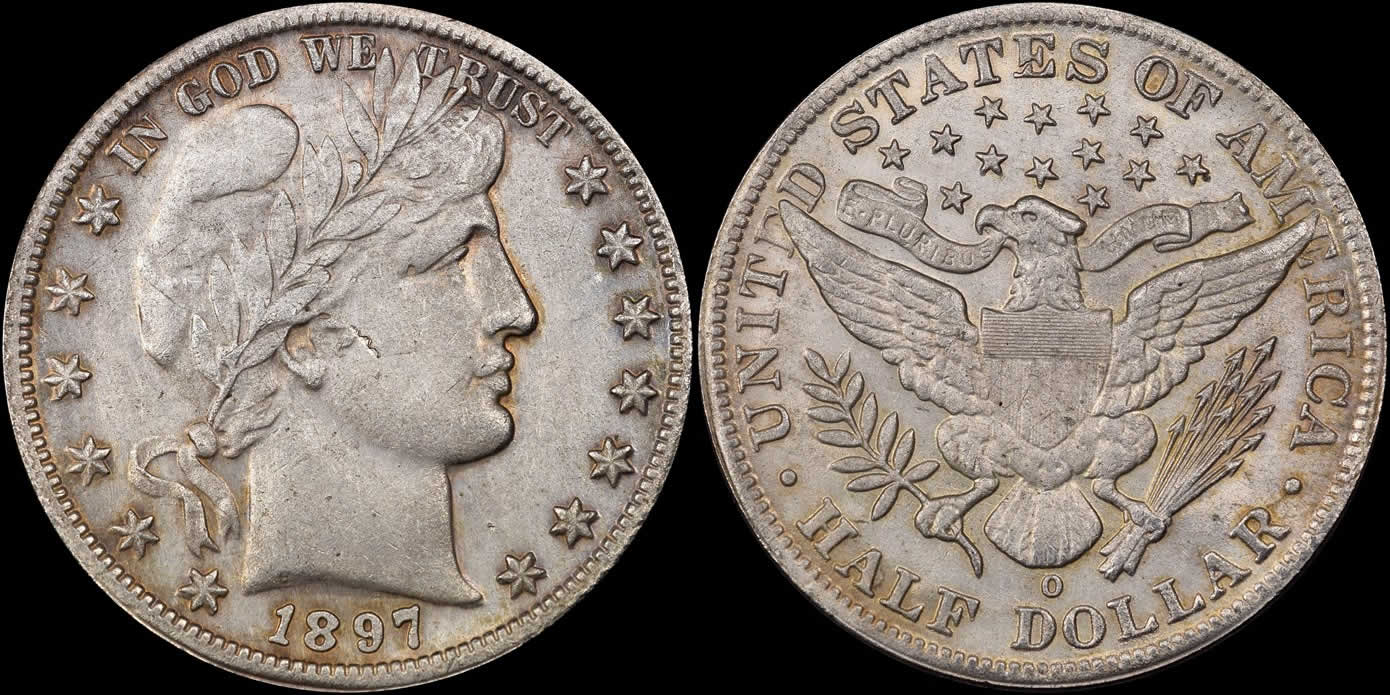 This Counterfeit 1897-O Half Dollar contains no silver and exhibits a weak strike and rough planchet.
The 1897-O is a semi-key date in the series. A mere 632,000 were struck that year, and most survivors are in very low grades. Had the specimen here been genuine, it would have commanded more than $2,000 in About Uncirculated (AU)-58, according to NGC Coin Explorer.
Struck in an alloy of 66-percent copper, 31-percent zinc, and 2-percent nickel (known colloquially as "German Silver"), the fake weighs only 12.3g (as opposed to 12.5g for a genuine silver half dollar).
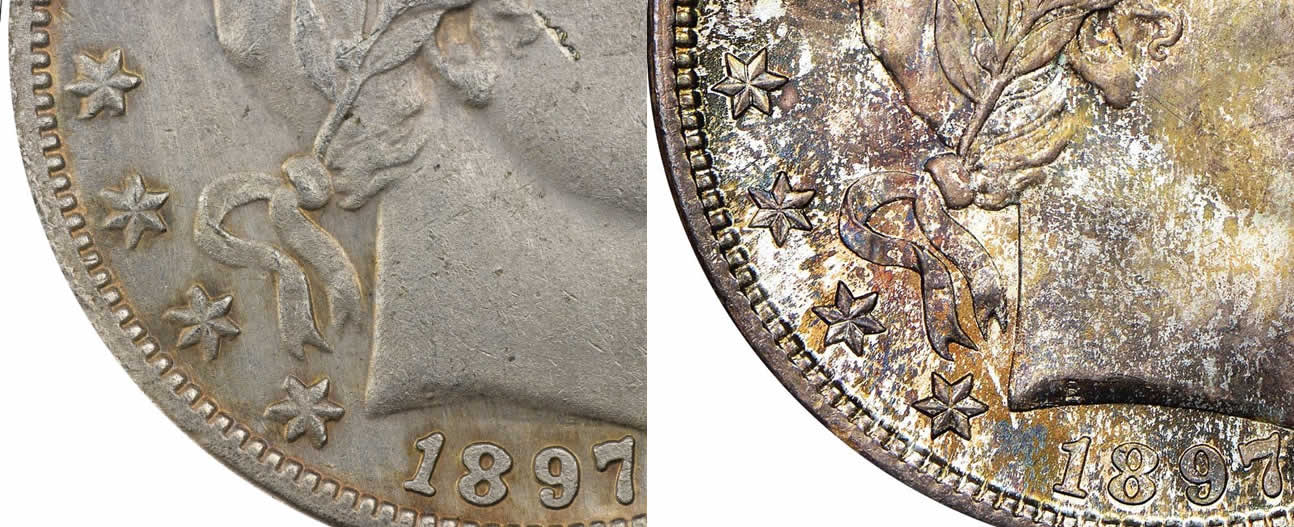 The devices on the fake (left) are rounded and poorly defined, particularly the date and stars.
Take a close look at the photos here and note the differences in the details. The date on the obverse of the counterfeit is irregular, but sharp and crisp on the authentic coin. The stars are blob-like and amorphous on the fake, but clearly rendered on the real deal.
The back of the cap also differs greatly on the two pieces. While it is well-defined on the genuine coin, it fades into the field on the counterfeit. Lastly, the high points of the design are poorly struck on the fake, and the planchet is rough.
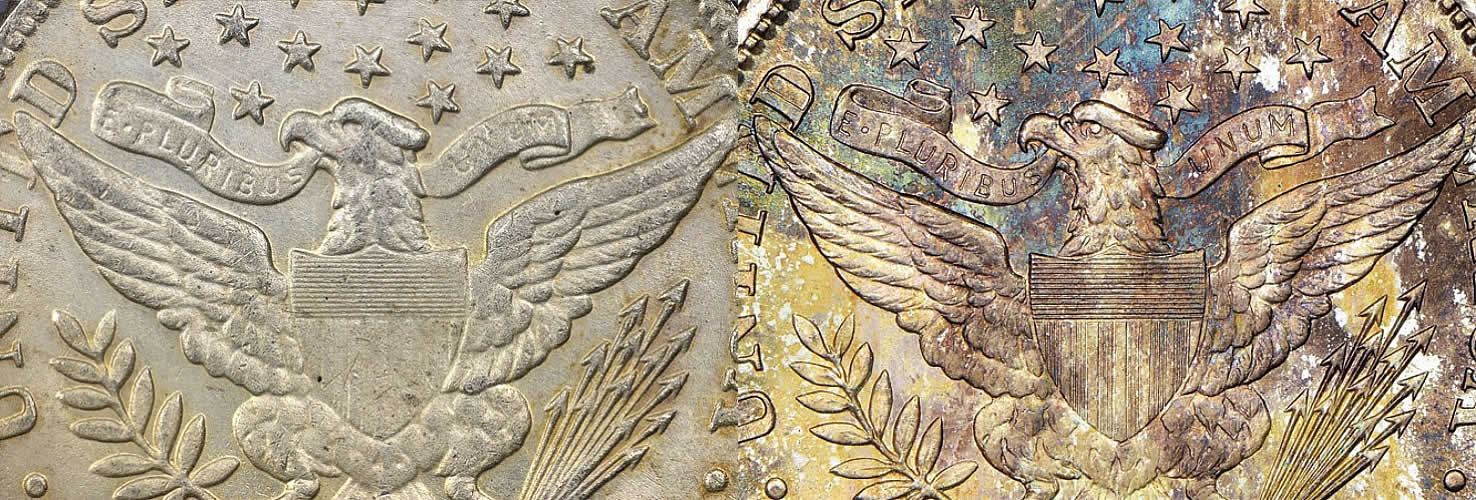 The details on a genuine specimen (right) are strong and sharp, while those on the counterfeit are weak and mushy.
The reverse of the counterfeit exhibits many of the same problems as the obverse. The eagle lacks detail, both in the wings and the shield. Additionally, the legend on the ribbon, E PLURIBUS UNUM, is very weak, and UNUM is almost completely lost. Note how the devices are rounded on the counterfeit, but clearly rendered on the genuine coin, especially the leaves of the olive branch.
This spurious issue is not especially deceptive. Many fakes, however — even high-quality ones — display similar defects. Diagnostics such as poor strike, weak details and rounded devices are indicative of counterfeits. Although this particular fake was readily detected because of its non-silver composition, the steps in the authentication process remained the same.
Read More: Counterfeit Detection Series Check out certified Barber Halves on ebay
.










 Posted 02/15/2021 2:02 pm


