PCGS - Some time ago I took my first trip to Charlotte, North Carolina, while on my way to the Blue Ridge Parkway to see the leaves change in the gorgeous vistas of the Appalachian Mountains. I love taking road trips to the Tar Heel State each autumn to do some leaf peeping, but as a journalist for PCGS I also enjoy venturing on side trips to landmarks and destinations with numismatic inclinations. There are few sites in western North Carolina so important to coin collectors as the Charlotte Mint, which opened as an assay office in 1837 and struck gold coins from 1838 through 1861. Bearing their signature "C" mint mark, Charlotte gold coins range from extremely scarce to highly rare.
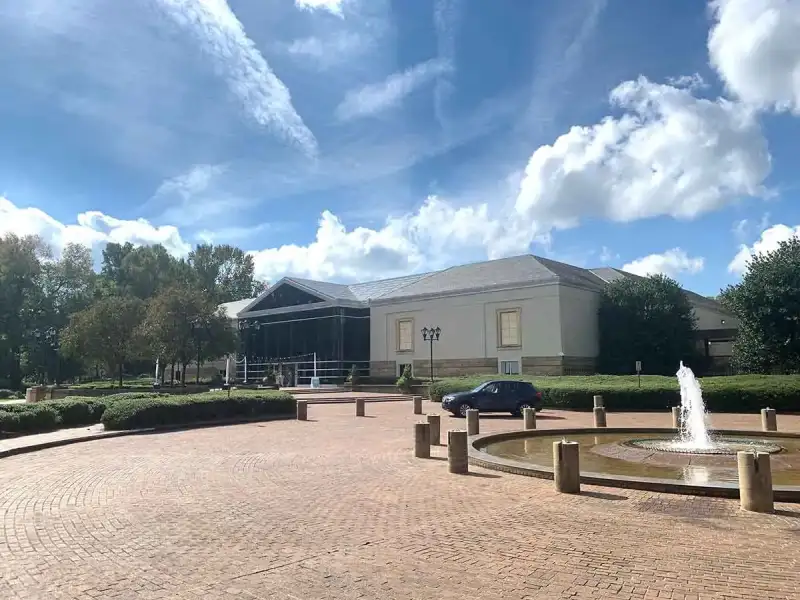 The main entrance of the Mint Museum Randolph invites visitors into a world of art and culture. A Brief History of the Charlotte Mint
The Charlotte Mint was among a trinity of three southern mints that constitute the first branch facilities of the United States Mint. These branch mints were located in Charlotte, New Orleans, and the small northern Georgia town of Dahlonega and began producing coinage in 1838. Their locations might have seemed far flung to the observer who understands the bulk of U.S. commerce was still mainly confined to the Eastern Seaboard in the 1830s. However, the locations of these first branch mints were highly strategic.
The New Orleans Mint was situated near what was one of the biggest ports in the South, while the Dahlonega and Charlotte Mints were located nearby lucrative gold mines in the foothills of the Appalachian and Smoky Mountains. While the New Orleans Mint was commissioned to strike both silver and gold coinage, the Charlotte and Dahlonega Mints produced only gold coins, expressly produced to compete against private-issue gold coinage that was gaining traction in circulation throughout the region.
Charlotte Mint operations yielded small mintages of gold coins, many of which have been melted or otherwise lost to the hands of time over the decades. Minuscule populations of collectible survivors along with increasing collector demand for C-mint coinage has pushed prices for these coins through the veritable roof. Making matters even harder for the ardent Charlotte Mint collector is that most C-minted coins were poorly struck, leaving specimens with any modicum of decent strike and surface quality as sought-after numismatic treasures. Charlotte Mint coinage was limited to only gold denominations of physically small size and included gold dollars, quarter eagles ($2.50), and half eagles ($5).
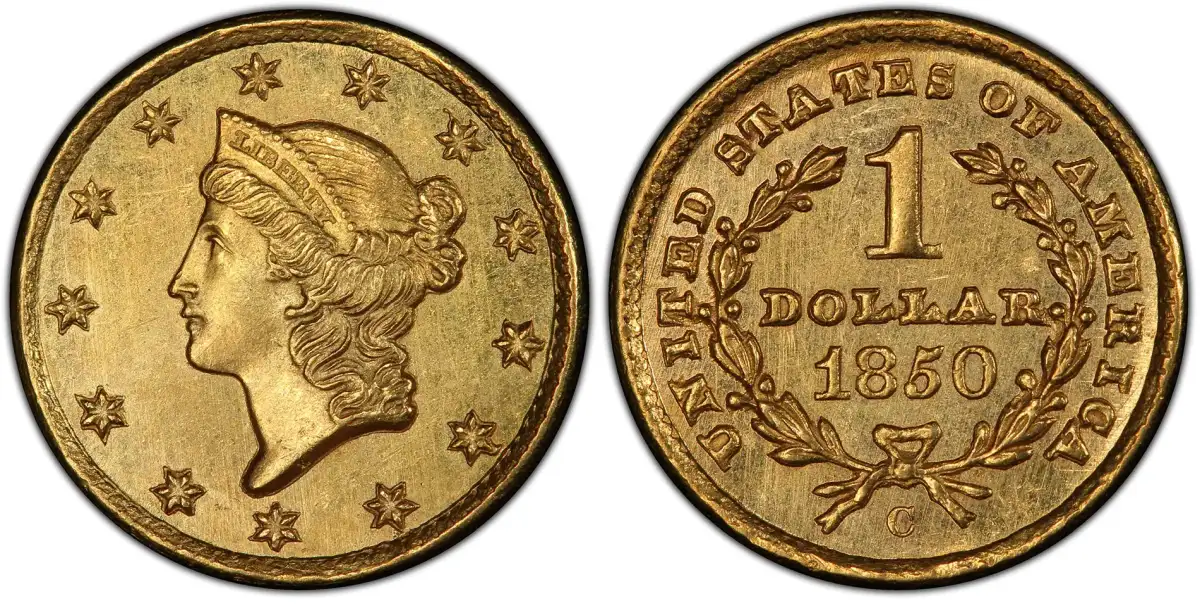 Gold Dollar, 1850-C G$1, PCGS MS63
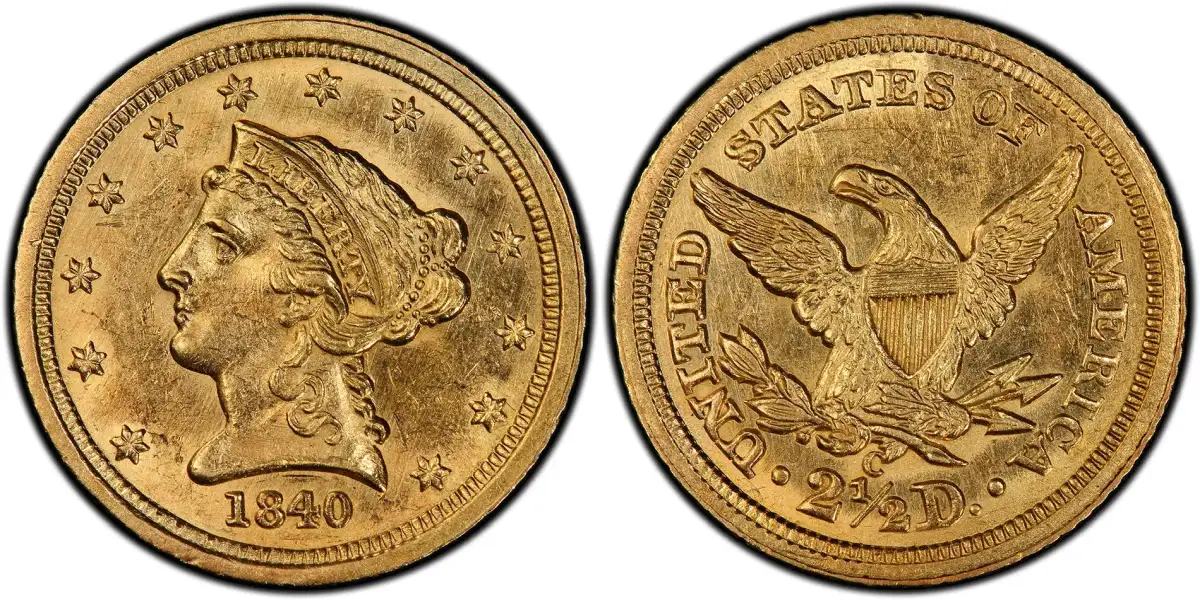 Liberty Head $2.5, 1840-C $2.50, PCGS MS62
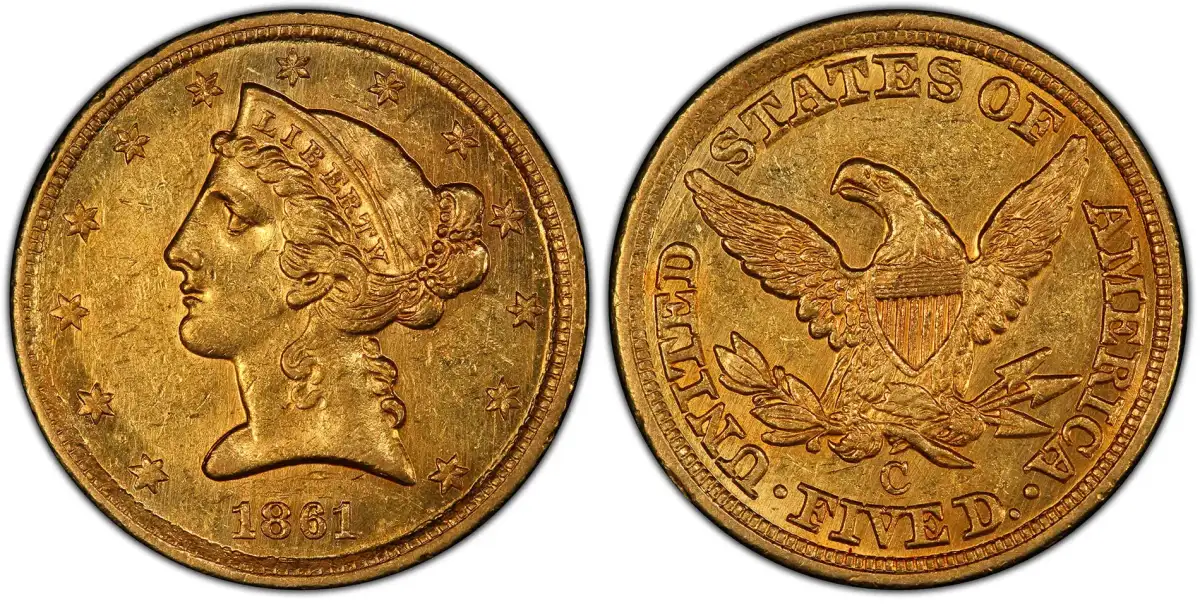 Liberty Head $5, 1861-C $5, PCGS AU58+
During the Civil War, the Charlotte Mint fell into the hands of occupying Confederate rebels, who were soon unable to procure gold planchets to make new coinage. Coining operations ceased in late 1861 and the mint building hosted a hospital and military offices. The building served as a U.S. government assay office from 1867 through 1913. In the years that followed it was a Red Cross station during World War I and a meeting location for the Charlotte Women's Club.
However, a post office expansion project next door threatened curtains for the mint building. Local citizens raised funds to buy the Charlotte landmark from the U.S. Treasury Department in 1933 and spared the aging structure from demolition. The building was relocated a few miles away and became the state's first art museum in 1936.
Read the Entire Article Check out Charlotte Mint Coins on ebay
.





 Posted 11/29/2021 11:13 am





