








 Posted 11/06/2021 5:44 pm


This issue was composed of 50% silver, 50% copper.
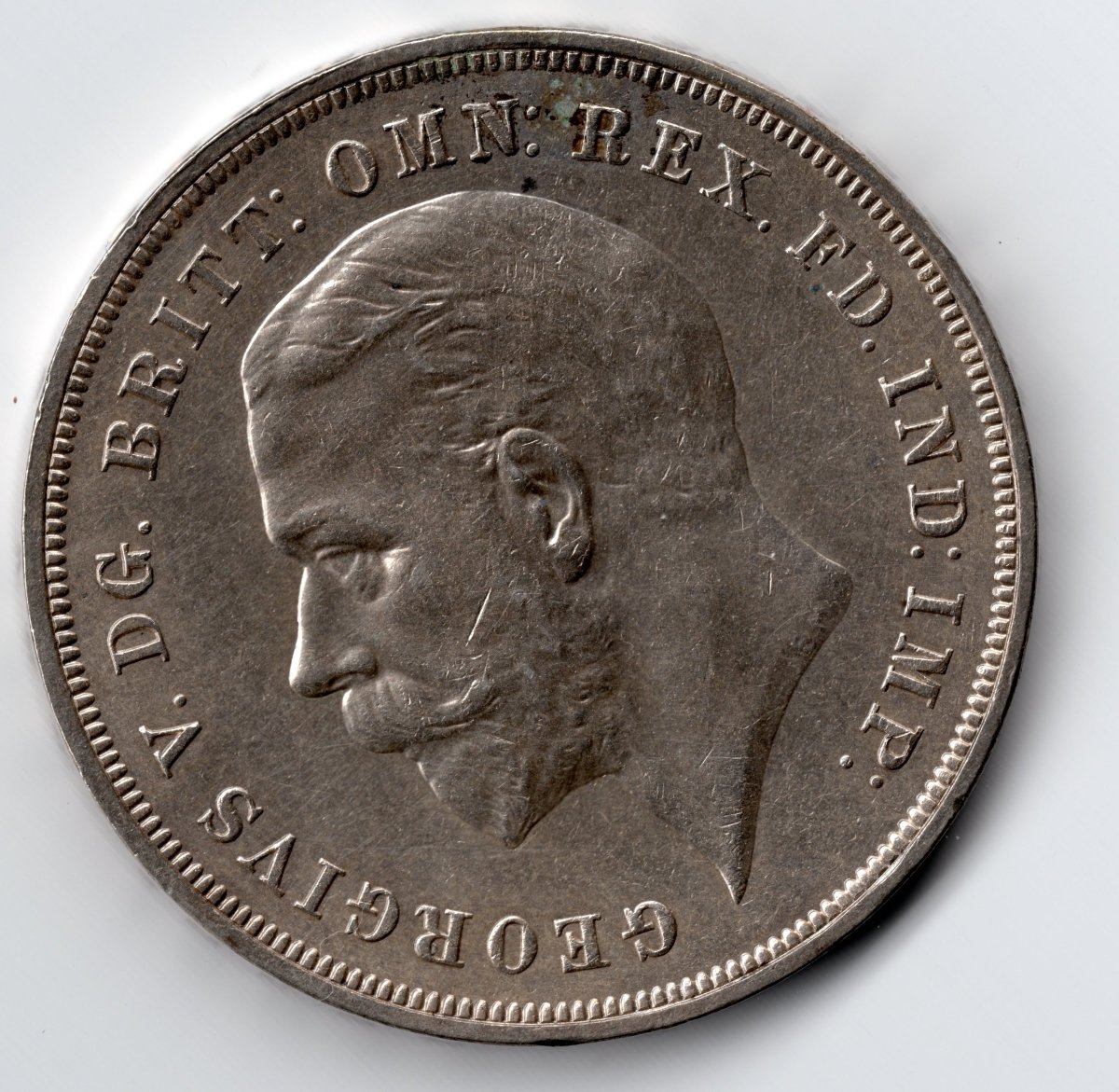
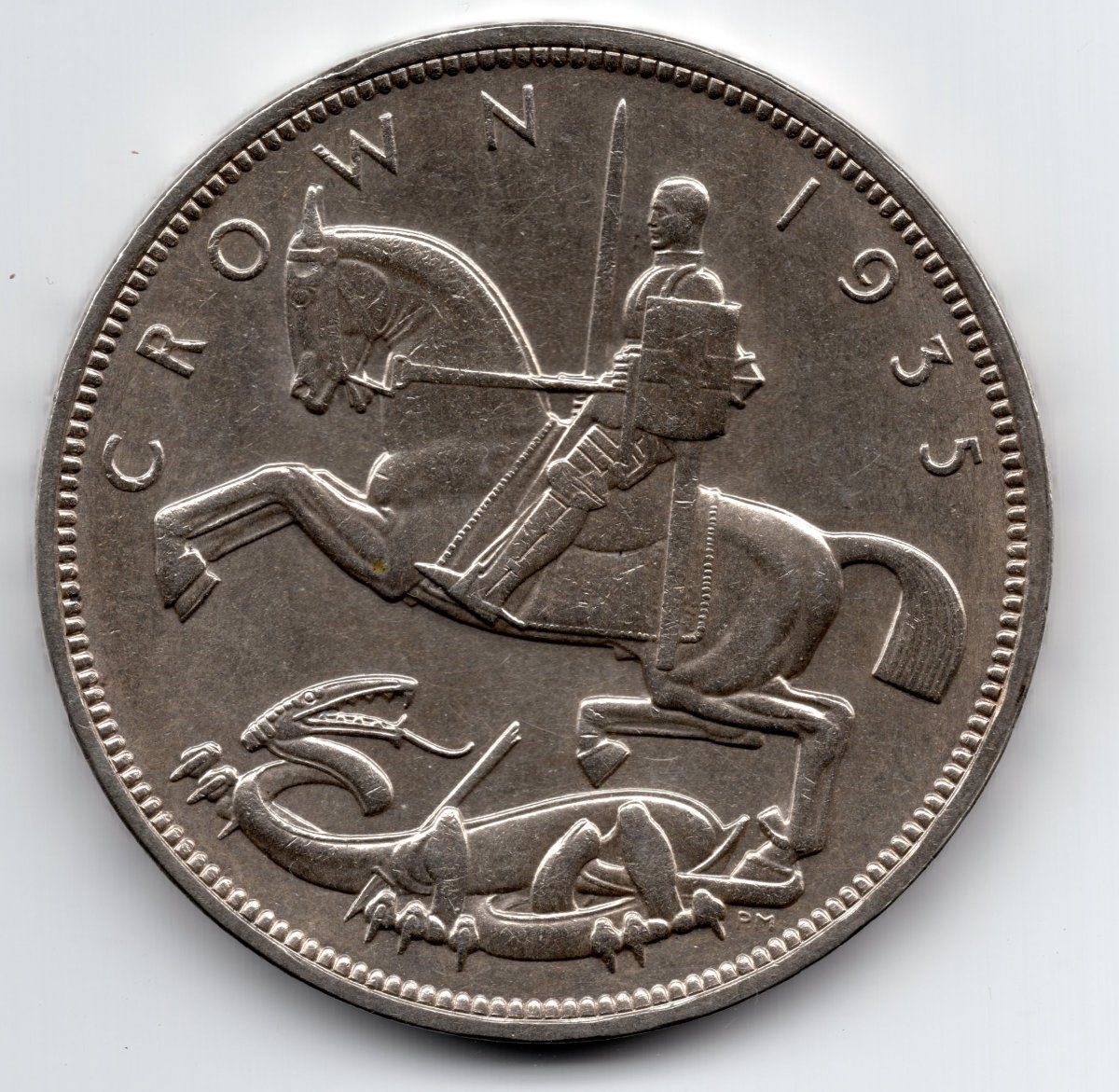
!935 British crowns in EF condition are comparatively common. I have an example in about MS-62.
Although not common, I have seen a greenish tinge on 500 fine silver British coins of all denominations.
In my opinion, the greenish tinge is due to the high proportion of copper in the alloy, which under the right aggressive environmental conditions, will produce an inhibited tendency to develop a green surface cast, which would be a form of verdigris
If this theory is correct, then the greenish tinge will not be removed except by careful mechanical means.
Nevertheless,
It may well be worth investigating the use of Verdi-Care before attempting a mechanical approach.
If Verdi-Care is not obtainable, do a Google search on the chemical treatment of 500 fine silver coins. If you do decide on one of the procedures suggested, do some preliminary tests on the treatment of some low value 500 fine silver coins first.
!935 British crowns in EF condition are comparatively common. I have an example in about MS-62.
Although not common, I have seen a greenish tinge on 500 fine silver British coins of all denominations.
In my opinion, the greenish tinge is due to the high proportion of copper in the alloy, which under the right aggressive environmental conditions, will produce an inhibited tendency to develop a green surface cast, which would be a form of verdigris
If this theory is correct, then the greenish tinge will not be removed except by careful mechanical means.
Nevertheless,
It may well be worth investigating the use of Verdi-Care before attempting a mechanical approach.
If Verdi-Care is not obtainable, do a Google search on the chemical treatment of 500 fine silver coins. If you do decide on one of the procedures suggested, do some preliminary tests on the treatment of some low value 500 fine silver coins first.


