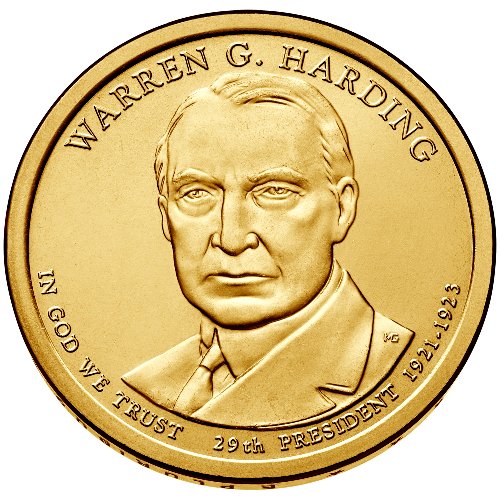
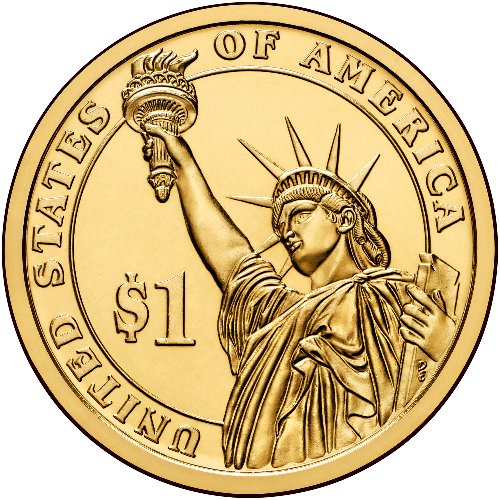
One of the more unusual proposals for a commemorative coin during the classic era was the bill introduced in 1924 that called for a 7-1/2 cent circulating commemorative coin to honor the memory of Warren G. Harding.
US President Warren G. Harding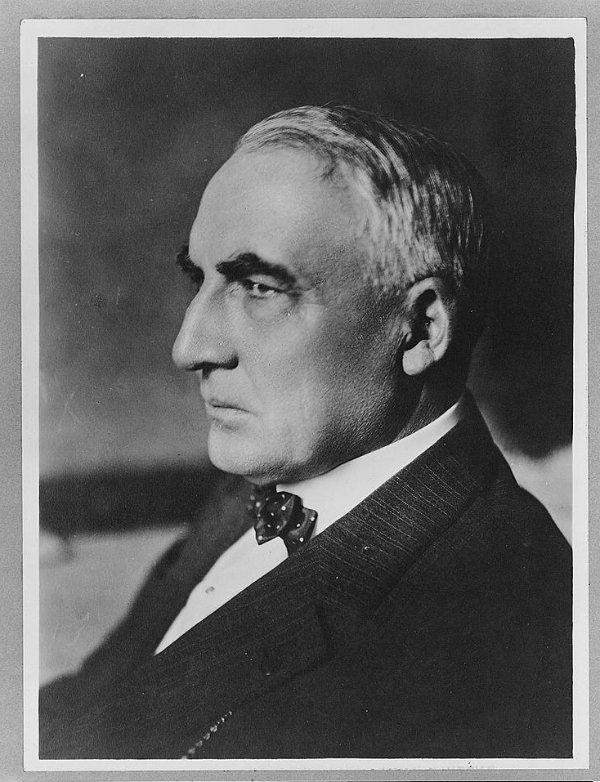 (Image Credit: Image courtesy of the Library of Congress, Prints and Photographs Division. http://www.loc.gov/pictures/ Public Domain.)
Harding died on August 2, 1923 while still in office and on West Coast trip; he died in San Francisco. Though several scandalous rumors related to his death were circulated at the time (including death by poisoning), and an initial diagnosis of stroke was announced, today, it is generally believed that Harding died as a result of having a heart attack (he was known to have had an enlarged and weakened heart).
The bill was introduced by Representative Thaddeus Campbell Sweet (R-NY), it called for 500,000 7-1/2 cents with a composition of 0.750 copper and 0.250 nickel.
(Note: The specified composition was the same as that of the US five-cent coin in 1924 - the Indian Head/"Buffalo" nickel. If the traditional relationship between denomination and intrinsic value was maintained, the Harding coin would have been larger than the nickel.) Upon its introduction, the bill was referred to the House Committee on Coinage, Weights, and Measures. The unusual coin was never reported out of the Committee, however, and never considered by the Whole House.
The 7-1/2 cent denomination was an odd one for a US coin and one not previously used within the nation's coinage system. Its proposal in 1924 was equally odd as there was no pressing commercial need for a coin of such a denomination. (In contrast, the three-cent coin denomination was introduced in 1851, in part, to facilitate the purchase of postage stamps - the postal rate for a half-ounce letter/envelope had been lowered from five cents to three cents in July 1851.)
Side Note: Stories have circulated about The Coca-Cola Company requesting Congress, in the 1950s, to authorize a 7-1/2 cent coin to be used in vending machines to match a price increase it was considering for a bottle of Coke - the Company had maintained a price of five cents per bottle for decades and believed doubling the price to ten cents represented too big of an increase. I've not come across such discussions in the
Congressional Record, so it does not appear to ever have been officially considered - definitely a "backroom" discussion!
President Harding's death was eulogized in Congress on February 27, 1924. Both chambers of Congress assembled in the Hall of the House of Representatives. Also in attendance: President Calvin Coolidge and members of his Cabinet, the Justices of the Supreme Court, the General of the Armies and Chief of Naval Operations, Governors of several US states, ambassadors and ministers from several foreign nations plus select other invited guests.
The Honorable Charles Evans Hughes delivered the memorial address. Hughes was a former Governor of New York, a former Associate Justice of the US Supreme Court and the US Secretary of State in the Harding Administration (he continued in the position under Coolidge, Harding's Vice President and successor); Hughes would later become the Chief Justice of the US Supreme Court. Hughes spoke at length, reviewing many aspects of Harding's life and political career. I can't present the full address here, nor succinctly summarize it, but I will offer a passage from Hughes' closing remarks:
"Warren G. Harding gave his life to his country. No one can do more than that. He exhausted himself in service, a martyr in fidelity to the interests of the people for whom he labored with a passionate devotion. He was a man of the people, indulging no consciousness of superiority, incapable of arrogance, separated from them neither by experience nor by pride nor by eccentricity. He was a brother to all whose strivings in countless communities, whose eagerness, adaptability, energy, venturesomeness, and and common sense give the stamp of the American character. Nothing human was alien to him, and he had "the divine gift of sympathy." He wrought mightily for the prosperity of the Nation and for the peace of the world, but he clothed the exercise of power with the beautiful garment of gentleness. If American life, with all its possibilities of conflict and turmoil, is to be worth living, it must be lived in the spirit of brotherly understanding, of which he will ever be an exemplar in high office. "It was a touching, eloquent address that respectfully honored the beloved President.
For more on the US Mint's Warren G, Harding Memorial medal, check out:
-
1925 Stone Mountain Memorial - Warren G. Harding Memorial MedalFor other of my posts about commemorative coins and medals, including more What If? discussions, check out:
Commems Collection. Coming Soon: A What If? post on a 2-1/2 cent coin proposal in honor of Theodore Roosevelt, Warren G. Harding and Woodrow Wilson.






 Posted 03/01/2022 08:50 am