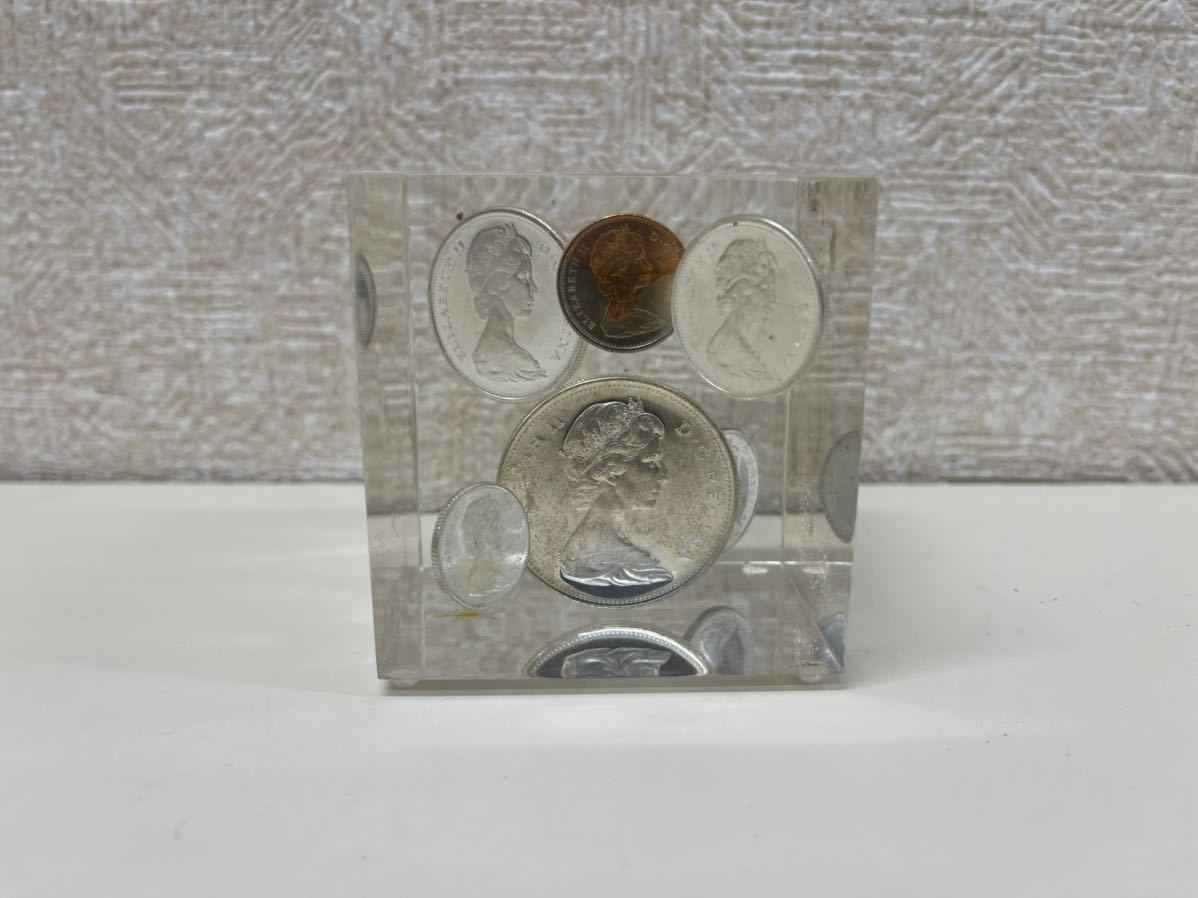
Ah, I see. In this case, what has happened is that there's actually a small air bubble trapped on the coin's surface - the acrylic isn't fully surrounding the coin. It's possible that the piece has seen wild changes in temperature, repeatedly going form hot to cold, and the coin is expanding and contracting at different rates to each other; eventually, all that microscopic pulling and pushing causes the surface of the coin to detach from the acrylic, in places. I have a couple of these acrylic-entombed coins - apparently, they were popular souvenirs in Canada in the 1960s and early 1970s - and one of them, the one my grandma had kept for decades in tropical north Queensland (which can get both very hot, and quite chilly), has turned a similar appearance to this coin. I'll see if I can find it and take some pictures.
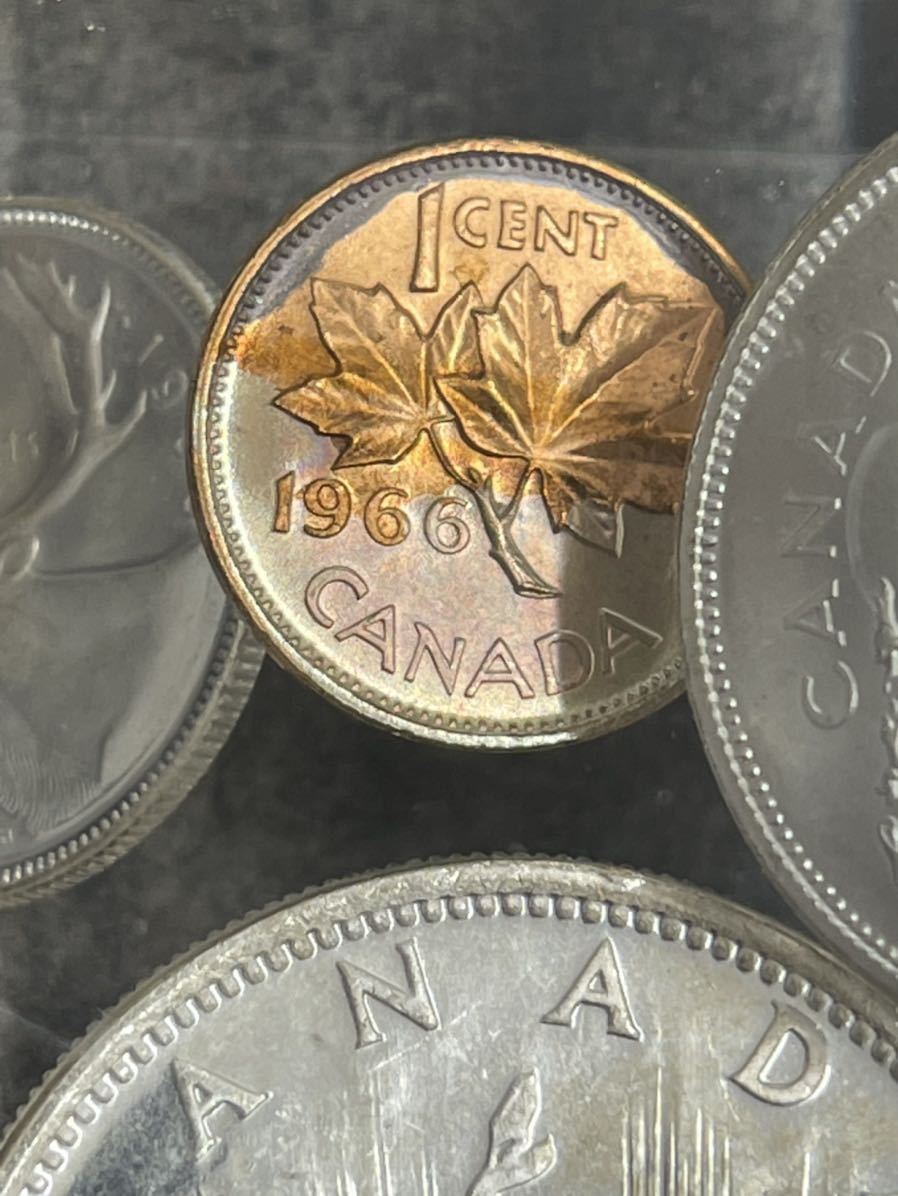
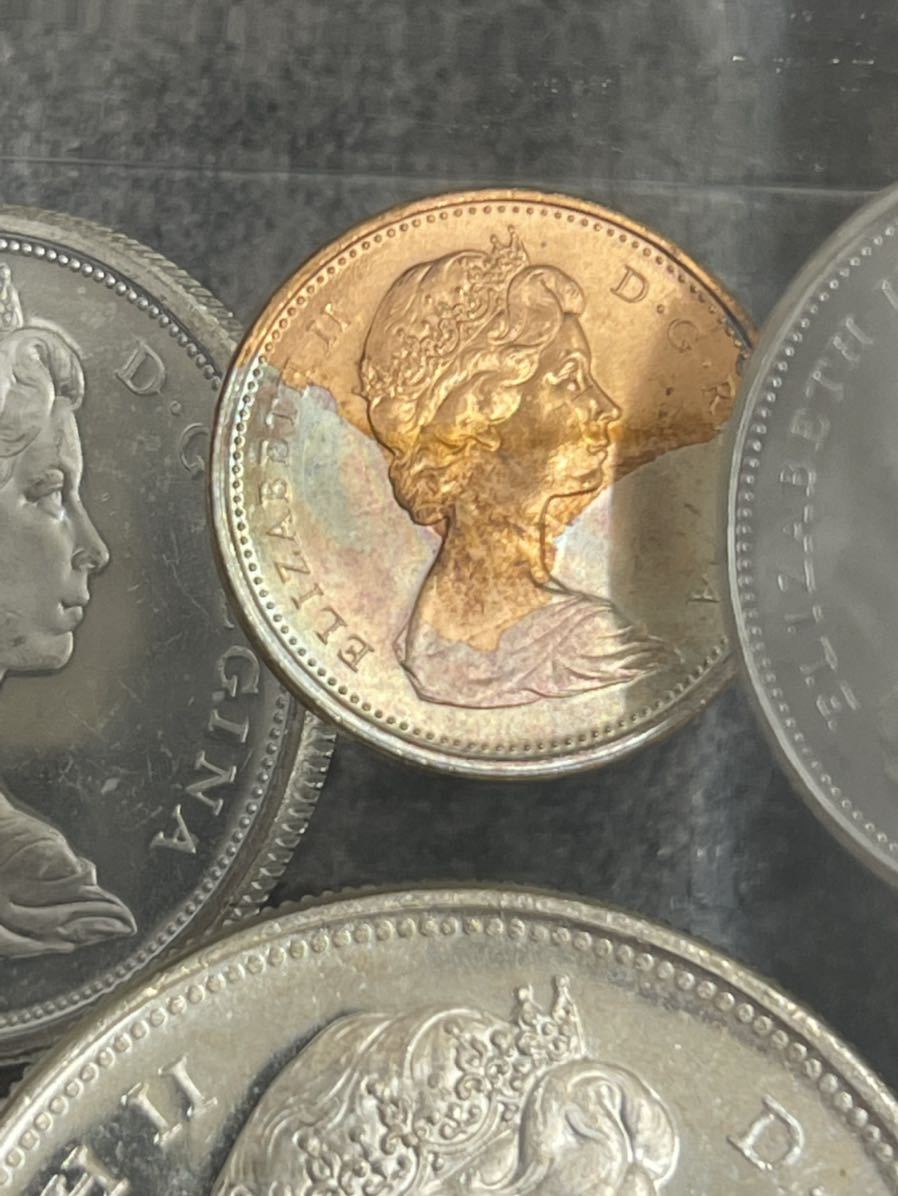
The places where the acrylic is still fully bonded to the surface of the coin appear coppery-brown. The paler area is where the acrylic has detached. The microscopic gap between the coin and the surface of the acrylic is acting like an optical "thin-film", causing the strange colours to appear.
I can't explain the dark brown semicircle on the reverse. My guess - []iguess[/i] - is that this is an actual bubble in the acrylic dating from when the object was created, and the coin has been sitting there exposed to that tiny bubble of oxygen for all this time.
The "tide line" might be a relic of the method of manufacture. Coins do not naturally "float" suspended in molten acrylic; being much more dense, they would sink to the bottom if you just dropped a coin into a vat of molten acrylic. So while I'm not privy to their patented manufacture methods, it seems reasonable that when these items are made, there would be several "pourings" of the molten acrylic. You pour a layer of acrylic, let it set, put a coin down on the flat surface, then pour the next layer. A simple single-coin souvenir like the ones I own, or one where all the coins are suspended in the "same plane", just two pourings - top and bottom with the coins sandwiched in between - are all you need. For an object like this with lots of coins at all sorts of crazy angles to each other, multiple pourings would be needed. I suspect the "tide line" is from a time in-between pourings, when the coin was stuck half-submerged in hot molten acrylic waiting for it to cool and harden before the next pouring.
Nor can I explain why only the cent has suffered this fate, and not the other coins. If my hypothesis about heating and shrinking causing the detachment is correct, then perhaps the silver and nickel coins don't shrink as much. A materials scientist might now more than me about this.
Don't say "infinitely" when you mean "very"; otherwise, you'll have no word left when you want to talk about something really infinite. - C. S. Lewis






 Posted 06/14/2022 12:43 pm