| Author |
 Replies: 9 / Views: 1,248 Replies: 9 / Views: 1,248 |
|
|
Bedrock of the Community
United States
12057 Posts |
This coin is a bit odd. Reverse appears to be double struck, but obverse does not. I found that kind of interesting and this coin was in a lot with 7 others, all unattributed, so I grabbed the entire lot. I am curious as to how this could have happened in the striking process. It has a nice brown patina, there is a planchet void on the obverse. Edge is roughly clipped, and the planchet is cracked there. Weight is 4.4 grams, diameter 22.0mm x 24.0mm (AE2, yes?) I think this is Valentinian II, Constantinople? The mint mark is off the planchet. Am I on the right track? Basing this off the punctuation, legends, and mark in the left reverse field (staurogram? chi-rho?) Obv: D N VALENTINI-ANVS P F AVG Pearl diademed bust right Rev: (VIRT)VS E-XERCITI Emperor standing right, holding orb and standard?, left foot stepping on captive Thoughts appreciated! 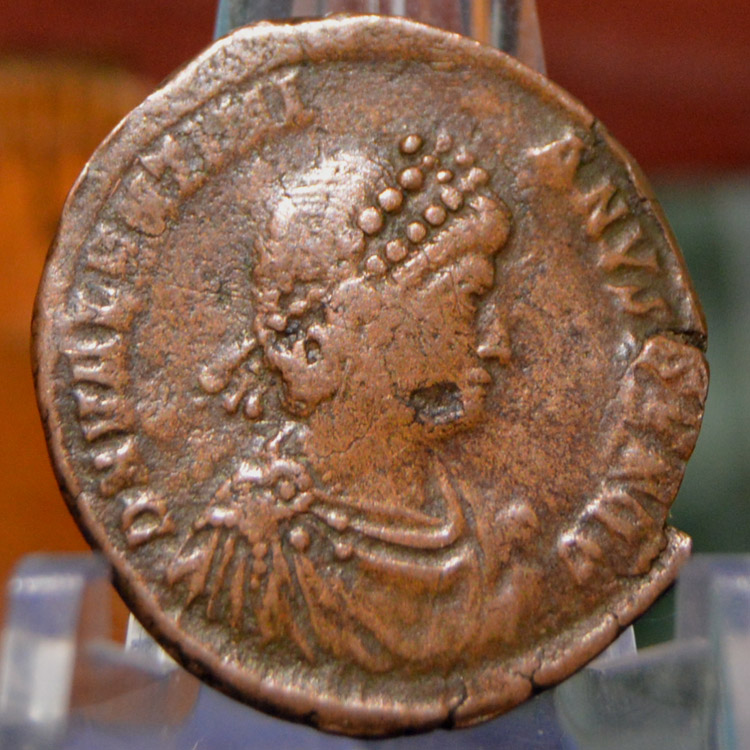 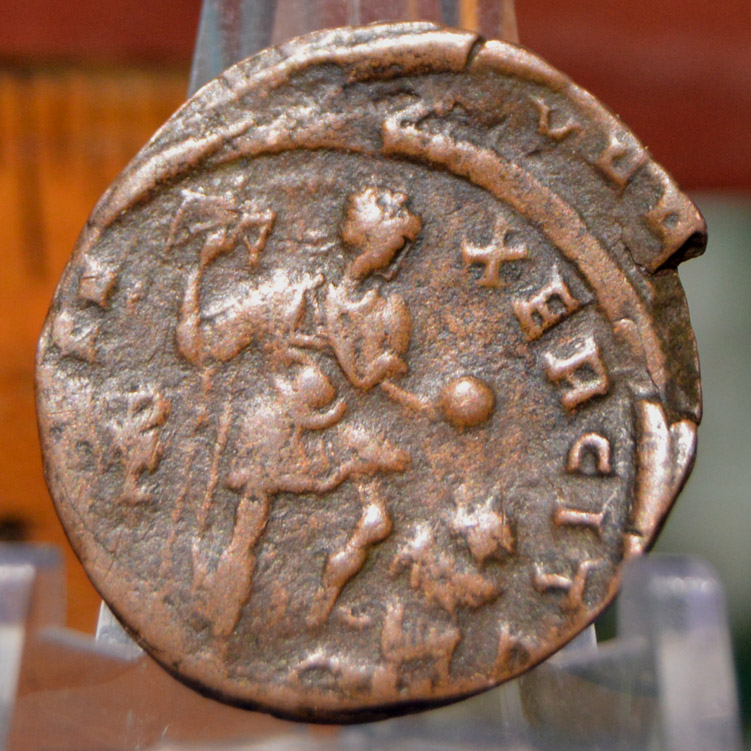 I have photos of the other 7 coins but need to crop them and clean them up. Three of them I had posted here earlier with bad pictures. Member ANA - EAC - TNA - SSDC - CCT #890 "Most of the things worth doing in the world had been declared impossible before they were done." -- Louis D. Brandeis |
|
|
|
Pillar of the Community
United States
2364 Posts |
That's cool, double struck rev. Yup Christian tau-rho symbol to left.
Edited by livingwater
04/08/2023 08:35 am
|
|
Valued Member
United States
319 Posts |
Woww! Such a fascinating coin, paralyse. Hard to speculate on the reason for a double-strike. The obverse is fairly well centered and does not seem to be effected by the second strike in any noticable way. Suggests to me that the first strike resulted in the coin being stuck in the upper die. Perhaps this anomaly is an attempt to free the coin by striking it again. There is a story here!
|
|
Valued Member
United States
319 Posts |
After a bit of research, the obverse would be the lower (fixed) die. Not the upper as I previously theorized. Which makes sense as it would also account for the clean obverse image. In this case, I would say the original strike produced an evidently weak reverse image. Which would then require the upper handheld(?) die to be repositioned for a second strike.
Gotta love this kind of rumination. Stirs the imagination!
|
|
Pillar of the Community
United Kingdom
725 Posts |
|
|
Bedrock of the Community
 United States
12057 Posts |
Thanks muchly, both of you!
Member ANA - EAC - TNA - SSDC - CCT #890 "Most of the things worth doing in the world had been declared impossible before they were done." -- Louis D. Brandeis |
|
Pillar of the Community
 United States
1000 Posts |
This is simply a case of the upper die bouncing...the mint workers never looked closely at the coins being struck and repositioned for a second strike.
|
|
Pillar of the Community
United Kingdom
1607 Posts |
|
|
Moderator
United States
23731 Posts |
Gives the coin character.
|
|
Pillar of the Community
United Kingdom
1607 Posts |
It certainly does give the coin character. I love finding coins, especially Romans, with 'die flaws'. I might hunt through my collection at some point and see what I have along these lines.
|
| |
Replies: 9 / Views: 1,248 |
|







 Posted 04/08/2023 6:47 pm


