NGC -
A group of four 1928 South African Sovereigns was recently submitted to NGC all struck from the same counterfeit dies.The gold sovereign is a coin issued by Great Britain, historically equivalent to one pound sterling. It was first struck from 1489-1604, and the denomination was revived in 1817. Former British territories, including Canada, Australia, and South Africa, also struck these coins on occasion.
The 1817 to date gold sovereigns feature the monarch of Britain on the obverse and a stunning rendition of St. George mounted on horseback slaying a dragon on the reverse. This attractive design, combined with the interesting history of these coins and their precious metal content, has made them very popular with collectors. Unfortunately, this popularity makes them a target for counterfeiters.
A group of four 1928 South African Sovereigns was recently submitted to NGC. Unfortunately, all of them were counterfeit—in fact, all were struck from the same counterfeit dies.
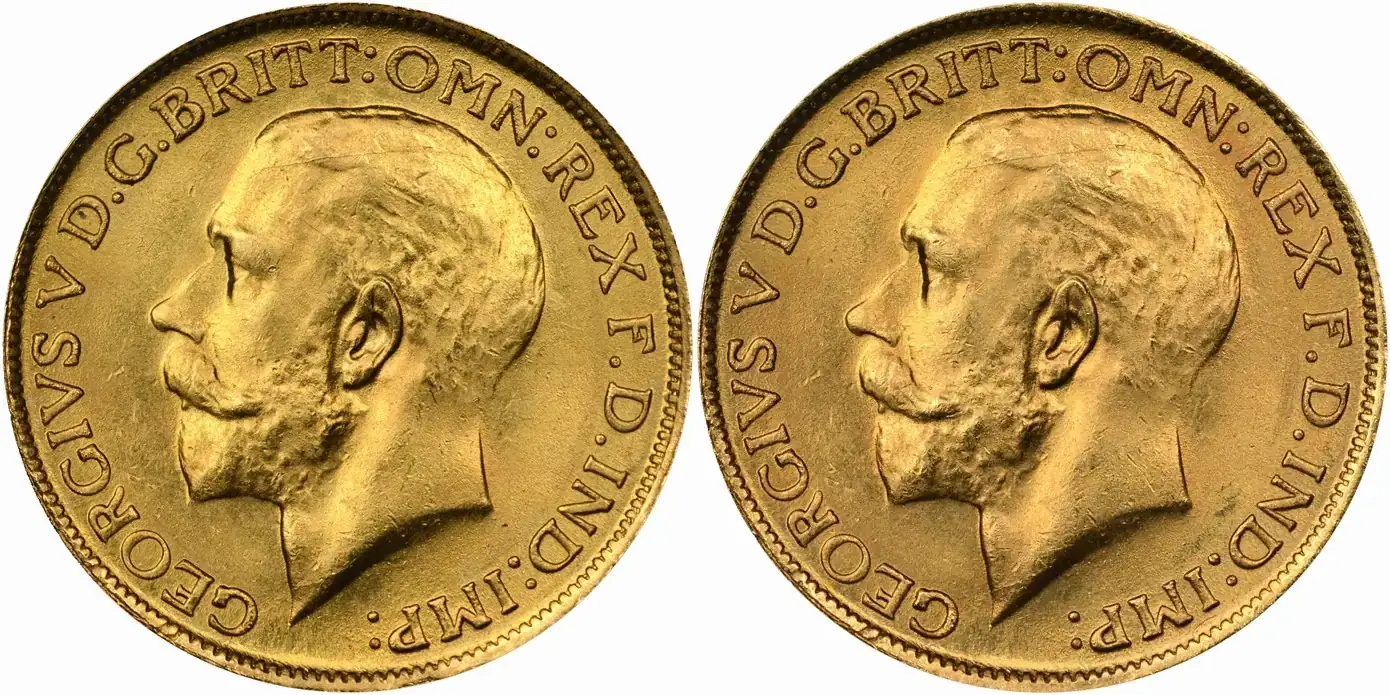 Two Counterfeit 1928 South Africa Gold Sovereigns
As you can see from the images, these are clearly too different coins. However, they both exhibit significant weakness in the strike of the hair. In addition, they both have the same die crack through the hair. While this shows that they were struck from the same obverse die, it does not prove that the coins are fake.
A closer examination, however, reveals numerous repeating depressions and marks on the two coins. These were hits or cuts on the genuine coin from which the counterfeit dies were made. These defects were then transferred to every coin struck from those false dies. The counterfeiter clearly did not put much effort into finding a "host" coin with few marks, and also did not appear to have made any attempt to remove these marks from the die.
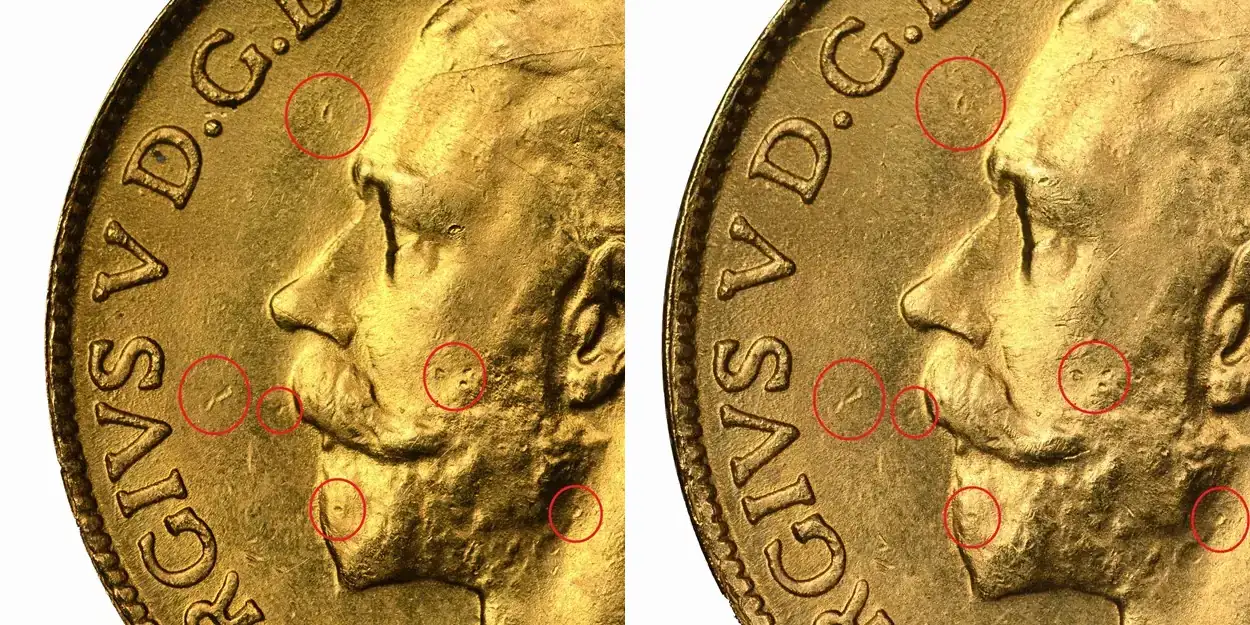 Counterfeit 1928 South Africa Gold Sovereigns Obverse Details
 The reverses are also struck from the same die. As you can see from the photos below, the two coins look practically identical. This should throw up immediate red flags, especially when you take a closer look.
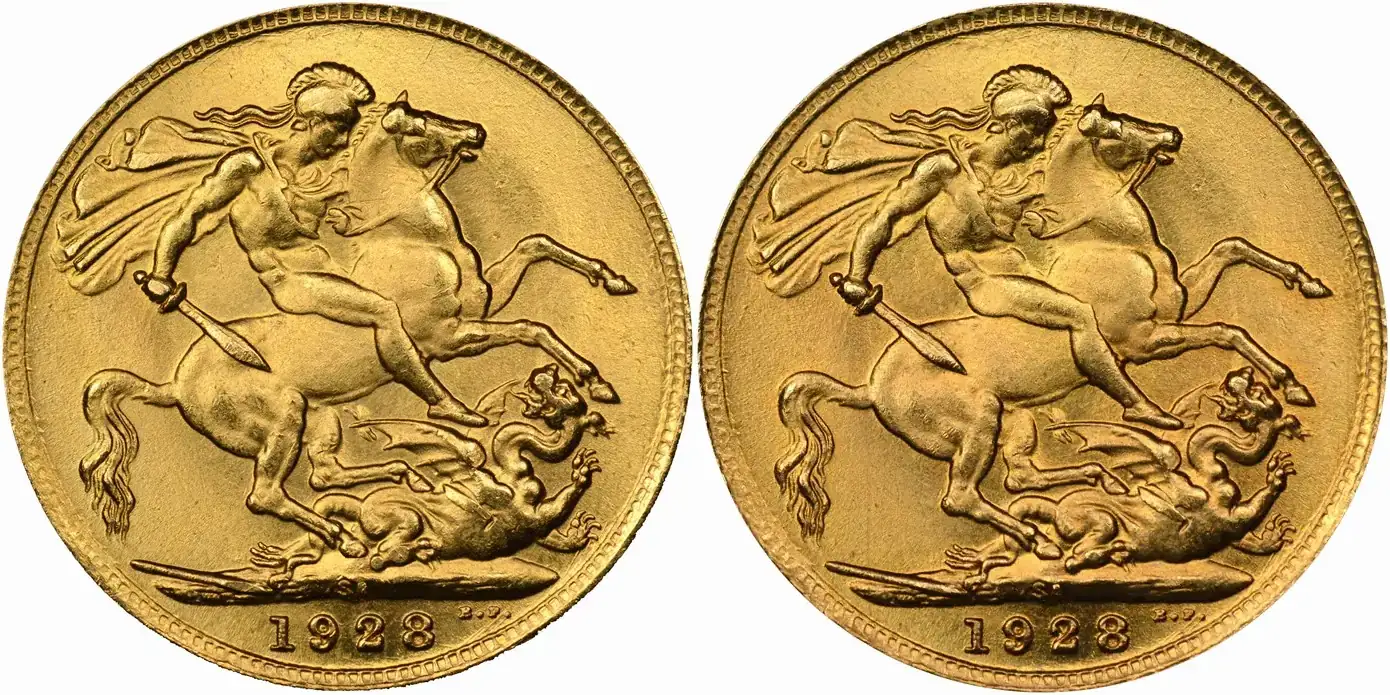 Two Counterfeit 1928 South Africa Gold Sovereigns
Note the matching marks which have been circled in red. The most glaring one is a large gash across the horse's neck that is clearly visible on both pieces. Also worthy of mention are the spikes coming out of the rim that have been circled in blue. These are known as tool marks and are quite common on counterfeit gold pieces. They are marks left on the die by the counterfeiter's engraving tool and will be seen on every piece struck from those dies.
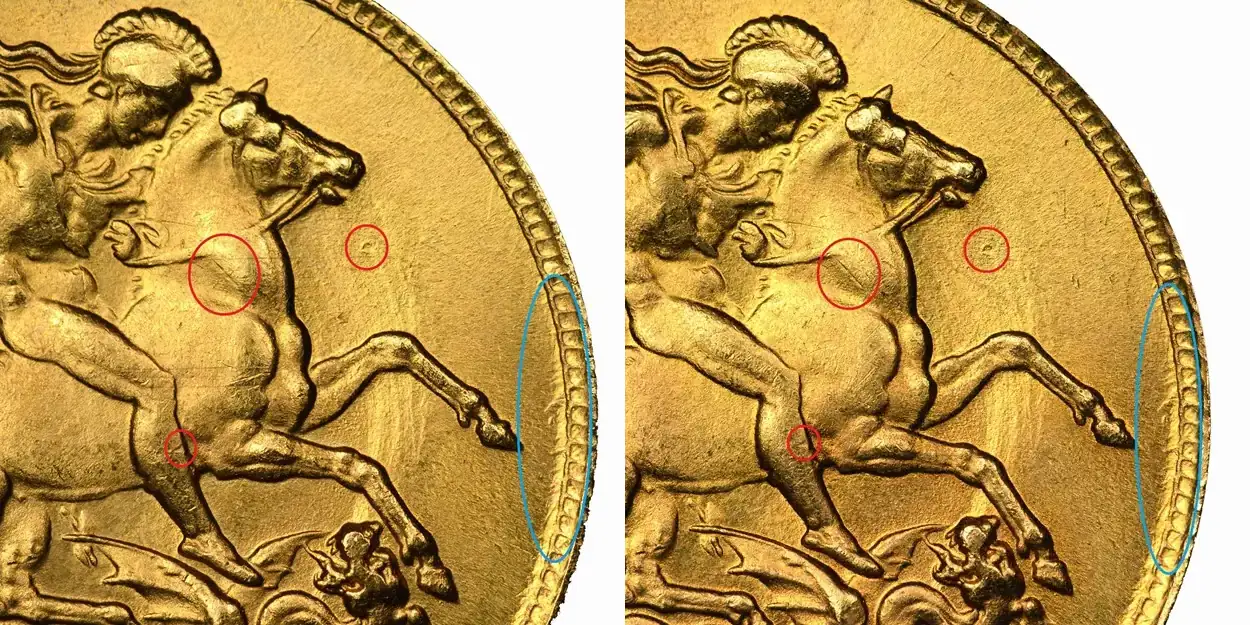 Counterfeit 1928 South Africa Gold Sovereigns Reverse Details
There are even more issues on the left side of the reverse. Note the additional repeating marks circled in red and further tool marks extending out of the rim. Another problem can be seen below the tool marks: there is extreme weakness in the denticles along the periphery. This area clearly did not transfer well from the host coin and is quite soft. A genuine coin would rarely have such a large area of weakly defined denticles. When you see it on four coins in a row—as was the case with this submission—there is clearly an issue.
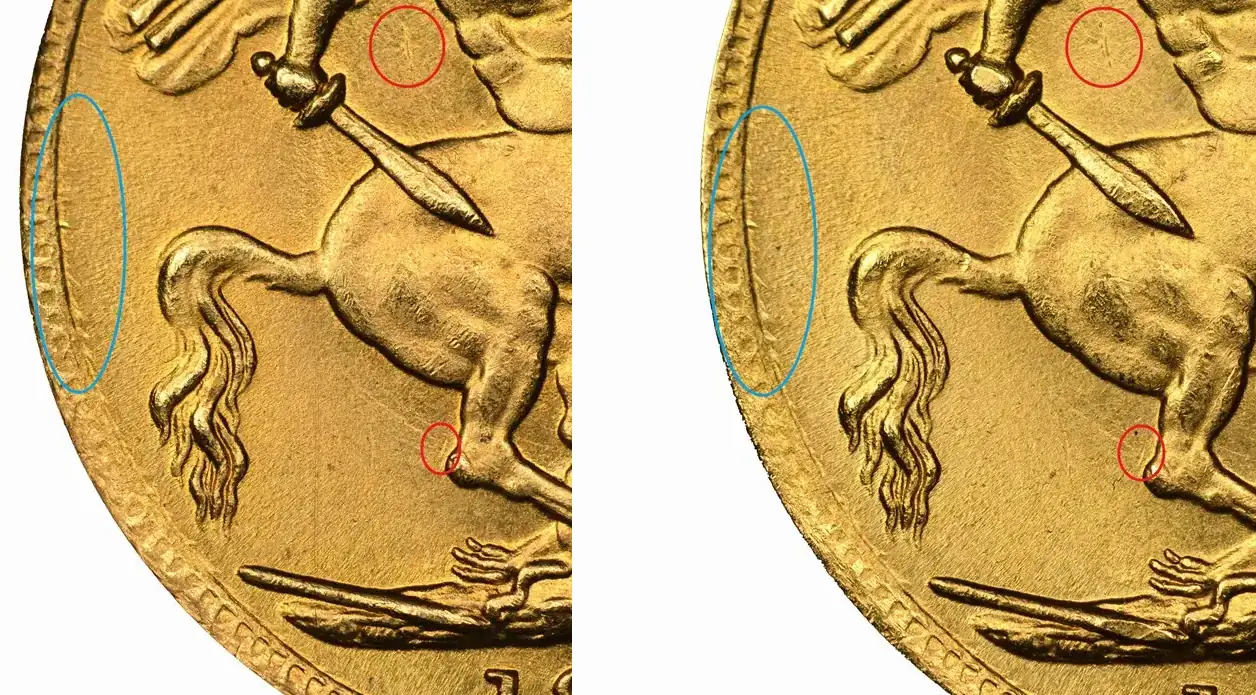 Counterfeit 1928 South Africa Gold Sovereign Reverse Details
When determining the authenticity of a coin, it is very important to know what a genuine coin should look like. It often helps to put them side-by-side, so the images below show a genuine sovereign with the same design (left) compared to the first fake in the submission (right). Look how much more detail there is in the hair on the genuine piece, as well as the upper part of the horse on the reverse. On the fake, the reins simply fade into the horse's neck. These stark differences clearly identify the four coins in this submission as fakes.
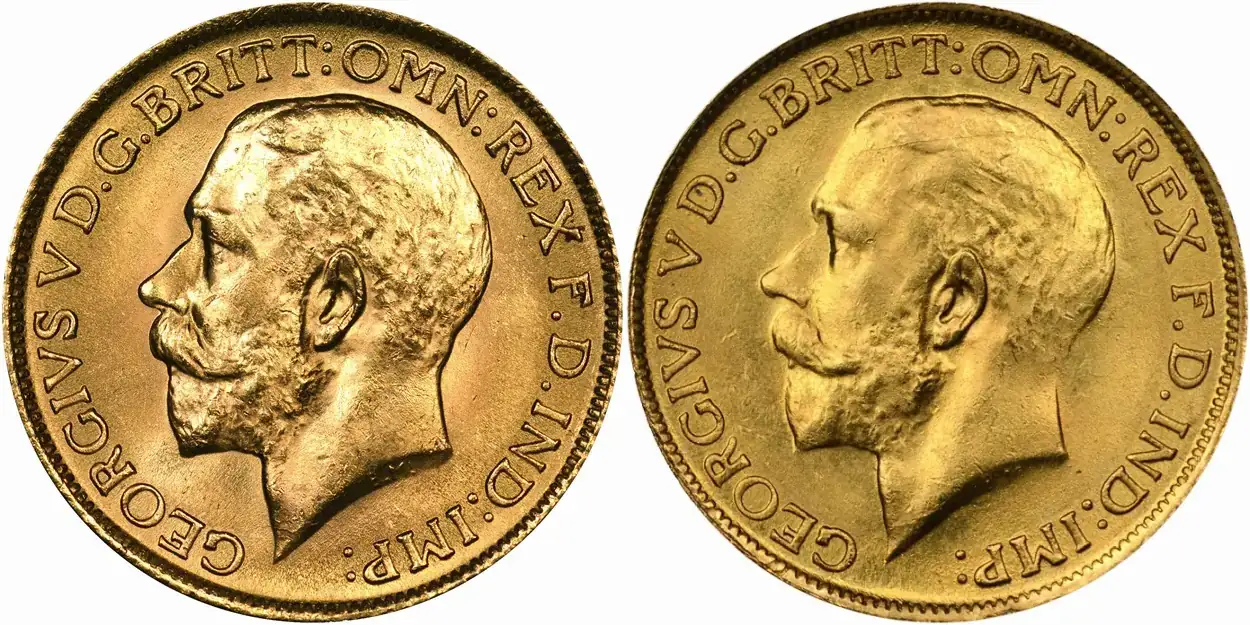 Left: Genuine 1914 South Africa Gold Sovereign, Right: Counterfeit 1928 South Africa Gold Sovereign
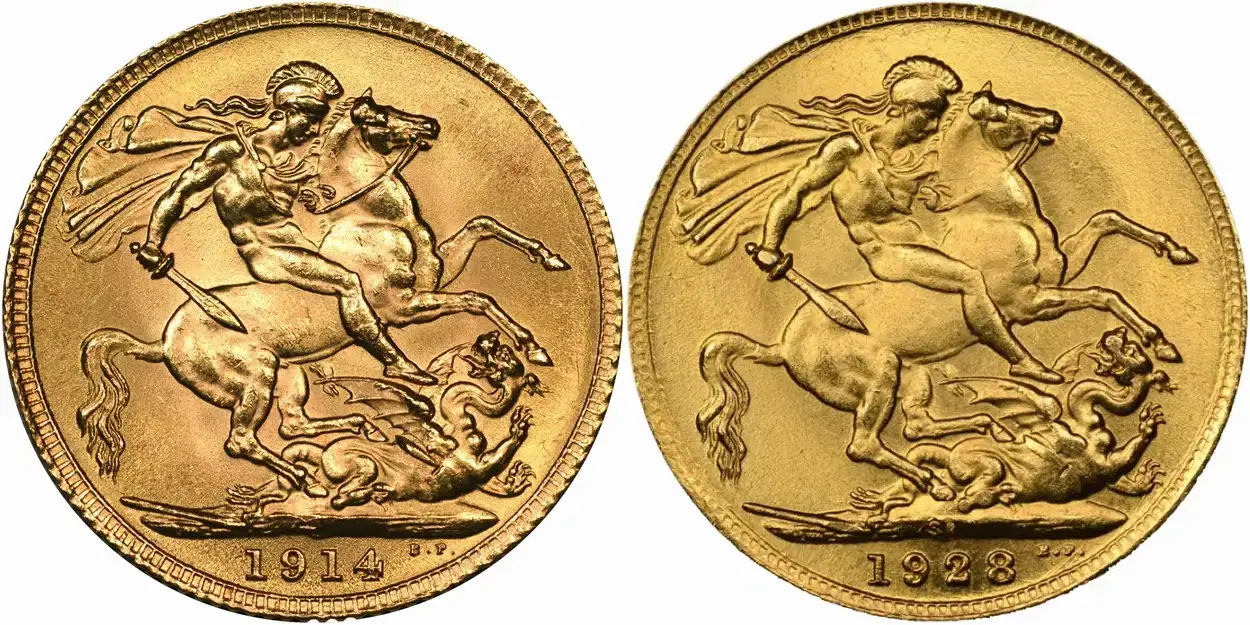 Left: Genuine 1914 South Africa Gold Sovereign, Right: Counterfeit 1928 South Africa Gold Sovereign
 Check out South African Sovereigns on ebay
.
Read More: Counterfeit Detection Series 




 Posted 10/10/2025 8:11 pm





