First, gbb, welcome to the forum! We're a friendly group and try to help whenever possible.
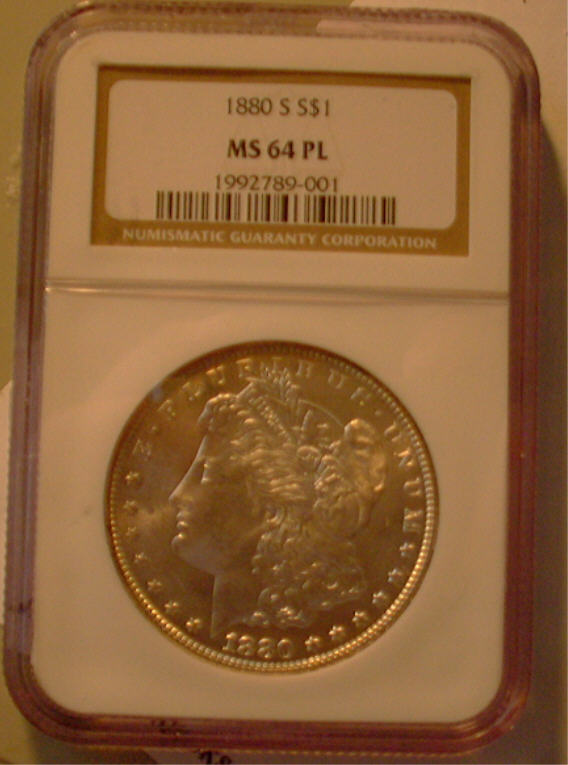
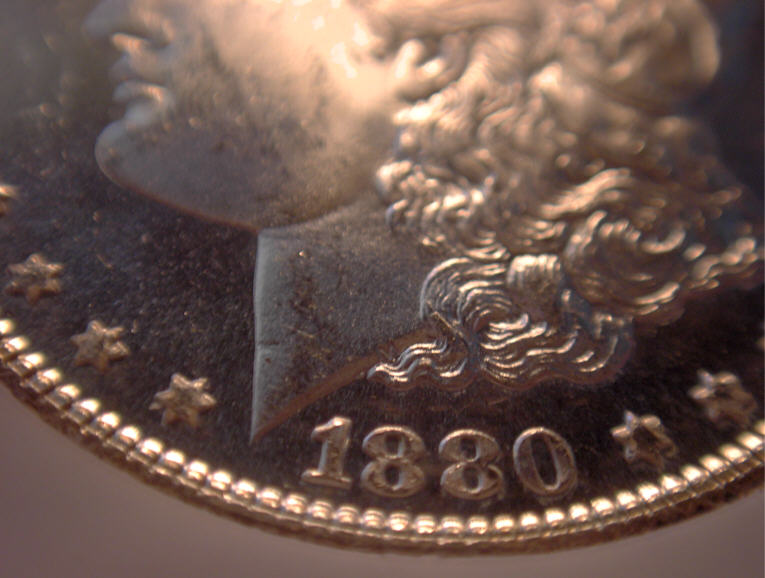
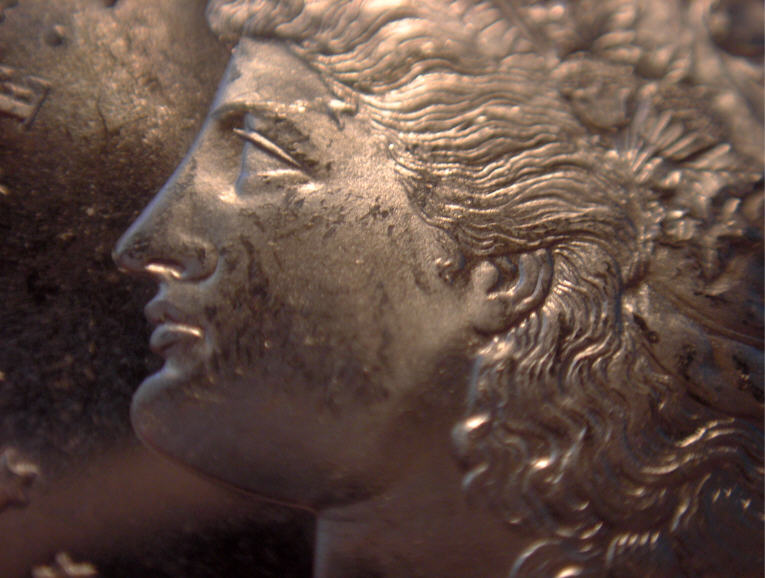
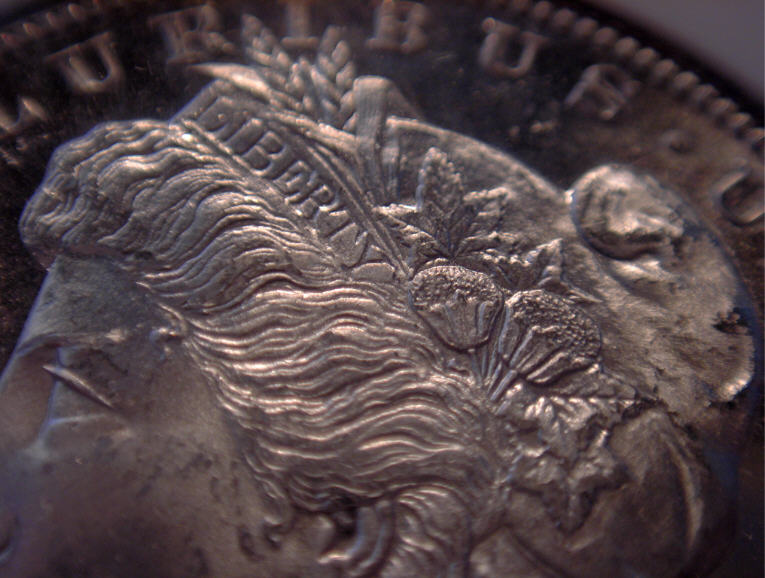
I'm no counterfeit Morgan expert, but if your 1880-S is a counterfeit, it's a good one. Most counterfeits of which I'm aware are castings. This one doesn't have the characteristic "graininess" of castings that I can detect. I have a counterfeit Morgan which would illustrate this, but I have not yet mastered my brand new digital camera, so I can't upload anything. However, a few threads ago, another 1880-S was discussed:
1880-S obverseI don't see the differences to which you refer between the two images beyond what might explained by the vagaries of imagery. Of course, it's always difficult to do analysis from an image, so what we see may not represent the actual appearance of the Morgan. In comparison with my own Morgan reference collection, I also don't see the differences, but again, comparing one in hand with an image is very difficult.
Does your Morgan have any luster? Usually, counterfeits have none. If there is some way you can get a photo of its luster then upload it, it might help us a little better.
Weight-wise, you'd need something more sensitive than postal scales; I use powder scales which gets the weight down to a tenth of a grain. An uncirculated Morgan should weigh about 412.5 grains; the counterfeit I have weighs 380 grains while a well-circulated (about G-06) 1879-CC Morgan weighs 398.2 grains, differences which could not be detected on a postal scale nor felt in the hands.
Of course, it can always be submitted to ANACS for authentication only.
Let's see if we can narrow this down for you.







 Posted 03/27/2006 1:31 pm